

Introduction
Since World War II, the spread of English worldwide has continued to grow. In 2024, Ethnologue (Eberhard, et al.) estimated that there were around 1.5 billion speakers of English of different origins, approximately 400 million first-language users, and 1.1 billion second and foreign-language users. Combined, the ratio between the two groups is roughly 3:1. Unsurprisingly, as the result of the global spread of the language itself, English has developed a diverse sociolinguistic profile which has translated into the emergence of a range of New Englishes spoken daily as a lingua franca (James, 2008). The evolution of the present-day use of the language has steadily been challenging the monolithic view of English both informally, in either face-to-face or technology-mediated interaction, and formally in the realm of academia. Yet, a positive result on the English as a Foreign Language (EFL) classroom does not seem as straightforward (Coady & Tsehelska, 2013). There seems to be a mismatch between the way students learn the language (EFL tradition, still trapped in the Modern Foreign Languages paradigm) and the way students use the language (English as a Lingua Franca (ELF) innovation, sharing the ideology of the World Englishes (Kachru, 1984) paradigm). Many practitioners remain anchored to the ideology of native-speakerism (Freeman, 2017) and from there to the implied monolingual normativity suggested by communicative competence. The focus is still on accuracy and accent and thus proximity to an NS model, instead of moving forward to (spoken) language proficiency and intelligibility as a means to better equip learner-users to interact with people from different linguistic affiliations in (un)planned situations for immediate communication, whether they may be instrumentally or integratively driven. As a result, such teaching fails to reflect the predominantly spoken use of the language outside the classroom in the learner-user’s “glocal” contexts due to the tourist boom, internationally while traveling abroad, or in technology-mediated interaction with fellow teens around the globe. The growth in affordances for out-of-class usage of the language has been reported in different contexts worldwide (Chan, 2016; Kuure, 2011; Sargsyan & Kurghinyan, 2016).
This state of affairs has wide-ranging implications for EFL teaching, at a theoretical level but mostly at a practical one. In light of this rationale, this article calls for a rethink of communicative competence and the validity of its native-speakerism ideology in favor of language proficiency and intelligibility as the yardstick against which the learner-user’s spoken mastery is to be considered, either in social or pedagogical settings. The aim is to bridge the conceptual gap between research and practice outside the ivory tower of academia by laying bare the concept of communicative competence whilst offering a different framework for practicing teachers.
Locating Communicative Competence
When researching in English language teaching methodology, one inevitably comes across the term communicative competence given its popularity and widespread study worldwide. Perhaps this is due to the seemingly rather straightforward concept it represents: “If the purpose of language study is language use, then the development of language proficiency should be guided and evaluated by the learner’s ability to communicate” (Savignon, 2018, p. 1). In fact, many English- language courses delivered throughout the past decades which claimed to emphasize speaking have attached themselves to the term communicative competence or to its shortened version – communicative. The endorsement of the concept of communicative competence can also be found in language-education policy documents, as is the case of the European Framework of Reference for Languages (CEFR). Originally, the concept included four criteria:
1. Whether (and to what degree) something is formally possible;
2. Whether (and to what degree) something is feasible in virtue of the means of implementation available;
3. Whether (and to what degree) something is appropriate (adequate, happy, successful) in relation to a context in which it is used and evaluated;
4. Whether (and to what degree) something is in fact done, actually performed, and what it’s doing entails (Hymes, 1972, p. 281).
This especially revered indicator of linguistic ability was first coined by Hymes in the late 1960s and introduced into foreign/second language learning discussions in the early 1970s. Hymes (1972) used the concept of communicative competence to oppose Chomsky’s (1965) linguistic competence which encompassed the NS abstract grammatical knowledge of the language, whilst Hymes’s broader communicative competence encompassed grammaticality, feasibility, appropriateness, and occurrence. In Hymes’s (1972) view, “competence is dependent upon both (tacit) knowledge and (ability for) use” (p. 282); i.e., to be communicatively competent one must combine the knowledge of the language itself and the ability to use it. Theoretically, Hymes includes a sociocultural dimension that was ignored by Chomsky. Nevertheless, this dimension consistently received secondary emphasis with each passing decade. During the 1970s the focus was on the functional dimension of communicative competence, in the 1980s and 1990s on discourse analysis, and towards the end of the century on the role of tasks and task-based learning (TBL). (Roberts, et al., 2001). Later TBL only grew in the importance it received for the development of global communicative competence, being vehemently advocated by some scholars, as is the case of Long (2015). Notwithstanding, this does not mean that sociocultural aspects were forgotten. In fact, their relevance for language teaching remained hotly debated. In the early years of the twenty-first century a considerable amount of research was dedicated to the pertinency of (inter)culturality when studying a foreign language (Byrnes, 2002; Lange & Paige, 2003; Risager, 2007). More recently, attending both to the spread of English as the world’s lingua franca and technology-mediated interaction, the calls to address not only a perceived lack of sociocultural input in foreign language teaching, but also one that moves away from British and American standards became more popular throughout applied linguistics (Bayyurt & Dewey, 2020; Byram, 2014; Guerra, 2016; Kiczkowiak, 2019; Kramsch, 2013; Sifakis, 2014; Sifakis & Tsantila, 2019).
Hymes’s (1972) theory of communicative competence enjoyed increasing popularity amongst scholars and teachers since its introduction into EFL and English as a second language (ESL) environments as a goal for L2 teaching and learning. In line with the consolidation of communicative language teaching during the 1980s, many theoretical frameworks for communicative competence were created. But it was Canale and Swain (1980) who designed perhaps the most influential model of communicative competence for FL learning and teaching. For the authors, communicative competence is “the relationship and interaction between grammatical competence, or knowledge of the rules of grammar, and sociolinguistic competence, or knowledge of the rules of language use” (p. 6). Besides grammatical and sociolinguistic competencies, the model also included strategic competence. Later, Canale (1983) further expanded and developed the model by adding discourse competence. Altogether, the model posits four dimensions to be taken into account: a) grammatical competence: the speaker’s knowledge of the language code (syntax, lexis, morphology, semantics, and phonology) and how to use it to express correct sentences; b) sociolinguistic competence: the speaker’s knowledge and appropriate application of the sociocultural code in which the language is used in terms of the role of participants, status, setting, norms of interaction, topic, register style and politeness; c) discourse competence: the speaker’s ability to use language extensively in a cohesive and coherent fashion by means of correctly connecting utterances (usually through cohesion devices) to make them meaningful; and d) strategic competence: the speaker’s knowledge of verbal and non-verbal communication strategies that may compensate competence or performance limitations and thus help to cope with possible communication breakdowns.
As a result this NS-based construct of communicative competence became pivotal for EFL/ESL teaching and learning and remains in circulation to date. It is prevalent both at the theoretical level (Eaton, 2010; Taş & Khan, 2020), as well as at the practical level, by being used as benchmark for the learner-user’s command of the language (Bakar, et al., 2019; Pillar, 2011). Indeed, even the supposedly unbiased European Commission supports this reified conception of communicative competence by sanctioning Gardner’s (2016) claims on the side of “correct” English, “in terms of UK and Irish native-speaker norms” (p. 2), although earlier claims (Lingua franca: Chimera or reality, 2011, p. 28) that ELF “dethrones” the nativeness principle and has successful communication amongst NNSs as its major goal. As pointed out by Savignon (2018), “related to the understanding of language as culture in motion and to the the multilingual reality in which most of the world population finds itself is the futility of any definition of a ‘native speaker’ a term that came to prominence in descriptive structural linguistics and was adopted by teaching methodologists to define an ideal for learners” (p. 5).
Unsurprisingly, Canale and Swain’s (1980) original theoretical framework was taken up by other applied linguists in the years that followed (e.g., Celce-Murcia et al., (1995); Bachman & Palmer 1996; Savignon 1983, 2002). Celce-Murcia et al.'s (1995) model further elaborated Canale and Swain’s sociolinguistic competence by adding actional competence, which is conceptualized by the authors “as competence in conveying and understanding communicative intent by performing and interpreting speech acts and speech act sets” (p. 9). As far as terminology goes, there are two slight changes: a) the use of sociocultural instead of sociolinguistic competence to highlight the newly added actional competence; and b) the use of linguistic instead of grammatical competence to indicate that this dimension comprised lexis and phonology besides morphology and syntax.
Bachman and Palmer’s (1996) proposed model of language ability (a term adopted by these scholars to replace that of communicative competence) was designed within a language-testing perspective only. Apparently quite different from its counterparts, this hierarchical, multilevel model is grounded in similar theoretical principles. Perhaps the biggest difference lies in Bachman and Palmer’s use of a dimension, functional knowledge, built on Halliday’s functional theory of language placing an emphasis on the importance of being able to correctly interpret the language users’ communicative intentions; i.e., to have illocutionary competence. There are two major components in this theoretical framework—language knowledge and metacognitive strategies. Language knowledge is divided into two other broad categories: organizational knowledge, further broken down into grammatical knowledge and textual knowledge; and pragmatic knowledge, divided into functional knowledge and sociolinguistic knowledge. On the other hand, metacognitive strategies, which are considered “executive processes” by Bachman and Palmer (p. 79), include goal-setting (deciding what is going to be done), assessment (a review of what is needed, what is available to work with, and how well one has done), and planning (managing the ready-to-use knowledge). Even though language knowledge and metacognitive strategies are two separate strands, they inevitably relate with each other, forming an interactional framework of language use.
In the same vein as Canale and Swain (1980), Savignon (1983, 2002) proposed a communicative- competence classroom model composed of four dimensions: grammatical competence, sociocultural competence, discourse competence, and strategic competence. The grammatical, discourse, and strategic competencies of Savignon’s (1983) model are identical matches to their counterparts in Canale and Swain. For that reason, the definitions offered above will not be repeated. In fact, Savignon (2002) asserts that Canale and Swain’s strategic competence draws on her earlier work in foreign language teaching, a study of adult classroom acquisition of French which focused on communication strategies (Savignon, 1972). Yet Savignon’s sociocultural competence has a broader scope than that of Canale and Swain’s sociolinguistic competence. It is “an interdisciplinary field of inquiry having to do with the social rules of language use” and thus “requires an understanding of the social context in which language is used” (Savignon, 2002, p. 9). Savignon extends this dimension of communicative competence to include the ability to communicate effectively in accordance with the context. The rules of appropriateness, turn-taking, content, silence, style, tone, non-verbal communication, and the like, are here perceived as context-dependent. This particular consciousness of the importance of potential cultural differences in the conventions of language used by the speaker may be subsumed, claims Savignon (2002), under cultural awareness or cultural flexibility. Savignon’s theoretical apparatus for sociocultural competence stresses the need to specify relevant aspects of the individual and the contexts of language in which they will engage when defining the construct of communicative competence.
The point to be made here is that communicative competence has been used extensively for the past fifty years in language teaching never really detaching itself from its original interpretation, both in and out the classroom, and thus still privileging NS norms (e.g., pronunciation), values, and practices, converting them into unrealistic pedagogic goals. Instead, the goals of communication, and meaning negotiation for that matter, for most EFL/ESL students should be intelligibility-based, since this will be the communicative competence benchmark in their future linguistic lives. “This suggests a greater focus on process than product, involving central roles for accommodation strategies, intercultural and pragmatic competence, flexibility, and tolerance of variation” (Blair, 2015, p. 89). I consider it inappropriate to foist upon students a model that is not relevant to their needs and hardly achievable in both either theory or practice.
Taking the Concept Forward
In addition to the distinction between linguistic and communicative competence, further concurring terms need differentiation: competence, performance, and (language) proficiency. In straightforward terms, a speaker’s competence refers to his/her subconscious knowledge of the language, whilst performance is the actual observable use of the language in diverse contexts, which involves not only linguistic but also extralinguistic aspects of language: memory, distractions, attention, and speech errors (commonly slips of the tongue and false starts). “The terms have come to be used to refer to what a person knows about a language (competence) and what a person does (performance)”(Nunan, 2013, p. 24).
This seemingly straightforward definition of the concepts is not without its problems. For present purposes, my biggest disagreement lies in the NS assumption it implies and resonates throughout applied linguistics literature. Perhaps this is due to the genesis of the concepts and the theory of language they were conceived upon. It was Chomsky who first coined and defined both terms when he presented his standard theory in Aspects of the Theory of Syntax (1965). Chomsky held that linguistic theory is concerned primarily with an ideal speaker-listener, in a completely homogeneous speech community who know their language perfectly and are unaffected by such grammatically irrelevant conditions as memory limitations, distractions, shifts of attention and interest, and errors (random or characteristic) in applying their knowledge of the language in actual performance.
This ideal speaker-listener abstraction referred to by Chomsky has its realization in the NS, which suggests that NSs are by definition competent and NNSs are not when in reality NSs display varying degrees of competence just as NNSs do. To be a foreign or second-language speaker of English does not necessarily translate into having less competence than a NS. Considering the Chomskyan sense of competence, let us take, for example, grammatical competence. Many NSs display lower grammatical competence when compared to NNSs. This I have witnessed frequently among my EFL students.
Finally, the question of what is meant by proficiency and how the concept relates to competence and performance remains. The term has been used extensively by scholars, in international certification tests like the International English Language Testing System (IELTS) and language- education policy documents, of which the CEFR (Council of Europe, 2001) and its most recent development, the CEFR-CV (Council of Europe, 2018), is the most influential. However, there is little agreement amongst linguists and applied linguists on its exact nature. Different people interpret and define it in many different ways.
Taking into account that the consolidation of communicative language teaching and the concept of communicative competence began in the 1980s, this decade can be considered a paradigmatic example of the fuzziness in relation to proficiency. Vollmer (1981) argues that “language proficiency is what language proficiency tests measure” (p. 152). For Ingram (1989), “what is meant when we say that someone is proficient in a language is that that person can do certain things in that language” (p. 220). Spolsky (1989) goes further to replace proficiency with knowing a language and lists a dozen discrete linguistic items that, in his view, constitute the criteria for knowing a language. On the other hand, other scholars use proficiency as an alternative for seemingly equivalent terms. Canale and Swain (1980) equate proficiency with achievement, whilst Stern (1991) equates proficiency with competence and in a similar vein, so does Higgs (1984). More recently, both Nunan (2013) and Lightbown and Spada (2013) continue to refer to the difficulty and confusion of how proficiency is defined in EFL/ESL language learning.
At the opposite end of the competence-performance dichotomy, Richards (1985) equates proficiency, which encapsulates the notion of skill, with performance, stating that “when we speak of proficiency, we are not referring to knowledge of a language, that is, to abstract, mental and unobservable abilities. We are referring to performance […]” (p. 5). It is each scholar’s own view of proficiency that tips the scale to either competence or performance. For his part, Taylor (1988) offers a different view from all of the above. Besides advancing definitions, he suggests how the terms interconnect. Taylor regards competence, which he describes as a static concept, according to the classical Chomskyan notion of the “speaker-hearer's knowledge of his language” (Chomsky, 1965, p. 4), whilst proficiency, which he describes as a dynamic concept, is “the ability to make use of competence,” and performance is “what is done when proficiency is put to use” (p. 166). Unlike the former definitions, proficiency is here put in between competence and performance, not equivalent to either of the two. “Nowadays, a relatively complex and multidimensional conceptualization of language proficiency tends to underlie the teaching, learning, and assessment of foreign languages, one which acknowledges that there are different communicative skills, communicative strategies, and a variety of linguistic competencies” (Harsch, 2017, p. 251).
My own understanding of (language) proficiency as a construct aligns with this multidimensional view. I see it as the bridge that fills the gap between the learner-user’s underlying competence and their actual performance in any given communicative situation, be it in educational (classroom) or real-life contexts. Competence is a rather static concept that needs to be activated by proficiency. But by static I do not mean fossilized, but cumulative – competencies are reinforced and extended over time with new knowledge acquired in every verbal exchange the learner-user engages in. All together, competence encompasses three intertwined dimensions: linguistic, strategic (which includes paralinguistics and metacognition), and intercultural. Unlike what I suggest, some scholars, like Hulstijn (2011) and the CEFR (Council of Europe, 2001), draw distinctions between competencies. The former speaks of core and peripheral competences, claiming “that performance in (most) oral […] language tasks is contingent, to a large extent, on more purely linguistic competences and, to a lesser extent, on less purely linguistic competences, such as […] strategic competences” (p. 239). The latter highlights the existence of general competences (declarative knowledge, skills and know-how, ‘existential’ competence, and ability to learn), “those not specific to language, but which are called upon for actions of all kinds, including language activities”, and communicative language competences (linguistic, sociolinguistic and pragmatic), “those which empower a person to act using specifically linguistic means” (p. 9). It must be said that the new CEFR-CV (Council of Europe, 2018) further reinforces these concurrent competences. The slight difference lies in the use of the general competence’s French counterpart – savoir, savoir-faire, savoir-etre and savoir-apprendre.
On the opposite end of the communicative continuum is performance. Performance reflects the real use of the language system by the learner-user in concrete communicative situations; i.e., an individual’s observable or measurable language-producing behavior in any given context. Thus, performance goes beyond linguistic knowledge alone, including extralinguistic factors such as memory, anxiety, distractions, attention, and speech errors (commonly slips of the tongue, hesitations, and false starts). Two comments are in order here. First, this means that poor performance in a specific communicative event does not translate into limited competence. Any speaker may unintentionally produce incorrect forms of the language system, regardless of his/her competence. Second, I strongly disagree with the covert, if not overt idea in foreign language teaching and learning that speech errors made by NSs are nothing more than an involuntary, momentaneous occurring phenomenon, while those made by NNSs are interpreted as a signal of low linguistic proficiency.
This leads us to the final and most important concept of my construct – proficiency. Proficiency is the learner-user’s ability to activate, retrieve and bring about the necessary competence or competencies for the communicative situation they engage in, relaying this language knowledge to their performance. Proficiency is, then, a rather dynamic concept that encompasses how automatically the learner-user can process their language knowledge. It overlaps as much competence as it does performance. In this vein, proficiency, competence, and performance cannot be separated. Together, they form the learner-user’s language proficiency. Figure 1 illustrates my multidimensional definition and attempts to lessen the ambiguity of (language) proficiency, how it (co)relates to competence and performance, and the contexts where it will be applied and/or assessed in different communicative events.
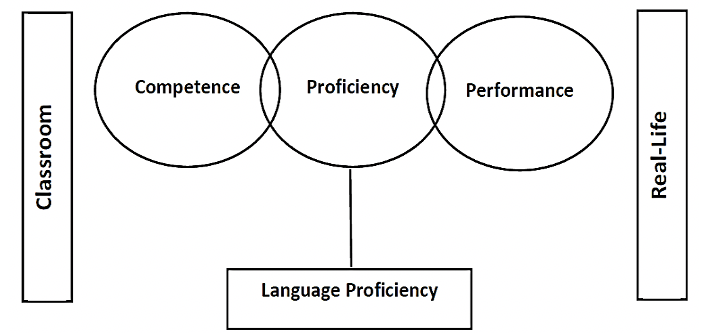
Figure 1: Non-linear (language) proficiency framework
I argue in favor of a move from communicative competence to language proficiency, combined with intelligibility, as the yardstick against which the learner-user’s mastery is to be measured in any given modality. For present purposes the focus is speaking, either in pedagogical or especially in social settings. In effect, amongst younger generations, the written form of the language has been deemphasized while its spoken counterpart is their preferred medium of communication outside the classroom, which translates into close verbal engagement in planned or unplanned situations for immediate communication, either face-to-face or in technology-mediated interaction (for example, gaming [see Chik, 2014]). It is through speaking that language proficiency often manifests itself.
As one of the most important subsets of speaking, intelligibility must be included when discussing language proficiency. My claim is grounded in the assumption that below a threshold level (yet to be determined) of phonological control; i.e., intelligibility, communication, and/or interaction may come to a halt, irrespective of the speaker’s competence in associated dimensions – vocabulary, grammar, and the like, thus making it a predominant ingredient of language proficiency. In my view, successful oral communication and/or interaction rely heavily on intelligibility. The prominence of intelligibility for language proficiency has been supported over the years by different scholars, despite the generalized lack of attention it has received in the field of applied linguistics. Hinofotis and Bailey (1980), in their empirical study on American undergraduates' reactions to the communication skills of foreign teaching assistants, concluded that “up to a given proficiency level, the faulty pronunciation of a non-native speaker can severely impair the communication process” (p. 124). Almost two decades later, Morley (1998) emphasized the role played by intelligibility in overall communicative competence, arguing in favor of an “undeniable fact: intelligible pronunciation is essential to communicative competence” (p. 20). More recently, De Jong et al. (2012) in a study on the componential structure of L2 speaking proficiency presented two significant aspects: a) pronunciation was the subset contributing the most for overall low proficiency scores , and b) pronunciation, along with vocabulary, represented the lion’s share (75%) of the speakers’ speaking variance. Notwithstanding my reservations about the onus of intelligible being put solely on NNSs by Hinofotis and Bailey (1980) because NSs are not always intelligible, nor is their birthplace a synonym for proficiency, it is clear that intelligibility may determine language proficiency and is a means by which language proficiency is demonstrated. Indeed, in the new CEFR-CV (2018), the importance of intelligibility is thus recognized as the primary construct in phonological control. In this the calls for the acceptance of new Englishes worldwide are finally reflected.
Implications for Practice
Communicative competence has been considered “one of the most powerful organizing tools to emerge in the social sciences in recent years” (Saville-Troike, 2003, p. 18). However, despite recognizing the merits of Canale and Swain’s (1980) original construct of communicative competence and its revivals , namely the introduction of equally important dimensions of language knowledge besides grammar, I do question the model’s appropriateness as an instructional goal for NNSs in foreign language learning/teaching environments. The model implies a NSs idealized linguistic and cultural standard based on a monolithic perception of what should constitute the L2 learner’s expected achievement.
The intuitive grasp of linguistic, social, and cultural rules and meanings are perceived as beyond the NNSs reach, thus implying that communicative competence is a landmark for NSs only, as if a foreign or second language learner-user could never achieve the language knowledge of their native counterparts. This line of thought portrays the NNSs as an inferior speaker, a speaker whose only hope not to upset native interlocutors is to learn how to be a “foreigner”. The label itself signals how Canale and Swain’s communicative competence model has been used to downplay NNSs ability to communicate. NSs are as susceptible as NNSs to the same communicative constraints – memory, anxiety, distractions, fatigue, attention, and even imperfect knowledge of the language system. I firmly believe that these communicative orthodoxies pose a form of forced inculturation on L2 learners.
As a teacher myself, I know how challenging engaging with ELF practice may be due to a lack of resources and support from boards and pressure to achieve the success percentages projected by the Ministry of Education. While it is (perhaps) utopian to think of a clear-cut formula to integrate an ELF perspective in ELT in any given context, some suggestions can be put forward:
- Keep updated with the latest research and current uses of the language, which entails being ELF-aware and open to ELF-informed pedagogical practices.
- Abandon outdated teaching paradigms whose norms are still dictated by NS standards and embrace the calls for acceptance of new Englishes worldwide; i.e., move from communicative competence to spoken language proficiency and intelligibility.
- Go beyond the textbook and expose your learner-users to different Englishes. Most textbooks support NS models as the only valid examples.
- Allow your learner-users to speak and explore the language by emphasizing intelligibility and communication strategies to get the message across whilst deemphasizing accuracy and accent.
- Raise your learner-user’s awareness of the language as they are going to use it – ELF users in situational speaking communities by providing examples of proficient and intelligible NNSs of English in ELF encounters to display how successful they can be and thus generate practical communicative empowerment.
This tendency should be to make things simple: provide learners with sufficient speaking and pronunciation practice to enable them to become both proficient and intelligible, and thus likely to be successful ELF users.
Conclusion
Communicative competence, regardless of its widespread dissemination and acceptance, is a concept that should be used with caution. Although recognizing the added value of Canale and Swain’s (1980) work, along with its interpretations, the model implies a NS idealized linguistic and cultural standard based on a monolithic perception of what should constitute the L2 learner’s expected achievement. Its appropriateness as an instructional goal for most NNSs in FL learning/teaching environments around the world is highly questionable, at best. The model implies that communicative competence is a landmark for NSs only. To avoid this forced inculturation on L2 learners, I advocate a reconceptualization of the concept of communicative competence, founded upon a move from communicative competence to language proficiency. As put forward by my non-Linear (Language) Proficiency Framework, spoken language proficiency, combined with intelligibility, must be the yardstick against which the learner-user’s mastery is to be measured either in real-life or classroom settings.
The way in which the language has been revolutionized by new Englishes worldwide, especially in its spoken form, by being adapted to accommodate the speakers’ communicative needs and/or culture-specific language alternatives calls for a speaker whose language proficiency is measured by an ability to get the message across intelligibly, not by how foreign they sound nor by any given level of deviation from the native model when measured against an alleged norm-providing standard. The dethroning of the nativeness principle implied in the concept of communicative competence will not happen by chance. The hands-on approach required to change this state of affairs has taken too long to be put into practice, perpetuating outdated teaching paradigms that do not conform to the learner-user’s present-day needs.
Acknowledgments
First and foremost, I want to express my gratitude to the editor-in-chief JoAnn Miller for her help and patience getting the manuscript on track at the initial stage. Secondly, I want to thank editor Yomaira Angélica Herreño-Contreras for her expertise and encouragement every step of the way. Thirdly, I am also grateful for the insightful comments offered by the anonymous reviewers and the style editors who provided mentoring and constructive criticism throughout the development and style editing stages. Any errors that may remain are entirely my own responsibility. Finally, a big thank you goes to my wife Patrícia for her unwavering support.
References
Bachman, L. F., & Palmer, A. S. (1996). Language testing in practice: Designing and developing useful language tests. Oxford University Press.
Bakar, N. I. A., Noordin, N., & Razali, A. B. (2019). Improving oral communicative competence in English using project-based learning activities. English Language Teaching, 12(4), 73-84. https://doi.org/10.5539/elt.v12n4p73
Bayyurt, Y., & Dewey, M. (2020). Locating ELF in ELT. ELT Journal, 74(4), 369–376. https://doi.org/10.1093/elt/ccaa048
Blair, A. (2015). Evolving a post-native, multilingual model for ELF-aware teacher education. In Y. Bayyurt, & S. Akcan (Eds.), Current perspectives on pedagogy for English as a Lingua Franca: Developments in English as a lingua franca (pp. 89-102). De Gruyter Mouton.
Byram, M. (2014). Twenty-five years on: From cultural studies to intercultural citizenship. Language, Culture and Curriculum, 27(3), 209-225. http://dx.doi.org/10.1080/07908318.2014.974329
Byrnes, H. (2002). The cultural turn in foreign language departments: Challenge and opportunity. Profession, 114-129. http://www.jstor.org/stable/25595736
Canale, M. (1983). From communicative competence to communicative language pedagogy. In J. C. Richards, & R. W. Schmidt (Eds.), Language and Communication (pp. 2-27). Longman.
Canale, M., & Swain, M. (1980). Theoretical bases of communicative approaches to second language teaching and testing. Applied Linguistics, 1(1), 1-47. https://doi.org/10.1093/applin/I.1.1
Celce-Murcia, M., Dörnyei, Z., & Thurrell, S. (1995). Communicative competence: A pedagogically motivated model with content specifications. Issues in Applied Linguistics, 6(2), 5-35. https://doi.org/10.5070/L462005216
Chan, H. W. (2016). Popular culture, English out-of-class activities, and learner autonomy among highly proficient secondary students in Hong Kong. Universal Journal of Educational Research, 4(8), 1918-1923. https://doi.org/10.13189/ujer.2016.040823
Chik, A. (2014). Digital gaming and language learning: Autonomy and community. Language Learning & Technology, 18(2), 85-100. http://dx.doi.org/10125/44371
Chomsky, N. (1965). Aspects of the theory of syntax. M.I.T. Press.
Coady, M. R., & Tsehelska, M. (2013). 21st century EFL: Enhancing the communicative approach. Humanising Language Teaching, 15(5).
Council of Europe. (2001). Common European framework of reference for languages: Learning, teaching, assessment. Cambridge University Press.
Council of Europe. (2018). Common European framework of reference for languages: Learning, teaching, assessment - Companion Volume. Council of Europe.
De Jong, N. H., Steinel, M. P., Florijn, A. F., Schoonen, R., & Hulstijn, J. H. (2012). Facets of speaking proficiency. Studies in Second Language Acquisition, 34(1), 5-34. https://doi.org/10.1017/S0272263111000489
Eaton, S. E. (2010). Global trends in language learning in the 21st Century. Onate Press.
Eberhard, D. M., Simons, G. F., & Fennig, C. D. (2024). Ethnologue: Languages of the World (27th Ed.). SIL International.
Freeman, D. (2017). The case for teachers’ classroom English proficiency. RELC Journal, 48(1), 31-52. https://doi.org/10.1177/0033688217691073
Gardner, J. (2016). Misused English words and expressions in EU publications. European Court of Auditors.
Guerra, L. (2016). Some common fallacies about learning and teaching English as a lingua franca. Fólio–Revista de Letras, 8(1), 367-382. https://periodicos2.uesb.br/index.php/folio/article/view/2871/2387
Harsch, C. (2017). Proficiency. ELT Journal, 71(2), 250-253. https://doi.org/10.1093/elt/ccw067
Higgs, T. V. (1984). Teaching for proficiency: The organizing principle. National Textbook Company.
Hinofotis, F. B., & Bailey, K. M. (1980). American undergraduate reactions to the communication skills for foreign teaching assistants. In J. C. Fisher, M. A. Clarke, & J. Schacter (Eds.), On TESOL ’80: Building bridges: Research and practice in teaching English as a second language (pp. 120-133). TESOL.
Hulstijn, J. H. (2011). Language proficiency in native and nonnative speakers: An agenda for research and suggestions for second-language assessment. Language Assessment Quarterly, 8(3), 229–249. https://doi.org/10.1080/15434303.2011.565844
Hymes, D. H. (1972). On communicative competence. In J. Pride, & J. Holmes (Eds.), Sociolinguistics: Selected Readings (pp. 269-293). Penguin.
Ingram, D. (1985). Assessing proficiency: An overview on some aspects of testing. In K. Hyltenstam, & M. Pienemann (Eds.), Modelling and assessing second language acquisition (pp. 215-276). Multilingual Matters.
James, A. (2008). New Englishes as post-geographic Englishes in lingua franca use: Genre, interdiscursivity and late modernity. European Journal of English Studies, 12(1), 97-112. https://doi.org/10.1080/13825570801900596
Kachru, B. B. (1984).World Englishes and the teaching of English to non-native speakers: Contexts, attitudes and concerns. TESOL Newsletter, 8(5), 25–26.
Kiczkowiak, M. (2019). Seven principles for writing materials for English as a lingua franca. ELT Journal, 74(1), 1-9. https://doi.org/10.1093/elt/ccz042
Kramsch, C. (2013). Culture in foreign language teaching. Iranian Journal of Language Teaching Research, 1(1), 57-78. https://files.eric.ed.gov/fulltext/EJ1127430.pdf
Kuure, L. (2011). Places for learning: Technology-mediated language learning practices beyond the classroom. In P. Benson & H. Reinders (Eds.), Beyond the language classroom (pp. 35-46). Palgrave Macmillan.
Lange, D. L., & Paige, R. M. (2003). Culture as the core: Perspectives on culture in second language learning. Information Age.
Lightbown, P., & Spada, N. (2013). How languages are learned. Oxford University Press.
Lingua franca: Chimera or reality? (2011). European Commission.
Long, M. (2015). Second language acquisition and task-based language teaching. Wiley.
Morley, J. (1998). Trippingly on the tongue: Putting serious speech/pronunciation instruction back in the TESOL equation. ESL Magazine, 1(1-6), 20-23. https://files.eric.ed.gov/fulltext/ED432148.pdf
Nunan, D. (2013). Learner-centered English language education. Routledge.
Pillar, G. W. (2011). A framework for testing communicative competence. The Round Table: Partium Journal of English Studies, 2(1), 24-37. http://theroundtable.partium.ro/Current/Language/Granville_Pilar_Framework_for_Testing_Communicative_Competence.pdf
Richards, J. C. (1985). Planning for proficiency. Prospect, 1(2), 1-17.
Risager, K. (2007). Language and culture pedagogy: From a national to a transnational paradigm. Multilingual Matters.
Roberts, C., Byram, M., Barro, A., Jordan, S., & Street, B. V. (2001). Language learners as ethnographers. Multilingual Matters.
Sargsyan, M., & Kurghinyan, A. (2016). The use of English language outside the classroom. Journal of Language and Cultural Education, 4(1), 29-47. https://doi.org/10.1515/jolace-2016-0003
Savignon, S. J. (1972). Communicative competence: An experiment in foreign-language teaching. Center for Curriculum Development.
Savignon, S. J. (1983). Communicative competence: Theory and classroom practice. Addison-Wesley.
Savignon, S. J. (2002). Communicative language teaching: Linguistic theory and classroom practice. In S. J. Savignon (Ed.), Interpreting communicative language teaching (pp. 1-28). Yale University Press.
Savignon, S. J. (2018). Communicative competence. In J. Liontas (Ed.), The TESOL Encyclopedia of English Language Teaching. Wiley.
Saville-Troike, M. (2003). The ethnography of communication. Blackwell.
Sifakis, N. C. (2014). ELF awareness as an opportunity for change: A transformative perspective for ESOL teacher education.Journal of English as a Lingua Franca, 3(2), 317-335. https://doi.org/10.1515/jelf-2014-0019
Sifakis, N. C., & Tsantila, N. (2019). English as a lingua franca for EFL contexts. Multilingual Matters.
Spolsky, B. (1989). Conditions for second language learning: Introduction to a general theory. Oxford University Press.
Stern, H. H. (1991). Fundamental concepts of language teaching (7th ed.). Oxford University Press.
Taş, T., & Khan, Ö. (2020). On the models of communicative competence. GLOBETSonline: International Conference on Education, Technology and Science, (pp. 86-96).
Taylor, D. S. (1988). The meaning and use of the term ‘competence’ in linguistics and applied linguistics. Applied Linguistics, 9(2), 148-168. https://doi.org/10.1093/applin/9.2.148
Vollmer, H. J. (1981). Why are we interested in ‘general language proficiency?'. In J. C. Alderson & A. Hughes (Eds.), Issues in language testing (pp. 152-175). British Council.