
Introduction
"Language is acquired through communication."
(Howatt & Widdowson, 2004, p, 279)
Communicative language teaching (CLT), which focuses on interaction and communication, has been a common approach in English as a foreign language (EFL) classes for decades. It involves the theory of language as communication that aims to enhance communicative competence in language students in a classroom. CLT was initially focused on the linguistic competence of the English Language and refers to human skills. According to Chomsky (1965), linguistic theory helps students in constructing correct and suitable grammatical statements while also developing their proficiency in the mastery of grammar in the selected language, including structures and forms. Chomsky’s linguistic theory in the late 1960s focused more on the syntactic structure of the target language (Dos Santos, 2020). Hymes (1972) later disagreed with Chomsky's theory, saying he had neglected the significance of language proficiency as well as communication skills, both of which are necessary for a speaker. According to Dos Santos (2020), Savignon believed that ''the core principle of the CLT approach is to learn in the language and to learn to use the language, but not learn the knowledge of the language'' (p. 105). According to Hymes (1972), oral communication develops both language knowledge and the ability to apply it successfully. However, Hymes' theory is not concerned with communication in the social dimension of language (Nikian et al., 2016). Canale and Swain (1980) established a more comprehensive framework that defined communicative competence, which included grammar, sociolinguistics, discourse, and strategic competency as parts of that framework. Structural competence refers to the ability and knowledge required to properly generate forms and discourses (Nguyen, et al., 2021). English language learners need to have this competence to accurately express the language. This competence includes components such as morphology, syntax, semantics of sentences and grammar, and phonology (Savignon, 1997).
Sociolinguistic competence illustrates the learner's ability to apply language appropriately and adequately in various social contexts (Nikian et al., 2016). It denotes the student's skill to recognise the relevance of a statement in a certain social situation. According to Nguyen et al. (2021), to communicate and express their meaning effectively to listeners, speakers must understand the objective, issue, and topic when communicating and interacting. Discourse competency, implies a student's aptitude to incorporate patterns and meaning successfully, that enables students understand and recognise different word kinds, connecting discourse to communication for a variety of reasons. Finally, strategic competency reflects a person's skills to comprehend verbal and nonverbal language communication techniques. This competency is crucial in order to improve communication efficacy and help students compensate for miscommunication brought on by constricting circumstances in real communication or inadequate ability in various domains of communicative competence (Canale, 1983). With this competence, learners can maintain the dialogue despite the limited vocabulary range. To conclude, it can be said that in the 1950s, the focus of English Language teaching and learning was mainly on the linguistic competence of the language which is still used by many teachers in the target context. In the 1970s, CLT introduced a learner-centred classroom environment that concentrated on tasks and activities to enhance communicative skills of EFL students (Nikian et al., 2016).
This paper focuses on the CLT approach in Libyan schools located in Malaysia. The Libyan School in Kuala Lumpur, Malaysia, caters to students from Libya who have accompanied their parents who are working or doing their postgraduate studies in Malaysia, which is a popular choice for Libyan postgraduate students seeking higher education opportunities abroad. To accommodate these families, the Libyan government has established Libyan schools in Malaysia, offering a curriculum taught in Arabic, except for English language studies for the children of the postgraduate students. The length of their stay in Malaysia varies based on the duration of their parents' postgraduate education. The Libyan School in Kuala Lumpur, operating for three decades, provides educational and pedagogical services for the Libyan community and serves as a hub for cultural, religious, and social events. Under the supervision of the Libyan Ministry of Education, the school follows the Libyan curriculum for primary, preparatory, and secondary levels. Primary level students (ages six to twelve), while preparatory and secondary level students (ages thirteen to eighteen) have English classes three to four days a week, lasting forty-five minutes each day. The school's curriculum aligns with that of Libya, offering lessons in Arabic with English language instruction as an integral part of the program.
Experts have studied the CLT approach from different Libyan schools and in the international context. Although the first introduction of CLT in Libya was in 1999-2000, the grammar-translation method is still the most common technique used in the English language class in Libya (Aloreibi & Carey, 2017; Elabbar, 2011). Literature has shown that this method is considered to be the main reason for a lack of communicative competency among students (Altaieb, 2013; Diaab, 2016; Orafi, 2008; Owen, Razali, Samad, & Noordin, 2019). A study carried out by Orafi (2008) revealed that many English teachers in Libya are unaware of the CLT approach, and as such, it is difficult to convince them to apply this approach in class. Studies on CLT from other regions also show that students who may be well-versed in the grammatical structure of English may still face problems applying the knowledge into practice (Bin Hamid, 2010; Diaab, 2016; Hmaid, 2014; Orafi, 2008; Owen et al., 2019; Alkurtehe et al., 2019). Hence, exposing students to the best practices and practical use of CLT in a real-life context is necessary.
Many studies on CLT in the Libyan context focus on implementing CLT in a classroom and its effects on Libyan culture (Abukhattala, 2014; Aloreibi & Carey, 2017). Only a few studies were conducted on teachers or students' perceptions of CLT (Abdelati, 2019; Alshibany, 2014; Hussein, 2018). It is essential to elicit the teachers' and students' perceptions of CLT to identify issues, needs, strengths, challenges, and best practices that may contribute towards the perception of CLT in enhancing the English language competence amongst the Libyan students. Studies have shown that teachers' perception of CLT may not always match the students' perception of CLT (Spawa & Hassan, 2013). Several studies on communicative activities in the Libyan context have shown varied findings (Hmaid, 2014; Hussein, 2018; Owen, et al., 2019). Numerous factors may contribute to students' unwillingness to communicate in English, namely shyness, lack of effort to practice English, inappropriate strategies of teaching speaking, and classroom activity (Owen et al., 2019). Other studies focus on either teachers' or students' perception of the general teaching of English, grammar (Fitori, 2019), or the English language curriculum in Libya (Altaieb, 2013; Altaieb & Omar, 2015). A study on the teachers' and students' perception of Oral Communicative Activities (OCA) in the Libyan context has yet to be conducted.
The lack of insight into perception among the teachers and learners/students may cause lack of understanding of the benefits of OCA and its relevance to speaking competency. To promote speaking, teachers use OCA such as games, role-play, information-gap, drills, etc. (Brown, 2001; Owen et al., 2019) in a language class. Studies have shown that communicative activity in the classroom positively affects students' speaking skills (Alkurtehe et al., 2019; Diaab, 2016; Owen et al., 2019; et al.). A study on 47 ESL teachers and 100 Malaysian learners on their perception of speaking skills found a mismatch between the teachers' and students' needs and what has been practiced in class (Spawa & Hassan, 2013). Therefore, it is necessary to find out the EFL teachers' and students' perceptions of OCA in Libyan schools. It is essential to ensure that both teachers and students see the positive effects of OCA on language skills. Thus, this study attempts to elicit EFL teachers' and students' perceptions of the application of OCA in the classroom in Libyan schools. Probing further into the application of OCA is crucial to empower the Libyan teachers of the implementation of the diverse activities that help to enhance the communicative skills among their students. It also provides significant pedagogical implications for the effective usage of OCA in their teaching and learning practices. Research has shown that some improvement in willingness to communicate can be caused because of the application of OCA (Khajavy et al., 2018). This study has made a theoretical contribution by expanding the literature which can support future education researchers in Libyan. This study may also be useful in highlighting instructional language planning, initiation concerns, and curriculum implementation difficulties for educational policymakers and curriculum developers to create a policy for schools to assign time and marks concerning speaking skills for OCA utilization in the classroom.
Literature Review
Studies have illustrated that OCA has a significant role in improving an EFL learner's speaking skills. Cheng (2015) conducted a study on CLT, to show that communicative activities in a language class are important. By utilizing a mixed-method approach, his study suggests that communicative activities have positive effects on learners' learning strategies, style, and attitude. In addition, the implementation of communicative activities in class is also determined by the teacher’s gender. Farooq (2015) studied the perception of teachers on the effect of applying communicative activities in class. Using data gathered through questionnaires and observation, he found that both male and female teachers were aware of the CLT approach. However, the male teachers showed less interest in it. Communicative activities also have been shown to positively impact on students' speaking skills. This can be seen in studies carried out by Yunita et al. (2015) and Ismaili & Bajrami (2016). Their experimental investigations based on pre- and post-speaking tests to assess oral communication among students showed that the students' speaking skills had improved significantly after implementing communicative activity . A similar study by Samperio Sánchez et al. (2016) was also designed to discover the effectiveness of communicative activities on speaking skills. Utilizing a quantitative method, they studied 263 students and 20 teachers, and the findings showed that teachers were aware of the effectiveness of communicative activities on their students' speaking skills (Samperio Sánchez et al., 2016).
Communicative activities affect students' communication skills and their confidence and attitude towards speaking. For example, Masduki et al. (2017) investigated the benefits of communicative activities on the speaking skills of shy students. They found that communicative activities improved the students' self-confidence and decreased their fear of speaking. Thu and Ngoc (2017) collected data reflecting students’ opinions and analyzed the effects of communicative activities on students' speaking skills and attitudes, illustrating the role of communicative activities in the classroom. They also found that the success of communicative activities in a classroom was affected by the diversity and flexibility of the students' group/teamwork and the teachers' corrective feedback. Mulyanah et al. (2018) sugggested that communicative teaching is essential for speaking enhancement by using a pre-test and a post-test to measure speaking progression on experimental and control groups of students. The success of integrating communicative activities in teaching and learning, however, has a close relationship to the curricula and EFL language policy. In a similar vein, Aloreibi and Carey (2017) noted that the communicative curricula also challenged teachers in implementing OCA effectively.
While the communicative activities can positively impact communication skills and speaking confidence, engaging Libyan learners in research has showed mixed results. For example, Abukhattala’s (2014) results suggested that Libyan learners consider communicative activities are language games and are not considered to be a serious way to learn a language. Owen and Razali (2018) conducted quasi-experimental research in the Libyan schools in Malaysia, and showed more positive results. They reported that students performed satisfactorily in speaking after taking part in communicative activities; however, the female students were found to have gotten better scores than male students in the pre- and post-speaking tests. In relation to this, these researchers recommended further research on the perceptions of communicative activities to explore their relevancy from the viewpoint of both students and teachers in Libyan schools.
OCA nevertheless can play a vital role in improving students' speaking skills, as has been shown in the literature. However, there is a need to investigate further into the Libyan students and teachers' perception of OCA as recommended by Owen and Razali (2018) and to dig deeper into best practices that would help improve teaching and learning. Thus, this study aims to investigate the perception of OCA use among Libyan students and teachers. The research examines the following research questions:
What are the EFL teachers' perceptions of OCA in an EFL classroom?
How do the Libyan students perceive OCA in an EFL classroom?
Methodology
Research design
The study employs a mixed-methods research approach. A mixed-methodology research strategy is a method of collecting, analysing, and combining quantitative and qualitative data in a study to evaluate the research problem (Creswell, 2012). A questionnaire, one of the quantitative methods of data collection, was used to explore the classroom environment, namely task orientation, students’ cohesiveness, and teachers’ support. The qualitative method involved semi-structured interviews with the EFL teachers, and a focus group interview with the EFL Libyan learners. The two methods contributed to both methodological and data triangulation to strengthen the methodology and provide clear evidence (Lincoln & Guba, 2000). Sale est al. (2002) stated that a mixed-methods approach provides cross-validation by triangulations, and it gives complementary results by using the strengths of one method to improve the other. Thus, this approach is rigorous because it provides cross-validation by triangulating the methods, i.e., a questionnaire, a semi-structured interview, and a focus group interview; in addition, it elicits complementary results by using the advantages of one method (the interviews) to improve the other method (the questionnaire). The research process commenced upon receiving consent from the appropriate educators and students, which signed approval to conduct the research study. As a result, before the study began, responders were instructed on the study's objectives and benefits. Students were also provided consent forms to be signed by a parent in order to approve their child’s participation in the study. The research objectives and processes were also explained to the teachers, who signed their consent letters. Following briefings on the study's aim and participation terms, the researcher gained consent from the study participants.
Participants
The participants of the study were selected based on purposive sampling as this method identifies and selects participants who have knowledge and experience about the issues being studied (Creswell & Clark, 2011). The participants of this study were available to communicate their experiences and opinions expressively in a deliberative manner (Bernard, 2011). There were five EFL participating teachers and five EFL Libyan students. The researcher has selected these participants based on homogeneity for purposive sampling. The students had come to Malaysia accompanying their parents. The three males and two females were from 14 to 16 years old. The language of instruction at school was Arabic, their first language. Therefore, the students did not need to use English at school except in the English language class as it is compulsory for them to study English.
The teachers were postgraduate students from different Malaysian universities. They were working part-time teaching the English Language in Libyan schools in Malaysia. Three teachers were trained teachers who had been teaching English in Libyan schools for more than five years. The other two teachers were non-trained teachers. Nevertheless, one of them had more than ten years of experience teaching English in Libyan schools, whereas the other teacher only had four years of experience. Both teachers worked in a non-academic field before continuing their postgraduate studies in Malaysia. The reason for choosing this group of students and teachers was to generate deep insight into OCA's perceptions and relevance. This is because they were directly involved with the experience of participating and conducting OCA in a classroom. Therefore, it was essential to elicit their perception of effective educational processes. The students were referred to using the following pseudonyms Sara, Ali, Hala, Adam and Sam, aged between (14-16) while the teachers were referred to as Nadir, Aya, Rami, Maha, and Laila for ethical reasons. The following tables shows informaion about the participants.
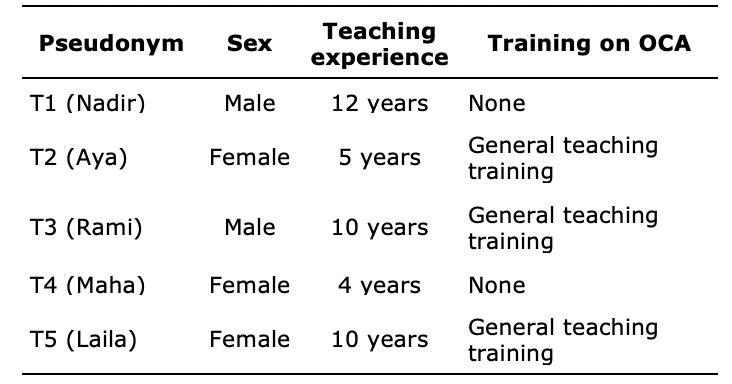
Table 1: Demographic information about participated teachers
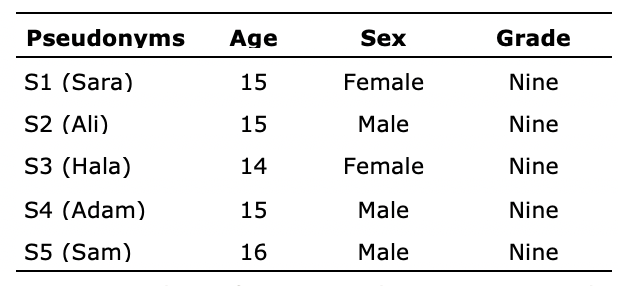
Table 2: Demographic information about participated students
Instruments and procedures
To measure the participants’ classroom environment (the task orientation, students’ cohesiveness, and teachers’ support), we adapted Fraser et al.’s (1996) questionnaire. We chose to use this questionnaire because the classroom activities used by teachers in a classroom can influence the support the teachers gave the students related to cohesiveness, and task orientations (Khajavy et al., 2018). The questionnaire utilized a five-point Likert scale ranging from 1 (strongly disagree) to 5 (strongly agree). The participants were asked to respond to the set of 13 items of the questionnaire: items 1, 2, 4 and 5 of the questionnaire were related to task orientation in the classroom, whereas items 3, 6, 7, 8 and 9 the participants’ group cohesiveness. The final four items (items 10, 11, 12 and 13) covered the support given the students in the classroom. No modifications were made to any of the questionnaire's items.
In the Phase 2 of the study, a semi-structured interview with the EFL teachers and a focus group interview with the EFL Libyan learners was conducted to elicit information to obtain in-depth information on a specific problem of a current real-life phenomenon (McMillan, 2011; Yin, 2014). The participants could express themselves freely and provide detailed information about the issues focused upon (Yin, 2014). The teachers' interview consisted of six open-ended questions that elicited their perception of OCA in a classroom, their views on using OCA to improve their students' speaking skills, their methods of teaching speaking lessons and conducting activities in a classroom, their opinions on the time spent on speaking lessons in class, and their teaching background. The students' interview consisted of three main open-ended questions. The questions elicited the students' perception of OCA, the use of OCA in the classroom, and the relevance of OCA in improving their speaking skills. The interview questions were based on the objectives of the study: to elicit the teachers' and students' perceptions of OCA in a classroom. The responses obtained from the semi-structured interview were analyzed individually. The interviews with the teachers were conducted in English, whereas those with the students occasionally included the use of Arabic. The duration of the face-to-face interviews ranged from fifteen to thirty minutes.
Data collection and analysis
The data was collected in two phases: the questionnaires were distributed to participants in Phase 1 (Quantitative Data), and the semi-structured interview with the EFL teachers and a focus group interview with the participants were conducted in Phase 2 (Qualitative Data). The data gathered from the questionnaire (items 1-13) was analyzed descriptively where a frequency count was used to score the responses. These were then converted into a percentage for each response. The teachers' interviews were conducted individually, while the students' focus group interviews were conducted in a group setting. The discussions were recorded, transcribed and analysed. The study aimed to find the participants’ perceptions of OCA and if such activities were relevant to the students and the teachers. The researchers also attempted not to influence the participants’ responses in any way and avoid providing the desirable answers.
Results
This section illustrates the questionnaire data (the quantitative phase) of the OCA usage in class and discusses the interview data (the qualitative phase) of the teachers' responses and the students' responses to the interview.
Questionnaire Results
The purpose of the questionnaires (the quantitative phase) was to describe the students’ opinions of the use of OCA in the classroom. Items 1, 2, 4 and 5 of the questionnaires elicited the task orientation of the participants’ classroom. The participants were asked whether the task designed in their class was useful and attractive, whether the class activities were clear and carefully planned, and if the class assignments’ instructions were clear so that everyone in the class knew the requirements for the assignments. Table 3 shows the responses.
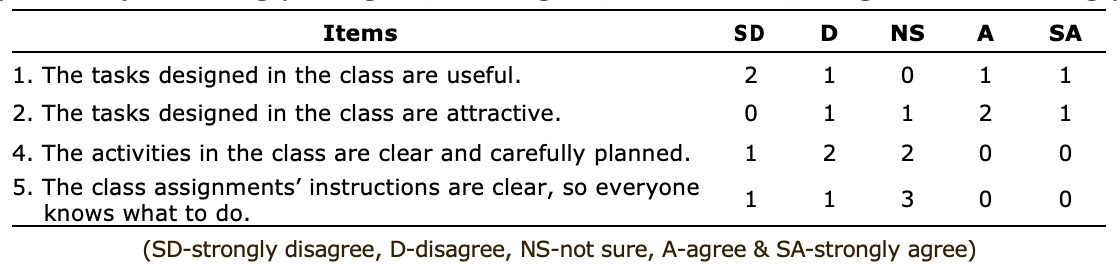
Table 3: Responses for Task orientation of the classroom (Items 1, 2, 4, 5)
In Item 1, the participants were asked whether the tasks designed for the OCA in the class were useful. Table 3 shows that most of the participants did not feel that the tasks designed for their class were useful. Only some participants thought that the tasks were useful. However, on Item 2, most them agreed that the tasks designed for OCA in the class were attractive and only a few of them found the tasks unattractive, and a few more were not sure whether the tasks designed for OCA in the class were attractive or not.
Item 4 also shows that the participants felt the tasks were not clear and not carefully planned and in Item 5 some of them felt that the instructions of the class assignments were not clear and not everyone knew what to do, however, most of them were not sure. Therefore, it could be concluded that although the participants found the task designed for the OCA attractive those designed for the participants’ class were not clear and not carefully planned by their teachers that most of the participants were not sure what to do. There could be multiple reasons why students perceived that the activities were not well-planned. For example, students might not have a clear understanding of the activities or assignments given to them or there might have been poor communication if the teachers did not communicate the purpose or goals of the activities clearly and the students did not understand the reasoning behind them and felt that they were not planned.
Items 3, 6, 7 and 8 of the questionnaires elicited the participants’ group cohesiveness. The students were asked whether they knew what to accomplish in class and whether they had experienced good teamwork with their classmates. They were also asked whether they were friendly with them on a team. This is to nurture communication in English between peers.
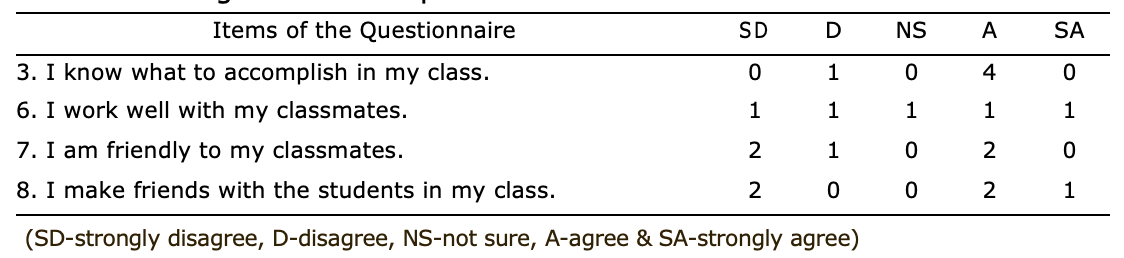
Table 4: Responses for Participants’ group cohesiveness
Table 4 shows that in Item 3 most of the participants knew what to accomplish in their class, in Item 6 some worked well with their classmates, and in Item 7, only some were friendly to others. Item 8 of the questionnaire shows that most of the participants did make friends with their classmates.
Thus, if the students lacked teamwork and friendliness, then they may have been less productive and creative in a team. With limited personal interactions, they may struggle to form strong relationships with one another, which can lead to communication breakdowns, misunderstandings, and a lack of collaboration. This also can reduce morale and motivation, which may negatively impact on the productivity and creativity within the team. Therefore, it is important for teams to find ways to foster a sense of community and build relationships.
Table 5 reflects the participants’ opinions about the teacher’s support of the students.
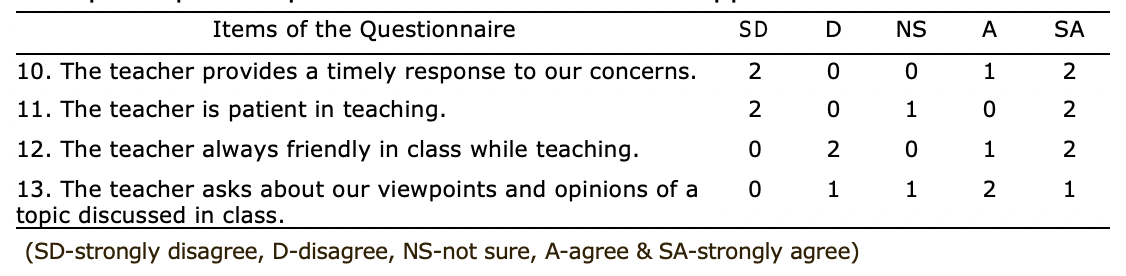
Table 5: Responses for Teacher support
Item 10 of the questionnaire shows that most of the participants agreed that their teachers provided time to listen to their concerns, but they were divided in Item 11 on whether the teacher was patient, although in Item 12 they felt the teacher was friendly. In the final item most students agreed that the teacher asked their viewpoints and opinions about topics discussed in class.
Interview results: The teachers' responses
What is your perception of OCA in a classroom?
Maha not seem to be acquainted with the term OCA as her response to this question showed. Rami demonstrated an understanding of OCA but answered the same question differently. Rami commented that OCA is based on the communicative teaching model, which requires interaction through increasing student talking time to make the class more student-centered. However, the teacher needs to insist on using only the English language to participate in the classroom. Laila also understood OCA and expressed her worries about using the Arabic language during pair and group discussion activities. She explained that her students had always refused to discuss topics in the English language because of their shyness and the fear of being laughed at due to the lack of vocabulary and ability to build the correct sentence structures. Nadir and Laila both responded positively about the use of OCA in an English Language class. Although they did not explain the positive effects of OCA, they said OCA was helpful encouraging students to speak English. Based on this finding, it can be said that the teachers were aware of the positive effects of OCA on students' speaking skills, although most of them were not able to explain OCA in details.
What are your views on teaching speaking skills using OCA?
All the teachers responded differently to this question. Nadir and Rami replied that they focused on speaking skills a lot and they monitored students while they were talking. Rami further said that he used different methods, such as asking questions, putting students into pairs or groups, utilizing collaborative learning, and employing educational games to encourage students to speak and communicate in English. On the contrary, Aya and Laila reported that they seldom used OCA in class for several reasons. For example, the students' lack of understanding of the English language, especially the vocabulary and sentence structure, led them to use Arabic in group and pair discussion activities. They said the students were also afraid of being laughed at if they used English in class. In addition, Aya explained that she preferred to conduct class activities individually, especially with a small sized class, because the use of OCA would affect the students' language learning. Maha also agreed that OCA should be used in teaching English speaking skills. However, the students’ role in Maha’s class was just to give their opinions about the new topics.
How do you teach English speaking skills in class?
All five teachers agreed on the importance of speaking skills. However, the methods utilized to promote speaking skills varied. Rami and Laila employed educational games to encourage students to speak, whereas Nadir and Rami put students into pairs and groups and monitored them without interruption or corrective feedback. However, due to time constraints, they said they focused more on writing and reading skills, and speaking skills were only practiced if they had enough time. Aya, on the other hand, did not use OCA in her class because she believed that OCA had adverse effects on her students as was mentioned in the previous question. According to her, the use of English in class activities would only keep them from participating actively in-class activities related to the primary focus of the Libyan' educational system, to prepare the students for examinations. Maha said that she would encourage her students to speak, and she did corrective feedback orally during the discussion activities. Laila asked students to converse based on visual aids. All these responses show that although the teachers encouraged students to participate in class activities, they somehow failed to apply OCA and maximize its positive effects for various reasons.
Do you have enough time to conduct speaking lessons in class?
Most of the teachers said that they did not have enough time to conduct a speaking lesson. All the teachers (Nadir, Aya, Maha, and Laila), except Rami, responded that although only limited time was provided to practice speaking in the classroom, they managed to help students practice speaking in the last ten minutes of each class. Nadir was more concerned about time constraints and explained that he had to complete the entire curriculum in seven to eight months as stipulated by the Libyan Education Ministry. Moreover, he added that since there wasn’t much time, only a few students could participate in any given activity. According to Laila, she even had to interrupt students' discussions to continue with the lesson.
Nevertheless, Rami believed that enough time was given to teach speaking because, according to him, "If the teacher plans the class time well, he will be able to give students enough time to practice speaking." Rami is the only respondent who had managed to give the speaking lesson in the given time and to put the students in pairs or groups.
Do you assign students to work in pairs or groups?
Only Nadir and Rami had assigned students to work in pairs and groups. For Nadir and Rami, assigning the students in pairs or groups would encourage them to speak and reduce their shyness. According to them, weak, shy, and anxious students were more comfortable practicing speaking with their classmates instead of their teachers to improve their English. On the contrary, Aya and Laila considered that using pairs and groups was ineffective because the students preferred to speak in Arabic, although they were asked to talk in English. Laila also added that she was concerned about making noise in class because, based on her experience, students made noise whenever she assigned them to work in pairs or groups. Maha, however, noted that she would assign students to work in pairs if there were fewer students in the class.
Have you attended any training programs on teaching English, mainly speaking skills, in the Libyan curriculum
The teachers had not attended any formal training programs on teaching speaking skills in the Libyan curriculum. However, some of them had participated in general English language teaching programs. One of the teachers (Rami) said that the English language and teaching methods were the same. He meant that training is training and any teacher only needs general training on how to teach English and it does not need to be dedicated to techniques to teach speaking or for any particular curriculum. Thus, they can teach any curriculum everywhere. This shows that the teachers do not have appropriate training programs on teaching speaking skills in the Libyan curriculum. They fail to fully utilize the advantages of OCA in nurturing and promoting English-speaking skills among their students. This explains why most of them are not aware of OCA and its effects on students speaking skills.
Interview results: The students’ responses
The students responded based on their past and current learning experiences, and they had a different perception of OCA and its usage in the classroom. Their responses ranged from viewing OCA as practical and beneficial to improve English speaking to a preference for the frequent use of OCA in the classroom. This variety of opinions reflected previous studies (Dewi et al., 2017; Owen, et al., 2019), which reported that the use of OCA in the classroom increases speaking skills. The students believed that OCA was necessary and essential in learning a language. One of the students (Sara) had experienced OCA in previous classes and had some knowledge of it. This student had explained previously the meaning of OCA to other students. The other students responded that they know OCA because they had also experienced it in their class; however, the term 'OCA' was not familiar to them. This seemed to show that most of the students in the study had little knowledge about OCA.
All the students used the word 'instrument' to identify OCA. In terms of applying the OCA in a class and whether they were useful, one student explained in detail that they had used OCA a lot in class the previous year and that OCA had helped them "to speak out ideas and think out of the book." Most of the students said that the teacher used more OCA last year in class compared to this year. All the students stated that the implementation of OCA was beneficial for them to practice speaking in the classroom. The students also had the same perceptions about the usefulness of using OCA in class. They believed that OCA was useful in speaking. Some of the students thought that the activities helped them the most in improving their speaking skills. The majority of the students agreed that OCA was useful whenever they applied it in the class.
The students gave various and short responses. Among the responses were that "when the teacher asks questions, they will respond," and "when the teacher tells them that they have to speak, the teacher plans activities and games to help them talk" (Ali). Nevertheless, Sara added that the teacher gave them a topic to speak about and asked them to support their answer. She explained that there was no right or wrong answer since the main goal was to practice. She also said that these activities helped to encourage the students to speak. In addition, most of the students asserted that the teacher had also asked them to prepare a presentation as a speaking activity. However, due to the lack of vocabulary, the presentation was short. The students (Ali, Hala, and Sam) explained that they needed only to say a few sentences as they read through the slides since it was difficult to talk when the teacher was not encouraging them. Some of students said that their teacher had attempted to implement OCA this year. The teachers used many activities and educational games to promote speaking skills among the students. However, the teachers had limited time to complete the curriculum in seven to eight months with three to five lessons per week for 30 to 45 minutes per lesson. Adam's teachers allocated the last five to ten minutes of the lesson for speaking activities before class ended. Thus, the students said that the allocated time to practice English in class was insufficient.
Sara, who seemed to have more knowledge about OCA, responded that OCA was relevant to them. The students in her class liked OCA because the activities motivated them to speak more in English, made them feel more confident to talk, and encouraged them to think. All the other students also agreed that OCA helped them speak and was relevant to their classes. Figure 1 shows the responses.
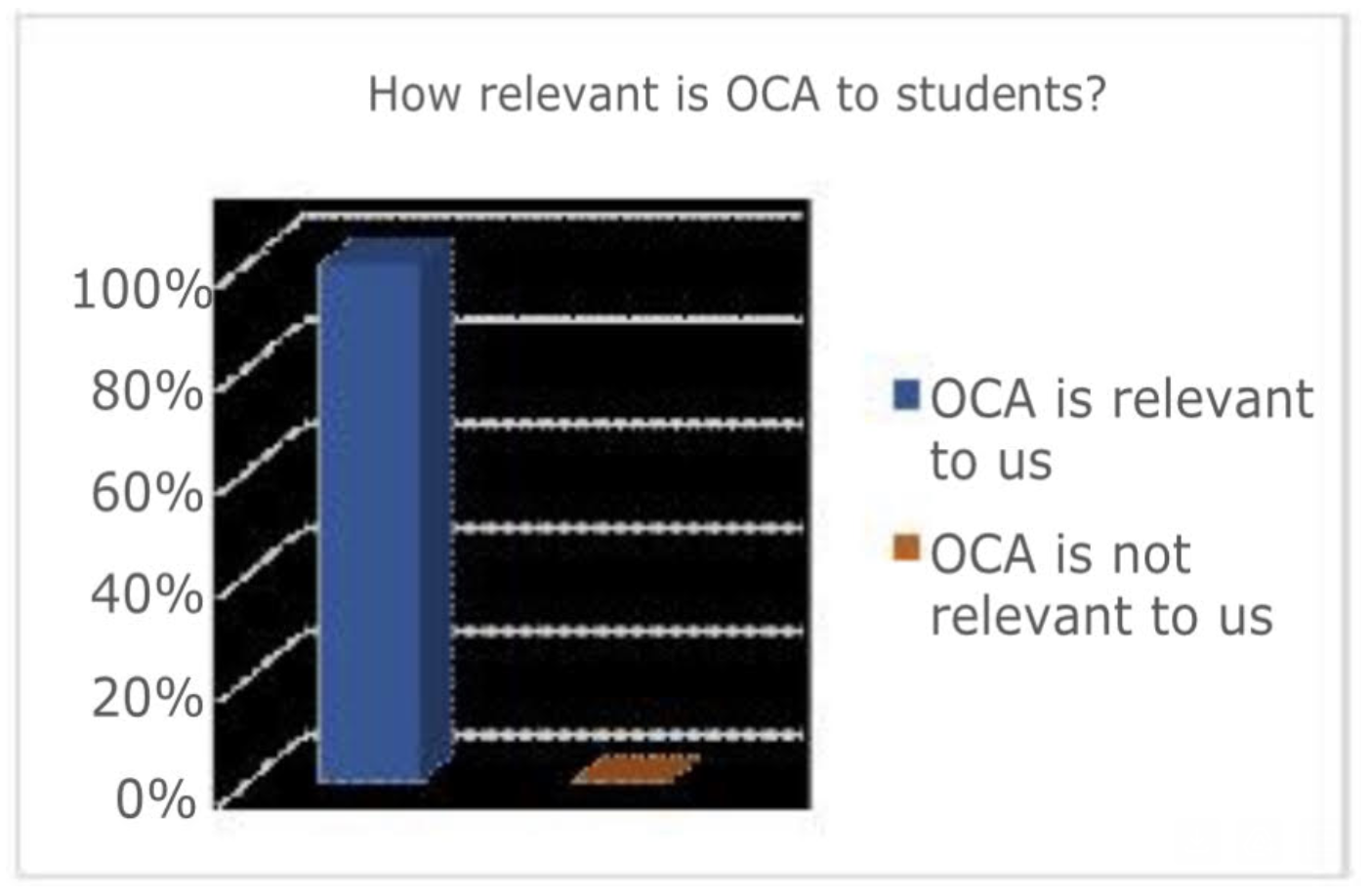
Figure 1: How relevant is OCA to students?
These students felt that OCA improved their speaking skills. They believed that OCA could help them communicate, which was pertinent to their classes if the OCA was implemented correctly and frequently by the teacher. One of the students said that the teacher supported them a lot and encouraged them to talk regardless of their mistakes. The teacher believed that OCA was highly relevant to their class and helped them progress positively in their speaking skills. However, most of the students said that their teachers did not apply OCA in the classroom. This resulted in minimum English use in speaking as the time allocated to speak English is limited. Figure 2 shows the responses.
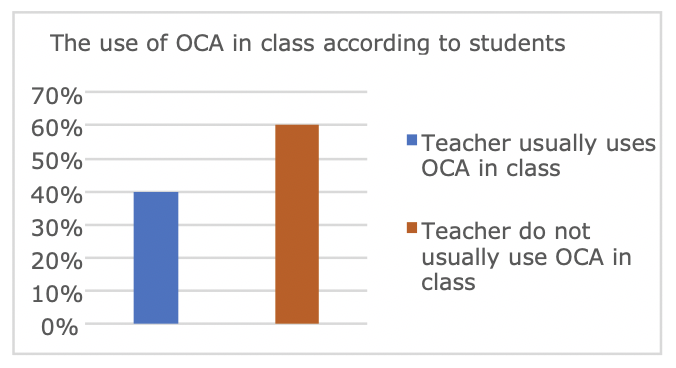
Figure 2: Teachers’ use of OCA
Furthermore, based on the students' responses, it can be said that even when the teachers use OCA, students may perceive the activities to be ineffective. For instance, the students would read the slides during the PowerPoint oral presentation instead of presenting the PowerPoint oral presentation topic without referring to the slides. The students believed that such a presentation did not support their speaking skills because OCA implementation was inappropriate. As a result, although they thought OCA is essential, teachers had a vital role in implementing these activities effectively.
All the participants stated that OCA was vital for students to speak English. The students' perspectives seem to agree with scholars' assertions in the research literature that OCA is beneficial to EFL learners and can encourage them to speak. Also, they felt that teachers' speaking skills should be up at the required level to teach speaking. Forty per cent of the students stated that their teachers used both English and Arabic in class, showing the teachers' inability to communicate 100% in English. The students felt that although the teachers knew a lot about the English language, they were still not confident to use the language without code-switching. Some students provided an example of the importance of the role that teachers can play to support students to speak. For example, one of the students (Hala) talked about her experience with two different teachers. She strongly appreciated the teacher who taught her in the first half of the semester because the teacher encouraged her to speak in class about her experiences. However, her experience with different teachers showed a difference in the improvement of her speaking skills. Her experience with the second teacher was unfavourable because the teacher did not focus on speaking. This illustrates that the students seemed to have different experiences with different teachers.
The students also thought that their teachers had not emphasized the importance of English-speaking skills, and they needed more activities to practice speaking. Sixty per cent of the students believed that learning skills other than speaking were not enough and that learners had to practice the English language orally in communication in the classroom. At this stage, their opinion was that the teaching of English-speaking skills was inadequate in meeting their needs, and they preferred more OCA to be implemented in class because it could improve their speaking skills. Also, more time should be allocated for OCA.
Discussion and Suggestions for Further Studies
The first research question concerned the teachers' perception of OCA. It was found that the teachers' knowledge and perception of OCA were limited. They also seldom applied OCA in their classrooms for many different reasons. Firstly, they reported that the time allocated for the English Language class was insufficient to cover all the language skills. Secondly, some teachers seldom had a group or pairs discussions as a class activity because the students mostly used their mother tongue (Arabic) during the activities. Thirdly, although the curriculum was communicative based, students were tested for their linguistic skills, as required in the traditional examination. This final finding is consistent with Abukhattala (2014) who stated that the Libyan examination system tests only linguistic skills such as the verb forms, sentence structures, spelling among others.
Teachers in the current study also believed that reading and writing skills were more important than speaking skills. These findings are consistent with Rahaman's (2013) finding that teachers have the desire to increase the use of communicative activities in class. However, from their viewpoint, writing and reading skills are more important than listening and speaking skills. They are also required to prepare students to pass exams, which has impelled them to focus more on linguistic skills. It seems logical that when the examination system is engaged in communication, the teacher and the student will be interested in this aspect. According to Aloreibi and Carey (2017), the communicative curricula challenges teachers. Therefore, they focus on teaching linguistic skills at the expense of communicative skills.
The second research question illustrated the Libyan students' perception of OCA in a classroom. It was found that the Libyan students' perceptions of OCA in a classroom were positive. The students preferred to have OCA in the class to improve their speaking skills. They perceived OCA as practical and beneficial in practicing speaking in the classroom. For these students, OCA motivated them to speak in the English language and made them feel more confident to speak in English. This is consistent with Owen and Razali (2018) and Khajavy's et al. (2017) findings. However, the students felt that their teachers seldom used OCA in the classroom because of their lack of understanding of the English language and their use of Arabic in group discussions. Time constraint is also one of the reasons why teachers seldom apply OCA in the classroom.
There is also an inconsistency between teachers' and students' perceptions of using the Arabic language in the English class. The students were concerned about the teachers' use of the Arabic language in the class. According to them, teachers' frequent use of the Arabic language decreased their chances of speaking English in class. This is because the students tended to communicate with their teachers in Arabic too. Aloreibi and Carey (2017) in their study reported that Arabic was the dominant language of instruction in the English classroom, and that both students and teachers interacted in the Arabic language during communicative lessons. Therefore, the students thought that teachers' English-speaking skills need to be improved to successfully implement OCA in English.
Nevertheless, the students and teachers agreed that the perception that lack of vocabulary and knowledge to build the correct sentence structure, shyness, and the fear of being laughed at could prevent the students from speaking English in class. The students said it was difficult to talk in English when the teacher did not encourage them to speak. They felt that the role that teachers can play to support students and promote them to speak in English was very important. Also, the teachers focused more on writing and reading skills, and speaking skills were only taught and practiced if they had enough time. This is consistent with Aloreibi and Carey (2017) who reported that the short time allocated prevented the teaching communicative English. The teachers in the current study were concerned about completing the whole curriculum in seven to eight months, as stipulated by the Libyan Education Ministry. Only a few students could participate in any given activity due to these time constraints. Only Rami and his student (Adam) asserted that the teacher allocated the last five to ten minutes of the lesson for speaking activities.
All these findings indicate that although the teachers encouraged students to participate in class activities, they somehow failed to use OCA in the classroom or to maximize the positive effects of OCA. The findings of the questionnaire also supported this conclusion. Although the students found the OCA attractive, they also felt that the OCA was not useful. The teachers failed to design and plan the tasks clearly and the students had problems doing the class assignments. They also failed to fully optimize the advantages of OCA in nurturing and promoting English-speaking skills among their students. In conclusion, the teachers' methods of teaching speaking skills were still inadequate to meet the students' needs. The teachers should also minimize the use of Arabic in the English class. Also, the schools should allocate more time for the English class to have time to include OCA in the class. This would give the students more opportunities to practice English in class.
Pedagogical Implications
There are several pedagogical implications for language teachers reflected in this study. As students and teachers differ in education and background, it is essential to comprehend where the similarities and differences lie. Teachers and students' perceptions are not often differentiated from each other concerning learning and teaching language, although each emphasizes a different aspect. To reduce conflict, they need to understand these differences. Teachers need to allow students to practice speaking in class so that they do not become disillusioned with their language learning. The current research recommends that teachers need to be aware of the students' needs and diversify their teaching process using OCA to improve the students' speaking skills. Teachers and students can contribute to a continuing dialogue that would increase teachers' awareness of their students' changing needs and arrice at the best possible method to increase the students’ participation in OCA.
Moreover, OCA implementation in classroom would support students in developing their awareness of enhancing their English proficiency. The teachers and the students need to collaboratively understand that OCA affects proficiency level amongst these Libyan students, and therefore there is a need to create an enabling environment within the classroom with relevant activities, cooperative spirit amongst students, as well as supportive guidance from the teachers. With the reciprocal awareness from both the teachers and students, there can be a more enabling approach in utilizing OCA more effectively. Although the study's purpose was not to determine the importance of using Oral Communicative Activities (OCA) in the classroom, participants’ perception was seen to affect the successful implementation of OCA in a Libyan EFL classroom. How the teachers and students perceive the use of OCA also affects the pedagogical significance of the OCA use in practice.
Conclusion
The study aimed to find out the students' and the teachers' perceptions of oral communicative activities (OCA) in terms of knowledge, understanding, relevance, and use in the EFL classes. Although the students in this study came from similar educational backgrounds, their perceptions regarding OCA differed, while most teachers shared a similar perception. However, it was also evident that students agreed that using OCA could improve their speaking. Most students who participated in this study presented their need to assign enough time for speaking activities and use OCA to improve their speaking skills. They were aware that OCA can be beneficial, and it should be applied more frequently in the classroom which is regarded to be a platform to maximatize the interactive teaching mode. The teachers need to be sensitized to their students' perceptions and beliefs regarding using OCA in the classroom. It is also recommended that the teachers and students have frequent dialogues such as the one conducted in this study to increase awareness of the role of OCA in the classroom. These discussions and dialogue sessions need to be initiated on a more frequent scale. Such discussions would increase the students' awareness of the use of OCA and possibly decrease the mismatch between students and teachers. The teachers' competency in using OCA for practicing the spoken language needs to be further developed. Integrating OCA has good potential to enhance the proficiency level of learners. These results should also influence policymakers to set the goal of learning English to enhance communicative competence instead of focusing on linguistic skills and testing the students rigidly on structural components. This study sheds some light on how students and teachers perceive the significance of OCA on the speaking competency needs in a Libyan context. This study may be limited to a small group of respondents; however, it provides insight into perception among the teachers and learners on OCA. A larger study could provide an in-depth understanding of the benefits of OCA and its relevance to speaking competency.
References
Abdelati, S. (2019). Communication strategies in Libyan EFL classrooms: Materials, perceptions and practices [Unpublished doctoral dissertation] Sheffield Hallam University. https://doi.org/10.7190/shu-thesis-00232
Abukhattala, I. (2014). Introducing the communicative approach in Libya: Resistance and conflict. The Journal of the Faculty of Arts, 4(8), 8–21. https://journals.misuratau.edu.ly/arts/upload/file/R-39-12.pdf
Alkurtehe, K. A. M., Rathakrishnan, M., & Krishnasamy, H. A/L N. (2019). The efficacy of oral Dictogloss tasks on vocabulary among Libyan students. Journal of Advanced Research in Dynamical and Control Systems, 11(8), 195–208.
Aloreibi, A., & Carey, M. D. (2017). English language teaching in Libya after Gaddafi. In R. Kirkpatrick (Ed.). English language education policy in the Middle East and North Africa. (pp. 93-114). Springer.
Alshibany, E. (2014). Investigating Libyan teachers’ perception of communicative language teaching. Proceedings of the 7th International Conference of Education, Research and Innovation, Seville, Spain. https://library.iated.org/view/ALSHIBANY2014INV
Altaieb, S. (2013). Teachers’ perception of the English language curriculum in Libyan public schools: An investigation and assessment of implementation process of English curriculum in Libyan public high schools. [Doctoral dissertation, University of Denver]. Electronic Theses and Dissertations. https://digitalcommons.du.edu/etd/26
Altaieb, S., & Omar, Y. (2015). Obstacles Libyan teachers of English encounter while implementing English language curriculum in Libyan high schools. Journal of Modern Education Review, 5(9), 840–853.
Bernard, H. R. (2011). Research methods in anthropology: Qualitative and quantitative approaches (5th ed.). Altamira.
Bin Hamid, N. S. (2010). Developing the oral skills through vocabulary: A case study of some secondary school students in Tripoli. Academy of Higher Studies, Ganzoor, Libya.
Brown, H. D. (2001). Teaching by principles: An interactive approach to language pedagogy (2nd ed.). Longman.
Canale, M. (1983). From communicative competence to communicative language pedagogy. In J. C. Richards & R. W. Schmidt. Language and Communication. Routledge.
Canale, M., & Swain, M. (1980). Theoretical bases of communicative approaches to second language teaching and testing. Applied Linguistics, 1(1), 1–47. https://doi.org/10.1093/applin/i.1.1
Cheng, W.-W. (2015). A case study of action research on communicative language teaching. Journal of Interdisciplinary Mathematics, 18(6), 705–717. https://doi.org/10.1080/09720502.2015.1108075
Chomsky, N. (1965). Aspects of the theory of syntax. The M.I.T. Press.
Creswell, J. W. (2012). Educational research: Planning, conducting and evaluating quantitative and qualitative research (4thed.). Pearson.
Creswell, J. W., & Clark, V. L. (2011). Designing and conducting mixed methods research (2nd ed.). Sage.
Dewi, R., Kultsum, U., & Armadi, A. (2017). Using communicative games in improving students’ speaking skills. English Language Teaching, 10(1), 63–71. https://doi.org/10.5539/elt.v10n1p63
Diaab, S. (2016). Role of faulty instructional methods in Libyan EFL learners speaking difficulties. Procedia-Social and Behavioral Sciences, 232, 338–345. https://doi.org/10.1016/j.sbspro.2016.10.032
Dos Santos, L. M. (2020). The discussion of communicative language teaching approach in language classrooms. Journal of Education and E-Learning Research, 7(2), 104–109. https://doi.org/10.20448/journal.509.2020.72.104.109
Elabbar, A. A. (2011). An investigation of influences affecting Libyan English as foreign language university teachers (LEFLUTs), teaching approaches in the language classrooms [Unpublished doctoral dissertation]. University of Glasgow. http://theses.gla.ac.uk/id/eprint/2983
Farooq, M. (2015). Creating a communicative language teaching environment for improving students’ communicative competence at EFL/EAP University Level. International Education Studies, 8(4). https://doi.org/10.5539/ies.v8n4p179
Fitori, H. (2019). Difficulties in teaching and learning English grammar in Libyan universities (Publication No.28329022) [Doctoral dissertation, John Moores University] Proquest Dissertations and Theses.
Fraser, B. J, McRobbie, C. J., & Fisher, D. L. (1996). Development, validation and use of personal and class forms of a new classroom environment instrument. Paper presented at the annual meeting of the American Educational Research Association, New York
Hmaid, Y. (2014). The impact of teaching oral communication strategies on English language learners in Libya [Unpublished masters theses]. De Montfort University. http://hdl.handle.net/2086/10947
Howatt, A. P. R., & Widdowson, H. G. (2004). A history of English language teaching (2nd ed.). Oxford University Press.
Hussein, S. (2018). Factors affecting the implementation of communicative language teaching in Libyan secondary schools[Unpublished doctoral dissertation]. Sheffield Hallam University. https://shura.shu.ac.uk/id/eprint/23409
Hymes, D. H. (1972). On communicative competence. In J. B. Pride & J. Holmes (Eds). Sociolinguistics: Selected readings. (pp. 269-293). Penguin.
Ismaili, M., & Bajrami, L. (2016). Information gap activities to enhance speaking skills of elementary level students. Procedia - Social and Behavioral Sciences, 232, 612–616. https://doi.org/10.1016/j.sbspro.2016.10.084
Khajavy, G. H., MacIntyre, P. D., & Barabadi, E. (2018). Role of the emotions and classroom environment in willingness to communicate. Studies in Second Language Acquisition, 40(3), 605–624. https://doi.org/10.1017/s0272263117000304
Lincoln, Y. S., & Guba, E. (2000). Paradigmatic controversies, contradictions, and emerging confluences. In N. K. Denzin & Y. S. Lincoln (Eds.), Handbook of qualitative research (2nd ed.), (pp. 163-188). Sage.
McMillan, J. H. (2011). Educational research: Fundamentals for the consumer (6th ed.). Pearson.
Masduki, M., Zakaria, N., & Ismail, N. N. (2017). The significant effects of communication activities in the co-curricular towards reducing shyness amongst elementary school children. Journal of Physics: Conference Series, 1049. https://doi.org/10.1088/1742-6596/1049/1/012058
Mulyanah, E. Y., Ishak, I., & Dewi, R. K. (2018). The effect of communicative language teaching on students speaking skill. CICES, 4(1), 67–75. https://doi.org/10.33050/cices.v4i1.478
Nikian, S., Nor, F. M., Rejab, A., Hassan, H., & Zainal, Z. (2016). The challenges in instilling communicative competence in second language learners. Journal of Advanced Review on Scientific Research, 26(1), 1–12.
Nguyen, M.-T., Minh, T. N., Pham, T. P., Duong, T.-B., Nguyen, T. H., Nguyen, D. H., Ngo, T. M. T., & Nguyen, D.-B.. (2021). A communicative competence model in English language undergraduate program in Cantho University. Multicultural Education, 7(12). https://doi.org/10.5281/zenodo.5771248
Orafi, S. M. S. (2008). Investigating teachers’ practices and beliefs in relation to curriculum innovation in English language teaching in Libya [Unpublished doctoral dissertation]. The University of Leeds. https://etheses.whiterose.ac.uk/1485/1/uk_bl_ethos_509816.pdf
Owen, E. A., & Razali, A. B. (2018). The effect of communicative activities on Libyan secondary school students’ speaking performance in Malaysia. International Journal of Instruction, 11(4), 45–60. https://doi.org/10.12973/iji.2018.1144a
Owen, E. A., Razali, A. B., Abd Samad, A., & Noordin, N. (2019). Enhancing Libyan students’ English speaking performance through language game and information gap activities. Problems of Education in the 21st Century, 77(1), 110–125. https://doi.org/10.33225/pec/19.77.110
Rahaman, M. M. A. (2013). English teachers' perception of communicative language teaching at the secondary level. International Multidisciplinary Research Journal, 2(5), 1-15.
Sale, J. E. M., Lohfeld, L. H., & Brazil, K. (2002). Revisiting the quantitative-qualitative debate: Implications for mixed-methods research. Quality and Quantity, 36(1), 43–53. https://doi.org/10.1023/a:1014301607592
Samperio Sánchez, N., Ríos Garduño, M. del D. R., & G. Toledo Sarracino, D. G. (2016). Students’ preferences for communicative activities and teachers’ frequency of communicative activity use in Tijuana. Plurilinkgua, 12(1), 15–33.
Savignon, S. J. (1997). Communicative competence: Theory and classroom practice: Texts and contexts in second language learning. McGraw-Hill.
Spawa, C. M. C., & Hassan, F. (2013). “I doesn't know English”: Beliefs and practices in the teaching of speaking of ESL classroom. Pertanika Journal of Social Sciences & Humanities, 21(2), 449-460.
Thu, N. T., & Ngoc, N. B. (2017). Students' opinion about communicative activities in speaking class: An investigation in grade 10 students from Toan Thang High School in Vietnam. International Journal of Advanced Research in Education & Technology, 4(1), 28-33.
Yin, R. K. (2014). Case study research: Design and methods (5th ed.). Sage.
Yunita, B., Marzuki, & Novitri. (2015). The effect of communicative activities on the speaking ability of 8th grade students of SMP N 23 Pekanbaru. Journal Online Mahasiswa, 3(1). https://jom.unri.ac.id/index.php/JOMFKIP/article/view/10047/9708