
Introduction
The outbreak of Covid-19 disrupted many schools worldwide (Tarkar, 2020; Teräs et al., 2020). In Turkey, face-to-face learning and teaching were suspended (Tarkar, 2020; Zhang, 2020) and all schools started online teaching and learning, leaving face-to-face teaching paradigms (Chang & Fang, 2020; Lemay et al., 2020). Technology and electronic-based online and remote learning became the core method for implementing education throughout the pandemic and the importance and readiness of remote learning became prominent. Lockee (2021) reported, “The Covid-19 pandemic is also likely to have a lasting effect on lesson design and the constraints of the pandemic provided an opportunity for educators to consider new strategies to teach targeted concepts” (p.5). Notwithstanding the negative impacts of Covid-19, the pandemic presented opportunities for countries to transfer their attention to emerging technologies (Setiawan, 2020; Toquero, 2020) and to improve their educational strategies; thus, the rapid transition to remote learning in higher education forced the institutions and governments to take immediate measures.
In other words, the Covid-19 pandemic forced universities to switch their entire instructional apparatus to one of online delivery overnight. Thus, it is no longer a question of whether online education can deliver the promise of a quality higher education and rather one of how can universities immediately and effectively and embrace mass adoption of online learning. (Liguori & Winkler, 2020, p.2)
Turkey was among the first countries to transfer remote learning (Hergüner et al., 2021). To mitigate the negative effects of the pandemic and to provide the safety of teachers and learners, an urgent plan was adopted by the Higher Educational Council and the Ministry of National Education, instructing an immediate and urgent shift to remote learning and teaching to continue undisruptive education under those current circumstances (Adıyaman, et al., 2021)
With the beginning of the 2020-2021 education period, all schools and universities in Turkey gradually started face-to-face education again (Özer et al., 2022). Studies exploring the psychological states and attitudes, teaching-learning domains, learner support and autonomy, technological challenge, and preferences of students majoring in English language teaching (ELT) in Turkey throughout the lockdown process have not been conducted thus far. Additionally, learner engagement in remote learning remains underexplored. In this regard, the main purpose of this current study was to determine, analyze and assess ELT students’ perceptions, attitudes and preferences throughout the Covid-19 period to see the effects and reflections of remote learning on students. It is hoped that the findings of this current study will be of much benefit to university lecturers, administrators, and students in taking future emergency decisions concerning the implementation of remote learning programs to provide different needs of students and undisruptive learning and teaching environments.
Literature Review
Language learning and teaching during Covid-19
Facing national lockdowns and quarantines at the beginning of the pandemic, most schools implemented a transition from traditional classroom teaching to online or hybrid education throughout Covid-19 (Dhawan, 2020; Rajab et al., 2020). This sudden shift from face-to-face classrooms to remote learning settings affected all dimensions of learning and teaching (Chandra, 2021). Most studies of teacher and student perspectives of online learning during the pandemic have focused on medical, dentistry, pharmacy students and some educational institutions (Bączek et al., 2021; Badovinac et al., 2021), as well as subjects like online training in the industry (Tseng & Chen, 2020). While some students suffered from online learning and even dropped out, some became more self-directed and benefited from online learning as a result of pandemic (Alodwan, 2021; Tanjung & Utomo, 2021).
Learner support and autonomy
The idea of being autonomous learners gained importance during this pandemic era. A descriptive study with 101 participants in Bitung city found that learners mainly reflected their positive attitudes toward being autonomous learners (Maru et al., 2021). Another study conducted by Ardana Reswari and Kalimanzila (2021) with university students in Indonesia showed that autonomous learning was one of the best alternative learning strategies in the pandemic process. Additionally, Khan et al. (2022) suggested that learners at Majmaah University had certain viewpoints and thoughts about the potential ability of autonomous learning.The findings in a case study at a secondary school in China revealed that strengthening the construction of online learning platforms and preparing targeted language learning materials would be helpful to increase autonomous learning (Xie & Yang, 2020). Data collected from a group of Hungarian university students during the Covid-19 process clarified that students’ exercise of learner autonomy affected their perceptions of ICT and remote learning-based teaching methods (Mátyás & Balázs, 2020).. In line with these studies, Ghobain and Zughaibi (2021) investigated some Saudi university English students’ readiness for online learning throughout the pandemic and reported that gender differences were found significant in terms of their motivation and only the participants studying English showed a lower level in autonomy than participants in other majors. Regarding the student learning experience during this difficult period, it can be summarized that most of the participants who took part in several related studies were satisfied by the support given by their university staff, instructors, institutional readiness, adequate technical support, assessment, qualified course content, etc. (Baber, 2020; Gopal et al. 2021).
Perceptions and attitudes of learners
Several studies examining the experiences of faculty and students during the pandemic have been conducted. Alhumaid et al.’s (2021) study revealed a positive relationship between technology acceptance and e-learning of the students during the pandemic and it was found that perceived fear and expectation confirmation were significant factors in predicting intention to use mobile learning. Another study examining the attitudes of the Faculty of Sport Sciences at Malatya İnönü University, Turkey concerning students’ education during this period found that students regarded distance education to be beneficial (Karaca & Ilkım, 2021). However, Long et al. (2021) found that students perceived a statistically significant decline in student cohesiveness, teacher support, involvement, task orientation, and equity in the learning environments before and after the pandemic-related learning disruption in a study from presevice teachers’ perceptions of learning environments in the USA. Another survey in 2020 at Midwestern University about faculty perceptions of teaching online throughout the pandemic period emphasized that faculty generally felt that although the course quality remained the same, students’ engagement and performance declined and that satisfaction levels decreased (Sims & Baker, 2020). According to another study, both faculty and students considered the pandemic-related perceptions of online learning to be advantageous. They also agreed on the benefits of online learning, such as the advantages of self-learning, affordable prices, convenience, and flexibility, yet they argued that online learning couldn't replace face-to-face learning (Almahasees et al., 2021). Uzorka and Makeri (2020) suggested that higher education students generally had some academic challenges such as a lack of e-learning facilities, financial constraints, a lack or insufficient conducive environments, teachers' attitudes, learning new skills, a lack of interest, and stress and anxiety toward learning during the pandemic and that those challenges shaped their attitudes. Among Cypriot universitystudents in another study, only 29% performed better and had positive attitudes toward online learning throughout the pandemic (Middleton et al., 2021).
According to the findings in the studies discussed in this section, it could be said that although most participants who took part in those studies expressed acceptable attitudes and perceptions about distance education, their general preferences and attitudes were still about receiving face-to-face education.
Problems and challenges of learners
Numerous studies have examined the problems and challenges of learners during the Covid-19 pandemic. In one study, Akcil and Baştaş (2020) observed that the negative anxiety of university students in Turkey during the pandemic was reflected in their e-learning processes. In another study conducted in Indonesia, Harefa and Sihombing (2021) found that online learning was considered less effective by students in remote areas because communication networks and infrastructure did not adequately support them to follow online learning. Agung et al. (2020) conducted a collective case study of Indonesian English students’ perceptions about their remote learning during Covid-19. Participants stressed that the availability of the internet connection, accessibility of the teaching materials, and compatibility of tools directly influenced the success of remote learning of the participants. To examine the perceptions of teachers, administrators and academics during the Covid-19 period, Sari and Nayır (2020) conducted research in Turkey and they found that participants were not really ready for distance learning because of insufficient knowledge and experience about online learning. In Pakistan, undergraduate and postgraduate higher school students’ attitudes toward online learning were not positive because of inadequate technical and financial issues when Covid-19 outbroke (Adnan & Anwar, 2020).
Another study in Latin America emphasized the importance of distance learning, but the absence and insufficient infrastructure caused serious problems (Gómez & Uzin P., 2022). Additionally, research conducted by Dahmash (2020) with EFL students at a state university in Saudi Arabia reflected the challenges of EFL learners encountered in online learning courses, including technological problems, flaws in teachers’ performance, problems with online exams, etc. Similarly, Octaberlina and Muslimin (2020) found that students in Indonesia experienced some problems, for instance, being unaccustomed to online learning, bad internet connection and poor infrastructure. Another study of EFL students in Jordan at Yarmouk University revealed problems with internet connection, teaching methods, assessment, lack of motivation, and willingness. (Hijazi & Al Natour, 2021).
Some studies have focused on preferences in learning and outcomes, e.g., face-to-face vs. virtual classes. A study conducted by Alqudah et al. (2021) indicated that most students at Jordanian universities preferred face-to-face learning over online learning although adequate online environments were provided by their universities. Hazaymeh (2021) from United Arab Emirates focused on investigating undergraduate EFL students’ perceptions about remote learning, showing that a majority of the participants acquired language proficiency successfully through online education. Nursalina and Fitrawati (2020) found that EFL teachers at high schools in Padang, Indonesia mainly had positive perceptions towards online learning. In Indonesia, Rahayu and Wirza (2020) elicited junior high school teachers’ perceptions about online learning and found that teachers had positive perceptions of online learning systems during Covid-19. Another more recent study by Salas-Pilco et al. (2022) in Latin America put emphasis on the salient role of student engagement in online learning and how the major characteristics of engagement (behavioral, cognitive and affective) were necessary during the pandemic process. Affective attitudes of EFL learners at a university in Algeria at the onset of the pandemic were examined, and it was found that not only students but also instructors were not well prepared for online learning, that teachers had lack of online teaching experience, and that face-to-face learning would be preferred (Benadla & Hadji, 2021).
Psychological states of learners
It is evident that most people experience stress and anxiety during any pandemic. Inevitably, students also worry about their studies and educational activities being impacted by the epidemic. In the literature, there were several studies indicating the effect of Covid-19 on students’ psychological and emotional status. For instance, in India, Dangi and George (2020) studied some students to assess their psychological state during the Covid-19 process, and they found that 76.44% of the students had severe and 23.66% had moderate anxiety levels. With the participation of 220 junior and senior high school students, research was conducted by Lindasari et al. (2021), in Indonesia, and it was found that the most prominent psychological barriers were stress and anxiety. Moreover, 401 undergraduate students from the university of Petra in Jordan were surveyed to determine their psychological moods, and it was revealed that students with lower computer skills had the highest negative psychological feelings, such as feeling anxious, bored, and nervous (Hesham, 2021). Students from different public and state universities in Bangladesh were questioned and the findings showed that students had psychological problems at three different levels: high, moderate and low (Dhar et al., 2020).
To summarize, much of the relevant research revealed in this section is quantitative and generally based on the investigation of at most two or three educational challenges that the participants faced during the pandemic. Most of the participants who took part in these studies were either students or teachers from high schools and universities, and they were either generally EFL, science or medicine students, but none of them was from ELT departments of the faculties of education. The results of these studies suggested that ELT students’ experienced psychological moods, attitudes, and perceptions have not been entirely explored. The focus of this current study was to explore the experience of ELT students at a state university in Samsun, Turkey.
Research Questions
This study attempted to answer the following research questions:
- What were the ELT students' perceptions, attitudes, and preferences (psychological states and attitudes, teaching-learning process, learner support and autonomy, technological challenges, preferences) about remote learning throughout the Covid-19 pandemic?
- What was the effect of the demographic variables (gender, year, and age) on ELT students' attitudes toward remote learning throughout this period?
Method
Design
In order to comprehend the responses of the participants findings more fully, quantitative data were collected for this study (Creswell, 2013). A questionnaire adapted and modified from relevant literature (Bhaumik & Priyadarshini, 2021; Djumingin et al., 2021; Muthuprasad et al., 2021) was used to gather information about the participants’ attitudes, perceptions, and preferences during the remote learning process. The results were used to measure variables and test relationships between variables (Leavy, 2023).
Participants
Second, third and fourth-year students majoring in the ELT department of a state university in Turkey voluntarily participated in this research. First-year students were not included in the study because they started their higher education at the beginning of the 2020-2021 spring semester without being exposed to online learning at the university. Necessary information about the participants is given in Table 1.
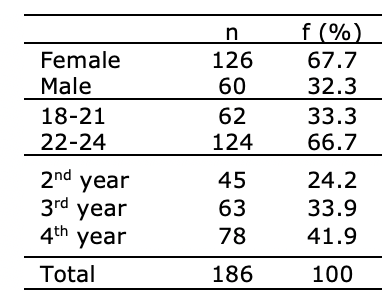
Table 1: Demographic distribution of the participants.
Data collection
Quantitative data were obtained by administering 60 items with a 5-point Likert-type scale (strongly disagree: 1, disagree: 2, undecided: 3, agree: 4, strongly agree: 5). To evaluate their responses, the following intervals were taken into consideration: Mean range scores between 1-1.8 (1%-21%) mean (very low); 1.9-2.6 (22%-33%) means (low); 2.7-3.4 (34%-55%) means (moderate); 3.5-4.2 (56%-78%) means (high) and 4.3-5.0 (79%-100%) means (very high) (Manyange et al., 2015; Özsoy & Özsoy, 20313). The questionnaire was adapted and modified from relevant literature to fit a Turkish remote learning context (Bhaumik & Priyadarshini, 2021; Djumingin et al., 2021; Muthuprasad et al., 2021).
The questionnaire consisted of two parts: A and B. Part A was designed to get participants’ demographic distribution and Part B had five subcomponents: Subcomponent 1: psychological states and attitudes; Subcomponent 2: teaching-learning process; Subcomponent 3: learner support and autonomy; Subcomponent 4: technological challenges, and Subcomponent 5: preferences of the participants. This questionnaire was selected due to the reliability and speed with which information can be obtained from a large number of participants in an efficient and timely manner. Different qualified instructors from four different departments (Foreign Language Teaching, Guidance and Psychological Counselling, and Computer Education and Instructional Technologies) were asked to check the questionnaire by expressing their views on the clarity and suitability of each item. Based on their suggestions, adjustments were made and items revised. In order to ensure its reliability and validity, the questionnaire was tested with 14 students who shared similar to the target group. An adequate level of internal consistency was shown by a Cronbach apha coefficient of 0.82. Before delivering the participants to the questionnaire, a request was made to both of the participants’ intent on the questionnaire. The questionnaire presented on Google forms. Participants were also informed that their answers would only be taken into account in the present research and they would be maintained confidential. One hundred eighty-six responses were received.
Data analysis
Results were evaluated by SPSS v24 statistical package program. Descriptive statistics and frequency analysis were used for the first research question; independent samples t-tests which explained the standard deviation, mean and pvalues and One-way-Anova test were performed for the second research question to test the relationships between variables of interest and draw conclusions accordingly.
Findings and Discussion
Research question 1: What were the ELT students' perceptions, attitudes, and preferences?
Table 2 (I1-I19) indicates the participants’ psychological states and attitudes toward remote learning.
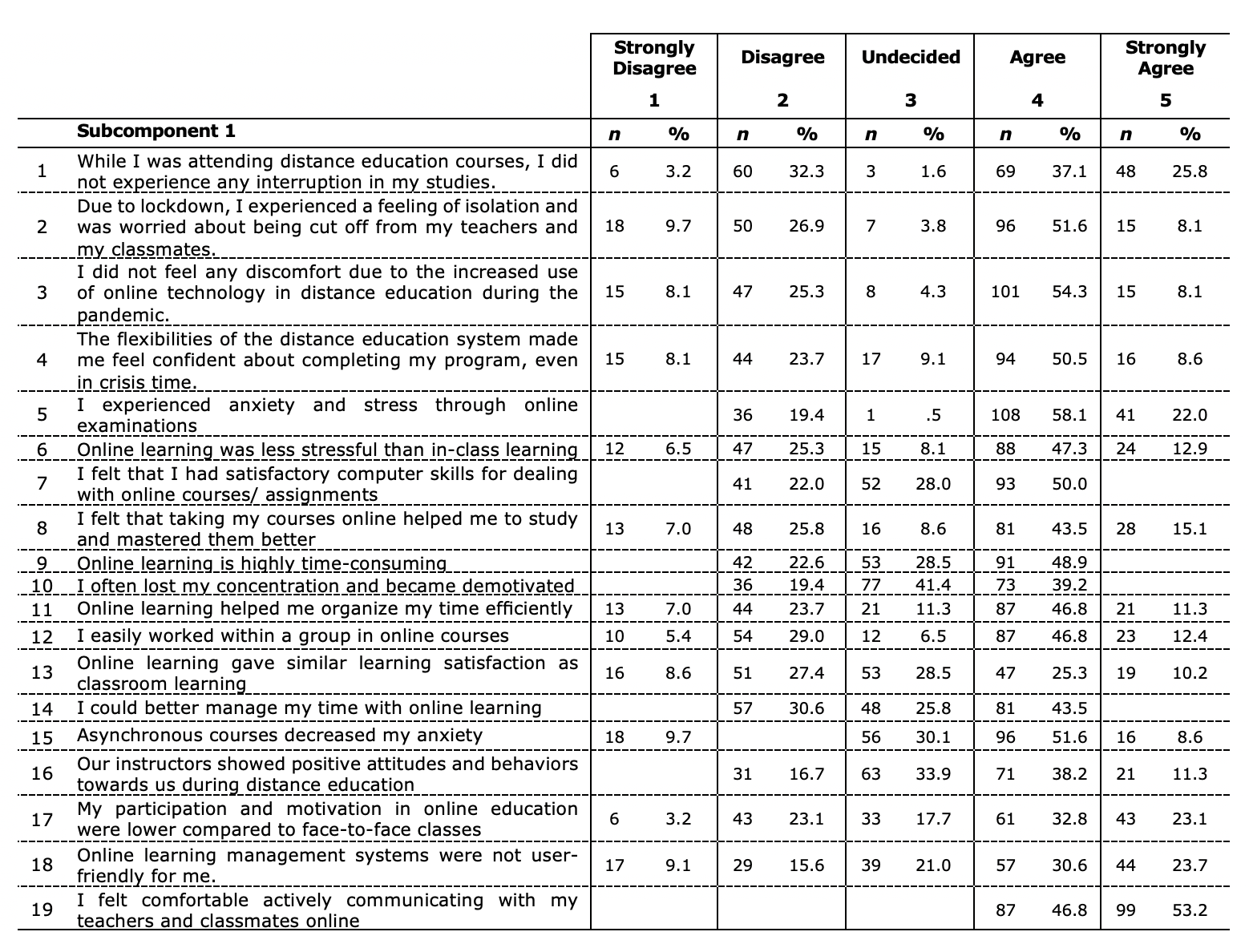
Table 2: Psychological states and attitudes of the participants
Most of the participants expressed generally positive attitudes towards online learning, although their psychological moods may have changed depending upon some factors or their perceptions about distance learning.
Not unlike reports of positive experiences by students in prior studies (Peimani & Kamalipour, 2021; Quezada et al., 2020), most of the respondents generally had positive ideas about their psychological moods and attitudes toward remote learning. For example, the use of technology did not make them feel any discomfort (I3, n=101, 54.3%); the flexibility of online courses relaxed them (n=94, 50.5%); they easily worked within a group in online courses (I12, n=87, 46.8%); they felt very comfortable interacting with their teachers and classmates online (I19, n=99, 53.2%), and asynchronous courses decreased their anxiety (I15, n=96, 51.6%). Like other studies that reported less favorable experiences (Arusha & Biswas, 2020; Radu et al., 2020), some students felt that remote learning was demotivating and frustrating, such as finding online learning time-consuming (I9, n=91, 48.9%) and experiencing stress and anxiety through online examinations (I5, n=108, 58.1%). Sometimes, students reported they were worried about being cut off from courses (I2, n=96, 51.6%), losing concentration, and becoming demotivated (I10, n=73, 39.2.
The second Subcomponent of the questionnaire was to clarify the ideas of the participants about the teaching-learning process throughout the Covid-19 period. Table 3 summarizes the results of items 20 through 33.
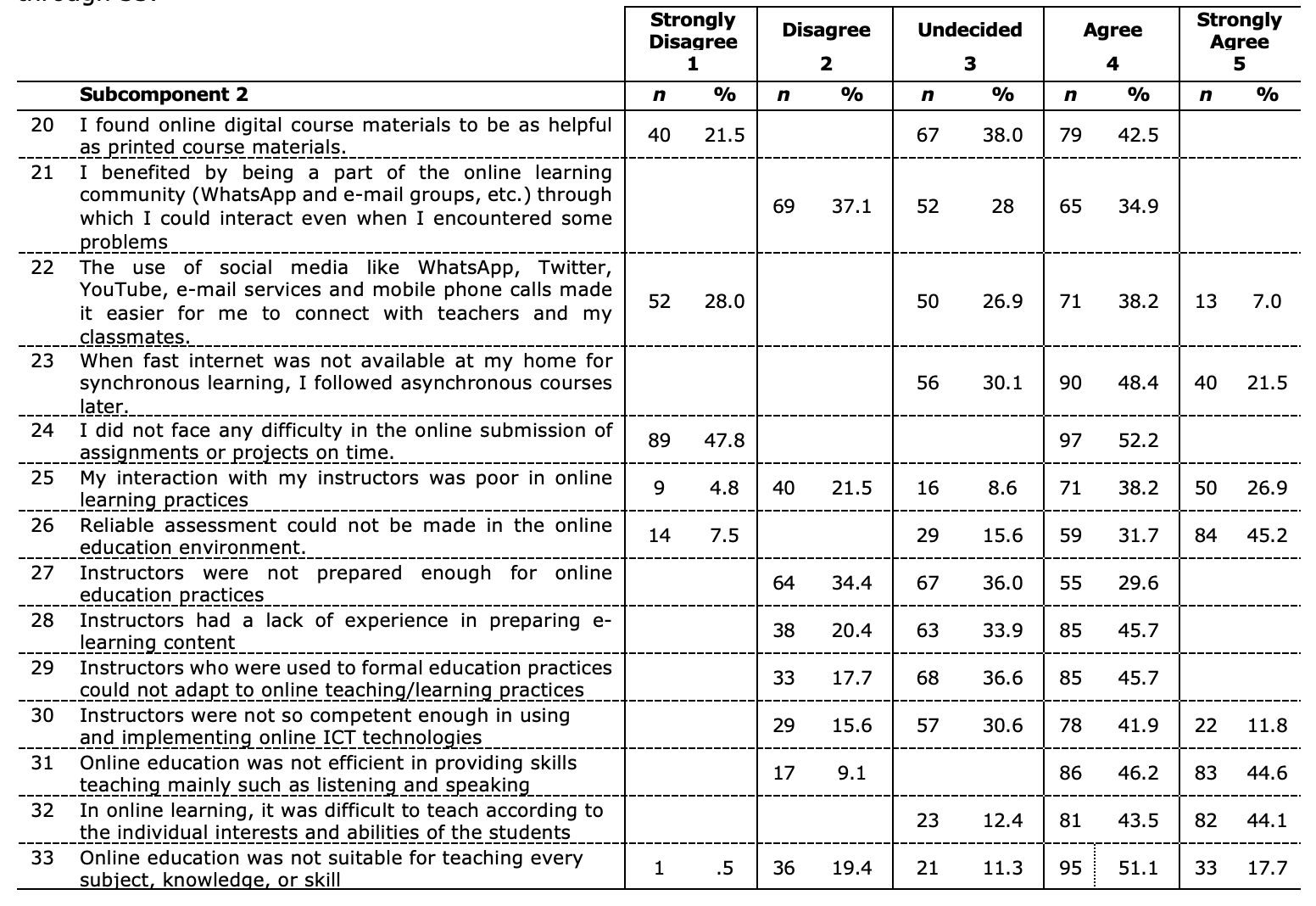
Table 3: Participants’ responses to the teaching-learning process during Covid-19
Three items (I28, I29, and I30) reflected participants’ negative attitudes about their instructors: Participants agreed (I28, n=85, 45.7%; I29, n=85, 45.7%; I30, n=78, 41.9%) that most of the instructors were not skillful at implementing and adapting online courses. These responses were parallel to the findings of Melvina et al. (2021) and Noor et al. (2020). Participants also reported the poor interaction with their teachers (I25, n=71, 38.2%) which was similarly reported by Arık et al. (2021) and Kruszewska et al. (2022). It should also be noted that 84 participants (45.2%) strongly agreed that online assessment was not reliable. This is supported by the research by Al-Karaki et al. (2021) and Nguyen et al. (2020). Additionally, a great majority of the participants ‘agreed’ and ‘strongly agreed’ (I31, n=86, 46.2%; I32, n=82, 44.1%; I33, n=95, 51.1%) that online education was not appropriate and adaptable for teaching every subject, such as listening and speaking skills. Similar findings for these results can also be observed in the relevant studies of Akhter (2020), Alzamil (2021), and Liu and Yuan (2021). Table 4 (I34-I41) reports the attitudes and opinions of the participants about learner support-autonomy from items 34 to 41.
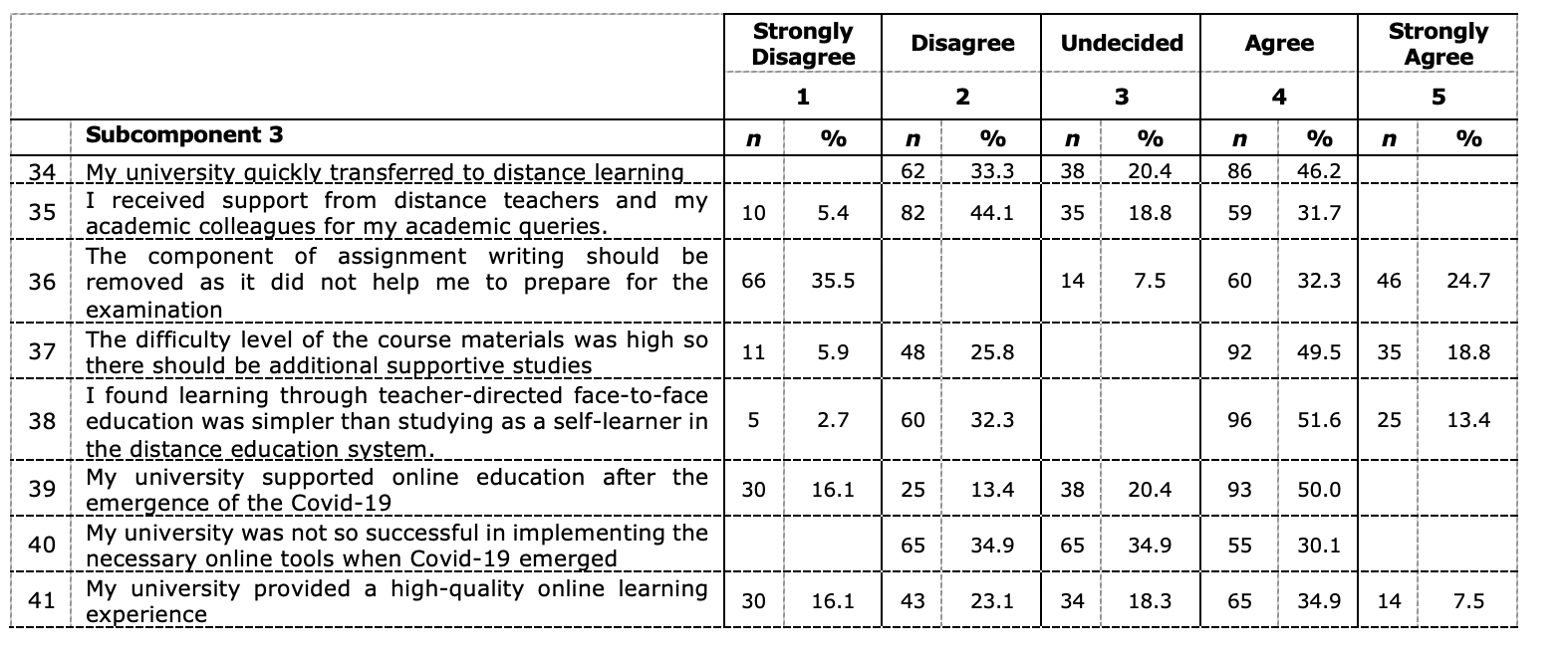
Table 4: Participants’ responses to learner support-autonomy
As can be observed from Table 4, participants generally agreed that their university’s response to the pandemic was appropriate and successful (I34, n=86, 46.2%; I39, n=93, 50%; I40, n=65, 34.9%; and I41, n=65, 34.9%). Those findings were similar to the findings of Bautista Jr. et al. (2021) and Subedi et al. (2020). Ninety two participants responded that the level of online materials was difficult and they needed additional support. (Gita Nurani, &Widiati, 2021; Lestiyanawati & Widyantoro, 2020).
Table 5 (I42-I48) shows that the majority of participants were not satisfied with the internet fees and connection (I43, n=84, 45.2%; I45, n=79, 42.5%; I47, n=92, 49.5%; I48, n=138, 74.2%). A group of students (I45, n=84, 45.2%; I43, n=79, 42.5%; I47, n=92, 49.5%) also complained about the internet connection fees, spending more money to provide necessary tools and disconnection problems. These findings are in agreement with studies conducted by Almahasees et al. (2021) and Dutta and Smita (2020). Additionally, they generally had sufficient computer skills and did not encounter too many difficulties (I46, n=100, 53.8%) and were able to overcome some of their problems. These responses were also reported by Elhadi et al. (2021); Jacques et al. (2021).
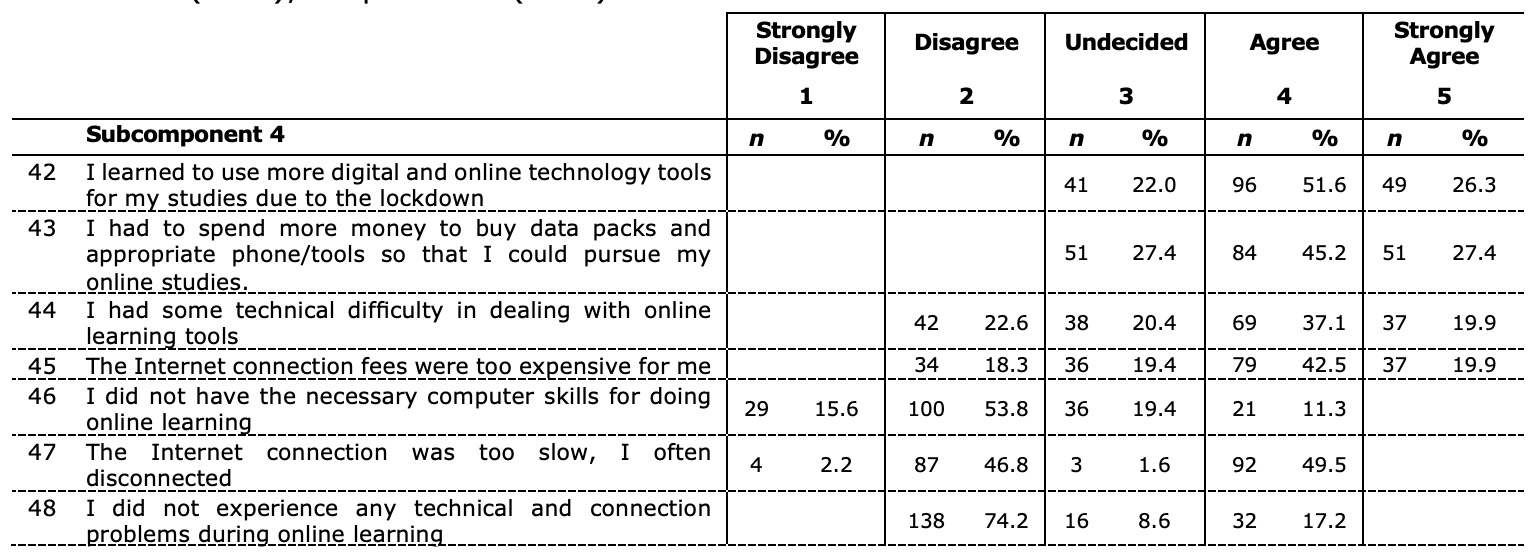
Table 5: Participants’ responses to technological challenges
Table 6 (I49-I60) summarizes the general preferences of the respondents about online learning. Here, it seems that students were undecided whether they were eager to continue online education and if it could become a new normal (I55, n=82, 44.1%; I56, n=80, 43%). However, the decision to continue to use online technology (I50, n=69, 37.1%) was preferred by some students (Suleri, 2020) as was providing more opportunities to the students, training instructors for online education, and preferring face-to-face classrooms (e.g., Aguilera-Hermida, 2020; Sukman & Mhunkongdee, 2021). Online exams (Sutiah et al., 2020) were the most rated items (I51, n=76, 40.9%; I53, n=77, 41.4%; I54, n=107, 57.5%; I59, n=106, 57%; and I60, n=103, 55.4%). A slow internet connection (n=92, 49.5%) and high Internet fees (n=79, 42.5%) were also among the students’ complaints (Ariyanti, 2020; Hossain, 2021)
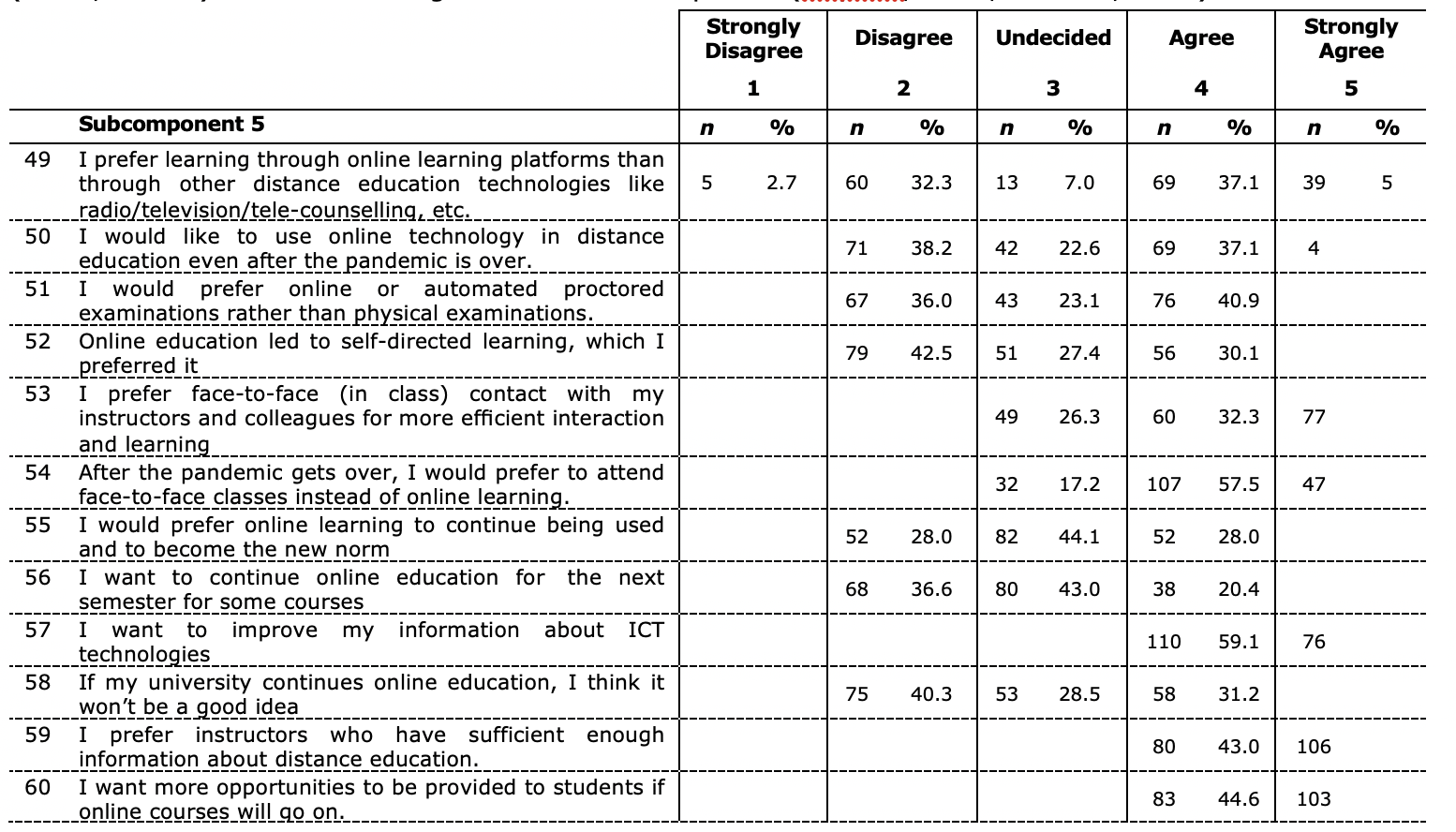
Table 6: General preferences of the participants
Findings for the Second Research Question: What was the effect of the demographic variables?
According to the average scores of each subcomponent, Tables 7 and 8 indicate the participants’ responses.
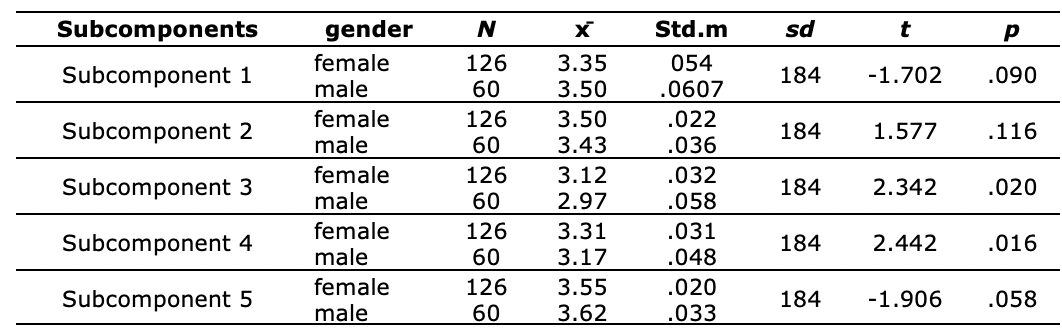
Table 7: Independent samples t-test for gender variable
This independent samples t-test was used to reveal whether there were any statistical differences between male and female participants according to the average scores of the subcomponent of the questionnaire. On average, it was found that Subcomponent 1: [t (184)=-1.702, p>.05]; Subcomponent 2: [t(184)=1.577, p>.05]; Subcomponent 3: [t(184)=2.342, p<.05]; Subcomponent 4: [t(184)=2.442, p<.05]; Subcomponent 5[t(184)=-1.906, p>.05]. While there was no statistically significant difference in the mean scores of Subcomponents 1, 2, and 5, the mean scores of Subcomponent 3 and 4 were statistically significant in favor of female participants. As a result of the independent sample t-test, a significant difference with a moderate effect value (eta squared=0.020) was found between the groups (Cohen, 1988).
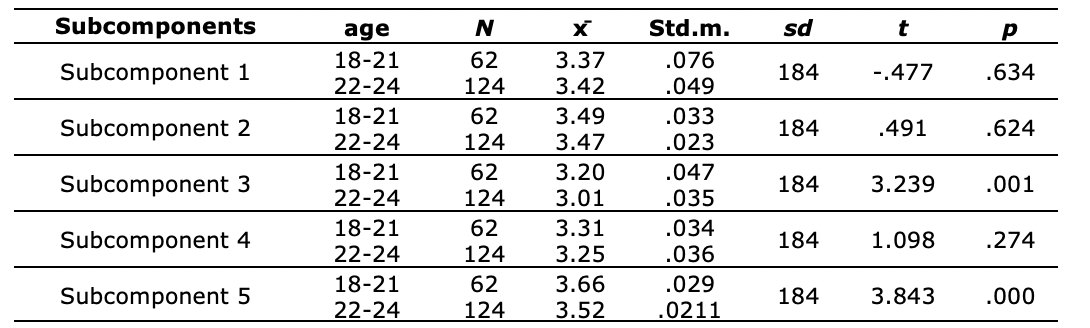
Table 8: Independent samples t-test for the age variable
Table 8 presents the results of the analyses obtained from the scores of the Subcomponents of the questionnaire. It shows that there is a statistically significant difference between Subcomponent 3 and Subcomponent 5. (Subcomponent -1[t (184) = -.477, p>.05]; Subcomponent -2 [t (184) = .491, p>.05]; Subcomponent -3 [t (184) = .001, p<.05]; Subcomponent -4 [t (184) = 1.098, p<.05]; Subcomponent -1[t (184) = 3.843, p<.05]). The other comparisons are not significant and eta effect values for this analysis are 0.006 which means that there is a medium effect (Cohen, 1988) with a significant difference.
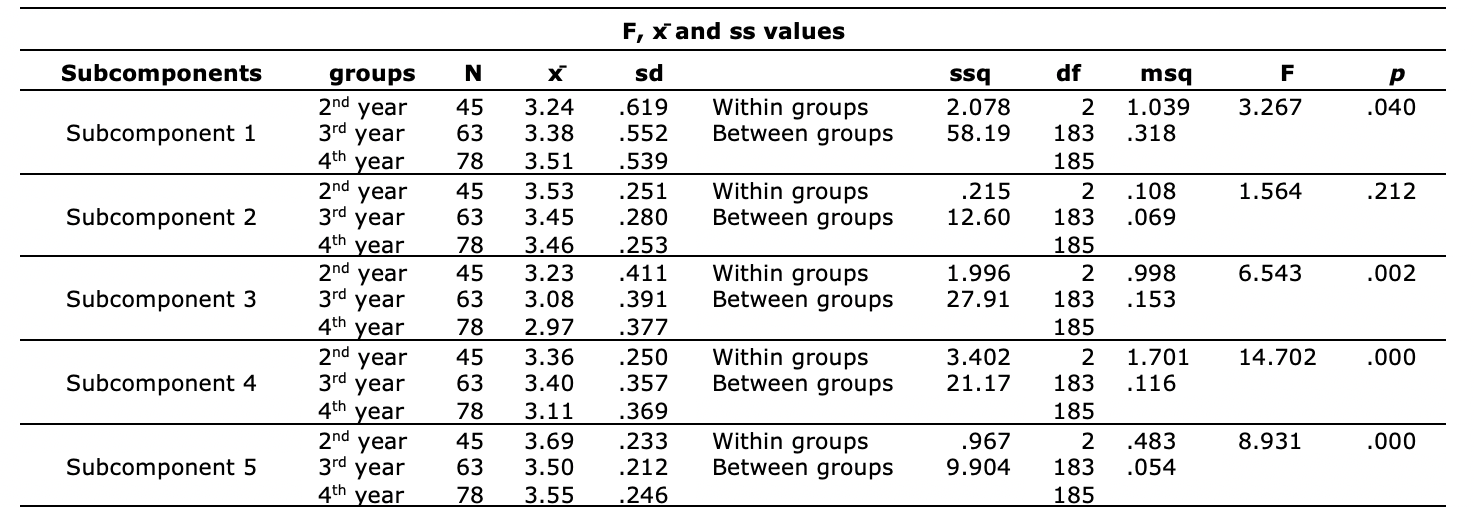
Table 9: One-way Anova results for years variable
After One-way analysis of variance performed by Anova to determine whether participants’ mean scores differed significantly based on the score variables, differences between group means were detected as statistically significant. (F=3.267, p=.040<.05; F=6.543, p=.002<.05; F=.1.701, p=.000<.05; F=8.931, p=.000<.05). Post-hoc analysis was also made to reinforce the source of the differences. For Subcomponent 1, the mean scores for 4th year students (3.51±.539) were found higher than those of 2nd and 3rd years (3.24±.619); for Subcomponent 3, the mean scores of 2nd years (3.23±.411) were higher than those of 3rd and 4th years (2.97±.377); for Subcomponent 4, the mean scores of 3rd years (3.40±.357) were higher those of 2nd and 4th years (3.11±.369); and for Subcomponent 5 the mean scores of 2nd year (3.69±.233) were higher than those of 3rd and 4th year (3.50±.212).
Discussion
Date gathered from the quantitative research method showed that participants generally revealed not only positive but also negative responses and attitudes toward online learning during the Covid-19 process (Simamore, 2020). Among the most pressing responses and attitudes about remote learning, for instance, were not feeling any discomfort using too much technology; agreeing with the flexibility for the courses provided by their university (Al-Nofaie, 2020; Hazaymeh, 2021) finding they had satisfactory computer skills for achieving online courses; reporting positive attitudes toward their teachers; finding online digital materials helpful; approving of the quick and high-qualified online learning environment from their university; and discovering an opportunity for self-directed learning. On the other, the negative responses and attitudes of the participants toward remote learning were: being worried about being cut off from online courses; experiencing anxiety and stress during online examinations (Ocak & Karakuş, 2021); losing concentration and becoming demotivated (Suarsi & Wibawa, 2021); noticing the teachers’ lack of experience and not being able to online learning (Sofianidis et al., 2021)
When the participants’ general preferences were examined, it was observed that they highly preferred face-to-face learning rather than remote learning. Yet, they also added that if they have to continue online learning in the future, they would want more opportunities such as unlimited Internet quota, easy access to online materials, enroll at any moment, self-paced learning opportunities, etc. to be provided and prefer teachers who have sufficient information about remote learning.
In this current study, the responses of the participants were compared over three different variables as well. The mean scores for the subcomponents of the questionnaire showed that there was a statistically significant difference in terms of the gender variable on behalf of female students for Subcomponents 3 and 4. Mean scores of Subcomponents 3 and 5 demonstrated a statistical difference for the participants from 18-21 years of age. Regarding the One-way Anova results, it was found that only Subcomponent 2 was not statistically different. For Subcomponent 1, the mean scores of the 4th years, for Subcomponent 3 and Subcomponent 5, those of 2nd years, and finally, for Subcomponent 4, those of 3rd years were found to be higher than the other years.
Conclusion and Suggestions
The main purpose of this current study was to clarify several aspects of remote learning from the perspectives of ELT students at a state university in Turkey. Those aspects were psychological states and attitudes, teaching-learning process, learner support-autonomy, technological challenges and preferences of the participants towards the abrupt transition to remote learning because of the Covid-19 pandemic.
This study, in the context of Turkey, has reflected several implications for remote learning. For example, it is hoped that the findings of this study will be helpful for the curriculum and materials designers, administrators, language policymakers, and instructors to review and redesign their teaching and learning programs. The Ministry of National Education and the Higher Council of Education in Turkey need to take into consideration that remote learning will be a new form in the future accompanied by face-to-face education. Those institutions should redesign the learners’ learning experiences and expectations. In this context, it will be necessary to train, educate, prepare, and increase their awareness of instructors about remote learning and try to lower internet connection fees, and provide a good infrastructure to not complicate remote education. In this research, it was also implied that except for learner-support autonomy and technological challenges, no significant difference was observed between female and male participants.
This study had also some limitations. For instance, only ELT department students at one state university in Turkey were taken into consideration. Further studies can use a more representative sample, including participants from other foreign language departments and private universities in different regions. Again in this study, only three variables (age, gender and year of study) were regarded to compare the responses of the participants. It can be recommended that increasing the number of variables (e.g., socioeconomic status, academic success, etc.) may help us get more detailed information about the situation.
References
Adıyaman, A. T., Güzel, A., Tümer, O., Keskin, S., & Ceylan, S. (2021). Covid-19 pandemisinin ruh sağlığı üzerine etkisi [The impact of the Covid-19 pandemic on mental health]. Current Journal of Medical Research, 1(2, sup 19). https://dergipark.org.tr/en/pub/cjmr/issue/76829/1286653
Adnan, M., & Anwar, K. (2020). Online learning amid the COVID-19 pandemic: Students’ perspectives. Journal of Pdeagogical Sociology and Psychology, 2(1), 45-51. https://doi.org/10.33902/JPSP.2020261309
Aguilera-Hermida, A. P. (2020). College Students’ use and acceptance of emergence online learning due to Covid-19. International Journal of Educational Research Open, 1. https://doi.org/10.1016/j.ijedro.2020.100011
Agung, A. S. N., Surtikanti, M. W., & Quinones, C. A. (2020). Students’ perception of online learning during COVID-19 pandemic: A case study on the English students of STKIP Pamane Talino. Shoshum: Jurnal Sosial dan Humaniora, 10(2), 225-235. https://dx.doi.org/10.31940/soshum.v10i2.1316
Akcil, U., & Baştaş, M. (2021). Examination of university students’ attitudes towards e-learning during the Covid-19 pandemic process and the relationship of digital citizenship. Contemporary Educational Technology, 13(1). 2-13. https://doi.org/10.30935/cedtech/9341
Akhter, T. (2020). Problems and challenges faced by EFL students of Saudi Arabia during Covid-19 pandemic. Rupkatha Journal on Interdisciplinary Studies in Humanities, 12(5). https://dx.doi.org/10.21659/rupkatha.v12n5.rioc1s23n5
Alhumaid, K., Habes, M., & Salloum, S.A. (2021) Examining the factors influencing the mobile learning usage during COVID-19 pandemic: An Integrated SEM-ANN method. IEEE Access, 9. https://doi.org/10.1109/access.2021.3097753
Almahasees, Z., Mohsen, K., & Amin, M. O. (2021). Faculty’s and students’ perceptions of online learning during Covid-19. Frontiers in Education, 6. https://doi.org/10.3389/feduc.2021.638470
Al-Nofaie, H. (2020). Saudi university students’ perceptions towards virtual education during Covid-19 pandemic: A case study of language learning via Blackboard. Arab World English Journal, 11(3). 4-20. https://doi.org/10.24093/awej/vol11no3.1
Alodwan, T. (2021). Online learning during the Covid-19 pandemic from the perspectives of English as foreign language students. Educational Research and Reviews, 16(7), 279-288. https://doi.org/10.5897/ERR2021.4169
Alqudah, I., Barakat, M., Muflih, S. M., & Alqudah, A. (2021). Undergraduates’ perceptions and attitudes towards online learning at Jordanian universities during Covid-19. Interactive Learning Environments, 31(9). 5781-5798. https://doi.org/10.1080/10494820.2021.2018617
Alzamil, A. (2021). Teaching English speaking online versus face-to-face: Saudi students’ experience during the Covid-19 pandemic. Arab World English Journal, 12(1). 19-27. https://dx.doi.org/10.24093/awej/vol12no1.2
Ardana Reswari, G. P., & Kalimanzila, J. (2021). Re-promoting autonomous learning for university students: A lesson from the pandemic Covid-19. Jurnal Ilmiah Profesi Pendidikan, 6(1), 38–47. https://doi.org/10.29303/jipp.v6i1.144
Arık, S., Karakaya, F., Çimen, O., & Yılmaz, M. (2021). Covid-19 Pandemi Sürecinde Uygulanan Uzaktan Eğitim Hakkında Ortaöğretim Öğrencilerinin Görüşlerinin Belirlenmesi [Determination of secondary education students’ view on distance education applied in the Covid-19 pandemic process]. Gazi Üniversitesi Eğitim Fakültesi Dergisi, 41(2), 631-659. https://doi.org/10.17152/gefad.926838
Ariyanti, A. (2020). EFL students’ challenges toward home learning policy during Covid-19 outbreak. Indonesian Journal of English Language Teaching and Applied Linguistics, 5(1), 167-175. http://doi.org/10.21093/ijeltal.v5i1.649
Arusha, A. R., & Biswas, R. K. (2020). Prevalence of stress, anxiety and depression due to examination in Bangladeshi youths: A pilot study. Children and Youth Services Review, 116. https://doi.org/10.1016/j.childyouth.2020.105254
Baber, H. (2020). Determinants of students’ perceived learning outcome and satisfaction in online learning during the pandemic of Covid-19. Journal of Education and e-learning Research, 7(3), 285-292. https://doi.org/10.20448/journal.509.2020.73.285.292
Bączek, M., Zagańczyk-Bączek, M., Szpringer, M., Jaroszyński, A., & Wożakowska-Kapłon, B. (2021). Students' perception of online learning during the COVID-19 pandemic: A survey study of Polish medical students. Medicine, 100(7). https://doi.org/10.1097/MD.0000000000024821
Badovinac, A., Par, M., Plančak, L. Balić, M. D. Vražić, D. Božić, D., & Musić, L. (2020). The impact of the Covid-19 pandemic on dental education: An online survey of students’ perceptions and attitudes. Dentistry Journal. 9(10).https://doi.org/10.3390/dj9100116
Bautista Jr., A. P. Bleza, D. G., Buhain, C. B., & Balibrea, D. M. (2021). School support received and the challenges encountered in distance learning education by Filipino teachers during the Covid19 pandemic. International Journal of Learning, Teaching and Educational Research, 20(6). https://doi.org/10.26803/ijlter/20.6.19
Benadla, D., & Hadji, M. (2021). EFL students’ affective attitudes towards distance e-learning based on Moodle platform during the Covid-19 the pandemic: Perspectives from Dr. Moulay Tahar University of Saida, Algeria. Arab World English Journal,Special Issue on Covid 19 Challenges, 1, 55-67. https://doi.org/10.24093/awej/covid.4
Bhaumik, R., & Priyadarshini, A. (2021). Pandemic experiences of distance education learners: Inherent resilience and implications. Asian Journal of Distance Education, 16(2), 18-37. https://asianjde.com/ojs/index.php/AsianJDE/article/view/571/351
Chandra, Y. (2021). Online education during Covid-19: Perception of academic stress and emotional intelligence coping strategies among college students. Asian Education and Development Studies, 10(2), 229-238.https://doi.org/10.1108/AEDS-05-2020-0097
Chang, C. L., & Fang, M. (2020). E-Learning and online instructions of higher education during the 2019 novel coronavirus diseases (COVID-19) epidemic. Journal of Physics: Conference Series, 1574, 1. https://doi.org/10.1088/1742-6596/1574/1/012166
Cohen, J. (1988). Statistical power analysis for the behavioral sciences (2nd ed.). Erlbaum.
Creswell, J. (2013). Research design: Qualitative, quantitative and mixed method approaches (4th ed.). Sage.
Dahmash, N. B. (2020). ‘I couldn’t join the session’: benefits and challenges of blended learning amid Covid-19 from EFL students. International Journal of English Linguistics. 10(5), 221-230. https://doi.org/10.5539/ijel.v10n5p221
Dangi, R. R. & George, M. (2020). Psychological perceptions of students during COVID-19 outbreak in India. High Technology Letters, 26(6), 142-148.
Dhar, B. K., Ayittey, F. K., & Sarkar, S. M. (2020). Impact of Covid-19 on psychology among the university students. Global Challenges, 4(11). https://doi.org/10.1002/gch2.202000038
Dhawan, S. (2020). Online learning: A panacea in the time of Covid-19 crisis. Journal of Educational Technology Systems, 49(1), 5-22. https://doi.org/10.1177/0047239520934018
Djumingin, S., Juanda, Maman. M., Haliq, A., & Weda, S. (2021). The effectiveness of online learning during the Covid-19 pandemic at higher education in Indonesia. Multicultural Education, 7(5). https://doi.org/10.5281/zenodo.4827351
Dutta, S., & Smita, M. K. (2020). The impact of Covid-19 pandemic on tertiary education in Bangladesh: Students’ perspectives. Open Journal of Social Sciences, 8(9). https://doi.org/10.4236/jss.2020.89004
Elhadi, M., Elhadi, A., Bouhuwaish, A., Bin Alshiteewi, F., Elmabrouk, A., Alsuyihili, A., Alhashimi, A., Khel, S., Elgherwi, A., Alsoufi, A., Albakoush, A., & Abdulmalik, A. (2021). Telemedicine awareness, knowledge, attitude, and skills of health care workers in a low-resource country during the Covid 19 pandemic: Cross-sectional study. Journal of Medical Internet Research, 23(2). https://doi.org/10.2196/20812
Ghobain, E. A., & Zughaibi, A. A. (2021). Examining Saudi EFL students’ readiness for online learning at the onset of Covid-19 pandemic. Arab World English Journal, 7, 3-21. https://doi.org/10.24093/awej/call7.1
Gita Nurani, S., & Widiati, U. (2021). Students’ perceptions about the online listening courses during the Covid-19 pandemic. A Journal of Culture, English Language Teaching, Literature and Linguistics, 8(1), 126-139.
Gómez, G. M., & Uzín P., G. J. A. (2022). Effects of COVID-19 on education and schools’ reopening in Latin America. In E. Papyrakis (Ed.), COVID 19 and international development (pp. 119-135). Springer. USA.
Gopal, R., Singh, V., & Aggarwal, A. (2021). Impact of online classes on the satisfaction and performance of students during the pandemic period of COVID-19. Education and Information Technologies, 26, 6923-6947. https://doi.org/10.1007/s10639-021-10523-1
Harefa, S., & Shihombing, G. L. A. (2022). Students’ perceptions of online learning amidst the Covid-9 pandemic: A study of junior, senior high school and college students in a remote area [version 2; peer review: 2 approved]. F1000Research, 10(867). https://doi.org/10.12688/f1000research.52152.2
Hazaymeh, W. A. (2021). EFL students’ perceptions of online distance learning for enhancing English language learning during the Covid-19 pandemic. International Journal of Instruction. 14(3), 501- 518. https://doi.org/10.29333/iji.2021.14329a
Hergüner, G., Yaman, Ç., Çaglakj Sari, S., Yaman, M. S., Dôbnezm A. (2021). The effect of online learning attitudes of university students on their online learning readiness. The Turkish Online Journal of Educational Technology, 20(1), 102-110. https://tojet.net/articles/v20i1/2019.pdf
Hesham, A. (2021). The impact of distance learning on the psychology and learning of university students during the Covid-19 pandemic. International Journal of Instruction, 14(4), 585-606. https://doi.org/10.29333/iji.2021.14434a
Hijazi, D., & Al Natour, A. (2021). Online learning challenges affecting students of English in an EFL context during the Covid-19 pandemic. International Journal of Education and Practice, 9(2), 379-395.https://doi.org/10.18488/journal.61.2021.92.379.395
Hossain, M. M. (2021). English language teaching through the virtual classroom during Covid-19 lockdown in Bangladesh: Challenges and propositions. Journal of English Education and Teaching. 5(1). 41- 60.https://doi.org/10.33369/jeet.5.1.41-60
Jacques, S., Ouahabi, A., & Lequeu, T. (2021). Synchronous e-learning in higher education during the Covid-19 pandemic. 2021 IEEE Global Engineering Education Conference (EDUCON), 21-23 April (pp. 102-1109). IEEE. https://doi.org/10.1109/EDUCON46332.2021.9453887
Karaca, Y., & Ilkım, M. (2021). Investigation of the attitudes distance education of the faculty of sport science students in the Covid-19 period. Turkish Online Journal of Distance Education, 22(4). 114-129. https://dergipark.org.tr/en/download/article-file/2002417
Khan, R. M. I., Ali, A., & Alourani, A. (2022). Investigating learners’ experience of autonomous learning in e-learning context.International Journal of Emerging Technologies in Learning, 17(8), 4-17. https://doi.org/10.3991/ijet.v17i08.29885
Kruszewska, A., Nazaruk, S., & Szewczyk, K. (2022). Polish teachers of early education in the face of distance learning during the Covid-19 pandemic: The difficulties experienced and suggestions for the future. International Journal of Primary, Elementary and Early Years Education, 50(3), 304-315. https://doi.org/10.1080/03004279.2020.1849346
Leavy, P. (2023). Research design: Quantitative, qualitative, mixed-methods, arts-based and community-based participatory research approches (2nd ed.). Guilford Press.
Lemay, D. J., Bazelais, P., & Doleck, T. (2021). Transition to online learning during the COVID 19 pandemic. Computers in Human Behaviour Reports. 4. https://doi.org/10.1016/j.chbr.2021.100130
Lestiyanawati, R., & Widyantoro, A. (2020). The strategies and problems faced by Indonesian teachers in conducting e-learning system during the Covid-19 outbreak. CLLiENT Journal, 2(1), 71-82. https://doi.org/10.32699/cllient.v2i1.1271
Liguori, E., & Winkler, C. (2020). From offline to online: Challenges and opportunities for entrepreneurship education following the Covid-19 pandemic. Entrepreneurship Education and Pedagogy, 3(4), 346-351. https://doi.org/10.1177/2515127420916738
Lindasari, S. W., Nuryani, R., & Siti Sukaesih, N. (2021). The impact of distance learning on students’ psychology during the Covid-19 pandemic. Journal of Nursing Care, 4(2), 130-137. https://doi.org/10.24198/jnc.v4i2.30815
Liu, M., & Yuan, R. (2021). Changes in and effects of foreign language classroom anxiety and listening anxiety on Chinese undergraduate students’ English proficiency in the COVID-19 context. Frontiers of Psychology: Educational Psychology, 12. https://doi.org/10.3389/fpsyg.2021.670824
Lockee, B. B. (2021). Online education in the post-COVID era. Nature Electronic, 4, 5-6. https://doi.org/10.1038/s41928-020-00534-0
Long, C. S., Sinclair, B. B., Fraser, B. J., Larson, T. R., & Harrell, P. E. (2021). Preservice teachers’ perceptions of learning environments before and after pandemic-related course disruption. Learning Environments Research, 25, 343-357. https://doi.org/10.1007/s10984-021-09376-9
Manyange, M. N., Abuga, I. M., & Nyambane, D. O. (2015). Investigating the financial knowledge management in selected Ngo’s in Yei County, Republic of South Sudan. International Journal of Information Research and Review, 2(7), 952-955. http://www.ijirr.com/investigating-financial-knowledge-management-selected-ngo’s-yei-county-republic-south-sudan
Maru, M. G., Pikirang, C. P., Setiawan, S., Oroh, E. Z. O., & Pelenkahu, N. (2021). The internet use for autonomous learning during COVID-19 pandemic and its hindrances. International Journal of Interactive Mobile Technologies, 15(18), 65-79. https://doi.org/10.3991/ijim.v15i18.24553
Mátyás, B. & Balázs, F. (2020). University students’ autonomous learning behaviors in three different modes of ICT-based instruction in the COVID-19 era: A case study of lockdown learning. Studies in Self-access Learning Journal, 13(1). 5-30. https://doi.org/10.37237/130102
Melvina, N. S. L., Yanti, W., & Yulmiati, D. A. (2021). EFL learners’ view on online learning implementation during Covid-19 outbreaks. In Meilinda, N. L. Pitaloka, Saparini, E. Nurdiansyah, M. R. Pahlevi, M. Ariska, & D. Kurniawan (Eds.). Proceedings of the 4th Sriwijaya University Learning and Education International Conference (SULE-IC 2020). Atlantis Press. https://doi.org/10.2991/assehr.k.201230.130
Middleton, N., Tsioutis, C., Kolokotroni, O., Heraclides, A., Nobelos, P. T., Mamais, I., Pantelidou, M., Christaki, I., Nikolopoulos, G., & Dietis, N. (2021). Knowledge, perceptions and attitudes of university students regarding COVID-19, Cyprus. European Journal of Public Health, 31(Sup 3). https://doi.org/10.1093/eurpub/ckab164.535
Muthuprasad, T., Aiswarya, S., Aditya, K. S., & Jha, G. K. (2021). Students’ perception and preference for online education in India during COVID-19 pandemic. Social Sciences and Humanities Open, 3(1). https://doi.org/10.1016/j.ssaho.2020.100101
Nguyen, J. G., Keuseman, K. J., & Humston, J. J. (2020). Minimize online cheating for online assessments during COVID-19 pandemic. Journal of Chemical Education, 97(9), 3429–3435. https://doi.org/10.1021/acs.jchemed.0c00790
Noor, S., Isa, F. M., & Mazhar, F. F. (2020). Online teaching practices during the
COVID-19 pandemic. Educational Process: International Journal, 9(3), 169-184. https://doi.org/10.22521/edupij.2020.93.4
Ocak, G., & Karakuş, G. (2021). Undergraduate students’ views of and difficulties in online exams during the Covid-19 pandemic. Themes in Learning, 14, 13-30. https://files.eric.ed.gov/fulltext/EJ1305321.pdf
Octaberlina, L. R., & Muslimin, A. I. (2020). EFL students’ perspective toward online learning barriers and alternatives using Moodle/Google classroom during COVID-19 pandemic. International Journal of Higher Education, 9(6). https://doi.org/10.5430/ijhe.v9n6p1
Özer, Z., Bahcecioglu, T. G., & Teke, N. (2022). The relationship between fear, obsessive behaviours and quality of life in chronic patients due to Covid-19 pandemic. Psychiatria Danubina, 34(10). 217-225. https://www.psychiatria-danubina.com/UserDocsImages/pdf/dnb_vol34_noSuppl%2010/dnb_vol34_noSuppl%2010_217.pdf
Özsoy, S., & Özsoy, G. (2013). Effect size reporting in educational research. Elementary Education Online, 12(2), 334-346.https://dergipark.org.tr/tr/download/article-file/90484
Peimani, N., & Kamalipour, H. (2021). Online education in the post-COVID-19 era: Students’ perceptions and learning experience. Education Sciences, 11(10). https://doi.org/10.3390/educsci11100633
Quezada, R. L., Talbot, C., & Quezada-Parker, K. B. (2020). From bricks and mortar to remote teaching: A teacher education program‘s response to COVID-19. Journal of Education for Teaching, 46(4), 472-483.https://doi.org/10.1080/02607476.2020.1801330
Radu, M.-C., Schnakovszky, C., Herghelegiu, E., Ciubotariu, V.-A., Cristea, I. (2020). The impact of the Covid-19 pandemic on the quality of educational process: A student survey. International Journal of Environmental Research Public Health, 17(21). https://doi.org/10.3390/ijerph17217770
Rahayu, R. P., & Wirza, Y. (2020). Teachers’ perceptions of online learning during pandemic Covid-19. Jurnal Penelitian Pendidikan, 20(3), 392-406.
Rajab, M. H., Gazal, A. M., & Alkattan, K. (2020). Challenges to online medical education during the COVID-19 pandemic.Cureus, 12(7). https://doi.org/10.7759/cureus.8966
Salas-Pilco, S. Z., Yang, Y., & Zhang, Z. (2022). Student engagement in online learning in Latin American higher education during the COVID-19 pandemic: A systematic review. British Journal of Educational Technology, 53(3), 593-619.https://doi.org/10.1111/bjet.13190
Sari, T., & Nayir, F. (2020). Challenges in distance education during the (Covid-19) pandemic period. Qualitative Research in Education, 9(3), 328-360. https://doi.org/10.17583/qre.2020.5872
Setiawan, A. R. (2020, 15 April). Scientific literacy worksheets for distance learning in the topic of Coronavirus 2019 (COVID-19), EdArXiv Preprints. https://edarxiv.org/swjmk
Simamore, R. M. (2020). The challenges of online learning during the COVID-19 pandemic: An essay analysis of performing arts education students. Studies in Learning and Teaching, 1(2). 87-103. https://doi.org/10.46627/silet.v1i2.38
Sims, S. K., & Baker, D. M. (2020). Faculty perceptions of teaching online during the COVID-19 university transition of courses to an online format. Journal of Teaching and Learning with Technology, 10(1), 337-353.https://doi.org/10.14434/jotlt.v9i2.31621
Sofianidis, A., Meleteiou-Mavrotheris, M., Konstantinou, P., Stylianidou, N., & Katzis, K. (2021). Let students talk about emergency remote teaching experience: Secondary students’ perceptions on their experience during the COVID-19 pandemic. Education Sciences, 11(6). https://doi.org/10.3390/educsci11060268
Suarsi, P. D. K., & Wibawa, I. M. C.. (2021). The impact of the COVID-19 pandemic on student learning motivation. Jurnal İlmiah Sekolah Dasar, 5(2). 194-201. https://doi.org/10.23887/jisd.v5i2.34418
Subedi, S., Nayaju, S., Subedi, S., Shah, S. K., & Shah, J. M. (2020). Impact of e-learning during COVID-19 pandemic among nursing students and teachers of Nepal. International Journal of Science and Healthcare Research, 5(3). https://ijshr.com/IJSHR_Vol.5_Issue.3_July2020/IJSHR0012.pdf
Sukman, K., & Mhunkongdee, T. (2021). Thai EFL learners’ voices on learning English online during the COVID-19 pandemic. International Journal of English Language Teaching, 9(2). https://www.eajournals.org/wp-content/uploads/Thai-EFL-learners-Voices-on-Learning-English-Online-during-the-COVID-19-Pandemic.pdf
Suleri, J. (2020). Learners’ experience and expectations during and post Covid-19 in higher education. Research in Hospitality Management, 10(2), 91-96. https://doi.org/10.1080/22243534.2020.1869463
Sutiah, S., Slamet, S., Shafqat, A., & Supriyono, S. (2020). Implementation of distance learning during the covid-19 in Faculty of Education and Teacher Training. Cypriot Journal of Educational Science., 15(5), 1204 - 1214. https://doi.org/10.18844/cjes.v15i5.5151
Tanjung, F. Z., & Utomo, A. (2021). Investigating EFL students’ perception on online learning amidst the Covid-19 pandemic. International Journal of Indonesian Education and Teaching, 5(1), 102- 115. https://doi.org/10.24071/ijiet.v5i1.3053
Tarkar, P. (2020). Impact of the Covid-19 pandemic on the education system. International Journal of Advanced Science and Technology, 29(9s), 3812-3814. http://sersc.org/journals/index.php/IJAST/article/view/16620/8320
Teräs, M., Suoranta, J., Teräs, H., & Curcher, M. (2020). Post-Covid-19 education and education technology ‘solutionism’: A seller’s market. Postdigital Science and Education, 2, 863–878. https://doi.org/10.1007/s42438-020-00164-x
Toquero, C. M. (2020). Challenges and opportunities for higher education amid the COVID-19 pandemic: The Philippine context. Pedagogical Research, 5(4). https://doi.org/10.29333/pr/7947
Tseng, C.-J., & Chen, T.-C. (2020). Impact of web-based teaching on the learning performance of education and training in the service industry during COVID-19. Contemporary Educational Technology, 12(2). https://doi.org/10.30935/cedtech/8581
Uzorka, A., & Makeri, Y. A. (2020). Attitudes of higher education students toward learning during COVID-19 pandemic. International Journal of Research and Innovation in Social Science, 4(8). 421-425. https://ideas.repec.org/a/bcp/journl/v4y2020i8p421-425.html#download
Xie, Z., & Yang, J. (2020). Autonomous learning of elementary students at home during the COVID-19 epidemic: A case study of the Second Elementary School in Daxie, Ningbo, Zhejiang Province, China. Best Evidence in Chinese Education, 4(2), 535-541. https://doi.org/10.15354/bece.20.rp009
Zhang, Y., & Ma, Z. F. (2020). Impact of the Covid-19 Pandemic on mental health and quality of life among local residents in Liaoning province, China. A cross-sectional study. International Journal of Environmental Research and Public Health, 17(7). https://dx.doi.10.3390/ijerph17072381