

Introduction
Writing in English remains a major concern for undergraduate students across the disciplines in Bangladesh. Students at the tertiary level are expected to have the capacity to write well academically. The students who come to pursue an undergraduate course at university have already studied English for a decade as a compulsory subject. After passing the Higher Secondary Certificate (HSC) examination, they should have acquired proficiency in English, enabling them to write a free and guided composition. Nevertheless, a gap is diagnosed between what undergraduate students are supposed to know and what they have acquired. There has been much criticism against their inability to write at the accepted standard. They cannot write coherently. When asked to write, they fall short of the accepted standard. Their writing appears “unsatisfactory and disproportionately low” (Afrin, 2016, p. 105) in tertiary-level education.
Despite the lengthy exposure of undergraduate students to the English language, they fail to show minimal academic competence in writing (Shamsuzzaman & Everatt, 2013). Due to incompetence in writing, they often feel disillusioned in the middle of the First Year when it is equally difficult for them to proceed or retreat (Dutta, 2001). Realizing the seriousness of the situation, a handful of them drop out, and a considerable number of those who take the test fail to procure a minimum pass. As a result, the number of students in the Second Year sharply declines, sometimes even to half that of the First Year. Bangladeshi undergraduate students consider writing in English as the most difficult skill (Karim et al., 2018).
Given their extended exposure to English, their writing still appears “vapid as such” (Shamsuzzaman, 2019) in tertiary-level education has prompted debate. Though there has been some work on this theme in recent years, it isn’t enough. In response to this problem, this study strives to find out the correspondence between students’ perceptions of writing and their actual practices of writing. This is significant because there is an obvious need to find out how students’ writing is affected by the way they perceive writing in order to further improve its development at tertiary-level education in Bangladesh.
Literature Review
Theoretical framework of the study
The current study used the cognitive process theory of writing (CPT) as a lens to view English as a foreign language (EFL) students’ perceptions and practices of writing. CPT postulates that writing consists of a series of cognitive operations, including planning, drafting, and revising (Flower & Hayes, 1981). The current study examined how EFL students use these cognitive operations to plan, draft, and revise their writing. In addition, it explored how their perceptions of the writing process affect their practices, providing insights into how EFL students think about and approach the task of writing.
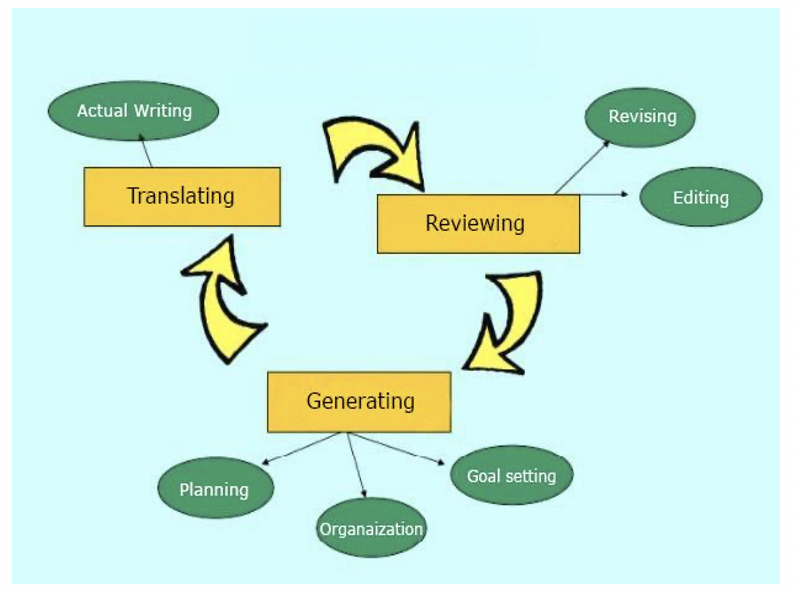
Figure 1: The writing process (Flower & Hayes, 1981)
Generating/prewriting is the stage before words emerge on paper. At this stage, expert writers plan to set a goal and organize it before they begin writing a draft of their text. Prewriting is the stage of discovery in the writing process (Rohman, 1965). Different writers can approach this stage differently. However, the most widely practiced prewriting strategies involve freewriting, listing, mapping, and outlining. Translating/drafting is the stage in which a product is produced, whereas reviewing/revising is a final reworking of that product. Revision is the key to effective writing. Here writers think more deeply about their readers’ needs and expectations. Their writing becomes reader-centered. Consequently, understanding the various stages of writing is essential for anyone who wishes to improve their writing skills. Each stage serves a distinct purpose and must be given due attention if one hopes to produce a well-crafted piece of writing. This echoes Cooper’s (1986) writing process model of the cyclical journey: prewriting, drafting, and revising your work until you are satisfied with how it comes out.
The writer’s knowledge of writing
Beaufort (2007) proposed a conceptual model that contains five specific knowledge domains that expert writers must focus on as they compose. Beaufort argued that five domains of knowledge must be taught concerning the discipline of writing, so students can write even when they leave their composition course which for many students is the only place writing ever takes place. The students believed that writing might seem like a very useless skill if they pursue a technical or skill-focused career (e.g., a computer programmer, electrical engineer, architect, or plumber). Beaufort posited that writing must be portrayed as a multidisciplinary activity. Beaufort’s five knowledge domains can help students competently write across the disciplines (Figure 2).
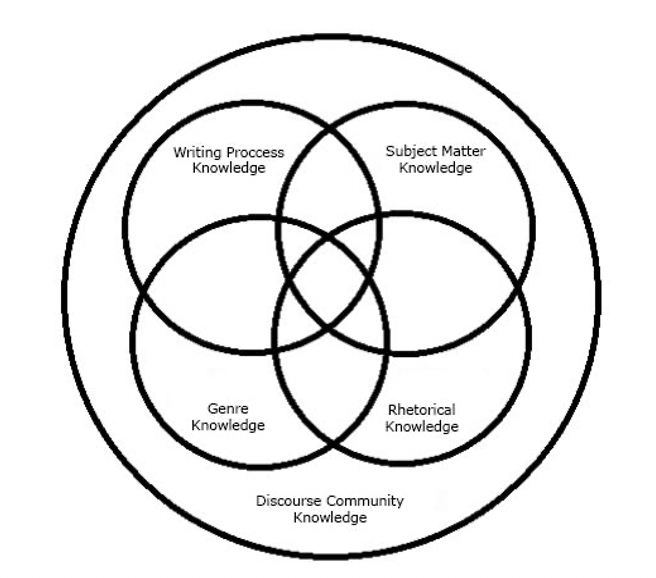
Figure 2: Five knowledge domains of an expert writer (Beaufort, 2007)
Figure 2 above shows the intersections between the various domains of a writer’s knowledge and how they must work together to elicit a writer’s optimal performance. Students must be aware of this function of writing, and instructors of writing must mention to their students that these five knowledge domains inseparable. Some of the domains of knowledge stipulated by Beaufort directly are included in the areas of writing covered by this study.
EFL learners’ difficulties in writing
The theories and practices of L2 writing mainly relate to English as a Second Language (ESL) contexts, even though a majority of the courses in Asia are engaged teaching writing for English as a foreign language (EFL) (Lee, 2017). Due to this over-reliance on ESL-oriented research g, teachers and students in Asia experience incompatibilities in teaching and learning L2 writing (Bhowmik, 2009). Scholars must look beyond ESL contexts when considering the future of EFL writing.
In the context of EFL, the learners often find writing challenging. As a result, many professionals look for ways to help learners improve their level of writing. In Saudi Arabia learners are exposed to the English language from the time of they start formal schooling. However, Saudi learners still consider writing in English challenging to learn and master. Alharbi (2019) at Majmaah University, Saudi Arabia, investigated the difficulties faced by 74 university students while writing a paragraph. He found that most students had difficulties writing, mainly related to mechanics. This study also found that university students struggle to create a well-developed paragraph or even to write a good sentence. Another study by Huwari and Al-Khasawneh (2013) explored the writing weaknesses among undergraduate students at Taibah University, Saudi Arabia. The study’s findings indicated that students’ weaknesses in writing were due to their lack of knowledge of vocabulary, grammar and lack of practice before entering the university. The students who participated in the study indicated that they had not had much opportunity to write outside of school. In addition, they said they felt unprepared for the writing demands of university.
Sawalmeh (2013), in his study, examined the errors made by 32 EFL learners in their 32 essays in the Preparatory Year Program at the University of Ha’il, Saudi Arabia. Most errors were related to spelling, punctuation, capitalization, verb tense, number, preposition, sentence fragment, article, and subject-verb agreement. They reported that students should not make errors in their writing, especially at the tertiary level. Grammatical, lexical, syntactic, and mechanical errors are undesirable and can be avoided with proper exposure to the English language.
Even though writing in English is an essential skill for EFL students in Indonesia, they still have difficulties mastering it. Most Indonesian university students still struggle to figure out their problems in the grammatical area (Ariyanti, 2016). In this connection, Haryanto (2007) found 84 grammatical errors in the 28 students’ compositions at State University Makassar, Indonesia. These errors were spread out in several grammatical errors of number, verb tense, article, subject-verb agreement, and the passive form of a verb. Generating ideas was another difficulty EFL learners encountered when writing in English. Salem (2007) studied the views of 50 undergraduate students on writing in English at the University of Al-Azhar, Egypt. Most students were overwhelmed when asked to write on a specific topic. Students were unaware of how to start the essay, generate ideas, or conclude it. In addition, students went off-topic in their writing and committed errors in punctuation and grammar.
In China writing in English is a significant skill for students who have English as a non-major in universities. It is an integral and essential part of English learning. Students’ writing is often unsatisfactory and problematic (Ai, 2015). Liu and Xu (2013) conducted a study to find syntactic errors in 90 English essays composed by 30 Chinese university students in Beijing. They found a total of 622. The study showed that these errors were the students’ most significant problems in writing. The errors committed were grouped into parts of speech, tense, voice, agreement, run-on sentences, word order, mixed structures, misuse of an article, incorrect comparisons, and errors in number.
Mostly in Asia, the skill of speaking is considered more important and interesting than writing (Nazara, 2011). A person who can speak well in English is considered good at English. Most of courses give more priority to mastering the skill of speaking than that of writing. This is not necessarily because the students find writing to be complicated or unenjoyable. Instead, it is often because they do not see the point in learning to write well. In their minds, writing is something they will only need to do for school assignments, and they do not see the value in improving their skills outside of that context. As a result, they fail to see how becoming a better writer can benefit them in their daily lives. With practice and perseverance, they may enjoy writing more than they thought. Otherwise, this negative attitude towards writing may cause them problems when they try to learn the skill (Ahmed, 2015).
To effectively communicate in English, it is essential to have a strong command of vocabulary. This is especially true when writing, as the ability to articulate complicated concepts clearly can be the difference between a successful paper and one that fails to make its point. As Laufer (2013) argued, lexical development must therefore be a central focus for any student who wishes to improve their English writing skills. By learning the relevant lexicon, students can expand their range of expression and better communicate their ideas on paper. In addition, a strong vocabulary can also help to impress readers and convey a sense of professionalism. Hence, it is clear that the importance of lexis in writing should not be underestimated.
Learning English can be difficult and time-consuming, but it can also be gratifying. For many people, the motivation to learn English comes from the desire to better communicate with friends or family or to travel to new and exciting places. However, for some students, the primary motivation for learning English is to further their professional ambitions (Nishanthi, 2018).
Factors that affect EFL learners’ writing
The ability to write efficiently is not a natural gift. Instead, it demands a lot of effort and practice. To put it more simply, learners must spend time studying and practicing writing extensively to develop writing skills. Learning to write in English when a student’s first language is different is often complicated by factors such as a lack of interest or of knowledge about the process of writing, little or no mentoring, limited reading experience, a lack of motivation, the influence of the mother tongue, a previous medium of instruction, or lack of confidence.
According to Bandura (1993), students’ perceived self-efficacy for success, or their belief in their potential to succeed, influences their academic accomplishment, motivation, and aspiration. In other words, confidence is can be a key when it comes to writing. If students believe in themselves and their ability to produce quality work, they are more likely to put forth the necessary effort and achieve success. On the other hand, a lack of confidence can lead writers to feeling overwhelmed and unsure of themselves, which can in turn lead to poorer writing quality and lower grades. It is therefore essential that students cultivate a healthy sense of self-efficacy in order to reach their full potential as writers.
Fareed et al. (2016) mentioned that at the tertiary level low motivation can have a significant impact on writing. Firstly, it can lead students to disengage from their work, making it difficult for them to produce quality writing. Secondly, low motivation can cause students to procrastinate, leading to them have to rush to complete their work and as a result, they make mistakes. Finally, low motivation can make it difficult for students to keep up with their peers, making them feel discouraged and eventually they give up altogether. While low motivation can be a challenge for any student, it is especially problematic at the tertiary level, where the expectations are higher, and the stakes are greater. As such, students must find ways to stay motivated throughout the writing process.
L2 writing in Bangladesh
Most people in Bangladesh use Bangla to communicate with friends, family members, and others around them. In everyday conversations, they hardly ever use English as a medium of communication. At universities in Bangladesh, it is commonplace that students also usually speak with their teachers in Bangla, even in English classes. Bangla is all-pervasive.
In Bangladesh, the education system comprises primary (Grades 1–5, ages 6–10), secondary (Grades 6–10, ages 11–15), higher secondary (Grades 11–12, ages 16–17), and tertiary (university, ages 18+) levels, similar to many other countries. Across Bangladesh’s education system, writing in English is a widely used skill in assessing students’ performance. Students take various examinations and their writing ability is graded. Though the other three skills of English are, to a certain extent, practiced in our context of learning and teaching, ability in writing in English is primarily evaluated for grades in the exam. Despite over a decade of practicing English writing, students in Bangladesh still experience writing problems in English at the university level. Uddin (2014) stated, “Writing is the most focused but the least developed English language skill among the learners in Bangladesh. At the tertiary level, the situation is not different”. Afrin (2016) found that university students in Bangladesh have an inadequate command of sentence construction skills in English. She also found that students lacked the confidence to express ideas in writing, do not use any prewriting technique, and have no concern about the organization of ideas. According to Mustaque (2014), Bangladeshi students’ writing at the tertiary level reveals repetition, inappropriate organization of ideas, use of vague words, and a lack of appropriate information.
In Bangladesh, the medium of instruction at primary, secondary and higher secondary levels is typically Bangla, and the National Curriculum and Textbook Board (NCTB) designs its curriculum. Interestingly, the predominant use of Bangla as the previous medium of instruction affects students’ writing skills in tertiary levels in Bangladesh. A study by Islam (2019) found that, students writing in Bangla can plan their writing more effectively than students writing in English at the secondary level, as they are not used to thinking and expressing themselves in English. However, both Bangla and English-medium learners struggle with the writing process.
Considering the above, the research questions in this study are:
- What are students’ perceptions of writing in English at the tertiary level in Bangladesh?
- How well can students write in English at the tertiary level in Bangladesh?
- How do students’ perceptions of writing correspond to the reality of their writing?
- Methodology
Participants
This study was based a sample of 70 participants who were first-year undergraduate students at a private university in Bangladesh. At the time of data collection, the participants were enrolled in the course ENG 101: English Fundamentals, which was compulsory for all students across the disciplines to earn a bachelor’s degree. The participants were from 18 to 22 years old. Their English proficiency level was predicted to be mixed since they had come from diverse academic backgrounds. They had received their primary and secondary education through three distinct mediums of instruction: Bangla, English, and Madrasha. Sixty three participants were from institutions using Bangla, seven from those using English, and none was from institutions using Madrasha.
Out of the 70 participants, 41 were males and 29 were females. In this study, great care was taken to obtain consent from all participants before collecting any data. Participants were explicitly asked for their consent (Appendix 4) at the beginning of each survey questionnaire. The participants’ responses were voluntary, and they had the right to withdraw from the study at any time. Furthermore, participants were informed that their responses would be confidential and anonymous. As such, this study was conducted ethically, and the participants’ rights were respected.
Instruments
The instruments used in collecting data were the questionnaire and the student writing sample. The two sets of questionnaires were used for the survey. One was a 12-item questionnaire to investigate the participants’ backgrounds and perceptions of writing and the other was a 9-item composition questionnaire, prepared following the research instruments of Shamsuzzaman (2015). Since it was a replication and extension of Shamsuzzaman’s (2015) study, we can trust the reliability and validity of the study without piloting. Additionally, a writing sample was used as a research instrument to assess how well participants could write. This was also adapted from Shamsuzzaman’s procedure since it effectively measures writing ability. The study employs the questionnaires and writing samples as research instruments because they are relatively easy to administer and can provide a wealth of information about many participants in a short period of time.
The background questionnaire
The background questionnaire (Appendix 1) was developed to collect information on the participants’ background and how it influences the learning of writing in English in the context of Bangladesh. It included questions about the participants’ age, previous language of instruction, length of study English, purpose of learning this language, skills they considered most difficult (reading, writing, listening, or speaking), opinions about the study of writing, and rating of themselves as a writers of English.
Composition questionnaire
The composition questionnaire (Appendix 2) was developed to gather data on how participants perceived writing in English. In the questionnaire, participants were asked to fill out writing-related information, such as their understanding of the writing process (brainstorming, drafting, revising), the aspects of writing they found most challenging (vocabulary, grammar, generating ideas), and their awareness of the mechanics of writing (spelling, punctuation, capitalization, vocabulary, grammar).
Writing sample
The study examined the writing samples (Appendix 3) of the participants. These samples were collected from these first-year students taking a mandatory writing course (ENG 101: English Fundamentals). The samples required a descriptive paragraph. This information was intended to represent the participants’ actual level of writing.
Data collection procedure
To collect data for this study, the Google Forms was utilized. A faculty member who taught four sections of ENG101, each comprising approximately 30 students, was responsible for distributing the links to both of the questionnaires to the students. The faculty member sent the links to the students through different platforms like Messenger, WhatsApp, and email. The students were given the flexibility to complete the questionnaires at their convenience, allowing them to devote ample time and attention to each question.
Along with the questionnaires, writing samples were also collected from the same cohort of first-year students taking the same course. These samples were on descriptive paragraph writing and were assigned by the faculty member responsible for the course. It was ensured that the prompts for the writing samples were relevant and appropriate for the students’ level of proficiency. As descriptive paragraph writing was a part of the syllabus, students did the tasks in the classroom, and they were given enough time to complete them.
The utilization of both questionnaires and writing samples helped to provide a comprehensive view of the students’ backgrounds, their perceptions towards writing, and their writing abilities, ensuring that the study’s results were accurate and reliable.
Data analysis
After the data from the surveys were collected through Google Forms, they imported into Google Sheets for analysis. The data are presented in pie charts to facilitate visual representation and identification of patterns and trends within the data.
Apart from the questionnaires, the writing samples provided additional information on the participants’ writing abilities, and these samples were analysed through content analysis. An experienced language teacher assessed the samples using a rubric developed by the Brac Institute of Languages (BIL) at Brac University (Appendix 5), scoring them on a scale of 0-10. The scores were then compiled and analysed using tables to provide a clear distribution and comparison of errors in the writing tasks students attempted.
Results
Results from the background questionnaire
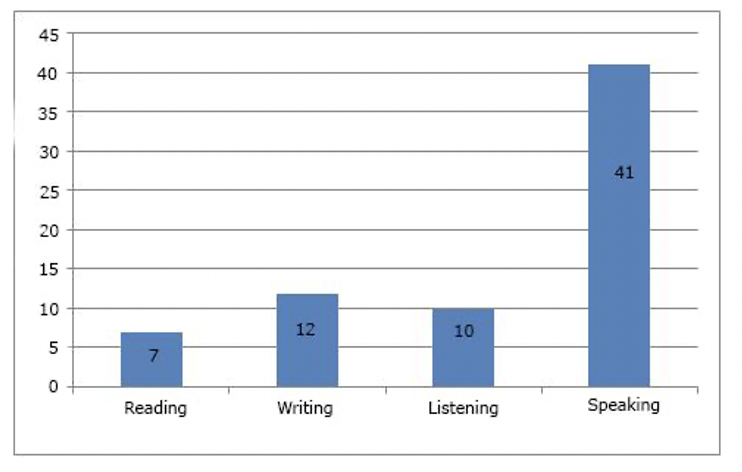
Figure 3: Skills that students find most important
Figure 3 provides information about the skills students find most important in English. Out of the total of 70 students, 41 considered speaking to be the most vital skill, indicating a significant emphasis on English-speaking abilities in our country in spite of it not being their native language. This could be due to the students not being confident of their ability to speak English, making them realize its importance. On the other hand, writing was only reported as the second most important skill by 12 students, despite its high value in academic institutions for students of any academic background. Despite a massive gap between the first two skills, it is noteworthy that both play a vital role in communicating with others. The data showed that ten students prioritized listening over reading, indicating that students found it much easier to understand English than to express themselves in it. In addition, students had the least difficulty in reading as they had been practicing it from a young age.
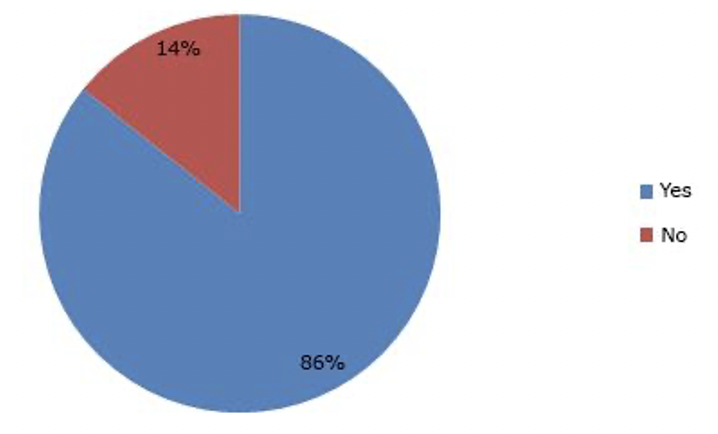
Figure 4: The difference between writing in L1 and L2
Figure 4 presents the participants’ awareness of the difference between writing in their first language (L1) and second language (L2). According to the data, 86% of the participants could distinguish between L1 and L2, whereas 14% were unaware of the difference.
Results from the composition questionnaire
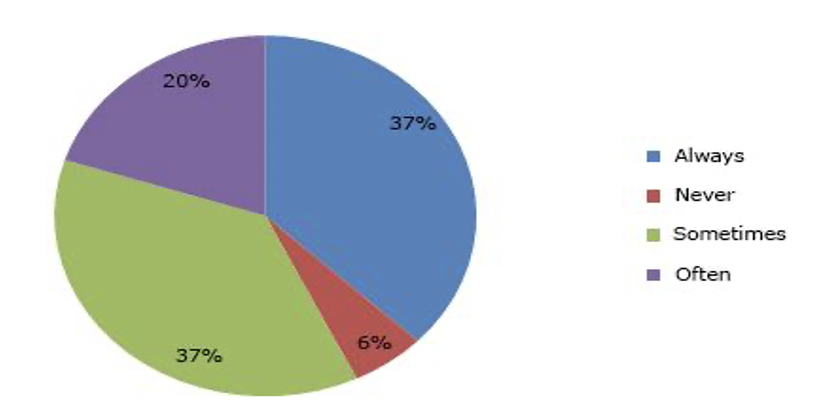
Figure 5: Awareness of the difference between revision and editing
Figure 5 demonstrates the participants’ awareness of the difference between revision (the content, structure, and organization) and editing (mechanical errors such as grammar, punctuation, spelling, and sentence structure). According to the pie chart, 37% of the participants were always aware of the difference between the two, while an equal percentage were only sometimes aware of it. Additionally, 20% were only often able to distinguish between revision and editing. However, some participants may have found the concept difficult to grasp, as seen by the majority’s response that they were only sometimes or often aware of it. Furthermore, 6% of the participants reported never being able to differentiate between revision and editing.
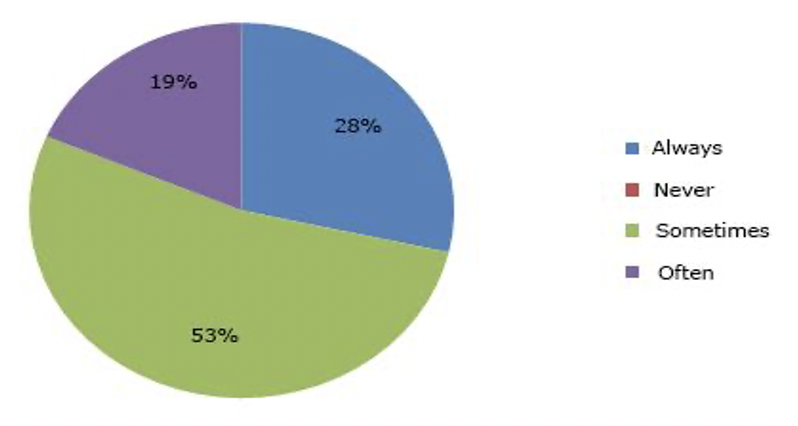
Figure 6: Revision and editing of the first draft
Figure 6 provides data on the frequency at which the participants revised and edited their first draft. It shows that 19% of the participants often revised and edited the first draft they created. In contrast, a larger number of participants (53%) only sometimes revised and edited their initial draft. The remaining 28% of participants always revised and edited it before moving on to subsequent stages of writing, recognizing the importance of this step in achieving more accurate and polished final work.
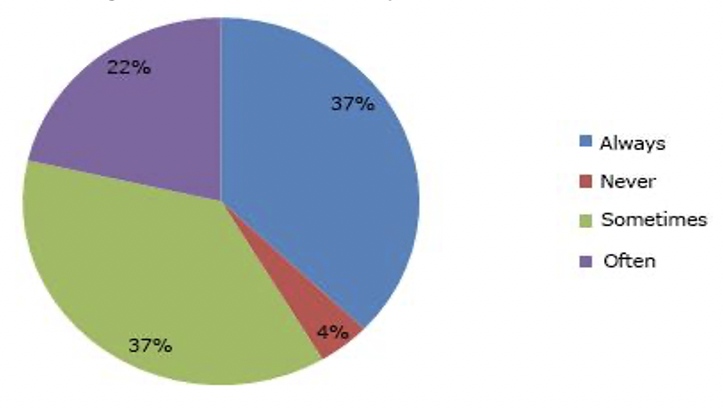
Figure 7: Awareness of the rhetorical features of writing
Figure 7 reveals the students’ awareness of the rhetorical features such as audience, context, logic, and purpose while writing. The data showed that 37% of students were always aware of the rhetorical features while writing, with an equal percentage of students sometimes being aware of them. Additionally, 22% of the participants were only often aware of them.
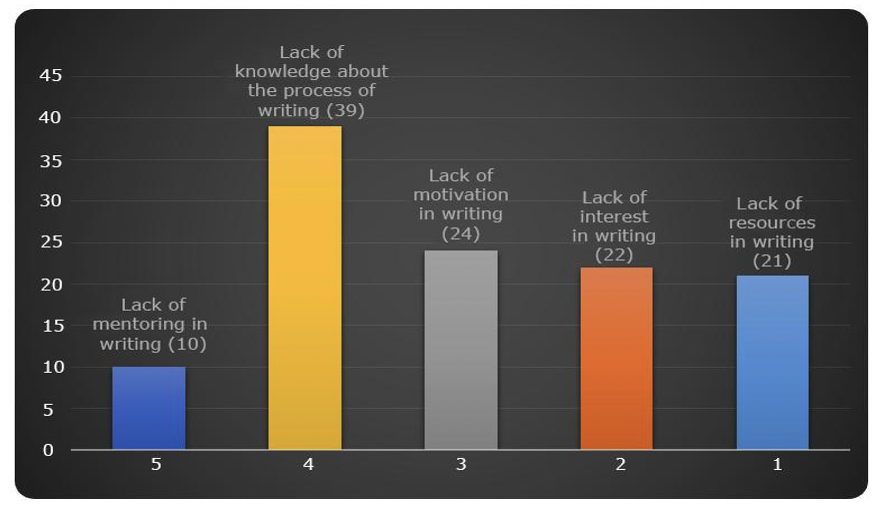
Figure 8: Difficulties that students attribute to while writing
Figure 8 provides data from a survey of students’ experiences when writing. According to the data, 39% of all students reported experiencing difficulties when writing due to a lack of information about the writing process. Only 10% of the students attributed their writing challenges to a lack of mentoring. Furthermore, 24% of the students reported that their challenges were due to a lack of motivation in writing, which could occur when students are assigned writing tasks on topics that do not engage them. In addition, 22% of the students cited a lack of interest in writing as a source of their confusion. Finally, 21% of the students blamed their challenges on a lack of available resources for writing.
Results from the writing performance analysis
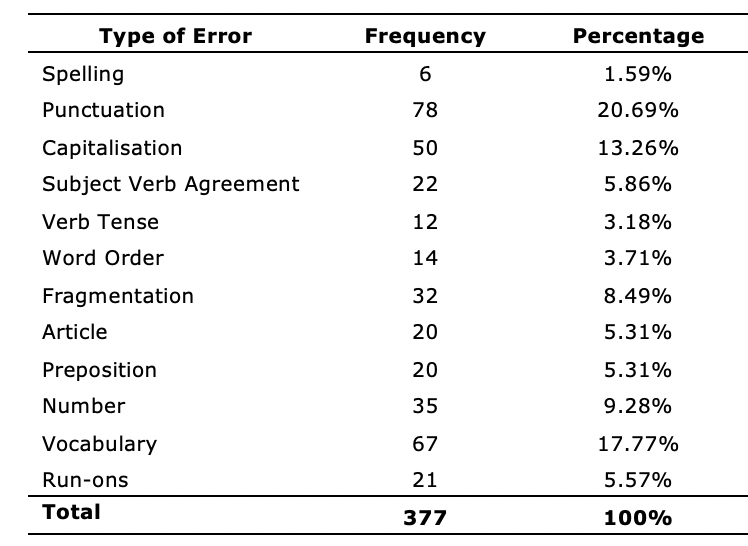
Table 1: Frequency of errors made by students in writing
Table 1 shows the frequency of the different types of errors made by the students in their writing. The majority of the students, 20.69%, made mistakes in punctuation due to ignorance and a lack of understanding of the text. The frequency of vocabulary errors among students was the second highest, 17.77%, while the frequency of capitalization errors was 13.26%. Interestingly, the data revealed that students seemed to have a good grasp of English spelling, as spelling errors were relatively infrequent at 1.59%. However, 9.28% students made mistakes in number, indicating that this is an area that students need to work on. Inaccuracies in prepositions and articles were a common issue for a similar percentage (5.31%) of the students, while subject-verb agreement and fragmentation were common mistakes for 5.86% and 8.49% of the students, respectively.
Discussion and Suggestions for Implementing Changes
What are students’ perceptions of writing in English?
A questionnaire on 70 tertiary students was conducted to grasp the students’ perceptions about writing entirely. The results indicated that 41 students believed speaking was the most significant skill, while 12 believed writing was the most important skill. In Bangladeshi culture, it is apparent that speaking is given greater weight or precedence over writing (Nazara, 2011). This may be because students believe that mastering speaking abilities can lead to mastering all skills.
The study also indicated that 29% of students believed writing was the most challenging skill in English (Alharbi, 2019). Upon further query, it was observed that only 32% of students made an outline of their writing before starting, and only 9% followed the drafting process. According to Cooper (1986), writing is best described as a cyclical process because it involves at least three stages, including prewriting, drafting, revising, and editing. Furthermore, good writers adhere to the writing process to produce coherent work. Therefore, it is recommended that students acquire an understanding of the writing process and be given additional support in understanding the difference between revising and editing, as it is a crucial aspect of effective writing. It is also suggested that students emphasize the significance of revising and editing the initial draft in order to write effectively and correctly.
When asked about the most challenging aspect of writing in the English language, 49% of students responded that vocabulary was the most challenging aspect. Laufer (2013) suggested that to articulate complicated concepts in English writing skills, it is necessary to learn the relevant lexis. Furthermore, our capacity to articulate concepts in a second language is hampered when we have a limited vocabulary. As a result, this study supports learning a sufficient vocabulary since the findings reflect Laufer’s point of view.
When asked whether they utilize the knowledge of writing formally, including understanding the rhetorical aspects of writing such as audience, context, logic, and purpose, most students did not always apply it effectively. This finding supports Silva’s (1992) conclusion that effective communication through writing heavily relies on the proper utilization of these rhetorical aspects. Therefore, students need to understand that effective communication through writing requires more than just the ability to string words together in a grammatically correct way. It also involves an understanding and utilization of the rhetorical aspects of writing, such as audience, context, logic, and purpose.
When asked about students’ experiences with writing, the data revealed that 39% of the students reported difficulties in writing due to a lack of information about the writing process, which could be attributed to their inattentiveness in class. This highlights an area where schools and educators could focus on improving writing instruction. Interestingly enough, only 10% of the students attributed their writing challenges to a lack of mentoring, indicating that the students did not necessarily view their teachers as the sole source of mentoring when it comes to writing. The data also showed that 24% of the students reported a lack of motivation in writing, which could be due to being assigned writing tasks on topics that do not engage them. This resonates with the research finding of Fareed et al. (2016) that low motivation can have a significant impact on writing at the tertiary level. This underscores the need for educators to consider ways to make writing tasks more engaging for students. Furthermore, 22% of the students cited a lack of interest in writing as a source of their confusion, suggesting a potential disconnect between students’ attitudes toward writing and their perceived expectations and requirements. Lastly, 21% of the students blamed their challenges on a lack of available resources for writing, indicating a potential need for greater access to writing support. All these results suggest that educators need to be aware of these various factors that can impact students’ writing experiences and consider ways to provide support and improve writing instruction.
Lastly, when asked how they would rate themselves as English writers, 63% students rated themselves as ‘fair,’ indicating a neither a good nor poor level of proficiency. Belief in one’s ability to succeed is an important factor in academic success, motivation, and aspiration. This is according to Bandura (1993), who states that students’ perceived self-efficacy for success impacts their academic accomplishment. So, the tertiary level students do not have confidence in their writing. The lack of awareness between writing in L1 and L2 could be one of the reasons for the students’ struggles with writing in English at the tertiary level in Bangladesh. This lack of awareness could be due to students’ disinterest in learning about the differences between languages, their different attitudes toward the languages they speak, and their lack of knowledge about the norms of writing in English.
The results showed that students generally prioritized speaking over writing, with only a small percentage of students considering writing to be the most important skill. Most students struggle with writing, particularly in terms of vocabulary and understanding the writing process. There is also a lack of awareness and utilization of rhetorical aspects such as audience, context, logic, and purpose. Students reported various challenges with writing, including low motivation and a lack of interest in writing. Moreover, many students do not consider themselves competent writers, indicating a lack of self-confidence in their writing abilities. As a result, Bangladeshi tertiary students cannot produce high-quality writing that can be portrayed through their academic writing performance. These results highlight the need for educators to provide additional support in writing instruction, such as a greater focus on the writing process, rhetorical aspects, and motivation.
How well are students able to write in English?
From the analysis of students’ writing, it is evident that students make many errors in their writing. Most of these errors are grammatical, lexical, syntactic, and mechanical. Even after an exposure of 12 years to English, the errors students make at the tertiary level are entirely undesirable (Sawalmeh, 2013). Basic elements of writing, such as articles, numbers, and prepositions continue to pose a challenge for some students. From the types of errors students make, it is apparent that they are not adequately prepared for the tertiary level of education in English, and that they should focus on these areas to improve their writing. While spelling seems to be one of their strengths, students should still be mindful of grammatical and syntactical errors that they may be making.
At the tertiary level, students often struggle to write in English. They face several challenges and make numerous errors, resulting in below-average writing. Most students are unfamiliar with writing conventions and lack a firm grasp of the language, possibly due to a lack of practice, which is necessary for having expertise in writing as noted by Huwari and Al-Khasawneh (2013).
From the analysis of students’ writing, many students in this study found themselves struggling with writing tasks. This could be caused by more than a lack of experience, but it could be augmented by a lack of motivation. Fareed et al. (2016) said that a lack of motivation often contributes to this struggle when it comes to writing. It can occur if students are assigned writing tasks that do not interest them. To address this issue and promote a love of writing, it is essential to select tasks that resonate with them. When students are allowed to write about something they are passionate about, they are more likely to be motivated and produce their best work. Furthermore, when students feel a personal connection to their writing, they are more likely to persevere through the challenges that inevitably arise. A lack of motivation can be a significant hurdle, but it can be overcome by selecting tasks that inspire and interest students.
It is also evident that many students reach the tertiary level of education without a clear understanding of the writing process. This lack of knowledge often results in poor writing, leading to lower grades. To address this issue, it is recommended that students be taught about the writing process from an early age. By familiarizing themselves with the steps involved in composing a piece of writing, students will be better prepared to produce high-quality work when they reach university. This, in turn, will result in improved grades and a greater appreciation for writing.
How do students’ perceptions of writing correspond to their actual practices of writing?
The study includes a correspondence between students’ perceptions of writing and their actual practices of writing. It is noticeable that most students do not consider writing as interesting or important. Some of the reasons for which this mentality prevails could be:
- Previous medium of instruction: The study reveals that most students, about 93% of students come from a Bangla medium background, while only 7% are from an English background in this study. Most students cannot write constructively or productively because of the poor teaching methods in the Bangla medium, which is supported by the research of Islam (2019). The NCTB curriculum does not concentrate much on improving students’ writing skills, particularly in English, and the syllabus is poorly structured. Consequently, most students cannot acquire the essential writing skills needed from their academic studies.
- Non-alignment of interests: The study reveals that students do not find writing as interesting compared to other aspects of the English language. This lack of interest makes it difficult to develop better writing skills. Although the students are aware of writing strategies like brainstorming, drafting, and outlining, they still fail to produce quality work. Ahmed’s (2015) research shows that a lack of interest in writing makes it difficult to produce high-quality written work. It is essential to understand that fostering an interest in writing plays a crucial role in improving students’ writing skills.
- Learning English mostly out of professional needs: The study suggests that many students are primarily motivated to learn English due to its perceived importance for their professional development. This is consistent with the research of Nishanthi (2018), which emphasizes the practical value of English in the workplace. While it is understandable that students prioritize the acquisition of language skills that are relevant to their career goals, this approach does have some negative consequences. Namely, it can restrict students from pursuing other areas of interest that may not align with their professional development. As a result, their writing practices can become overly focused on conforming to a standardized structure, which can stifle creativity, innovation, and fluidity. However, it should be noted that there are exceptions to this general trend, and it is possible to balance the practical demands of language learning with a more expansive approach that encourages exploration and experimentation in writing.
It is apparent that students’ perceptions of writing significantly affect their actual writing practices. It is evident that many students lack interest in writing and do not consider it a priority, resulting in the production of shoddy academic work. Thus, there is a reciprocal connection between perceptions and practices of writing: the way students think about writing shapes the way students perform. This indicates that addressing the root causes of students’ negative perceptions towards writing can lead to improved writing practices and ultimately, better academic work.
Conclusion
This study demonstrates the need for a shift in how undergraduate students across disciplines perceive and practice writing in English. The current system often sets students up for failure by teaching them to view writing as a mysterious process that only experts can understand (Shamsuzzaman & Everatt, 2013). However, if we change our perceptions of writing, we can help students to understand that writing is a skill that can be learned and practiced. By changing students’ perceptions, we can change their practices and improve how they write. The study suggests valuable insights into the importance of perception in shaping writing practice. The information gleaned from this study can be used to improve how undergraduate students across disciplines perceive and practice writing in English.
The study suggests that students do not comprehend writing conventions, which results in the inferior quality of academic writing. Based on the analysis of students’ writing, the common errors they make are spelling, punctuation, capitalization, verb tense, number, preposition, sentence fragment, article, subject-verb agreement, word order, vocabulary, and run-on sentences. The study also finds that most of the errors students make are due to their perceptions and practices of writing that go against the grain of L2 writing literature.
To improve the current students’ writing, improvements should be made from the root level. While English medium schools already have effective methods of teaching English, the NCTB curriculum lacks such a utility. Integrating the primary process of writing, consisting of prewriting (brainstorming, outlining, listing, mapping), drafting, and revising, into the school and college curriculum can help students develop a keen sense of writing from a very young age. Instead of pressuring to write a fixed-format paragraphs/compositions for exams, students should be encouraged to express themselves freely while writing. In this way, they can implement the writing process properly and can continue developing this particular skill set. Ultimately, the goal is for students to become better writers, and giving them the freedom to express themselves is the best way to achieve this goal.
Moreover, the academic writing process can be daunting for students who are not taught about it at an early education level. This is because they are not familiar with the rules and conventions of academic writing. As a result, they may suffer in their studies or feel pressure to conform to the expectations of their tertiary institution. Therefore, students must be taught about the academic writing process at an early stage in their education as Bazerman (2013) argues that those who succeed in most arts, including writing, start early in their life. This will enable them to understand academic writing requirements and avoid difficulties later in their studies. Introducing students to the writing process early on could positively impact their academic performance and future success.
References
Afrin, S. (2016). Writing problems of non-English major undergraduate students in Bangladesh: An observation. Open Journal of Social Sciences, 4(3), 104-115. https://doi.org/10.4236/jss.2016.43016
Ahmed, S. (2015). Attitudes towards English language learning among EFL learners at UMSKAL. Journal of Education and Practice, 6(18), 6-16. https://files.eric.ed.gov/fulltext/EJ1079681.pdf
Ai, B. (2015). A study of the EFL writing of Chinese learners: A critical narrative. Changing English, 22(3), 294-306. https://doi.org/10.1080/1358684X.2015.1056091
Alharbi, M. A. (2019). Saudi Arabia EFL university students’ voice on challenges and solution in learning academic writing. Indonesian Journal of Applied Linguistics, 8(3), 576-587. https://doi.org/10.17509/ijal.v8i3.15276
Ariyanti, A. (2016). The teaching of EFL writing in Indonesia. Dinamika Ilmu, 16(2), 263-277.https://doi.org/10.21093/di.v16i2.274
Bandura, A. (1993). Perceived self-efficacy in cognitive development and functioning. Educational Psychologist, 28(2). https://doi.org/10.1207/s15326985ep2802_3
Bazerman, C. (2013). Understanding the lifelong journey of writing development. Journal for the Study of Education and Development: Infancia y Aprendizaje, 36(4), 421-441. https://doi.org/10.1174/021037013808200320
Beaufort, A. (2007). College writing and beyond: A new framework for university writing instruction. Utah State University Press.
Bhowmik, S. K. (2009). L2 writing pedagogy in EFL contexts: An exploration of salient practices in teaching and learning. Journal of Asia TEFL, 6(3).
Cooper, M. M. (1986). The ecology of writing. College English, 48(4), 364-375. https://doi.org/10.58680/ce198611607
Dutta, S. K. (2001). English Language and literature in Bangladesh: Towards a methodology. In F. Alam, N. Zaman, & T. Ahmed (Eds.), Revisioning English in Bangladesh, 123-140. The University Press.
Fareed, M., Ashraf, A., & Bilal, M. (2016). ESL learners’ writing skills: Problems, factors and suggestions. Journal of Education and Social Sciences, 4(2), 81-92. https://journals.iqra.edu.pk/JESS/Issue2-16/Article4/JESS1604201.pdf
Flower, L., & Hayes, J. R. (1981). A cognitive process theory of writing. College Composition and Communication, 32(4), 365-387. https://doi.org/10.2307/356600
Haryanto, T (2007). Grammatical errors in Indonesian EFL learners’ writing. The 5th Annual Linguistic Conference (KOLITA 5)(pp. 1-6). Jatma Jaya Catholic University.
Huwari, I., & Al-Khasawneh, F. (2013). The reasons behind the weaknesses of writing in English among pre-year students’ at Taibah University. English for Specific Purposes World, 14(38).
Islam, R. (2019). Teaching EFL writing: A comparative study of Bengali and English medium secondary schools in Bangladesh. Crossings: A Journal of English Studies, 10, 143-156. https://deh.ulab.edu.bd/sites/default/files/Islam-R.pdf
Karim, S. M. S., Maasum, T. N. R. T. M., & Latif, H. (2017). Writing challenges of Bangladeshi tertiary level EFL learners. e-BANGI Journal, 12(2), 296. https://ejournal.ukm.my/ebangi/article/view/20435/6448.pdf
Laufer, B. (2013). Vocabulary and writing. The encyclopedia of applied linguistics. https://doi.org/10.1002/9781405198431.wbeal1432
Lee, I. (2017). The teaching and learning of L2 writing in Asia. Writing and Pedagogy, 8(3), 401–408. https://doi.org/10.1558/wap.32668
Liu, M., & Xu, Y. (2013). An investigation of syntactic errors in Chinese undergraduate EFL learners’ compositions: A cohort study. International Journal of Applied Linguistics and English Literature, 2(4), 182–191. https://doi.org/10.7575/aiac.ijalel.v.2n.4p.182
Mustaque, S. (2014). Writing problems among the tertiary level students in Bangladesh: A study in Chittagong region. Language in India, 14(1). http://www.languageinindia.com/jan2014/shakiladissertationfinal1.pdf
Nazara, S. (2011). Students’ perception on EFL speaking skill development. Journal of English Teaching, 1(1), 28-43. https://doi.org/10.33541/jet.v1i1.50
Nishanthi, R. (2018). The importance of learning English in today world. International Journal of Trend in Scientific Research and Development, 3(1), 871-874. https://doi.org/10.31142/ijtsrd19061
Rohman, D. G. (1965). Pre-writing the stage of discovery in the writing process. College Composition and Communication, 16(2), 106-112. https://doi.org/10.2307/354885
Salem, M. S. A.-S. (2007). The effect of journal writing on written performance, writing apprehension, and attitudes of Egyptian English majors [Unpublished doctoral dissertation]. The Pennsylvania State University. https://etda.libraries.psu.edu/files/final_submissions/4340.pdf
Sawalmeh, M. H. M. (2013). Error analysis of written English essays: The case of students of the preparatory year program in Saudi Arabia. English for Specific Purposes World, 14(40).
Shamsuzzaman, M. (2015). Perceptions and practices in learning and teaching second language writing in English: Influences of backgrounds and language skills [Unpublished doctoral dissertation]. University of Canterbury, New Zealand. https://core.ac.uk/download/pdf/35473066.pdf
Shamsuzzaman, M. (2019). Reflections on my dilemmas with writing. Crossings: A Journal of English Studies, 5, 11-15. https://deh.ulab.edu.bd/sites/default/files/Shamsuzzaman.pdf
Shamsuzzaman, M., & Everatt, J. (2013). Teaching writing in English at tertiary level in Bangladesh: Deconstructing error and reconstructing pedagogy. In J. Greenwood, J. Everatt, A. H. Kabir, & S. Alam (Eds.), Research and educational change in Bangladesh (pp. 69-84). Dhaka University Press.
Silva, T. (1992). L1 vs L2 writing; ESL graduate students’ perceptions. TESL Canada Journal, 10(1), 27–47. https://doi.org/10.18806/tesl.v10i1.610
Uddin, M. E. (2014). Teachers’ pedagogical belief and its reflection on the practice in teaching writing in EFL tertiary context in Bangladesh. European Journal of Educational Sciences, 1(3), 58-80. https://doi.org/10.19044/ejes.v1no3a5