
Introduction
Some authors doubt that reflective practice (RP) improves the skills of pre-service teachers (PST) (Walsh & Mann, 2015), yet, others claim overall positive impacts of RP on pre-service programs (Hartoto et al., 2019; Loan, 2019). RP here refers to the daily process for decision-making and problem-solving (Larrivee, 2008). During the COVID-19 pandemic, sudden onlineness created challenges for non-tech savvy PSTs in the micro-teaching practicum. During this time, RP helped the PSTs work towards a deeper level of reflection about working efficiently in a multimodal teaching context.
Teacher self-efficacy is the capability belief in executing courses of action to succeed in tasks (Er, 2020). Bandura et al. (1999) state that self-efficacy beliefs are parts of global personality traits rather than context-specific judgments. Teachers’ professional personality includes such traits as extraversion, openness, agreeableness, and conscientiousness (Senler & Sungur-Vural, 2013), but very few studies record the effects of personality on PSTs' self-efficacy (Eghtesadi & Jeddi, 2019), although it has a profound but subliminal influence (Senler & Sungur-Vural, 2013). Therefore, Chaves-Barboza et al. (2019) emphasize self-efficacy training in teacher education using diverse methodologies. Reflection may facilitate the investigation of self-efficacy with reasoning and values behind actions, feelings, and experiences. More studies are needed on the results of adopting RP as a tool to explore self-efficacy among PSTs during online teaching practica. In response to these concerns, this present study includes variables such as reflection, pedagogical aspects, and personality traits. PSTs' beliefs and self-efficacy during teaching practica are the more robust predictors of the use of knowledge and skills in the future (Kavanoz et al., 2015). Thus, this study seeks to find answers to the following research questions:
1. During the sudden onlineness, in what ways can RP contribute to the development of PSTs' self-efficacy beliefs for pedagogy and what areas of improvement in these aspects are PSTs aware of?
2. How can RP assist the development of PSTs' self-efficacy beliefs for personality and what areas of improvement in these traits are PSTs aware of?
Review of Literature
Reflection
Reflection is an abstract concept, and its existence is assumed to be based on observed behavior and expressed beliefs (Larrivee, 2008). RP is a useful technique for getting people to discuss their practices and the factors that led to their approval at specific times (Nguyen, 2019). Since RP is typically conducted in writing, it is frequently a solo endeavor (Walsh & Mann, 2016). In this study we frame RP online and RP hybrid as our theoretical foundation. Both types of RP were adopted in order to engage PSTs in the process of continual learning. While both RPs in this study progress through stages of reflection in a linear style, Farrell's (2015) recursive structure approach helps PSTs understand how seemingly disparate parts connect, such as how critical reflection influences philosophy and theory informs principles. RP online is only distinguished by the mode of teaching practicum from RP hybrid which refers to PSTs’ ability to self-reflect on both virtual and offline mode with the shifting between the two.
A willingness to reflect is a crucial characteristic of a teacher who wishes to learn (Kurosh et al., 2020). Forms of reflection are depth-based: pre-reflection, surface reflection, pedagogical reflection, and critical reflection (Larrivee, 2008). During pre-reflection, teachers react impulsively to students and the classroom environment without considering choices. The second form is slightly deeper, focusing on the strategies and procedures to achieve pre-determined goals. Pedagogical reflection demonstrates how teachers use their subject knowledge and current notions about what constitutes quality knowledge (Nguyen, 2019). The final form is the reflection that analyzes classroom methods, moral and ethical implications, and the effects on students. Teachers' reflections involve an in-depth examination of their values and beliefs, manifested in their students' assumptions and expectations (Larrivee, 2008). The classification of the reflection indicates the progress from initial practice up to advanced reflection, implying that the critical reflection seems to be the most relevant to our study context.
Teacher self-efficacy and the dimensions
Self-efficacy is a commonly accepted idea as a component of how people behave (Bandura, 1989). Teacher self-efficacy is the capability belief in executing courses of action to succeed in tasks (Er, 2020). A high level of self-efficacy provides people with confidence and comfort embarking on complex tasks since efficacy expectations operate as a behavioral predictor with various effects on performance (Bandura, 1989). Teacher self-efficacy relates to the belief about creating a desirable classroom (Bandura, 1978). The integration of teacher-believed theories and classroom practice is referred to as a collective human characteristic (Saberi & Rahimi, 2014).
It is commonly believed that people can rate their own self-efficacy, although the accuracy may be questioned. The theory by Banderas (as cited in Saberi & Rahimi, 2013) states that people's beliefs about their capacity to handle challenging situations that forms the basis of self-efficacy. Bandura et al. (1999) assert that people form their self-efficacy beliefs based on four factors or sources, one of which is related to affective states, terms which in this study we refer to as ‘personality self-efficacy’ or ‘self-efficacy for personality’. Teachers' assessments of their own abilities in relation to desired classroom or learning outcomes are referred to as teacher efficacy, according to Bandura (as cited in Saberi & Rahimi, 2013), and this concept is derived from the idea of self-efficacy in personality psychology (Tschannen-Moran et al., 1998). Tschannen-Moran et al. (as cited in Saberi & Rahimi, 2013) even discovered that "positive personal teacher efficacy has positive effects on students' performance on language achievement tests”. The labelling of personality self-efficacy in this study refers to an individual's traits or qualities regarding affective states.
Pedagogical aspects
Professional teachers are those who have obtained the qualities of being professional, covering domains of cognition and dynamic affection. Cognition concerns professional knowledge, whereas dynamic affection includes professional beliefs and motivational orientation reflected as self-efficacy (Depaepe & Konig, 2018). Professional knowledge deals with pedagogical knowledge and teaching skills. Lee et al. (2013) strongly recommend that teacher training institutions equip PSTs with professional knowledge and develop their self-efficacy as well so that later when becoming teachers, PSTs are better informed about lifelong professional development related to self-efficacy and pedagogical transformation.Further, Lee et al. highlight that teachers with a high level of self-efficacy are more open to new ideas and more capable of undergoing a pedagogical conceptual transformation, which may affect proper teaching.
Personality traits
In this regard, PSTs’ beliefs in personality traits can direct their preferences or personality potentiality to act on a given situation. It has been shown that beliefs in personality traits could contribute to teaching performance and the need for self-efficacy related to personality traits has been raised by Tschannen-Moran et al. (as cited in Saberi & Rahimi, 2013). However, despite the growing body of literature on personality traits required of English as a foreign language (EFL)teachers and attributes of effective EFL teachers (Abedini et al., 2018b; Quan, 2022), there are few studies about PSTs' personality self-efficacy. Tarajová (2020) reports teachers’ attributes seen as necessary from their students' perspectives include emotions (patient, humorous, excited), kindness (friendly, polite), fairness, lenience, and responsibility. Barrick and Mount (1991) define extraversion as an active drive toward the sociological and materialistic world (including sociability, assertiveness, and positive emotionality); agreeableness as the tendency to be kind to others (composed of altruism, empathy, modesty, and trustworthiness); conscientiousness as goal-specific behaviors (associated with organization, a demonstration of self-control, planning, and assigning priorities); neuroticism as emotional stability (related to anxiety, sadness, and moodiness); and openness as readiness to engage with new experiences (including intellectual curiosity, creativity, imagination, calmness). Thus, personality traits affect professionals in their job performance, including teachers (Saberi & Rahimi, 2014).
Method
This study utilized RP in combination with questionnaires, thus integrating the qualitative and quantitative approaches. In-depth interviews acted as confirmatory tools (Creswell & Creswell, 2018).
Participants and study setting
The study was undertaken in an intact micro-teaching course at a private university in an eastern part of Indonesia, in the Faculty of Teacher Training and Education with 35 students enrolled in the course as teacher participants. Practicum in this university had been modified; during four months of the six-month semester, PSTs taught their peer PSTs in micro-teaching lab and during the two remaining months of the semester they entered public schools under the Memorandum of Understanding (MoU) between schools and the university (named as pre-internship yet a part of micro-teaching course). The necessity of the choice of this university was due to the university’s location in one of the most remote areas in the eastern part of Indonesia. This university is committed to advance the quality of teacher training despite the limited access to infrastructure in the region. In Indonesia, rural areas are categorized as 3T (Terdepan, Terluar, Tertinggal) regions, which stand for the Frontier, Outermost, and Disadvantaged regions, which are inextricably linked to the existence of an unequal development system, the cause of which is related to national education-related factors, teacher quality, and a lack of infrastructure (Arkiang, 2021). The university’s efforts and its teacher training programs were the reasons behind the selection. However, the COVID-19 pandemic prevented the PSTs from entering the public schools, and thus the mentors and PSTs looked for volunteer secondary-school students for the practicum. As a result, the volunteers became diverse group of students, yet the students’ grades were not noticeably different, e.g., students in Grade 1 and Grade 2 of senior high schools were the participating students. As unstable internet connections frequently happened in the area during the study, the practicum mode was a PSTs’ initiated decision, whether virtual teaching through Zoom (online mode–OnM) or offline video-recorded practicum (offline mode-OfM), depending on the connectivity. This study addresses an interesting phenomenon of ‘sudden onlineness’, revealing the fact that there was a struggling transition from offline mode of teaching to online teaching during the pandemic, and between the transitions, the hybrid mode could not be ignored. This is why the ‘hybrid’ mode was retained in the study’s data to report what really occurred in the field.
Research procedures
As can be seen in Table 1, the research-related activities were organized in such a way from the initial step including the discussion of ethics to the final step of the interviews. At the beginning of the class, the participants were informed about the study, and then they were invited to participate voluntarily by signing the consent forms.
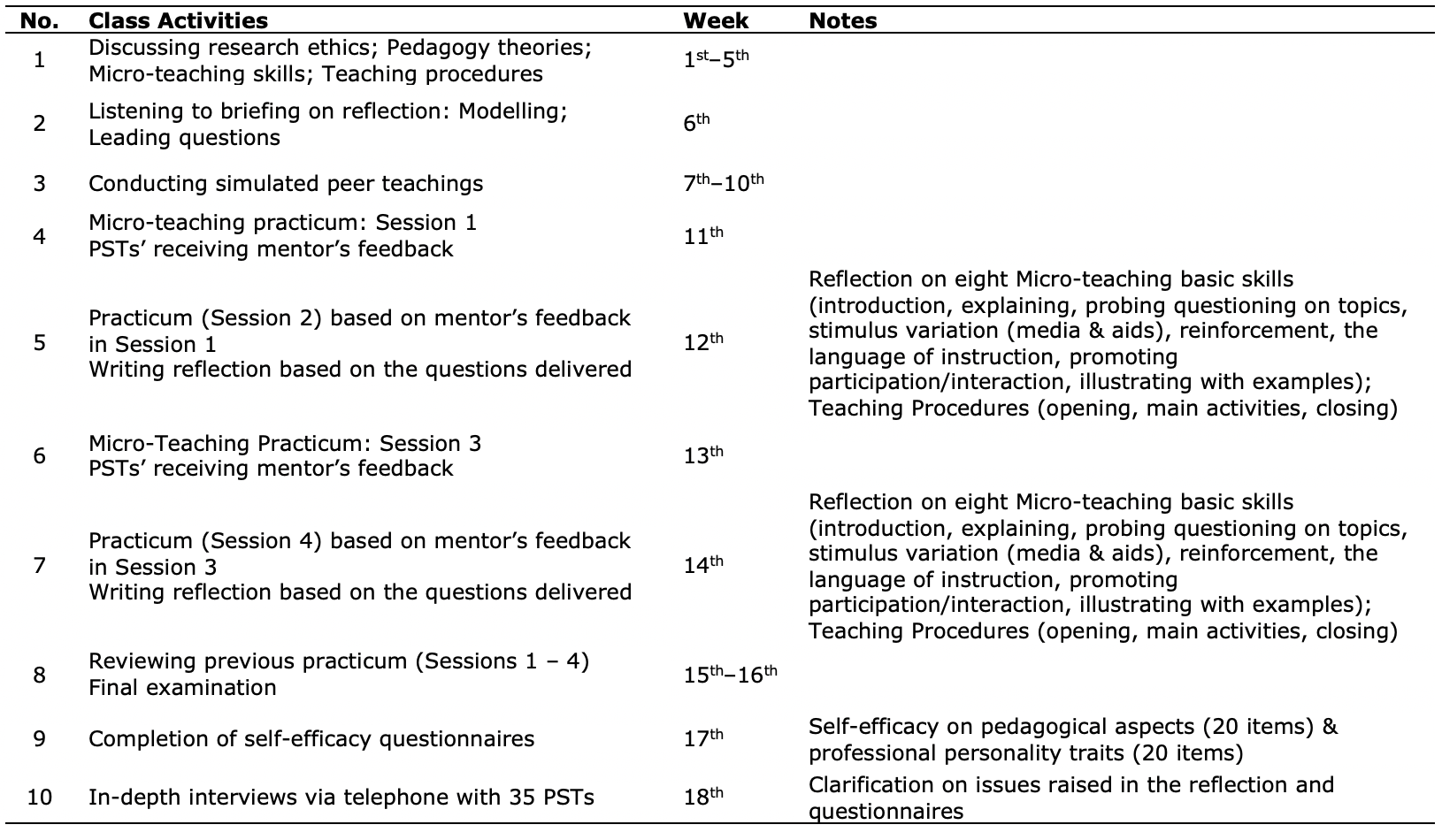
Table 1: Research activities
The two sessions were parts of the teaching cycle. Session 1 consisted of practicum-evaluation-replan-improved teaching for Session 2. Session 3 included practicum-evaluation-replan-improved teaching for Session 4. Each practicum lasted 10-15 minutes and was recorded. Four meetings were for simulated teaching without observation by the mentors. After that, another four meetings of practicum were carried out with their observation. The PSTs received feedback from mentors upon finishing the Session 1 practicum. Based on the feedback, an improved practicum was carried out in Session 2, followed by critical reflection writing about the session. Larrivee’s (2008) reflection was modified for this study. Similar steps applied to Sessions 3 and 4. To prevent any bias, three weeks after the PSTs handed in their reflections, an online questionnaire was distributed. A week later, the semi-structured interviews were held. These acted as a validation tool of the reflection and the open-ended questionnaires (Parts B and D) if there was any other issue that needed to be raised.
Data collection and analysis
To incorporate validity strategies (Creswell & Creswell, 2018), a triangulation data collection technique was used: critical reflection, questionnaires, in-depth interviews.
Critical reflection: The instrument
First, the critical reflection for the PSTs included leading inquiries (see Appendix 1) yet the reflection was open for flexibility in the responses. As the concept of teachers as reflective practitioners has recently entered Indonesian education (Cirocki & Widodo, 2019), flexibility and context were strongly encouraged in this study. Larrivee’s (2008) reflection was modified to lead the present reflection, to cover basic skills (Table 1), teaching topics, explanation skills, English use in teaching, students’ interactions or the absence of interactions in online mode, and topics recommended for the next meeting. Prior to the use of RP model, the PSTs were given RP samples to learn, raise any questions and try-out after the practicum (see Table 1). Then the PSTs wrote critical reflection on Session 2 and Session 4 (after the Practica). The criticality of their responses in the reflections were analyzed from being informative, evaluative, and argumentative on the aspects (Micro-teaching) asked on their performance.
Questionnaires: The instrument
The present self-efficacy questionnaires were adapted from several studies (Çakir & Alıcı, 2009; Güneş et al., 2017; Senler & Sungur-Vural, 2013) to cover pedagogy and personality (Appendix 2 & 3). In total, the questionnaires consist of 42 items: pedagogy (Part A=20), personality traits (Part C=20), and Parts B and D (two open questions) which asked for areas of improvement in pedagogy and personality. The options provided the research participants were a 5-point Likert scale covering strongly disagree, disagree, neutral, agree, strongly agree (Part A); not at all, very little, quite a bit, some degree, a great deal (Part C)—scoring 1 to 5 points.
In-depth interview: The instrument
In addition, one-hour phone interviews were carried out on a one-to-one basis. The interviews allowed questions beyond the original probes in order to have more complete data. The interview protocol (see Appendix 4) was based on the participants’ previous data (the critical reflection and issues raised from the questionnaires). The interview (twice) acted as validation tools on the previous data collected. The interview was recorded and manually coded under the theoretical views that underpins this study.
Results and Discussion
The collective reflections of the PSTs suggested they had been able to carry out critical reflection, focusing on the eight micro-teaching skills and the teaching procedures (see Table 2). It seems it is reasonable for pre-service teachers to develop reflective capabilities and attitudes towards the skills and self-evaluation in teaching (Nosratinia & Hossaini, 2018).
RP towards pedagogical self-efficacy development
There are mainly four aspects of pedagogical self-efficacy development reflected in critical reflection. First, micro-teaching skills. In the initial stage of practicum, the PSTs encouraged their students to learn by establishing a frame of reference associating the students’ experiences with the lesson objectives. The activities, averaging 5-7 minutes, included stimulating questions, a video clip, recalling materials, illustrating, a picture of the topic of the day, students' schemata knowledge, an overview, and games.
However, some PSTs confirmed in the interviews (Appendix 1) that they were concerned about the lack of student-teacher interactions, especially during the shift from two-way interactions to one-way due to practicum mode change, and they admitted that the teaching sounded awkward. For example, PST15 said that there should be live contact that cannot be manipulated. In the interview to validate the reflection, PST15 revealed,
I need to improve my confidence and sympathy for all my students, because I need to serve them better. My online teaching has no students, and I feel no interaction. This is new for me.
Reflection by PST15 (Using leading question number 7):
I was a little doubtful whether there was material that I teach can be understood or not. There were no questions from students. I can not [sic]communicate face to face with students. It made me not so confident, because they sat on the other side.
Consequently, some PSTs confessed experiencing an impromptu microteaching practicum because of the replacement of two-way teaching engagement with an offline video teaching without students; or if there were some students present in the practicum, they adjusted the teaching components as to anticipate students’ passiveness in online practicum. In the past, fellow PSTs took turns acting as students if there were no real students in the class. The findings support Özcan and Gerçek's (2019) principles that effective communication with students at full length is crucial. PST9 said,
I want to improve my self-disciple especially in preparing learning materials and my attitudes in teaching, especially when teaching using offline then shifted to online—the changes happen dramatically. Mentor, the teaching sounds odd.
Reflection by PST9 (Using leading question number 7):
I should make better materials and interesting ones to the students because of the sudden changes. It sounds odd. We used to have face-to-face teaching, but now it is different. It is so quick.
PST9 felt the shift from offline to online mode was very sudden which she, and most of the PSTs, was not used to before pandemic, and thus they felt unprepared to have the online practicum.
To record the OnM problems, PST18 reflected that sometimes she was relying on her own assumptions about what the students wanted because they were not physically present and related this issue in the interview that,
Improve my performance in teaching: [being] effective and efficient, in class teaching and in talking, because I tend to assume students on the other side when I make teaching on online model [sic].
Reflection by PST18 (Using leading question number 7):
Strive to have high self-esteem and enjoy and relax to make it interesting to the students, even they seem far away. I don’t like looking at camera all the teaching. I sometimes make assumption on what the students want because they are on the other side
Alternating OfM into OnM led some PSTs to discomfort and difficulty in looking confident before the camera. Yet, some other PSTs viewed OnM in a more positive light, such as efficient timing for teaching from one-way interaction (PST5), more chances to explore technology and multimodality (PST7), and an organizable teaching plan (PST10).
Reflection by PST10 (Using leading question number 3):
My explanation part in main teaching is I explained the material well and slowly put a lot of emphasis on students so that they could easily understand. I used simple technology (power point & audio material) that help me a lot in time. Easy, quick, and fun.
Regarding this, it can be said that the PSTs under study could better see the positive side of one’s past teaching through reflection, while self-assessing and reasoning about one’s capability, as has also been proven by Triastuti et al. (2020).
Another issue arising in the reflection was a challenge to replace themes with daily conversations in order to maintain the students' most feasible topics. Some PSTs eventually replanned for beginner lessons while they were supposed to teach senior high school students, such as referring to topics of 'congratulations', 'greeting expressions', 'offering and suggestions', 'satisfaction and dissatisfaction', 'hotel reservation'. Other PSTs used the self-efficacy beliefs to develop effective and thorough instruction for students as suggested by Çankaya (2018). Three PSTs decided to teach verb tenses, although they taught them in isolation and used a deductive approach – primarily focusing on applying grammar rules. The findings are in line with the study by Seng et al. (2020) in that high-order-thinking (HOT) skills in EFL classrooms sometimes are left out. HOT skills are vital in EFL teaching and essential for students to learn (Nosratinia & Hossaini, 2018). Though the study did not look into this specifically, if PSTs had meta-cognitive skills, they could transfer them into their teaching by assisting students in uncovering grammar patterns inductively, for instance.
Areas of improvement in pedagogy
In addition to the reflection, Table 2 displays the self-efficacy questionnaires seeking information, including classroom management, materials and technology, strategy, medium of instruction, and microteaching, along with the areas of improvement.
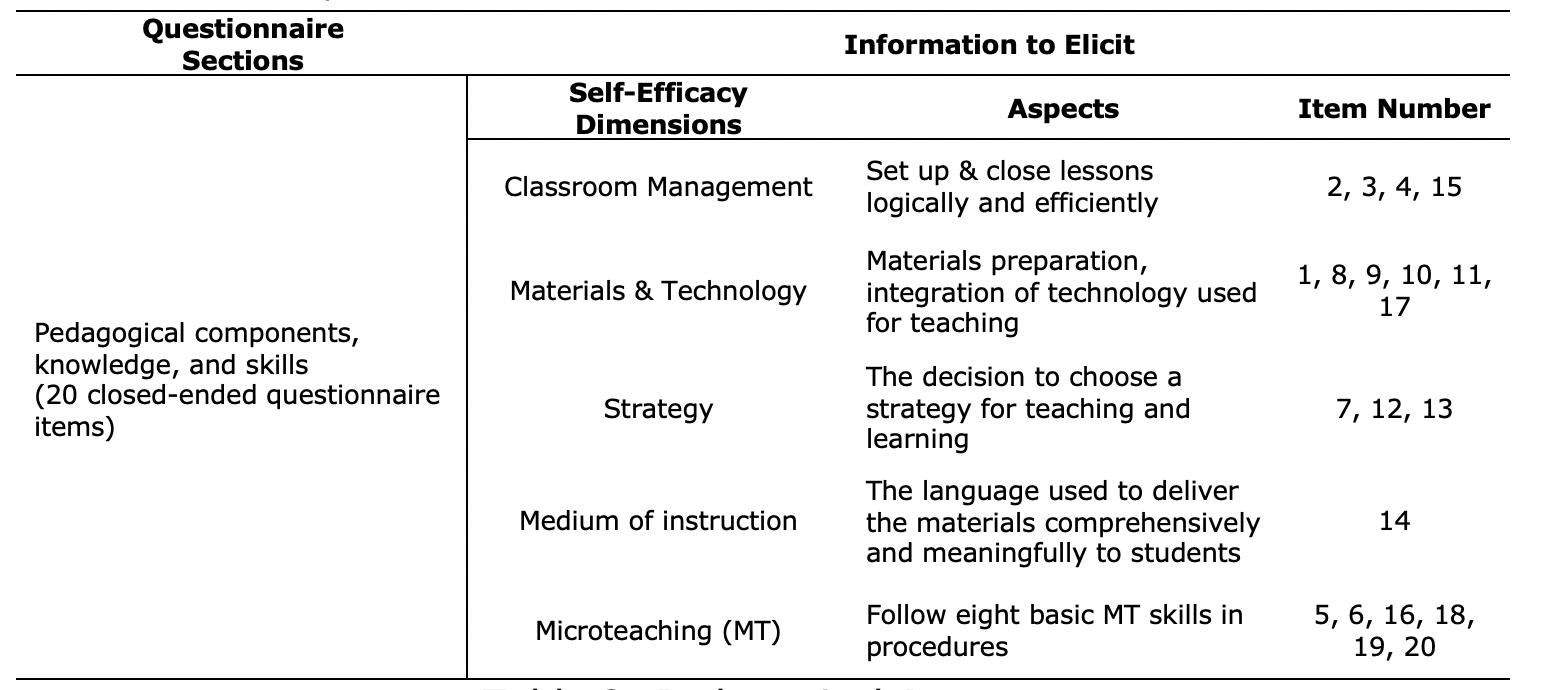
Table 2: Pedagogical aspects
Figure 1 presents the self-efficacy beliefs on running either OfM or OnM of practicum—with 54% versus 51% saying they ‘agreed’ that they were able to set up virtual classroom versus to manage the real class (Items 2 and 3). The interview further revealed that the PSTs faced an issue with effective time management for the modes of practicum. Similarly, as Özcan and Gerçek (2019) mention, within the area of time management, the PSTs tended to focus on completing their lesson plans rather than spending time working on improving students' comprehension. Utami et al. (2019) observed that even a group of in-service teachers considered their time management in class effective when they finished all materials although they tended to put aside the priority to ensure the students' comprehension. It is important to instill high commitment to students' understanding above others.
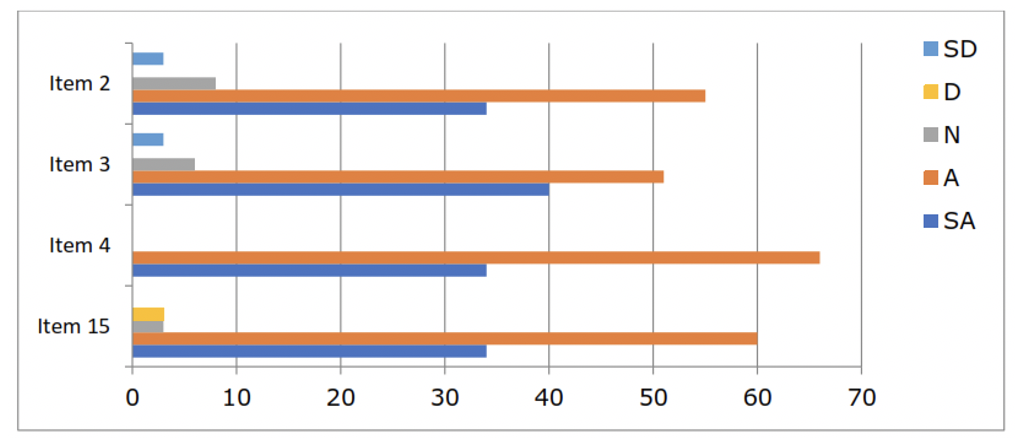
Figure 1: Self-efficacy sub-dimension: Classroom management
Eghtesadi and Jeddi's (2019) instructional method was the strongest predictor of teaching performance compared to the other pedagogical components, while the best predictor in the present study appears classroom management, with the statement of ‘agree' ranging from 50% to 70%. The evidence confirms Çankaya's (2018) study that the PSTs had a strong efficacy sense for classroom management. They, however, may have felt less effective when instructing specific students in specific settings. It is important to note that when the self-efficacy was assessed, the PSTs in our study were teaching students of low language proficiency, highlighting the needs to address context-specific situations (Abedini et al., 2018a). Regarding material preparation and technology use in the practicum, Figure 2 shows that the PSTs chose the 'neutral' (N) option, which they believed was relevant to the changed teaching modes.
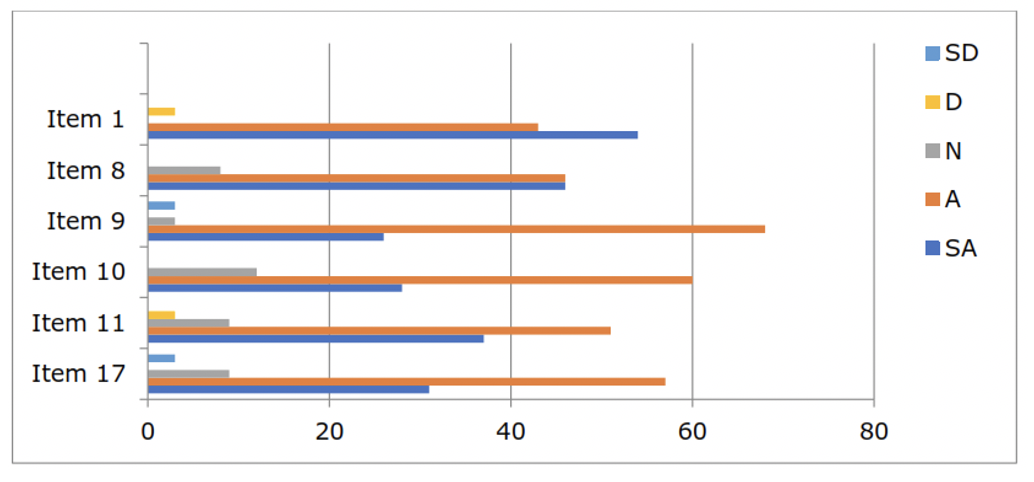
Figure 2: Self-efficacy sub-Dimension: Materials & technology
Figure 2 shows that 12% of the PSTs acknowledged limited use of technology in their practicum. Kent and Giles (2017) suggested that limited technology use could be due to insufficient technological knowledge, fewer teaching experiences, or other problems. Dixon et al. (2019) said that the other causes of the insufficient knowledge could be due to a lack of self-confidence and a hostile and hazardous environment. However, PST 15 and PST 20 were aware of the need of technology use for better practicum. Thus, institutional support seems essential to provide access to technology. In addition, Technological Pedagogical Content Knowledge (TPACK) could equip PSTs with effective technology integration for appropriate teaching (Kavanoz et al., 2015). Although technology is still lacking in the research setting, the PSTs sought outside sources for inspiration to enable them to handle the practicum, characterized as ‘openness’ (See Figure 7).
Further, Figure 2 shows how the PSTs initiated teaching innovations by preparing and modifying materials (Items 1 and 17), selecting interesting and relevant activities and topics (Items 8 and 9), integrating basic technology (Item 10), and adding games (Item 11). Senler and Sungur-Vural (2013) stated that the high percentages like these could reflect material preparation and technology application as imaginative expressions, creative thoughts, curiosity, and open-mindedness. Thus, the Figure corroborates openness as a trait of the personality dimension (Figure 7)
In terms of strategies applied in the teaching (Figure 3), the disruption of the 'face-to-face' practicum naturally did not prepare all beginner teachers. The PSTs were unsure of appropriate strategies for OnM or OfM; therefore, 3% chose 'strongly disagree' when it came to 'grouping students' skills (Item 7) because of the absence of the sufficient number of students for the practicum. However, because they were able to handle problems in class applying certain strategies, the strategy sub-dimension is at a moderate level ('strongly agree'). Seng et al. (2020) address this by suggesting that PSTs are indeed risk-takers who are adaptable to lifelong learning skills.
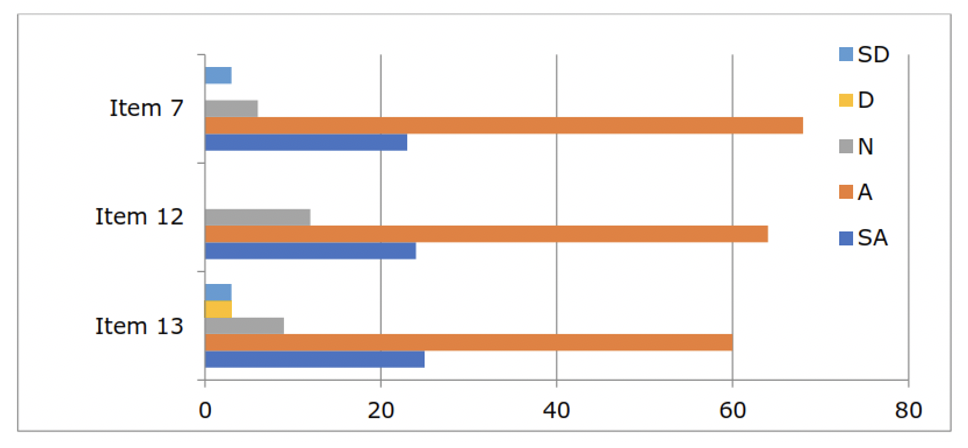
Figure 3: Self-efficacy sub-dimension: Strategy
Because the medium of instruction only includes language use, the inquiry solely looks at the codemixing or codeswitching of English, Indonesian, and Kupang Malay. Figure 4 discloses another compelling fact: the change of language. Before the pandemic, English was the medium of instruction (OfM) but has been shifted in OnM. The intensity of English usage in teaching differs for any EFL teachers, regardless of their proficiency (Utami et al., 2019). This study, nevertheless, indicates that this was a matter of choice. The PSTs replaced 'comprehensive English' (see Questionnaire Part A, Item 14 asking about the use of medium of instruction) with the concept of 'intelligibility'—delivering teaching practically and feasibly, even by interchanging the codes. In the interview, that the PSTs chose ‘agree’ (70%) on Item 14 was confirmed. Surprisingly, their choice of emphasizing intelligibility is because they understand the term comprehensible English as something for the students to easily understand, that is, modified English or teacher talk. Furthermore, to lead their students to achieve the 'intelligibility', the PSTs initiated additional languages (Indonesian and Kupang Malay) - having anticipated the situation of the sudden onlineness. In addition, they believed that the poorer the students' English was, the more probable additional languages could be codemixed or codeswitched.
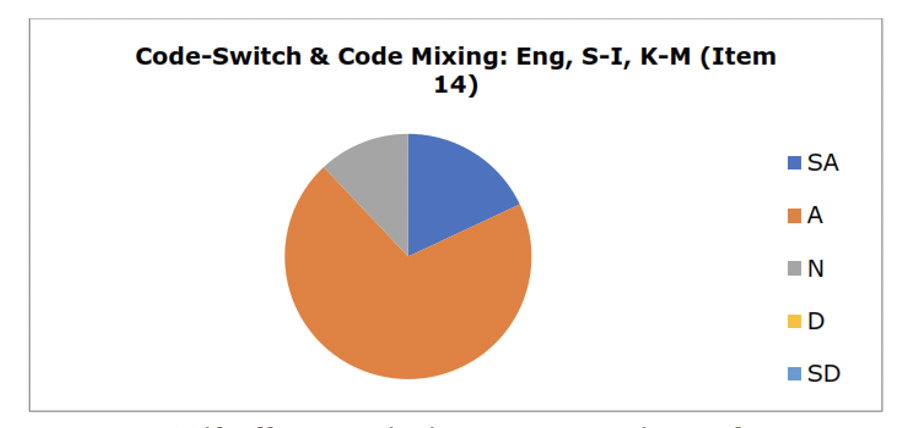
Figure 4: Self-efficacy sub-dimension: Medium of instruction
If the complex learning situation persisted, the PSTs predicted that students' speech intelligibility would suffer, similar to what they saw in their university courses on similar platforms. Thus, to anticipate this, the PSTs' decision was crucial to their students' learning, abandoning accuracy, but prioritizing the delivery of clear messages. Borg (1998) mentions that teachers’ decisions are influenced by their educational knowledge, beliefs, theories, and attitudes and according to Triastuti et al. (2020), it is known as knowledge base interaction.
Figure 5 depicts the PSTs' views regarding teaching procedures, students' understanding, linking activities, assisting students in problem-solving, wrapping up lessons, and closing lessons. Again, most PSTs’ microteaching skills reach quite high in the percentages, between 60% and 80%; the most important proportion was using teaching procedures, meaningful activity links, and student assistance (Items 5, 16, 18, respectively).
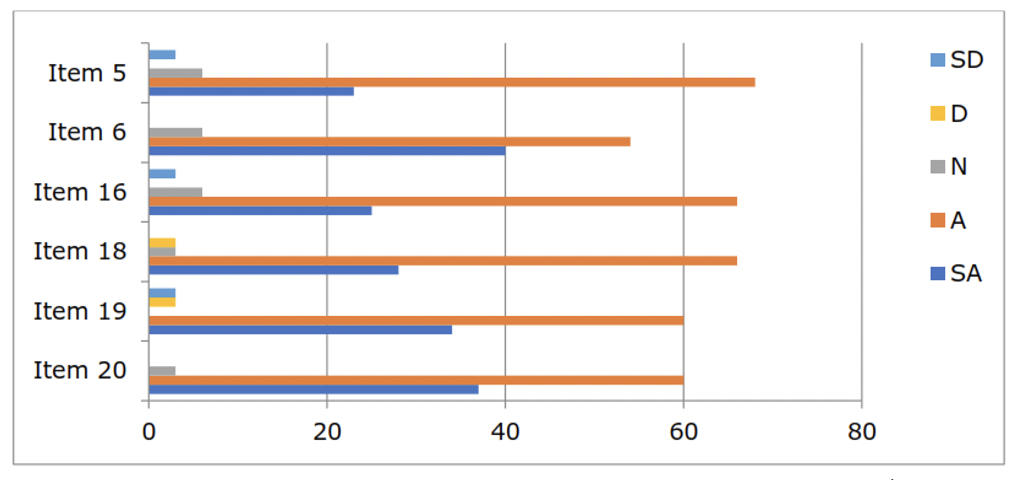
Figure 5. Self-efficacy sub-dimension: Microteaching
The only choice that has low percentages is 'ensuring the students' understanding of the PSTs explanation,' which receives only 54%, because varied methods were used to get messages across. In general, the option percentages in Figures 1 to 5 fluctuated, although they tended to rise. The strongly held belief aids the PSTs in overcoming obstacles in OnM. It is because people who believe they can achieve their goals are more likely to make the necessary efforts than those who do not (Kissau & Algozzine, 2014).
RP towards Professional Personality Self-Efficacy Development and the Improvement Area
According to Choi and Lee (2018), sociocultural components, other teacher traits, and the accumulation of practical teaching experiences contribute to strong efficacy views. In contrast, from another angle, Farrell (2015) adds that teachers' emotional engagement in teaching necessitates regular monitoring and attentive listening and elicits students' sentiments. According to Woolfolk and Hoy (1990), there is a correlation between high personality teacher efficacy and their humanistic approach toward students. These pedagogical aspects and personality traits are inseparably linked – they have been covered and discussed in previous dimension (Pedagogy, above). In addition to the reflection, Table 3 presents four main personality traits distributed through the 20 questionnaire items.
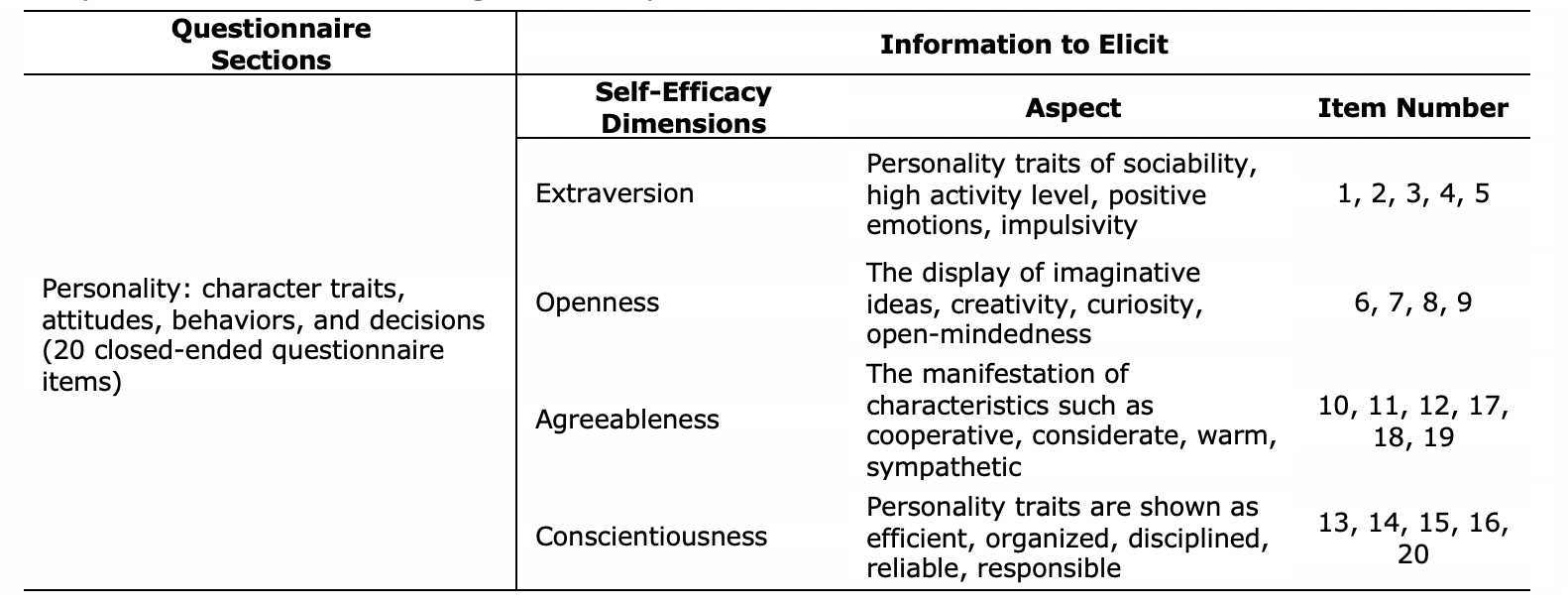
Table 3: Personality traits
The percentages of the participants’ responses to the questionnaires (Likert scale) have been transferred to a pie chart to visualize the data. Specifically, Figure 6 indicates traits related to extraversion divided into five aspects. Of these aspects, 'looking for outside source' (Item 4) reaches 70%. Relating to this, a large number of responses (64%) can be seen with ‘working with peers’ in Figure 6 demonstrating the PSTs’ tendency for collaboration. However, 15% PSTs felt alone during the social distancing period. Kissau and Algozzine (2014) agree that online teaching impedes the development of a sense of classroom community. So when sociability is restricted, sometimes, isolation is felt. The data also provides evidence that the pandemic restricted student-teacher interactions. Sometimes interaction is not seen as the crucial essence of teaching (Quan, 2022). According to Choi and Lee (2018), the awkward feeling felt during transition from offline to online practicum is due to the established mindset of ideal face-to-face teaching and the normal teaching scenario.

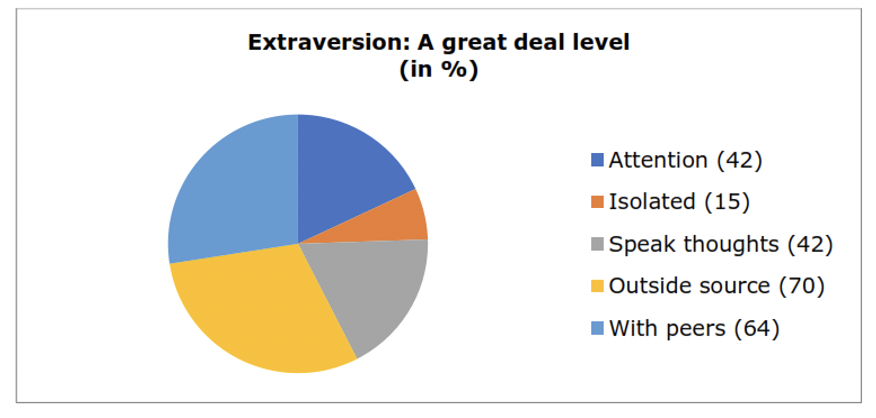
Figure 6. Self-efficacy sub-dimension: Extraversion
As observed, the extraversion had the highest percentages (Figure 6), followed by openness (Figure 7), and agreeableness (Figure 8). These traits complement each other, for example in Figures 6 and 7, extraversion: 'looking for outside sources' (70%) and 'working with peers' (64%), which contrasted with openness: 'open to new ideas’ (55%) and 'meet new people’ (63%).
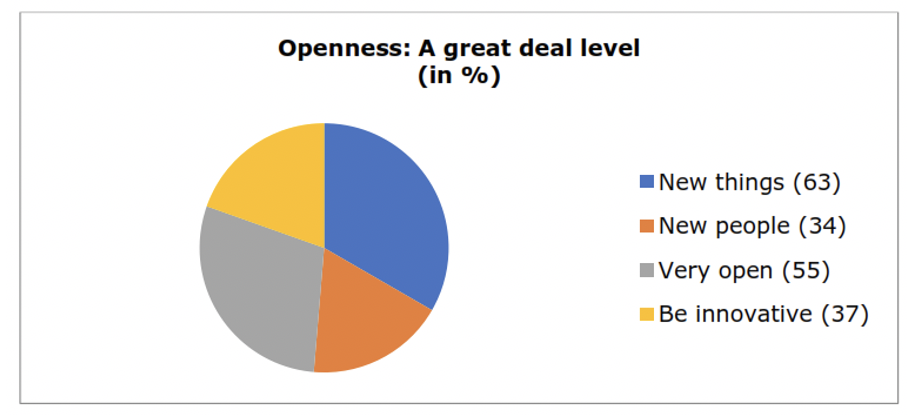
 Figure 7: Self-efficacy sub-dimension: Openness
The data show that 37% of the respondents admitted they had learnt to be innovative using technology, and PST1 even mentioned that more technology training was needed, although he used Kahoot and Google Classroom. Liang (2019) mentions that the purpose of technology is to share information and to benefit teachers in mutual communication to students. Thus, raising PSTs’ awareness, commitment, resilience, and self-discipline would lead to more integration of technology (Ortaçtepe & Akyel, 2015). The PSTs’ enthusiasm to learn new things (63%) corresponds to open-mindedness (55%). Open-mindedness is one of the valid predictive indicators for teaching competence (Senler & Sungur-Vural, 2013). In short, when teachers are broadminded, they are more apt to employ new ideas (55%) and are more willing to try out something new out of their comfort zone (63%).
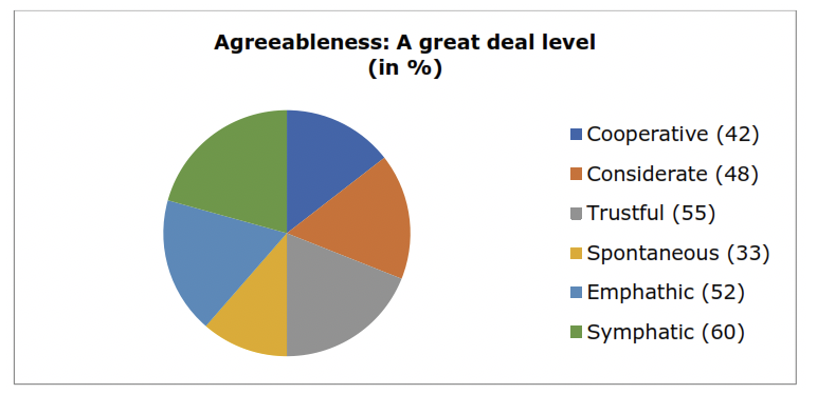
 Figure 8: Self-efficacy sub-dimension: Agreeableness
In Figure 8, the agreeableness traits have six aspects as can be seen in the Figure. The PSTs share concern for developing a rapport with students and maintaining its flow in practicum. This is in agreement with the findings of pedagogical self-efficacy. Agreeableness relates closely to the learning strategy emphasizing task completion (Senler & Sungur-Vural, 2013; Vermetten et al., 2001). Referring to the previous discussion on the pedagogical dimension, it can be said that the more agreeable teachers are, the more apt they are to modify the teaching procedures. Figure 8 corresponds to Figure 6 in that the greater their extraverted characteristics (being sociable or outgoing, liking teamwork), the more probable they reflect agreeableness (sympathy, helpfulness, helping other students). Senler and Sungur-Vural (2013) reported that there was a positive relationship between extraversion (β=.09) and agreeableness (β=.20).
The fourth trait is conscientiousness with five aspects (Figure 9). Conscientiousness is PSTs’ ability to control impulses, plan tasks, organize learning, and carry out teaching (Senler & Sungur-Vural, 2013).
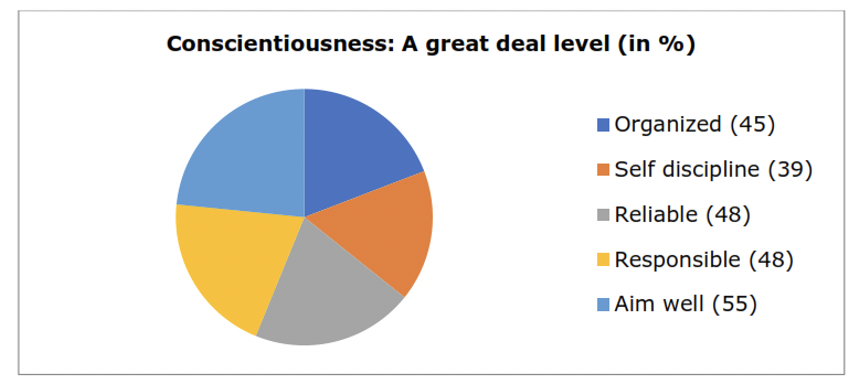

Figure 9: Self-efficacy sub-dimension: Conscientiousness
Saberi and Rahimi (2014) asserted that the more conscientious the teachers were, the more likely they would perceive being self-efficacious in organizing instruction and applying strategies. This is true with two aspects, where ‘organized’ (45%) and ‘self-discipline’ (39%) have similar responses from the participants. Further, they said that self-discipline was not only about being punctual, but also about being diligent in reading teaching resources. Nosratinia and Hossaini (2018) concluded that by having self-discipline, PSTs can thrive in carrying out complex tasks and can function autonomously regardless of difficult circumstances, since the self-efficacy is amplified, and thus the task becomes easier.
Interestingly enough, ‘trustful’ at 55% (Figure 8), reliable at 48% (Figure 9), and responsible at 48% (Figure 9) are from the ‘agree’ option instead of the ‘strongly agree’ option in the scale. The interviews reveal that PSTs tend to depend on external assessment for three attributes (trustful, reliable, and responsible). More than three-quarters of the PSTs affirmed that someone else should assign certain attributes to teachers based on merits rather than assigning the attributes themselves. According to Sheybani and Miri (2019), PSTs are actually being engaged in professional (intentional) identity building, which is rooted in the accumulation of symbolic resources such as status, esteem, mastery, a sense of belonging, and attachment. Sheybani and Miri further addressed a lack of confidence as an issue dealing with 'critical thinking and identity building.’ Thus, critical thinking is necessary to override excessive low self-confidence that hinders self-efficacy.
In determining the collective self-efficacy level of personality traits, Seng et al’s (2020) scale was adopted.
Lowest self-efficacy: 0-20%
Limited self-efficacy: 21-40%
Moderate self-efficacy: 41-60%
Adequate self-efficacy: 61-80%
High self-efficacy: 81-100%
Table 4 summarizes the results using a scale multiplied by one point for 'not at all’ up to five points for 'a great deal' to accumulate the total score. The maximum score was the number of respondents multiplied by five points. Each trait percentage Table 5 was obtained from the total score divided by the maximum times 100%, which was used to classify the level.
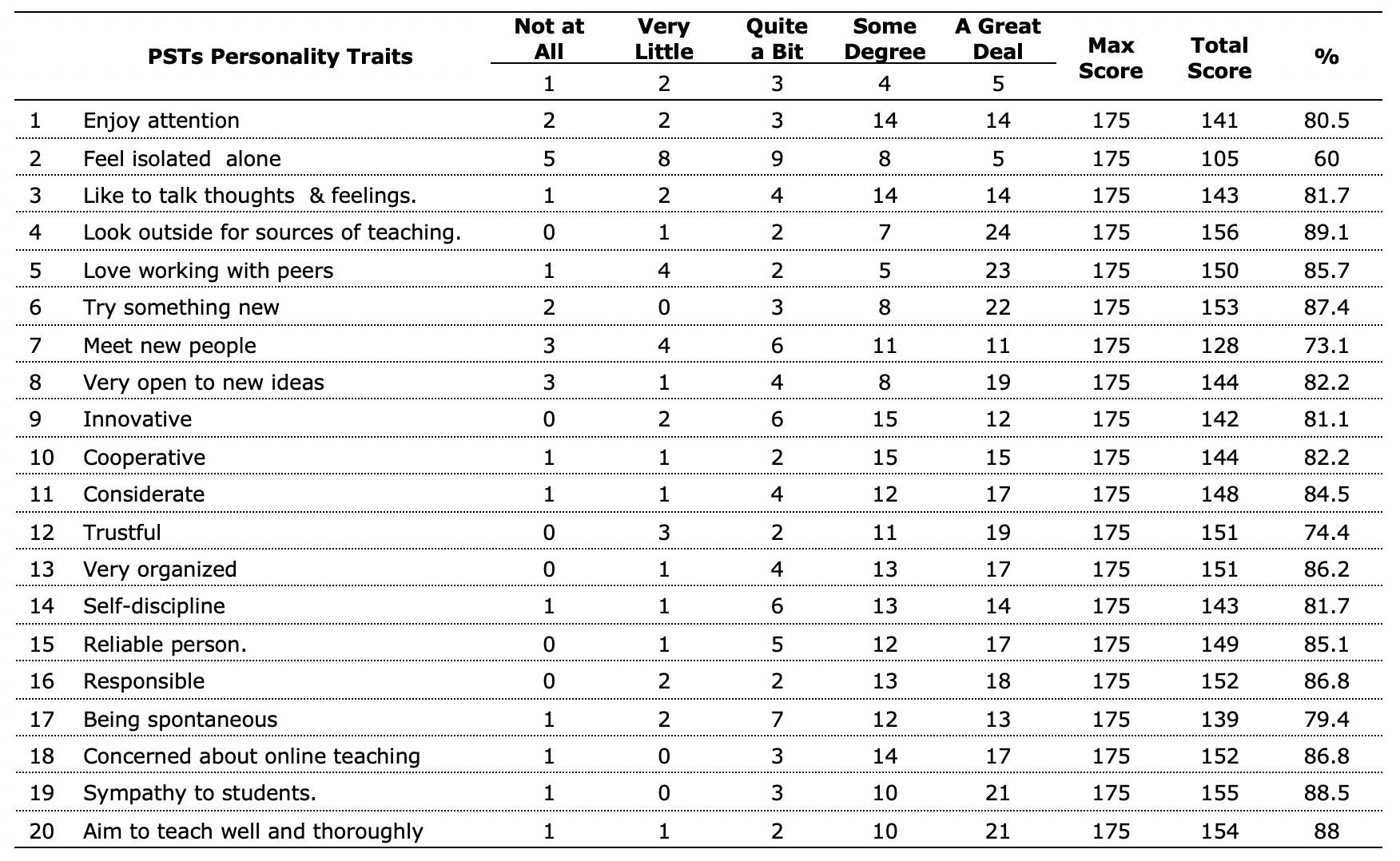
Table 4: Self-efficacy of personality traits
There were 16 traits out of 20 which ranged from 81% to 100% suggesting the PSTs had high self-efficacy as relates to personality traits. This is in line with Churches' (as cited in Seng et al., 2020) characteristics of successful 21st-century teachers, namely, adaptivity, lifelong learning, collaboration, and risk taking. All traits of openness were between 30% to 60%, implying that being open-minded can lead to adaptation and adjustment. However, in three other traits (spontaneity, meeting new people, and being trustful), they leveled out at 61% to 80%, since the PSTs depended on the community for the attribute 'trustful'. PST 26 stated that,
I have to study and aim high in teaching. But others should decide whether I am a reliable, responsible, and trustful person. It is important to get these predicates [sic] from your supervisors or peers from what you do in class.
The findings strengthen Chaves-Barboza et al’s (2019) study that teachers’ views of their abilities is closely tied to a certain period, precise aim, and environment. Thus, teachers’ views are dynamic and changeable, allowing teachers to develop by improving the control over their behavior and actions while increasing knowledge and trustworthiness for a positive impact.
Conclusion
Reflection practice contributes to pre-service teachers’ (PST) development of self-efficacy in their pedagogy and professional personalities, and both self-efficacies help shape the quality of the teaching practicum. Although technological savvy and self-confidence are two areas of improvement, the findings indicate preparedness of the PSTs for pre-service teaching because of the high self-efficacy in both dimensions. The higher the self-efficacy they have, the more prepared the PSTs to deal with complex teaching situations. This study has revealed that as teaching media shifts occurred, the PSTs applied the concepts of intelligibility-based approach to their teaching, including material selection, student needs, appropriate approaches, multimodality and language-social connections, although the use of English only throughout a lesson was not stressed. Using modified English has been emphasized by the PSTs in order to help the volunteer students easily understand them during the practicum.
Despite the awkward feeling caused by sudden onlineness for practicum, the PSTs achieved high self-efficacy from extraversion and conscientiousness. Although they are minor in comparison to overall self-efficacy, the use of technology and self-confidence are two areas that need improvement in the dimensions of pedagogy and professional personalities.
Needless to say, there was a limitation since the questionnaire did not distinguish the off-line mode and online mode of teaching practicum explicitly. Further investigation needs to examine whether PSTs’ self-efficacy increases when teaching modalities are switched between offline and online by involving more participants with different demographics, genders, and technology literacy levels.
Acknowledgement
The financial assistance of the Indonesian Endowment Fund for Education (LPDP) is gratefully acknowledged. Also, the authors would like to express their warm gratitude to undergraduate students of Universitas Kristen Artha Wacana, Kupang, East Nusa Tenggara, Indonesia, as the participants of the study. Further, high appreciation is addressed to Professor Ali Saukah for his inspiring course, The Exploratory Research, and for his school of thought.
References
Abedini, F., Bagheri, M. S., & Sadighi, F. (2018a). Exploring Iranian collective teacher efficacy beliefs in different ELT settings through developing a context-specific English language teacher collective efficacy scale. Cogent Education, 5(1). https://doi.org/10.1080/2331186X.2018.1552340
Abedini, F., Bagheri, M. S., Sadighi, F., & Yarmohammadi, L. (2018b). The constituent elements of collective teacher efficacy beliefs and their contributing factors in different ELT educational contexts: A qualitative study. Cogent Social Sciences, 4(1). https://doi.org/10.1080/23311886.2018.1500768
Arkiang, F. (2021). Analisis pembelajaran daring selama pandemi COVID-19 di daerah 3T (Nusa Tenggara Timur) [Analysis on online learning during COVID-19 pandemic in 3T region (East Nusa Tenggara)]. Jurnal Pendidikan, 12(1), 57-64.
Bandura, A. (1978). Self-efficacy: Toward a unifying theory of behavioral change. Advances in Behaviour Research and Therapy, 1(4), 139-161. https://doi.org/10.1016/0146-6402(78)90002-4
Bandura, A. (1989). Human agency in social cognitive theory. American Psychologist, 44(9), 1175-1184. https://doi.org/10.1037/0003-066X.44.9.1175
Bandura, A., Pastorelli, C., Barbaranelli, C., & Caprara, G. V. (1999). Self-efficacy pathways to childhood depression. Journal of Personality and Social Psychology, 76(2), 258–269. https://doi.org/10.1037/0022-3514.76.2.258
Barrick, M. R., & Mount, M. K. (1991). The big five personality dimensions and job performance: A meta-analysis. Personnel Psychology, 44(1), 1-26. https://doi.org/10.1111/j.1744-6570.1991.tb00688.x
Borg, S. (1998). Teachers’ pedagogical systems and grammar teaching: A qualitative study. TESOL Quarterly, 32(1), 9-38. https://doi.org/10.2307/3587900
Çakir, Ö., & Alıcı, D. (2009). Seeing self as others see you: Variability in self-efficacy ratings in student teaching. Teachers and Teaching: Theory and Practice, 15(5), 541-561. https://doi.org/10.1080/13540600903139555
Çankaya, P. (2018). The exploration of the self-efficacy beliefs of English language teachers and student teachers. Journal of Language and Linguistic Studies, 14(3), 12–23. http://www.jlls.org/vol14no3/2.pdf
Chaves-Barboza, E., Solá-Martínez, T., Marín-Marín, J.-A., & Sanz-Prieto, M. (2019). Self-efficacy of teachers in initial training: A comparison between the populations of two universities. Education Sciences, 9(3). https://doi.org/10.3390/educsci9030188
Choi, E., & Lee, J. (2018). EFL teachers’ self-efficacy and teaching practices. ELT Journal, 72(2), 175-186. https://doi.org/10.1093/elt/ccx046
Cirocki, A., & Widodo, H. P. (2019). Reflective practice in English language teaching in Indonesia: Shared practices from two teacher educators. Iranian Journal of Language Teaching Research, 7(3), 15-35. https://doi.org/10.30466/ijltr.2019.120734
Creswell, J. W., & Creswell, J. D. (2018). Research design (5th ed.). Sage.
Depaepe, F., & König, J. (2018). General pedagogical knowledge, self-efficacy and instructional practice: Disentangling their relationship in pre-service teacher education. Teaching and Teacher Education, 69, 177-190. https://doi.org/10.1016/j.tate.2017.10.003
Dixon, R. A., Hall, C., & Shawon, F. (2019). Using virtual reality and web conferencing technologies: Exploring alternatives for microteaching in a rural region. Northwest Journal of Teacher Education, 14(1). https://doi.org/10.15760/nwjte.2019.14.1.4
Eghtesadi, A., & Jeddi, A. (2019). Teachers’ critical thinking and self-efficacy as predictors of their pedagogical success.International Journal of Applied Linguistics and English Literature, 8(1), 62-70. https://journals.aiac.org.au/index.php/IJALEL/article/viewFile/5246/3836
Er, K. O. (2020). The relationship between teacher self-efficacy beliefs and educational beliefs of pre-service teachers. Educational Research and Reviews, 15(1), 8-18. https://eric.ed.gov/?id=EJ1238407
Farrell, T. S. C. (2015). Reflecting on teacher-student relations in TESOL. ELT Journal, 69(1), 26-34. https://doi.org/10.1093/elt/ccu033
Güneş, P., Yıldırım, Ö., & Yılmaz, M. (2018). Development of the rubric self-efficacy scale. International Journal of Assessment Tools in Education, 5(1), 176-189. https://doi.org/10.21449/ijate.373040
Hartoto, S., Suroto, Khory, F. D., Al Ardha, M. A., & Prakoso, B. B. (2019). Learning communities for prospective teachers through peer-tutoring programs. Proceedings of the 1st International Conference on Education Social Sciences and Humanities, Indonesia, 563-569. https://doi.org/10.2991/icesshum-19.2019.90
Kavanoz, S., Yüksel, H. G., & Özcan, E. (2015). Pre-service teachers’ self-efficacy perceptions on web pedagogical content knowledge. Computers and Education, 85, 94-101. https://doi.org/10.1016/j.compedu.2015.02.005
Kent, A. M., & Giles, R. M. (2017). Pre-service teachers' technology self-efficacy. SRATE Journal, 26(1), 9-20. https://files.eric.ed.gov/fulltext/EJ1134392.pdf
Kissau, S., & Algozzine, B. (2014). The impact of mode of instructional delivery on second language teacher self-efficacy. ReCALL, 27(2), 239-256. https://doi.org/10.1017/S0958344014000391
Kurosh, S., Yousefi, M. H., & Kashef, S. H. (2020). Iranian teachers’ reflective teaching practice in relation to self-efficacy perceptions: Investigating teachers’ discipline. Reflective Practice, 21(3), 356-370. https://doi.org/10.1080/14623943.2020.1748591
Larrivee, B. (2008). Development of a tool to assess teachers’ level of reflective practice. Reflective Practice, 9(3), 341-360. https://doi.org/10.1080/14623940802207451
Lee, B., Cawthon, S., & Dawson, K. (2013). Elementary and secondary teacher self-efficacy for teaching and pedagogical conceptual change in a drama-based professional development program. Teaching and Teacher Education, 30 84-98. https://doi.org/10.1016/j.tate.2012.10.010
Liang, Y. W. (2019). Consequences of work–leisure facilitation from tour leaders’/guides’ perspectives: Self-efficacy and satisfaction. Journal of Leisure Research, 51(2), 206–229. https://doi.org/10.1080/00222216.2019.1670586
Nguyen, T. T. L. (2019). Reflective teaching in an EFL writing instruction course for Thai pre-service teachers. Journal of Asia TEFL, 16(2), 561-575. https://doi.org/10.18823/asiatefl.2019.16.2.8.561
Nosratinia, M., & Hossaini, F. A. (2018). Self-efficacy and critical thinking as the predictors of autonomous language learning in EFL contexts. International Journal of Applied Linguistics and English Literature, 7(1), 64-72. https://doi.org/10.7575/aiac.ijalel.v.7n.1p.64
Ortaçtepe, D., & Akyel, A. S. (2015). The effects of a professional development program on English as a foreign language teachers’ efficacy and classroom practice. TESOL Journal, 6(4), 680-706. https://doi.org/10.1002/tesj.185
Özcan, Ö., & Gerçek, C. (2019). Multidimensional analyzing of the microteaching applications in teacher education via videograph. European Journal of Teacher Education, 42(1), 82-97. https://doi.org/10.1080/02619768.2018.1546285
Quan, N. H. (2022). Attributes of effective EFL teachers in Vietnamese context as perceived by students and teachers. Indonesian Journal of Applied Linguistics, 11(3), 650-663. https://doi.org/10.17509/ijal.v11i3.40592
Saberi, M., & Rahimi, A. (2014). On the effect of personality and efficacy on second language instructors’ performance. Procedia-Social and Behavioral Sciences, 136, 240-245. https://doi.org/10.1016/j.sbspro.2014.05.32 1
Seng, G. H., Muhamad, M., & Kiely, R. (2020). Integration of 21st century learning skills and teacher characteristics in ESL classrooms: The case of Malaysia. Universal Journal of Educational Research, 8(12A), 7561-7566. https://doi.org/10.13189/ujer.2020.082541
Senler, B., & Sungur-Vural, S. (2013). Pre-service science teachers’ teaching self-efficacy in relation to personality traits and academic self-regulation. The Spanish Journal of Psychology, 16(E12). https://doi.org/10.1017/sjp.2013.22
Sheybani, M., & Miri, F. (2019). The relationship between EFL teachers’ professional identity and their critical thinking: A structural equation modeling approach. Cogent Psychology, 6(1). https://doi.org/10.1080/23311908.2019.1592796
Tarajová, R., & Metruk, R. (2020). Characteristics of an effective EFL teacher : Perspectives of Slovak EFL students and teachers. European Journal of Education Studies, 7(12), 319-331. https://dx.doi.org/10.46827/ejes.v7i12.3419
Triastuti, A. (2020). Assessing English pre-service teachers’ knowledge base of teaching: Linking knowledge and self-portrayal. TEFLIN Journal, 31(1), 108-138. https://doi.org/10.15639/teflinjournal.v31i1/108-138
Tschannen-Moran, M., & Hoy, A. W. (2001). Teacher efficacy: Capturing an elusive construct. Teaching and Teacher Education, 17(7), 783-805. https://doi.org/10.1016/S0742-051X(01)00036-1
Utami, I. L. P., Prestridge, S., Saukah, A., & Hamied, F. A. (2019). Continuing professional development and teachers’ perceptions and practices - A tenable relationship. Indonesian Journal of Applied Linguistics, 9(1), 108-118. https://doi.org/10.17509/ijal.v9i1.12463
Vermetten, Y. J., Lodewijks, H. G., & Vermunt, J. D. (2001). The role of personality traits and goal orientations in strategy use.Contemporary Educational Psychology, 26(2), 149-170. https://doi.org/10.1006/ceps.1999.1042
Walsh, S., & Mann, S. (2015). Doing reflective practice: A data-led way forward. ELT Journal, 69(4), 351-362. https://doi.org/10.1093/elt/ccv018
Woolfolk, A. E., & Hoy, W. K. (1990). Prospective teachers’ sense of efficacy and beliefs about control. Journal of Educational Psychology, 82(1), 81-91. https://doi.org/10.1037/0022-0663.82.1.81