
Introduction and Review of the Literature
English teaching in Chile
Teacher training in Chile has a very long tradition that started in the nineteenth century (Ávalos, 2014). Since that time, different departments and schools of education have been responsible for teacher training, mainly based on a traditional curriculum. However, preparing teachers who respond to new social demands and the requirements of society is part of the current discussion. But, because of the low results of both students and teachers in different evaluations, Chile has faced an educational crisis in the last decades (Abrahams & Farías, 2010) similar to what has happened in other Latin American countries. Based on that, initial teacher education gained strategic importance for educational policies in Chile (Guerra & Montenegro, 2017; Sotomayor et al., 2011) due to the relevant role teachers play in the society. This strategic importance has been realized in an agenda in initial teacher education which considers new regulations for universities that offer pedagogy programs and the revision of minimal quality standards in these undergraduate programs.
Currently every teaching program has to be accredited by the National Accreditation Commission (CNA for its Spanish acronym) in order to admit new students and to guarantee the educational quality of the programs, it has been established by law (20.109, 2006). The dimensions for accreditation regulate different aspects regarding the implementation of the teaching programs, such as the graduate profile, academic program or curricula, language teaching and the implementation of internship, academics, the program’s purposes, and objectives as well as the structural organization of the program. Most programs get an accreditation of six to three years, according to the Chilean CNA.
In 2016, a new law was passed (20.903) to establish the Teacher Professional Development System, which provides the standards of teacher teaching training drawing the areas and dimensions needed to support future teachers’ performance and their assessment. These standards, on the one hand, regulate pedagogical aspects of teaching training and, on the other, the multifaceted components of English teaching. The latter is subdivided in five different dimensions namely English language competence and teaching, principles for English language teaching and learning, the development of communicative skills, learning resources and cultural and intercultural competence for language teaching.
By the same token, the Chilean government established a National Diagnostic Evaluation (END for its Spanish acronym) so that all the above-mentioned standards can be measured. The results of this evaluation for English language teaching in 2019 showed that there was not a significant increase in the results among Chilean Universities in the last years regarding pedagogical knowledge as shown in Figure 1. Nevertheless, there is an opportunity for the different programs to improve their results.
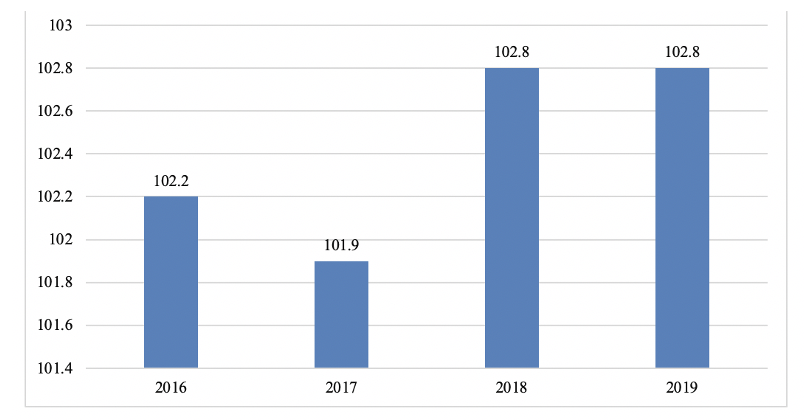
Figure 1: Pedagogical results from 2016-2019
Likewise, the results obtained in the discipline-oriented components tests do not show a significant improvement from 2016 to 2019 as shown in Figure 2.
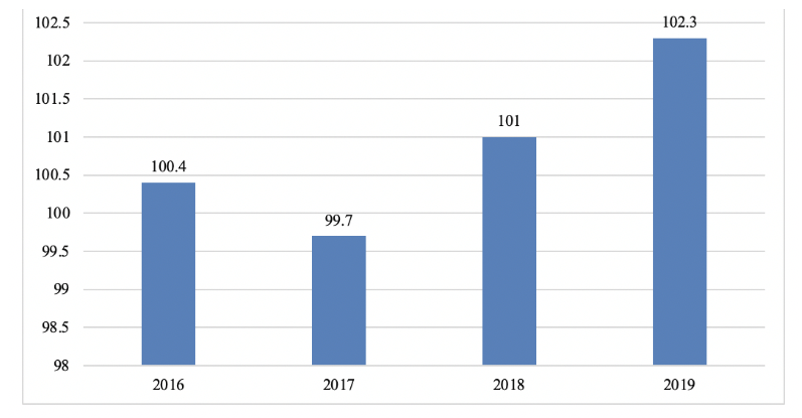
Figure 2: Discipline-oriented components test results from 2016-2019
More detailed information is obtained when analyzing the distribution obtained by the Chilean universities regarding the different dimensions such as English language competence, teaching knowledge for the implementation of lessons, and elements for lesson planning and pedagogical reflection (Figure 3).
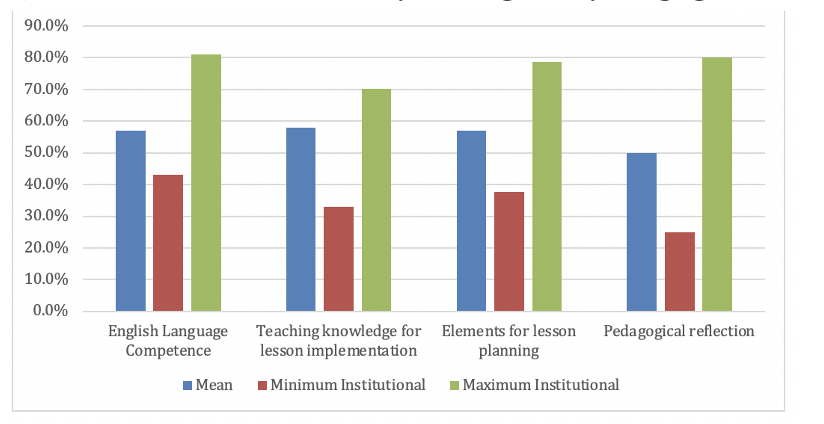
Figure 3: Discipline-oriented components test results by Dimension 2019
The gap shown by universities is significant. These results reflect the need for universities not just revising their academic programs but getting some new perspectives when designing their curriculum in order to fulfil the training need stablished by the Chilean Educational demands and the strategic plan to improve education.
English as a global language
English has also gained importance worldwide in recent decades as it has become the global language (Pennycook, 2017) and the language of business and technology. This led countries all around the world to improve their English language programs. Chile was not an exception, as English was included as part of the national curriculum in 1998 and is taught as the only compulsory foreign language (Gómez Burgos, 2017; Gómez Burgos & Walker, 2020) as in many countries in Latin America. Lately, a significant number of schools have developed a language policy which promotes the insertion of this foreign language from grade one and even pre-K with an average of three pedagogical hours (45 minutes per hour) per week in the public schools. This has meant that authorities have encouraged the inclusion of a foreign language (Barahona, 2016) e in the national curricula to reduce the gap between private and public schools. This has also been the result of a national call from the Chilean authorities when the National English Strategy 2014-2030 was launched. This program aims to incorporate new teaching methodologies (e.g., task-based learning and content language learning), gradually making teaching English to young learners mandatory and giving students more exposure to it. Thus, the new proposal has opened new demands to universities that offer English pedagogy majors especially in terms of updating the curriculum plan future English teachers have to study to graduate.
Under the previous circumstances, this work intends to describe initial teacher education for English as a foreign language (EFL) teachers and to address the role of content and language integration (Martel, 2013) and the opportunity this offers in English teacher education programs. This paper seeks to create a space for reflection about this new trend in the field of EFL teacher education worldwide. It uses information from four more traditional programs and four more innovative programs that have begun to move towards the adoption of more contemporary approaches in the field of English teacher education. These innovations have centered on the teacher practice and as a consequence, the teaching methodology has become more active; these two streams were created due to the new requirements of public policy and have been the results of the curricula adopted by some institutions.
Initial English as a foreign language teacher education
EFL teacher education in Chile has a long tradition. The vast majority of the English pedagogy programs are orientated to prepare English teachers for high school education (Barahona, 2015, 2016). These pre-service teacher programs have followed a linguistics curriculum where “the tendency of English proficiency as the most prominent knowledge” (Barahona, 2014, p. 45) is still the norm, instead of a more practical approach on teaching strategies or a balance between linguistics and pedagogy courses. Recently, however, university curriculum reforms of English pedagogy programs have encompassed progressive pre-service school-based experiences (Díaz Larenas & Bastías Díaz, 2012). However, the main problem still remains intact in the curriculum plans of the EFL teacher education programs: the divorce of training areas such as English Linguistics and Pedagogy or Education (Abrahams & Farias, 2010; Gómez Burgos, 2022). This rupture has continuously been present in the English pedagogy programs and has meant that the English language area is with no doubt the dominant stream in the programs. Nonetheless, as Stanton & Fiszbein (2019) claimed, many of the English teachers in Latin American countries “lack either the necessary English skills, the necessary pedagogical skills, or both, to be effective educators in the classroom” (p. 5).
Regarding the organization of the curriculum in pre-service English teacher programs in Latin America, Stanton & Fiszbein (2019) reported that most curricula tend to be divided in six thematic areas: language development (English proficiency), culture (anglophone culture and literature), pedagogy (teaching or pedagogical skills), practicums (student teaching experiences), research and soft skill development, with a notorious emphasis on English language courses. Though the English pedagogy programs exhibit a prominence in English courses that boost the learning of the target language, results in language proficiency shows that 63.2% of current teachers in the Chilean Educational system met the national requirement of B2 level or above (Stanton & Fiszbein, 2019).
To our knowledge, there is no excuse for the low results teachers obtain in the different tests if the curriculum plan of the programs they studied have a large presence of the target language. Therefore, it is prudent to think of the responsibility the current English pedagogy programs have on the low results, and how the teacher trainers deliver their teaching to the pre-service teachers. That is to say, if teachers do not reach the minimum language requirements after four or more years of English exposure, there is something that is not being applied correctly. As Barahona (2015) claimed, there is an insufficient number of qualified teachers in Chile and an inappropriate English language teaching curriculum. These elements could be some of the causes of low English-language proficiency in the country, in particular the organization and non-existing integration of the areas of knowledge in the programs and the prevalent use of traditional methods teacher educators follow.
The authors here adhere to a current perspective that intends to connect content with language in order to make the shift from the traditional approach that focuses on memorization and lectures on the part of the trainer, giving the students a more passive role. From this perspective, a way to integrate content and language in English teacher preparation programs seems to be promising (Gómez Burgos, 2022) as it connects attractive topics and themes with particles of the language, presenting a more integrated view to train more specialized future English teachers. This new methodology will allow teacher educators combine scientific knowledge with language theories (Kim & Graham, 2022) plus adding practical examples from the school context. This integration of skills will let pre-service teachers assimilate and contextualize the theory.
Content and language integration in English teacher education
Much has been written about the integration of content and language in education in the last two decades. The notion of language learning and the discipline-related knowledge integrated to promote language acquisition has been widely disseminated in different contexts (Banegas et al., 2020). On one hand, Content Based Instruction (CBI) originated in North America where it is also known as Content-Based Language Teaching (CBLT). It is an approach created to include language instruction in content instruction as a way of making it meaningful for learners (Cammarata et al., 2016). On the other hand, Content and Language Integrated Learning (CLIL) emerged in Europe and is a language teaching or educational approach that has to do with integrating curricular content and second/foreign language learning (Banegas, 2022; Banegas et al., 2020; Fajardo Dack et al., 2020; Setyaningrum & Khoiriyah, 2022). This methodology promotes linguistic competence specifically by developing students’ oral skills and increasing their motivation towards learning the second/foreign language (Martín del Pozo, 2015, p. 155).
As a way of combining both approaches, Martel (2013) proposed a new label: Content and Language Integration (CLI) which is the one we have adopted to refer to the integration of language and content in foreign language education. Martel pointed out that CLI is a systematic mix of content taken from thematic units or other areas of knowledge and the target language structures of the foreign or second language. In this hybrid approach, language is taken from the genres used in the classroom to convey content in a way that learners are exposed to authentic language use (Gómez Burgos & Walker, 2020). That being said, this approach offers the opportunity for English teacher preparation programs to use learners’ valuable time in language exposure.
Despite the vast number of studies about the incorporation of CLI in different levels of the school system, research reporting on the inclusion of CLI in English teacher education is limited (Banegas & del Pozo Beamud, 2022) and the development of teachers has been a neglected area (Cammarata & Ó Ceallaigh, 2020). Martín del Pozo (2015) commented on the importance of teacher education in bilingual contexts with a strong call for preparing better trained and qualified teachers. In her report, she analyzed seven Spanish studies on teacher training needs which showed a tendency towards the linguistic area rather than the pedagogical dimension and teachers gave no attention to the need of formal training in appropriate methodologies related to bilingual education. Similarly, Banegas (2015) carried out an investigation in Argentina where he analyzed a cohort of pre-service teachers’ lesson plans. His work showed a focus on content with language being limited to vocabulary teaching which evidenced that the student-teachers struggled with incorporating learning tasks that include both language and content. Morton (2019) gave an overview of different studies that showed the increased attention given to the integration of content and language in foreign language education. The author emphasized two important aspects, first the shortage of well-prepared teachers, and second, the limited research on teacher education in this field.
Gómez Burgos & Walker (2020) reported on pedagogical research in Chile about modernizing English teacher education. By means of a total immersion program, the authors trained teachers using a CLI approach that integrated content and pedagogical knowledge. The innovation highlighted the use of student-centered methods and communicative strategies to language learning, such as scaffolding, collaborative work, and active learning. Their conclusions showed that minor changes in the presentation of grammar content were needed, and the faculty should be trained in the methodology to easily adopt this new shift. Likewise, in a duo-ethnographic study Banegas & del Pozo Beamud (2022) described their own experiences as teacher educators in the conceptualization, planning, and implementation of CLI courses by examining how they experienced the preparation of future English teachers with a strong emphasis on CLI. Pérez Cañado (2018) also reported on how teacher training for CLI in Spain had been omitted from teacher training preparation programs and how these teachers have faced this new challenging with inadequate preparation. Likewise, Martín del Pozo (2015) reported that teachers from Spain lack formal training in methodologies related to bilingual education and CLI.
Therefore, this work aims at analyzing eight EFL teacher preparation programs in Chile by focusing on the curriculum structure of these majors as a way of expanding the research data in this area of study.
Method
This work reports on a case study, a proposal to integrate content and language in English teacher education in Chile. It describes the English teacher preparation programs that are part of this study from a qualitative approach with emphasis on the curriculum structure, but with no reference to the effectiveness of the participating programs. The authors analyzed the program structures of eight programs running in 2020 in Chile; four programs were selected as they relied on a very traditional curriculum and four programs were selected as they showed evidence of more innovative plans. When referring to traditional programs, we mean a rigid curriculum layout that shows the separation of areas of knowledge; more innovative programs show evidence of the integration of areas of knowledge in the curriculum map. Documents in the public domain were used to select information and analyze it. After that, thematic analysis (Fereday & Muir-Cochrane, 2006) was applied in order to organize information into pre-established categories for analysis. The analysis process involved a careful review and selection of the data, then predefined codes were used based on the categories identified. The programs were selected because they complied with the following criteria:
- The programs equally represented the three regions of Chile (north, center, south)
- The programs equally represented the type of institution (public or private)
- The programs had been accredited for at least three years (out of a maximum of seven years) in Chile.
The descriptive information about the programs analyzed is presented in Table 1.
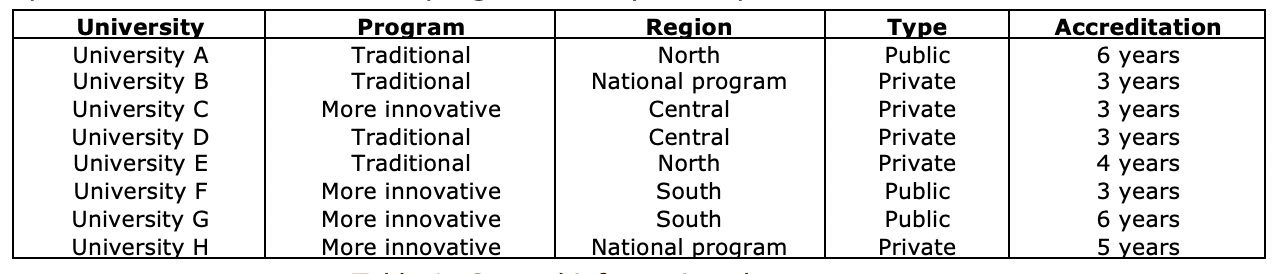
Table 1: General information about programs
Findings
As previously stated, the program structures of eight programs were analyzed. Five pre-established categories were selected to analyze the program structures namely: a) English Linguistics, b) English Teaching Methodology, c) General Pedagogy Courses, d) Teaching Practice, and e) General Training Courses. These areas were selected as they were part of the national components assessed by the accreditation process of all pedagogy programs in Chile. The explanation of each area is as follows:
- The English Linguistics area deals with the English language courses and the linguistics-oriented ones such as phonetics, grammar, syntax, discourse analysis, culture and literature among others.
- The English Teaching Methodology area has to do with the courses connected to language teaching, such as applied linguistics, teaching methods and approaches to name a few.
- The General Pedagogy area includes courses related to educational sciences, for instance: educational anthropology, sociology, psychology and/or educational politics.
- The Teaching Practice area corresponds to the practical experiences or field experiences which occur in the primary or secondary schools.
- The General Training area involves the transversal or core courses of each institution which are common subjects for all undergraduate programs.
Table 2 shows the number of courses in the curriculum plan according to the specific category. The eight programs had a similar number of courses during eight to ten semesters with an average of 49.8 courses per program. The area with the most courses was English Linguistics with 43% of the total number of courses and the following area was General Pedagogy with 23% of courses. Twenty one percent of the courses were devoted English Teaching (c) combined with Teaching Practice (d). Finally, General Training had 13% of courses in the curriculum plan analysis.
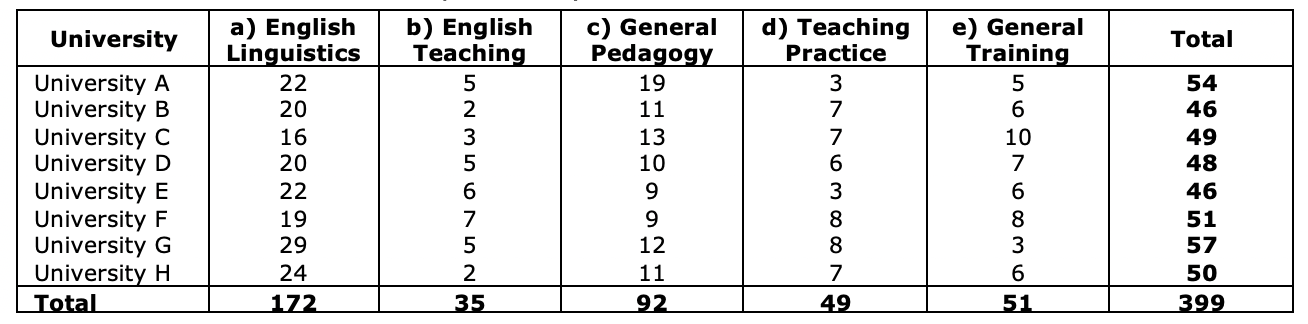
Table 2: Number of courses in the curriculum plan
In the traditional programs (Universities A, B, D, & E) the presence of the five areas could be clearly identified in the curriculum maps. There was a distinctive sequence of courses related to each area. The names used in the curriculum layouts were centered on the area they belonged to. The courses in the English Linguistics area had linguistic-oriented subjects such as Phonetics, Syntax, Morphology, and Semantics. They also organized English language courses progressively, such as English Language 1 then English Language 2 or Elementary English then Intermediate English. Literature and culture courses were added in this area, for example, Renaissance and Postmodern Literature. This is similar to what was observed in the General Pedagogy area where educational courses were clearly stated with subjects like General Curriculum, Ethics, or General Evaluation. The English Teaching area and Teaching Practice were clearly separated on the the curriculum layouts with courses such as Practice 1, Practice 2, or Methods, Teaching Receptive Skills, or Teaching Productive Skills. General training courses showed the institutional focus of each university such as Catholic religion courses, collaborative subjects, Spanish or Mathematics.
On the other hand, in the more-innovative programs (Universities C, F, G, & H) the five areas were more interwoven. In the English Linguistics area the names of courses were more general, such as Developing Communicative Competence 1, 2, Learning English through Culture or Literature. The General Pedagogy Area also integrated other subjects to include topics such as Responding to Special Needs in the English class or English Curriculum. The English Teaching and Teaching Practice areas had a specific and relating connection among their courses, such as Teaching and Practice of English 1, 2, or Didactics and Practice of English 1, 2, and so on. The presence of more courses in the Teaching Practice area was evident in these programs. Similar to the more-traditional programs, the General Area was a separate component of the programs and represented the specific directions of the institution.
Discussion
A shift from a traditional towards a more integrative perspective
Having in mind that traditional curriculum maps of Chilean English programs represent 85% in comparison to the remaining 15% of semi-traditional layouts (Gómez Burgos, 2022), English teacher education programs should be revised (Glisan & Donato, 2017) and updated in order to include the integration of content and language in their curricula (Banegas, 2012; Barahona & Benítez, 2020). That being said, new innovations to incorporate different approaches and proposals in these programs are a need for the current era.
Aligned with what Gómez Burgos (2022) reported, English pedagogy programs need an urgent update centered on four specific areas of knowledge, instead of the five areas used in the analysis above which are based on the national components assessed by the accreditation process of all English pedagogy programs in Chile. These four key areas are a) Fundamental pedagogy, b) English Language: Theory & Practice, c) English Teaching & Field Experience, and d) Complementary Training. These new areas show the joining together of the essential components of the prevailing areas as shown in Table 3.
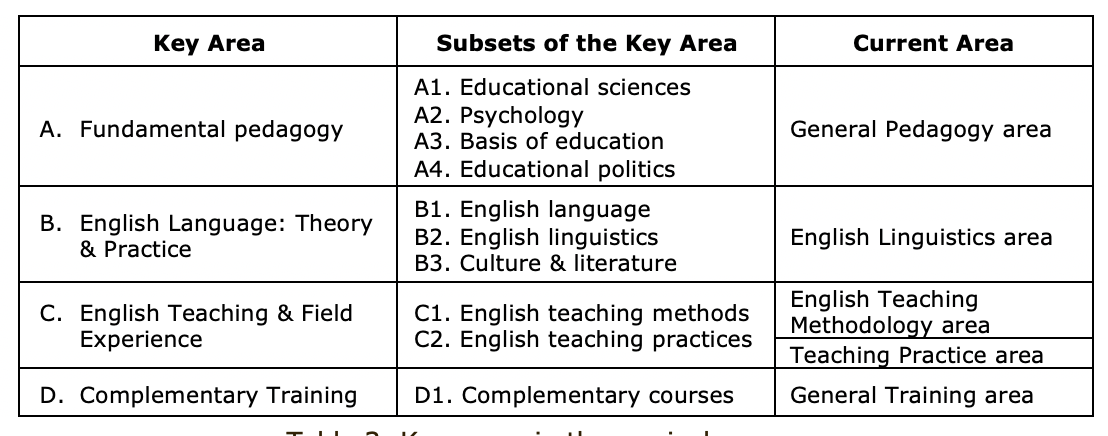
Table 3: Key areas in the curriculum maps
The key areas shown in Table 3 need to be backed up using two clear oriented principles. That is to say, the curriculum plans of the English pedagogy programs need to show an integrative set of courses that overlap with the surrounding areas of knowledge. This gives evidence of a more innovative curriculum map as summarized in Table 4.
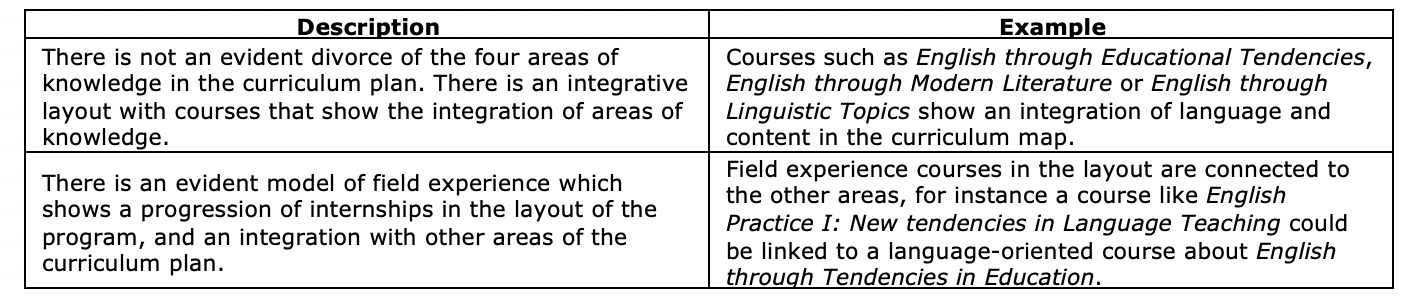
Table 4: Oriented principles in curriculum maps
These two oriented principles of the curriculum maps of English teacher education not only need to be reflected on the four key areas of knowledge, but also to be effective, need to incorporate a specific framework rooted on pedagogic models and situated research (Morton, 2019) that informs the entire process of preparing new English teachers in foreign language contexts. This specific framework has to be conceived as an institutional agreement and gradually implemented as this shift, first, has to reflect CLI and, second, a research agenda has to be developed to contextualize the specific needs of the English teaching field in the region.
Conclusions and Suggestions
Taking into consideration that a more integrative perspective for preparing new English teachers in foreign language contexts is a must nowadays, two oriented principles to guide the curriculum maps of programs were declared above. These principles emphasize the integration of four key areas of knowledge and the inclusion of a model of gradual field experiences that responds to the different areas identified in the proposal. These two principles are thought to be essential to incorporate new changes in teacher training and are the basis of a strong innovative program in the future. Nonetheless, this change has to be progressive and with the commitment of different actors, not only teachers of teachers, but also institutional and national authorities. That being said, an effective shift in English teacher education not only means the change in the curriculum map of the programs ,but also the adoption of a new framework supported by a strong strategic plan with at least two systematic foci.
Firstly, the strategic planning covers specific needs and elements at the different levels of education (McDougald & Álvarez Ayure, 2020). That said, a relevant component is preparing teachers of teachers with a methodological and theoretical grounding in CLI and a practical realization of the principles of this approach. As Martín del Pozo (2015) pointed out, today the “traditional foreign language classroom is not showing efficiency” (p. 155), and one of the reasons for this is the way English teachers are being prepared. Novice teachers repeat their mentors’ practices when they deliver their own lessons, and teachers of teachers, most of the time, adhere to more traditional perspectives to foreign language teaching. In this line, Morton (2019) claimed that there is a shortage of well-prepared teachers to implement CLI, which is a threat to the sustainability of these programs, as CLI teachers are most of the time untrained in teaching second language learners (Mahan, 2020). Professional development requires preparing educators who are committed to further professional development (Martel, 2013) and teachers who want to effectively make this shift. In terms of methodological changes, McDougald & Álvarez Ayure (2020) addressed the relevance of CLI in the use of the foreign language in authentic contexts and with contextualized materials. This allows learners to participate in real-world cultural issues since CLI provides students with tools and opportunities to use the language. It emphasizes the inclusion of content from curricular areas with “systematic language instruction and focus on form” (Nassaji & Kartchava, 2019, p. 611) within communicative contexts. Delivering lessons based on the previous principle will mean a systematic further development program for teachers to make the needed shift and adhere to this new approach.
Secondly, the plan entails opening the institutions overseas. As Martín del Pozo (2015) stated, “the internationalization of universities in non-English speaking countries requires attracting international students” (p. 155). This requires offering more courses in English to make it more attractive to foreign students to opt into Chilean universities. Having more courses taught in English would promote student exchange and staff mobility in the pedagogy programs and research would be shared with international institutions that train teachers. This new scenario would be in English and would expose future English teachers to other subjects in English. This would be aligned with the two proposed principles as they state the integrations of areas of knowledge in teacher preparation.
Finally, the implementation of this strategic planning requires the participation and commitment of different actors, such as instructors, institutional, and national authorities to negotiate and agree on common lines of development to make this process feasible. National meetings need to be coordinated and organized by the Ministry of Education in light of the results obtained by the universities in the National Evaluations given to future teachers. This would mean the participation of the different actors and institutions as a way of improving the national results and teacher training preparation.
Considering that this work was based on the analysis of only eight curriculum maps, the sample size may not be representative of the English teacher preparation programs in Chile. Further research should consider the analysis of other layouts and the syllabi of different programs. This new source of information could provide more evidence of the organization of the programs and the development of content in the syllabi. With that second source of information, a more precise and complete analysis could give more details and evidence to make decisions about the additional changes that English education needs in Chile. These results can be compared and complemented with evidence on the quality and effectiveness of the teacher preparation programs in achieving their goals or meeting the needs of students. All in all, this will complement this initial work and provide more evidence of this necessary shift in English teacher education.
References
Abrahams, M. J., & Farias, M. (2010). Struggling for change in Chilean EFL teacher education. Colombian Applied Linguistics Journal, 12(2), 110–118. https://doi.org/10.14483/22487085.87
Ávalos, B. (2014). La formación inicial docente en Chile: Tensiones entre políticas de apoyo y control [Initial teachers’ education in Chile: Tensions between policies of support and control]. Estudios pedagógicos (Valdivia), 40(ESP), 11-28. http://dx.doi.org/10.4067/S0718-07052014000200002
Banegas, D. L. (2012). Integrating content and language in English language teaching in secondary education: Models, benefits, and challenges. Studies in Second Language Learning and Teaching, 2(1), 111-136. https://doi.org/10.14746/ssllt.2012.2.1.6
Banegas, D. L. (2015). Sharing views of CLIL lesson planning in language teacher education. Latin American Journal of Content & Language Integrated Learning, 8(2), 104-130. https://files.eric.ed.gov/fulltext/EJ1132044.pdf
Banegas, D. L. (2022). Research into practice: CLIL in South America. Language Teaching, 55(3), 379-391. http://doi.org/10.1017/S0261444820000622
Banegas, D. L., & del Pozo Beamud, M. (2022). Content and language integrated learning: A duoethnographic study about CLIL pre-service teacher education in Argentina and Spain. RELC Journal, 53(1), 151-164. https://doi.org/10.1177/0033688220930442
Banegas, D. L., Poole, P. M., & Corrales, K. A. (2020). Content and language integrated learning in Latin America 2008-2018: Ten years of research and practice. Studies in Second Language Learning and Teaching, 10(2), 283-305. http://dx.doi.org/10.14746/ssllt.2020.10.2.4
Barahona, M. A. (2014). Exploring the curriculum of second language teacher education (SLTE) in Chile: A case study.Perspectiva Educacional, 53(2), 45-67. https://dx.doi.org/10.4151/07189729-Vol.53-Iss.2-Art.261
Barahona, M. (2015). English language teacher education in Chile: A cultural historical activity theory perspective. Routledge.
Barahona, M. (2016). Challenges and accomplishments of ELT at primary level in Chile: Towards the aspiration of becoming a bilingual country. Education Policy Analysis Archives, 24. https://doi.org/10.14507/epaa.24.2448
Barahona, M., & Benítez, R. (2020). Empowering student-teachers to become highly capable English language educators. In D. Banegas (Ed.), Content knowledge in English language teacher education: International experiences (pp.185-200). Bloomsbury Publishing.
Cammarata, L., & Ó Ceallaigh, T. J. (Eds.). (2020). Teacher development for immersion and content-based instruction. John Benjamins.
Cammarata, L., Tedick, D. J., & Osborn, T. A. (2016). Content-based instruction and curricular reforms: Issues and goals. In L. Cammarata (Ed.), Content-based foreign language teaching: Curriculum and pedagogy for developing advanced thinking and literacy skills (pp. 15-36). Routledge.
Díaz Larenas, C., & Bastías Dīaz, C. (2012). Una aproximación a los patrones de comunicación entre el profesor mentor y el profesor-estudiante en el contexto de la práctica pedagógica [An approach to the communication patterns between the mentor teacher and the student teacher in the context of pedagogical practice]. Educación XXI, 15(1), 241-263. https://doi.org/10.5944/educxx1.15.1.158
Fajardo Dack, T., Argudo, J., & Abad, M. (2020). The development of pragmatic competence in CLIL classrooms. MEXTESOL Journal, 44(3). https://www.mextesol.net/journal/index.php?page=journal&id_article=21491
Fereday, J., & Muir-Cochrane, E. (2006). Demonstrating rigor using thematic analysis: A hybrid approach of inductive and deductive coding and theme development. International Journal of Qualitative Methods, 5(1), 80–92. https://doi.org/10.1177/160940690600500107
Glisan, E. W., & Donato, R. (2017). Effective foreign language teaching: Broadening the concept of content knowledge. Foreign Language Annals, 50(1), 114-134. https://doi.org/10.1111/flan.12290
Gómez Burgos, E. (2017). Use of the genre-based approach to teach expository essays to English pedagogy students. HOW, 24(2), 141-159. http://dx.doi.org/10.19183/how.24.2.330
Gómez Burgos, E. (2022). Initial English as a foreign language teacher preparation in Chile: Reflections from theory and practice. In C. E. Poteau & C. A. Winkle (Eds.), Advocacy for social and linguistic justice in TESOL (pp. 182-194). Routledge.
Gómez Burgos, E., & Walker, W. (2020). Modernizing English teacher education in Chile: A case study from a southern university. Colombian Applied Linguistics Journal, 22(1), 101-114. https://doi.org/10.14483/22487085.14638
Guerra, P., & Montenegro, H. (2017). Conocimiento pedagógico: Explorando nuevas aproximaciones [Pedagogical knowledge: exploring new approaches]. Educação e Pesquisa, 43(3), 663-680. https://doi.org/10.1590/s1517-9702201702156031
Kim, H., & Graham, K. M. (2022). CLIL teachers’ needs and professional development: A systematic review. Latin American Journal of Content & Language Integrated Learning, 15(1). https://doi.org/10.5294/laclil.2022.15.1.5
Mahan, K. R. (2020). The comprehending teacher: Scaffolding in content and language integrated learning (CLIL). The Language Learning Journal, 50(1), 74-88. https://doi.org/10.1080/09571736.2019.1705879
Martel, J. (2013). Saying our final goodbyes to the grammatical syllabus: A curricular imperative. The French Review, 86(6), 1122-1133. http://www.jstor.org/stable/23511338
Martín del Pozo, M. Á. (2015). La formación del profesorado para la enseñanza integrada de contenidos y lengua extranjera: Perspectivas de un debate europeo actual [Teacher education for content and language integrated learning: insights from a current European debate]. Revista Electrónica Interuniversitaria de Formación del Profesorado, 18(3), 153–168. https://doi.org/10.6018/reifop.18.3.210401
McDougald, J. S., & Álvarez Ayure, C. P. (2020). Expanding the value of CLIL: Perspectives from primary to higher education. Latin America Journal of Content & Language Integrated Learning, 13(2), 155-162. https://doi.org/10.5294/laclil.2020.13.2.1
Morton, T. (2019). Teacher education in content-based language education. In S. Walsh & S. Mann (Eds.),The Routledge handbook of English language teacher education (pp. 169-183). Routledge.
Nassaji, H., & Kartchava, E. (2019). Content-based L2 teaching. In J. W. Schwieter & A. Benati (Eds.), The Cambridge handbook of language learning (pp. 597-620). Cambridge.
Pennycook, A. (2017). The cultural politics of English as an international language. Routledge.
Pérez Cañado, M. L. (2018). Innovations and challenges in CLIL teacher training. Theory Into Practice, 57(3), 212-221. https://doi.org/10.1080/00405841.2018.1492238
Setyaningrum, R. W., & Khoiriyah. (2022). Core features of content and language integrated learning (CLIL): An exploratory study in Indonesian primary schools. MEXTESOL Journal, 46(3). https://doi.org/10.61871/mj.v46n3-5
Stanton, S., & Fiszbein, A. (2019, October). Work in progress: English teaching and teachers in Latin America. Pearson. https://www.thedialogue.org/wp-content/uploads/2019/11/white-paper-2019-completo-final.pdf
Sotomayor, C., Parodi, G., Coloma, C., Ibáñez, R., & Cavada, P. (2011). La formación inicial de docentes de educación general básica en Chile ¿Qué se espera que aprendan los futuros profesores en el área de Lenguaje y Comunicación? [Initial training of teachers of general basic education in Chile: What are future teachers expected to learn in the area of Language and Communication?] Pensamiento Educativo, 48(1), 28-41.https://pensamientoeducativo.uc.cl/index.php/pel/article/view/25639/20563