
Introduction
Rajagopal (2015) stated that EFL students can master the writing skills if they receive effective corrective feedback. During the past two decades, research on corrective feedback (CF) has received permanent focus in English as a foreign language (EFL) and English as a second language (ESL) which has led to noticeable development in the field (Chong, 2019). However, corrective feedback is included among the still controversial issues in second language (L2) writing(Sarré et al., 2021). The majority of studies have focused on students' grammatical errors, and neglected other elements, especially the content of the writing (Ferris, 2003; Lee, 2019). Ahmed (2020) reported that highlighting students' grammatical errors with colours helped students to fix them. Sarré et al. (2021) claimed that applying any types of written corrective feedback (WCF) is more beneficial than leaving students' errors without correction. However, Lee (2019) claimed that unfocused and comprehensive CF was full of errors and Ellis and Sheen (2011) found that implicit CF was useless in correcting students' errors of writing. On the other hand, Saeed and Al Qunayeer (2022) have called for the use of interaction between students and teachers while giving the feedback.
The majority of EFL teachers focus on the grammatical errors in students' writing (Ferris, 2003; Lee, 2019). However, mastering writing requires many abilities and skills, and grammar is just one of them. Research studies which have aimed at focusing on students' overall writing ability go further by focusing on the content of writing rather than just spotting the grammatical errors (Khezrlou, 2019; Mahmoudi & Bugra, 2020; Rassaei, 2017). Such calls for content-focus are not new. Ferris (2004) pointed out that teachers should not only provide students with correction of their grammatical errors, but also give feedback on the content and organization of their writings. Al-Jarrah (2016) stated that research did not provide evidence as to whether CF should focus on form or content. However, Ellis and Sheen (2011) mentioned that correcting grammar and content of students' writing is somewhat unexplored. Still, Al-Jarrah (2016) criticized previous studies on CF because they did not set clear answers as to whether to correct the errors in students' written production or to just provide feedback on them. He used the term "error correction", instead of written feedback. He also added that even studies that supported correcting students' errors, did not indicate how to correct students' written essays. This study focuses on two of these issues: The interactive, face-to-face feedback with students to revise their essays focusing on both content and form and students' perceptions about such strategies. Specifically, the research questions are:
- What are Yemeni EFL undergraduates’ attitudes on getting their essays corrected via face-to-face interaction with their instructor?
- What are some of the advantages Yemeni EFL undergraduates get from engaging in face-to-face interactive feedback?
- How do Yemeni EFL undergraduates evaluate their writing at the end of the course?
Literature Review
Corrective feedback is perceived as "comments on the appropriateness or correctness of learners' production or comprehension of a second language" (Li & Vuono, 2019, p. 94). It "refers to the feedback that learners receive on the linguistic errors they make in their oral or written production in a second language (L2)" (Ellis & Sheen, 2011, p. 593). CF signifies the teachers' comments on students' writing errors (Mao & Crosthwaite, 2019). However, no definition focuses on students' degree of covering the requirement to be included in the content of their writing productions. Several issues on unfocused and comprehensive written feedback are still unresolved (Lee, 2019). Mao and Lee (2020) confirmed that the effectiveness of focused, comprehensive WCF and students and teachers' attitudes towards them is still foggy. Likewise, the efficacy of indirect WCF is not clear yet (Tang & Liu, 2018). Mao and Crosthwaite (2019) also reported that the variation between teachers' belief and practice on CF is among the controversy issues. Still, CF is perceived as context-specific (Ahmed, 2020).
The (im)practicality of corrective feedback
Corrective feedback is the concern of two theories, the first is sociocultural theory and the second is cognitive theory. The cognitive theory explains how CF helps in the acquisition process in both oral and written CF. On the other hand, in sociocultural theory, a teacher helps the learner to move from self-regulation to self-correction and it is usually taught to suit the learner' level and oral (Ellis & Sheen, 2011).
Studies on WCF are quite common. Some have explored the existing research on WCF (Ahmed, 2020; Chong, 2019; Mao & Lee, 2020). Chong (2019), for example, analyzed the abstracts of 41 WCF articles released between 2007 into 2017 using the seven-stage model of analysis suggested by Petticrew and Roberts (2008). The study identified 22-word levels which were classified into five themes including WCF types, types of errors, writing assignments, research design, and participants demographics. Al-Jarrah (2016) claimed that previous studies on CF were problematic in design, so that he suggested a three-premise CF model which links "error correction with error feedback", focusing only on one grammatical error at a time, and paying attention to the use of the structure.
Other empirical studies exploring the effects of WCF on students' performance with different language elements showed positive effects (Beşkardeşler & Kocaman, 2019; Hamid et al., 2018; Khezrlou, 2019; Sarré, et al., 2021). Hamid et al. (2018) explored the impact of colour code system as a kind of indirect CF on EFL students' grammatical errors. The study used experimental design and was carried out on Middle Eastern EFL students. Findings showed that whenever students noticed their grammatical errors, they tried to minimize them, so a measurable degree of improvement was found. Khezrlou (2019) studied the impact of task and procedural repetition delivery by oral CF on the development of past tense (regular and irregular) amongst 47 EFL students. The students participated in pre-tasks, three repeated tasks, and post- and delayed tests for a six-week intervention. Students were provided with CF either through revision or requests for clarification. The study reported requests for clarification outperformed the revision feedback. Furthermore, Sarré et al. (2021) measured the impact of six types of CF amongst EFL learners in France. The participants were divided into seven groups, one of which was a control and the other six were experimental groups which received different types of feedback. This study revealed that any CF was better than no feedback at all. Moreover, the findings showed that unfocused indirect CF alongside with additional computer micro-tasks was the best CF type in the French context.
Types of corrective feedback
Ellis (2009) identified five types of teachers CF. They are direct, indirect, metalinguistic, focused versus unfocused, and electronic feedback. However, Al-Jarrah (2016) classified CF into error feedback (EF) and error correction (EC) whereas the first focuses on correcting issue related to content while the second modifies mechanical and grammatical errors at sentence level. Furthermore, many previous studies distinguished between face-to-face and online feedback (e.g., Liu et al., 2021; Pham, 2020; Rassaei, 2017). Zhang et al. (2021) investigated the preferences of 117 EFL Thai students for four types of widely discussed WCF, i.e., grammatical, orthographic, lexical and pragmatic errors. They also explored whether the EFL students' preference to any of the four types of WCF was influenced by their enjoyment or proficiency levels. It was reported that the students' preference was to use WCF types including overt correction and metalinguistic explanation irrespective the types of errors. It was also found that unlike low level students, high proficiency level students preferred less explicit WCF, i.e., error code and underlining. Some factors were also revealed that affected students' preference of WCF including first language linguistic features and their mastery level of the target language. In the same vein, Beşkardeşler and Kocaman (2019) studied the impact of direct focused and direct unfocused WCF on developing EFL students' accuracy in prepositions of time and place. The study employed an experimental design in which focused group WCF got their errors directly corrected whereas students in the unfocused WCF[1] received correction addressing their grammatical, punctuation and spelling errors. The results revealed that the experimental group scored higher than the control group. The finding also showed that no significant differences were found between focused and unfocused WCF. Lee (2019), however, reported that the application on the focused approach to CF and its advantages for teachers. He rejected the criticism levelled on direct CF and suggested EFL teachers to apply this approach.
Furthermore, Ahmadi-Azad (2014) studied the impact of coded and uncoded WCF on the writing accuracy of Iranian EFL students. The study analyzed ten error types in students' writings. The participants were grouped into two groups. For the four weeks of interventions the errors of the first group were underlined and codes were written above them, whereas the second group’s errors were underlined and corrected. Students were then asked to write composition. Results showed that coded WCF had more impact on students' writing.
Face-to-face feedback vs. other strategies
Face-to-face (FTF) feedback has been combined with different types and models of feedback in various studies on writing, Mahmoudi and Buğra (2020) established that combining FTF feedback with rubric-guided assessment significantly enhanced student performance. Rassaei (2017) compared FTF and computer-mediated revisions; Pham (2020) investigated the impact sequences of two types of feedback, i.e., FTF and computer-mediated revisions of students' writings. However, all studies reported the positive impact of both feedback types that were FTF on students' development. Rassaei (2017) and Pham (2020) studied the impact of FTF and computer-medicated feedback. Rassaei’s study on 57 Iranian EFL students measured the students' comprehension to these two feedback modes. Findings indicated that learners' development was equally improved in both computer-mediated and FTF versions.
Vásquez-Colina et al. (2017) studied the nature of peer feedback with service teachers in undergraduate classes in distance learning and FTF mode and reported no significant differences between the two. However, face-to-face feedback was preferred over peer feedback presented in distance learning mode. Liu et al. (2021) investigated the impact of combining both FTF and e-feedback on enhancing PhD students writing ability. The findings showed that FTF consolidated basic level students whereas e-feedback promoted peers to provide constructive feedback and finally FTF feedback in the third phase promoted in-depth discussion. The researchers strongly believed on the impact of technology discussed above on providing feedback to students' writings. However, in contexts which lack infrastructures for applying e-feedback, it is essential for teachers to adapt FTF feedback. Price et al. (2013) reported that teachers in FTF construct nuanced understandings of the errors, interacted with and engaged students, and encouraged deeper comprehension of the topic which could not be achieved with simple written feedback. Such FTF feedback relates to the learner’s individual differences and encourages f personal communication skills.
Interactive FTF feedback
Face-to-face feedback is used to refer to feedback which is the opposite of that used in online feedback. It refers to the simultaneous identification of students' writing errors while they are sitting with their teacher. The teacher is commenting on the students' writing both orally and identifies the errors directly and indirectly. Lamm et al. (2019) suggested that a combination of peer FTF and written feedback to be supplied to the students in specific feedback sessions that are based on teachers' facilitations. They believed that such strategy is beneficial to the students.
Methods
Research design
This study used a qualitative research design due to the nature of the research. Qualitative research allows the researcher to get a profound understanding of the research phenomena. It also gives chance to the participants to express their attitudes freely. The study was conducted during first semester of the academic year (2021-2022).
Participants
The researcher recruited all the fourth level students who enrolled in the Academic Writing course for the academic year, 2021-2022. There were four males and thirteen females. All the participants orally expressed their consent to participate in the study. The participants shared Socotri as a first language and Arabic as a second language. They were studying English as a foreign language. Their average age was 23. They lived in rural and semi-rural areas. They had formally studied English for ten years at school and university. The researcher got permission from the vice dean of the college to conduct the study. The ethical approval letter dated (December 21, 2021) states that the college has no objection in this research and it serves as scientific research. Students were told to write their attitudes frankly and assured that they were not required to write their names on the questionnaire.
Procedures
The researcher taught the Academic Writing course, which focused on how to write essays, descriptive, opinion, compare and contrast, etc. The course covered 12 weeks, with three hours of class a week. Students were required to write an essay at home depending on three procedures they had studied and practiced collaboratively in the class. The students came to the next lecture with their completed essays. The instructor allocated 30 minutes for correcting students' essays. It was sufficient time to edit at least ten essays every lecture due to the small numbers of students enrolled. A student was called to the front of the class and sat with the instructor. The instructor read the essay and wrote down feedback and explained the writing problems to the students. The focus included the basic elements of the essays, like, hook, background and thesis statement for the introduction. Topic sentences, supporting sentences, conclusion, for the body paragraphs and connectors, verb tenses, word choice in addition during the conclusion of the essays. Therefore, students were given chance to develop their essays and resubmit them during the next lecture. This process continued two, three, or even more times while developing the same essay. It depended on the students' ability and motivation to modify their writings. The researcher applied FTF interactive corrective feedback for four essays types during the semester. At the end, students participated in answering an open-ended survey. Twelve of the students submitted their questionnaire while five of them did not. It can be said that this research adapted Al-Jarrah's (2016) focused (comprehensive) feedback. Figure 1. shows the framework that this study used.
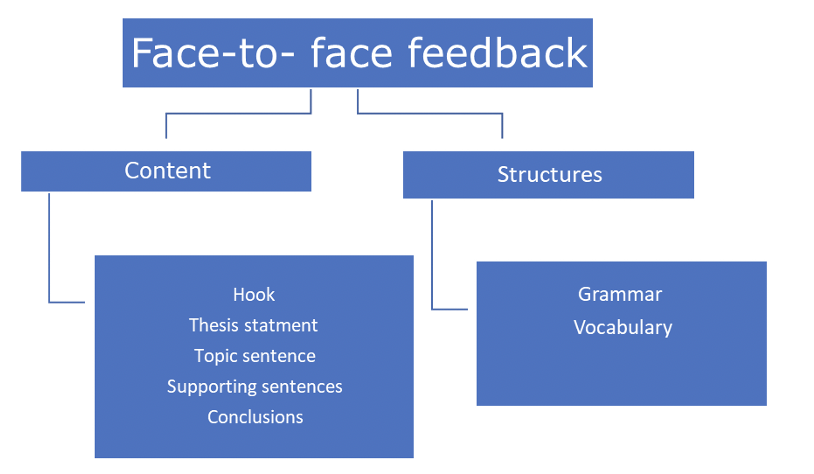
Figure 1: Face-to-face feedback adapted in the classroom.
Instrument
An open-ended questionnaire was shared with the students. It aimed to check their perceptions about the impact of FTF correction feedback and the focus of the teacher while giving the feedback. The questionnaire contained five questions. They were validated by three EFL expert professors who taught writing. They were also administrated to two students at a different college.
Data analysis
Students' answers to the questionnaire were qualitatively analyzed in which themes and codes were obtained. Students' numbers were attached to each quote exhibited.
Results
RQ1: What are Yemeni EFL undergraduates’ attitudes on getting their essays corrected via face-to-face interaction with their instructor?
All the students perceived the teacher's feedback on their writing positively:
I like face-to-face correction feedback. It is excellent for me because when I see my mistakes in front of my eyes, I learn how to correct them from my supervisor. [Student 2]
That is a good idea; it helps me to identify my mistakes, then to correct them. Really, I like this way so much. [Student 12]
It is good. I like that feedback to develop my writing and avoid my mistakes. [Student 3]
I like face-to-face feedback because I understand my mistakes and I know how I write correct essay. [Student 7]
It is good for me. It developed my writing, and I became able to write essays. [Student 5]
It is a good way for the students. [Student 9]
This is an excellent way for me. [Student 2]
RQ2: What are some of the advantages Yemeni EFL undergraduates get from engaging in face-to-face interactive feedback?
Students reported that they got some benefits in their writing due to the face-to-face interactive strategy adopted by their instructor during the academic writing course. Students believed that they learned to spot their mistakes to avoid them in their writing:
Focusing on my mistakes in face-to-face enable me to correct them and avoid repeating them next times. The teacher's FTF comments help me to how to write the best essay. [Student 1]
I recognize my mistakes easily and I rewrite my essay again without mistakes or with a little. I also understood the form of writing and applied it in my writing. [Student 3]
I got a lot of benefits including how to write a paragraph, or an essay. I learned the steps that I should follow to make the essay/paragraph focusing on the unity. It gives every student chance to discuss his/her mistakes directly with the teacher face to face, i.e., why is it wrong? and how to correct them. [Student 11]
I learned the essay format, the spaces between the paragraphs and the content of the essay. [Student 5]
I learned how to write an essay with its correct elements and organization. I learned from my mistake in my writing that due to the face-to-face correction that the instructor used. [Student 9]
Still other students reported they learned correcting grammar, use appropriate vocabulary and apply the steps required in essays:
I got many benefits due to the various discussions with my teacher on how to use the best vocabulary, correct grammar, and the steps that I should follow during the writing process. [Student 11]
I got benefit how to write essay with correct grammar and apply steps of essay writings. [Student 4]
Focusing on mistakes directly made me correct them at the same time and avoid committing them next times. Also, the professor's notes helped me how to write the best essays with the required elements, structure of sentences, conjunctions, punctuations and the use of suitable words to describe what learnt. [Student 1]
RQ3: How do Yemeni EFL undergraduates evaluate their writing at the end of the course?
The majority of the students reported that their writing had improved, but the degree of improvement differed from student to student. One even said that they became good writers and even that they had the ability to teach others how to write essays:
I got a lot of information that help me to write without any difficult. I can teach them to anyone easily. [Student 1]
Others reported that their writing improved and they could write without losing their ideas:
I become a good writer. I can support my writing without dismantling the idea. [Student 3]
I found my writing developed and became better. After I studied academic writing, the professor gave me the techniques of writing like outline. I gained the plan how to write essays. [Student 2]
I found myself good. My writing becomes better than before. It has been developed and improved. [Student, 5]
I find myself better than I was. At first, I have no idea how to write an essay. [Student 11]
Furthermore, some students compared their level after taking the previous course.
I am better than before, I learned how to write essays. [Student 6]
Now, I am better than before. [Student 10]
I become good. I know how to write good essays. [Student 8]
I find myself improved. I am able to write essays. [Student 9]
However, the last group showed little improvement in their writing,
I have improved a little. [Student 7]
I am not bad. [Student 4]
Discussion
This study explored the role of face-to-face (FTF) written correction feedback (WCF) on Yemeni EFL students' attitudes. Results indicated that these students preferred FTF feedback to WCF on their essays. This finding shows that students preferred to get their essays corrected in interactively and FTF with their teachers rather than getting corrected essays without any FTF interaction. This finding is in line with Lamm et al. (2019), who suggested combining both written and oral feedback in a FTF mode with the students. This finding is also confirmed by Price et al. (2013) who reported that FTF feedback achieved and corrected issues that could not be addressed through WCF. In FTF correction students are engaged deeply in the learning and assessment processes. Saeed and Al Qunayeer (2022) said that the importance of feedback which is based on interaction between students and teachers should be used. Loan (2017) also found that Thai students reported positive attitudes regarding peer-teacher feedback on their paragraphs.
This study indicates that the writing instructor should focus on both content and structures while correcting students' essays. This finding confirmed the positive role that the instructor played. This finding disagreed with previous studies which called for teachers to focus only on students' grammar (e.g., Khezrlou, 2019; Mahmoudi & Bugra, 2020; Rassaei, 2017), and others highlighted the complexity of focusing on both grammar and function (e.g., Ellis & Sheen, 2011). However, Ferris (2004) said teachers should not only provide students with correction of their grammatical errors, but also with the content and organization of their writings.
Finally, students perceived FTF feedback positively. They reported that they got many benefits like, "I know my mistakes easily and I rewrite my essay again without mistakes or with a little"; "I got benefit how to write essay with correct grammar, and apply steps of essay writings"; "It gives every student chance to discuss his/her mistakes directly with the teacher face to face i.e., why is it wrong? and how to correct them". Students also reported that, " I become a good writer. I can support my writing without dismantling the idea", "I learned a lot of information that I did not know. It helped me to write without difficulty. Also, I can teach essay writing to anyone".
Conclusion
This study explored a contradictory issue which is the use of face-to-face interactive feedback when correcting students' writing. It differs from previous research by its simultaneous focus on both grammar and content when the majority of studies have focused on one. This study shows that Yemeni undergraduate students preferred face-to-face feedback over written correction feedback. They reported that getting their errors corrected in front of their eyes enabled them to understand their mistakes and avoid them the next time. They said that their instructor focused on both grammar and content of their essays which urged them to write essays and apply all the steps required. They also reported that they had become good writers, and some even said they had gained the ability to teach essays to other students. All the above findings require comprobation in future research. This is a call to check the impact of FTF feedback in further experimental research to assure the validity of the perceptions of the limited number of students studied in this research.
References
Ahmadi-Azad, S. (2014). The effect of coded and uncoded written corrective feedback types on Iranian EFL learners' writing accuracy. Theory & Practice in Language Studies, 4(5), 1001-1008. https://doi.org/10.4304/tpls.4.5.1001-1008
Ahmed, A.M. (2020). Feedback in EFL writing: Arab world contexts, issues, and challenges. In A. M. Ahmed, S. Troudi, & S. Riley (Eds), Feedback in L2 English writing in the Arab World. Palgrave Macmillan.
Al-Jarrah, R. S. (2016). A suggested model of corrective feedback provision. Ampersand, 3, 98-107. https://doi.org/10.1016/j.amper.2016.06.003
Beşkardeşler, S., & Kocaman, O. (2019). The effects of written corrective feedback types on the prepositions of place and time in EFL context. Journal of Multidisciplinary Studies in Education, 3(1), 1-13. https://dergipark.org.tr/en/download/article-file/683394
Chong, S. W. (2019). A systematic review of written corrective feedback research in ESL/EFL contexts. Language Education & Assessment, 2(2), 70-95. https://doi.org/10.29140/lea.v2n2.138
Ellis, R. (2009). A typology of written corrective feedback types. ELT Journal, 63(2), 97-107. https://doi.org/10.1093/elt/ccn023
Ellis, R., & Sheen, Y. (2011). Corrective feedback in language teaching. In R. Hinkel (Ed.), Handbook of research in second language teaching and learning (pp. 593-610). Routledge.
Ferris, D. (2003). Responding to writing. In B. Kroll (Ed.), Exploring the dynamics of second language writing (pp. 119–140). Cambridge University Press.
Ferris, D. R. (2004). The “grammar correction” debate in L2 writing: Where are we and where do we go from here. Journal of Second Language Writing, 13(1), 49–62. https://doi.org/10.1016/j.jslw.2004.04.005
Hamid, H. A., Nasri, N. F., & Ghazali, N. (2018). Colours as a form of corrective feedback in EFL learners' writing. GEMA Online Journal of Language Studies, 18(4), 106-123. http://doi.org/10.17576/gema-2018-1804-08
Khezrlou, S. (2019). Task repetition and corrective feedback: The role of feedback types and structure saliency. English Teaching & Learning, 43(2), 213-233. https://doi.org/10.1007/s42321-019-00025-2
Lamm, E., Petkova, A., & Alvarez Domingo, M. A. (2019). Time to face your feedback: Combining the benefits of written and face-to-face feedback in teams. Academy of Management Proceedings, 2019(1).https://doi.org/10.5465/AMBPP.2019.16307abstract
Lee, I. (2019). Teacher written corrective feedback: Less is more. Language Teaching, 52(4), 524-536. https://doi.org/10.1017/S0261444819000247
Lee, I. (2020). Utility of focused/comprehensive written corrective feedback research for authentic L2 writing classrooms. Journal of Second Language Writing, 49. https://doi.org/10.1016/j.jslw.2020.100734
Li, S., & Vuono, A. (2019). Twenty-five years of research on oral and written corrective feedback in System. System, 84, 93-109. https://doi.org/10.1016/j.system.2019.05.006
Liu, F., Du, J., Zhou, D. Q., & Huang, B. (2021). Exploiting the potential of peer feedback: The combined use of face-to-face feedback and e-feedback in doctoral writing groups. Assessing Writing, 47. https://doi.org/10.1016/j.asw.2020.100482
Loan, N. T. T. (2017). A case study of combined peer-teacher feedback on paragraph writing at a university in Thailand. Indonesian Journal of Applied Linguistics, 7(2), 15-24. https://doi.org/10.17509/ijal.v7i2.8345
Mahmoudi, F. & Bugra, C. (2020). The effects of using rubrics and face to face feedback in teaching writing skill in higher education. International Online Journal of Education and Teaching (IOJET), 7(1), 150-158. https://eric.ed.gov/?id=EJ1244244
Mao, S. S., & Crosthwaite, P. (2019). Investigating written corrective feedback: (Mis)alignment of teachers’ beliefs and practice. Journal of Second Language Writing, 45, 46-60. https://doi.org/10.1016/j.jslw.2019.05.004
Mao, Z., & Lee, I. (2020). Feedback scope in written corrective feedback: Analysis of empirical research in L2 contexts. Assessing Writing, 45. https://doi.org/10.1016/j.asw.2020.100469
Petticrew, M., & Roberts, H. (2008). Systematic reviews in the social sciences: A practical guide.
Blackwell.
Pham, H. T. P. (2020). Computer-mediated and face-to-face peer feedback: Student feedback and revision in EFL writing. Computer Assisted Language Learning, 35(9). https://doi.org/10.1080/09588221.2020.1868530
Price, M., Handley, K., O’Donovan, B., Rust, C., & Millar, J. (2013). Assessment feedback. An “agenda for change”. In S. Merry, M. Price, D. Carless, & M. Taras (Eds.), Reconceptualising feedback in higher education: Developing dialogue with students (pp. 41-53). Routledge
Rajagopal, N. (2015). A teacher's written corrective feedback: Belief and practices [Unpublished doctoral dissertation]. Universiti Malaya.
Rassaei, E. (2017). Video chat vs. face-to-face recasts, learners’ interpretations and L2 development: A case of Persian EFL learners. Computer Assisted Language Learning, 30(1-2), 133-148. https://doi.org/10.1080/09588221.2016.1275702
Saeed, M. A., & Al Qunayeer, H. S. (2022). Exploring teacher interactive e-feedback on students’ writing through Google Docs: Factors promoting interactivity and potential for learning. The Language Learning Journal, 50(3), 360-377. https://doi.org/10.1080/09571736.2020.1786711
Sarré, C., Grosbois, M., & Brudermann, C. (2021). Fostering accuracy in L2 writing: Impact of different types of corrective feedback in an experimental blended learning EFL course. Computer Assisted Language Learning, 34(5-6), 707-729. https://doi.org/10.1080/09588221.2019.1635164
Tang, C., & Liu, Y.-T. (2018). Effects of indirect coded corrective feedback with and without short affective teacher comments on L2 writing performance, learner uptake and motivation. Assessing Writing, 35, 26-40. https://doi.org/10.1016/j.asw.2017.12.002
Vásquez-Colina, M. D., Russo, M. R., Lieberman, M., & Morris, J. D. (2017). A case study of using peer feedback in face-to-face and distance learning classes among pre-service teachers. Journal of Further and Higher Education, 41(4), 504-515. https://doi.org/10.1080/0309877X.2015.1135884
Zhang, T., Chen, X., Hu, J., & Ketwan, P. (2021). EFL students' preferences for written corrective feedback: Do error types, language proficiency, and foreign language enjoyment matter? Frontiers in Psychology, 12. https://doi.org/10.3389/fpsyg.2021.660564
[1] Focused group WCF targets a predetermined category of linguistic errors, such as prepositions or article usage. In contrast, unfocused group WCF addresses all discernible errors across grammatical, lexical, and syntactical domains.