
Introduction
Distance education has been one of the most popular and rapidly growing educational practices at the tertiary level due to the COVID-19 pandemic (Nikolaevna Poddubnaya et al., 2021; Nomnian, 2022; Thumvichit, 2021; Thumvichit et al., 2021). Because of the required social distancing, distance learning became a new educational procedure which is highly promising as it focuses on individualization (Nenko et al., 2020). Distance education is regarded as a formal method of learning, and it is a type of learning in which teachers and learners reside in different locations (Gunawardhana, 2020). This circumstance necessitates the need for educational institutes to address a number of issues, including ways for educational processes to interact in virtual environments, web technologies and services, information exchange, and digital transformation are the key requirements for the globalization of education in the new socio-cultural reality (Nikolaevna Poddubnaya et al., 2021).
During the pandemic, the use of electronic information and educational materials in the educational process was the only way to continue formal education (Koreneva et al., 2020). Various technological educational tools were progressively instrumental in shifting language educational platforms from classroom to virtual ones. English language instruction called for alternative pedagogical approaches by adopting computer-assisted language learning (CALL) to meet remote online learning and teaching. However, CALL is considered to be one of the fundamental distance English learning tools, and it not only refers to the integration of computer applications in language teaching and learning, but also involves a broad area of information and communication technology (ICT), such as computer-mediated communication (CMC), language learning in virtual worlds, and mobile-assisted language learning (MALL) (Lodhi et al., 2019; Levy, 1997). According to CALL studies, software, learning tasks have been considered as one of the scopes of CALL instruction (Alian et al., 2018; Chapelle, 2003; Ghufron & Nurdianingsih, 2019; Habbash, 2020; Meihami, 2021; Nejati & Jahangiri, 2018; Shaikh et al., 2021; Shayakhmetova et al., 2020; Stewart, 2019; Zawiła, 2021).
Microsoft Teams, among others, has become one of the key CALL platforms. This platform was launched in 2017 by the Microsoft Company. It is a cloud app digital hub that integrates discussions, meetings, files, and applications together in a single learning management system (LMS) (Microsoft, 2018). Microsoft Teams apps are easy to download and applicable for both desktop and mobile devices. It has highly advanced capabilities, such as chat rooms, collaborative discussion, content sharing, video conferencing, and file storage (Buchal & Songsore, 2019; Henderson et al., 2020; Hubbard & Bailey, 2018; Ilag, 2020; McVey et al., 2019; Tsai, 2018). Because of its useful functions, employing Microsoft Teams for distance education can potentially benefit teachers and students who may not be able to meet physically.
A number of studies explored the benefits and challenges of Microsoft Teams in language classes during the crisis (Alabay, 2021; Nguyen & Duong, 2021; Rojabi, 2020). For instance, Yen and Nhi (2021) found that undergraduate students expressed a positive view towards the use of Microsoft Teams for teaching foreign languages online. On the contrary, some constraints included a considerable risk of being distracted by technology and losing track of deadlines; other limitations incorporated an incapacity to make effective use of multimedia, a lack of social interaction and rapid feedback, inaccessibility to internet, and educational technology, time management, and self-motivation (Nenko et al., 2020). Since Microsoft Teams has been one of the latest tools in time of crisis, the context of its functional use according to users’ attitudes should be emphasized. An individual’s feelings, beliefs, and reaction to an event, phenomena, items, or person are referred to as attitudes which are the evaluation of positive or negative view (Olufemi, 2012). In the field of education, attitude has risen in popularity since it has been established as an important component of second language pedagogy (Şentürk, 2019).
Users’ attitudes towards CALL have been explored at different academic levels in Thai higher education. Thumvichit (2021) states that teacher agency can create a convivial learning environment that substitutes the loss of interpersonal communication, enhances learner autonomy, and provides suitable assessment tools, for example, during emergency remote teaching and learning. Nevertheless, the integration of educational technologies, online platforms, and English language teaching during the COVID-19 pandemic crisis enhanced teacher-student interactions and sociocultural dimensions (Inpeng & Nomnian, 2020; Nomnian, 2022). Although digital tools cannot substitute face-to-face interpersonal instruction and interaction, self-access language learning (SALL) materials and advising in language learning (ALL) were recommended during the abrupt transition (Thumvichit et al., 2021). Various digital channels and platforms, including LINE (Nomnian, 2022) and Facebook (Inpeng & Nomnian, 2020; Nomnian, 2022) not only could narrow down communicative gaps between teachers and students, but also promote positive psychological impact on both parties. There are, however, limited studies regarding the effect of Microsoft Teams on distance English learning in a Thai university. To fulfill this gap of CALL research in Thai higher education context during the COVID-19 crisis, this study explored attitudes of teachers and undergraduate students in terms of their experience and satisfaction from using Microsoft Teams.
Literature Review
Open and Distance Learning (ODL)
Open and Distance Learning (ODL) is relevant to CALL as it is an alternative pedagogical practice derived from computer-accelerated instruction (CAI), which is the pioneering tool for supporting teachers (Lodhi et al., 2019). Web-based distance learning system is considered a part of ODL and is suitable for undergraduate students whose interests and satisfaction are ensured (Bagci & Celik, 2018). ODL can also provide scaffolding for undergraduate students who utilize online spaces to create supportive learning community with their peers (Foley & Marr, 2019).
This teaching method can be conducted on various online platforms, and the selection of the method depends on the individual educational institutes and organizations. Previous studies have explored different aims of distance learning (Bouchefra & Baghoussi, 2017; Lodhi et al., 2019; Rakowski & Wojdynski, 2018; Alrazeq Saeed & Al-Zayed, 2018; Tafazoli et al., 2018, 2019). Time flexibility, financial consideration, and the direction of instructional technologies and applications were the main reasons for the participants to take part in distance learning (Dos Santos, 2020). For example, Turkish undergraduates found ODL system effective as it could bridge their socioeconomic gaps in their education (Kılınc et al., 2020).
Through various CALL applications and software, ODL can play an important role in learners’ motivation that drives them to use self-study to reach language goals. CALL also supports the paradigm shift of technological language learning. For these reasons the attitudes of Thai students and teachers towards CALL were the main focuses of this present study.
Multicomponent Model of Attitudes to CALL
Attitude is a psychological phenomenon through which individuals manifest their thoughts towards some events (Eagly & Chaiken, 1998; Tafazoli et al., 2019). Scholars argue what constituents an attitude. Thurstone (1931) describes an attitude as a positive or negative emotional response to a psychological object, while Allport (1954) defines it as a tendency to think, feel, and behave towards a person (or object) in a specific way. Thus, attitudes not only encompass emotion, but also include cognition and behavior. Therefore, the three main components, namely cognitive, affective, and behavioral aspects are the keys to study attitudes (Fishbein & Ajzen, 1975; Kiesler et al., 1969; Mantle-Bromley, 1995; Mantle-Bromley & Miller, 1991; Wood & Wood, 1993).
Each domain of attitudes is related to a particular aspect in the field of CALL research. The cognitive component is concerned with a person’s level of knowledge and computer literacy (Simonson & Maushak, 2001). The behavioral component is a person’s overt conduct. This component is linked to a language teacher or a student’s experience at the time of using technology in language teaching and learning. In other words, according to Simonson and Maushak, the more computer competency one has, the more positive attitudes toward computers they have. Lastly, the affective component is concerned with an attitude object. The affective component is defined by individual’s feelings or emotions that are connected with the attitude object. The simple definition is that it deals with the emotive component of attitude when a teacher believes that a technology makes their teaching more effective (Tafazoli, 2019).
The above mentioned three attitude components should be integrated into exploring CALL educational research and practices. There are a number of empirical studies that examine the attitudes towards CALL through different contexts. For example, while in Tafazoli et al. (2019), there was no difference between Spanish and Iranian students with regards to their attitudes towards CALL, Lodhi et al. (2019) claimed that male students had higher positive attitudes than their female counterparts because the former were satisfied with their English development through virtual reality-assisted language learning (VRALL). Virtual reality technology is a part of CALL as it promotes students’ engagement in their learning (Rakowski & Wojdynski, 2018).
In addition, Jordanian undergraduate students found CALL positive as it enhanced their writing ability, classroom participation, creativity, English usage, vocabulary, and communication (Alrazeq Saeed & Al-Zayed, 2018). Additionally, in a cross-cultural study of Iranian and non-Iranian students’ attitudes towards CALL, it was revealed that there was no difference between groups (Tafazoli et al., 2018). Furthermore, Algerian EFL teachers’ attitudes were examined in terms of their affective, cognitive, and behavior domains, which affected their positive attitudes towards CALL (Bouchefra & Baghoussi, 2017). They observed that participants generally held a positive outlook toward CALL and showed several indicators suggesting they would likely adopt it in the future, provided that the conditions became favorable.
Microsoft Teams for Education
Microsoft Teams was launched on 14 March 2017 in New York was initially created for business communication by the Microsoft Cooperation. (Microsoft Teams, 2021). It has recently been utilized for various purposes using the six following functional features.
- Teams: Communities and groups are allowed to communicate through a particular URL provided by an administrator. This function is also the communicational area for teachers and students in class.
- Channels: Users not only can set up specific channels for conversations and topics but also send private massages to other users. Both posts and direct massage channels are be interacted by texts, images, GIFs, and memes. Moreover, other platforms can share information, and they are MailChimp, Facebook Pages, Twitter, PowerBI, and Bing News.
- Calling: Instant messaging, voice over IP, and video conference are available on this software.
- Meeting: Users can create the meeting schedule in advance for specific channels and invite thousands of users. This software is also linked to Microsoft Outlook for meeting invitation.
- Team Live Events: There is a special function called Live on this software that can broadcast up to ten thousand users on Microsoft Teams.
- Education: Teachers can conduct students’ assignments on a tab bar. Office 365 is also available as sub-education areas, such as quizzes and online test.
- Protocols: There is a number of sub-protocols for specific purposes that can be connected by Microsoft Teams. (Microsoft Teams, 2021).
Empirical studies of Microsoft Teams in education are under-explored since this platform is a new alternative adopted during COVID-19 crisis. For instance, Rojabi (2020) examined 28 undergraduate students’ perceptions of Microsoft Teams as an online learning tool in an Indonesian context and found that although it was truly new for students, they could utilize it easily, and had positive perceptions towards using it as an English online learning environment. Yen and Nhi (2021) conducted a survey among 50 Vietnamese students in order to gain feedback from teaching and learning activities on Microsoft Teams and found that the students had positive responses from this new online platform. However, Nguyen and Duong (2021) claimed that EFL Vietnamese students experienced difficulties of e-learning via Microsoft Teams. It is evident that there are mixed research results regarding the use of Microsoft Teams for online teaching and learning that requires more studies to enhance a better understanding and wider impact for other users in a Thai higher education context.
On the basis of the above literature review and filling the research gap, the following research questions are formulated.
- What are the levels of learners’ attitudes towards English instruction using Microsoft Teams?
- What are the learners’ attitudes and perceptions towards English instruction using Microsoft Teams?
- What are the instructors’ attitudes and perceptions towards English instruction using Microsoft Teams?
Methodology
Research design
This study employed a mixed-method approach to explore the attitudes of teachers and students towards their use of Microsoft Teams in their online English instructions. According to Creswell (2014), the mixed-methods approach is suitable for researching educational contexts where the relationships between factors and stakeholders are interrelated. This present study investigated the attitudes of stakeholders who were teachers and students, employing both survey and interview regarding the use of Microsoft Teams. Following the survey, a qualitative approach was used to gain in-depth understanding of the stakeholders’ experiences and perceptions (Heigham & Croker, 2009).
Research setting and participants
This study was undertaken in one of the private universities in Nakhon Pathom, Thailand because this university employed Microsoft Teams for their emergency remote teaching and learning during the pandemic in 2021. Prior to the data collection, this study obtained ethics approval from IPSR-Institutional Review Board (IPSR-IRB) committee and the Committee for Research Ethics (Social Sciences) of Mahidol University under project IPSR-IRB-2021-067 and COA. No. 2021/04-067.
The participants were undergraduate students and teachers. The first author was a teacher in this university and had to use Microsoft Teams in their English class. The participants were 208 undergraduate students were from different programs, such as Nursing Science, Physical Therapy, Biomedical Engineering, Innovation in Food Technology and Nutrition, Sport Science and Exercise, Accounting, Graphic and Multimedia Design, Health Service Management, Trading Innovation Management, and Christian Theology. These students voluntarily participated in responding to the questionnaire survey regarding their attitudes towards Microsoft Teams since they had experienced learning English via this platform for at least one semester.
Data collection and analysis
There were two main research instrument tools: a survey questionnaire and focus-group interviews. First of all, the participants’ attitudes towards Microsoft Teams use were obtained by using the survey tool created for Alrazeq Saeed and Al-Zayed’s (2018) students’ attitudes towards CALL. There were 20 items that were related to main three types of attitudes (cognitive, affective, and behavioral components) based on 5-point Likert scale. The study followed Alrazeq Saeed and Al-Zayed’s internal reliability study for instruments. Then, the current study conducted a pilot to test the validity of the instruments, and the Cronbach’s Alpha values of the instruments were reported as 0.80 and 0.74.
Following the adjustment of the questionnaire, the aims of the study were explained and the questionnaire survey was provided online to respondents. Then their responses were analyzed by descriptive statistics such as mean ( ) and standard deviation (S.D.). Finally, the five-Likert scale:1) strongly disagree, 2) disagree, 3) neutral, 4) agree, and 5) strongly agree was interpreted into the five categories of attitude levels: strongly negative attitudes 1.00- 1.80, negative attitudes 1.81 - 2.60, neutral 2.61 – 3.40, positive attitudes 3.41 - 4.20, and strongly positive attitudes 4.21 - 5.00 before conducting the interviews (Pimentel, 2010).
The focus-group interviews were conducted with both students and teachers. Grill et al. (2008) suggest that the focus-group interview should be conducted with six to eight members per group. Therefore, the sampling size was six participants per group from each of the four years of study. Each year group mixed students from different academic programs. These twenty-four participants were recruited by a purposive sampling technique. With regard to the teachers, eight of them volunteered to take part in the focus-group interviews. They were English teachers who had employed Microsoft Teams in their class for at least one semester. Both teachers and students shared their thoughts on the use of Microsoft Teams to help enhance the quality of teaching and learning of the university and their programs.
In the interview process, the first researcher made an appointment with each group for the online interview, with their available time and place. On the interview day, the researcher informed interviewees about study aims and processes before sending them consent forms. After receiving the signed consent forms, the researcher began the interview questions in Thai, beginning with the easy questions first to create a relaxing atmosphere for the participants and then the interview session was completed with the in-depth questions. Each interview session lasted approximately 30 to 60 minutes and was recorded on Microsoft Teams which had a device for sound.
Finally, the thematic analysis was employed in this study, and the research presented the suitable data themes flexibly. The informants’ audio recordings were transcribed and categorized, and the coding process was conducted to capture the underlying meanings within the interview data.
Results and Discussion
Research Question 1: What are the levels of learners’ attitude towards English instruction through Microsoft Teams?
The findings from questionnaire responses concerning attitude towards English instruction using Microsoft Teamsincluded three parts: cognitive information, behavioral information, and affective information.
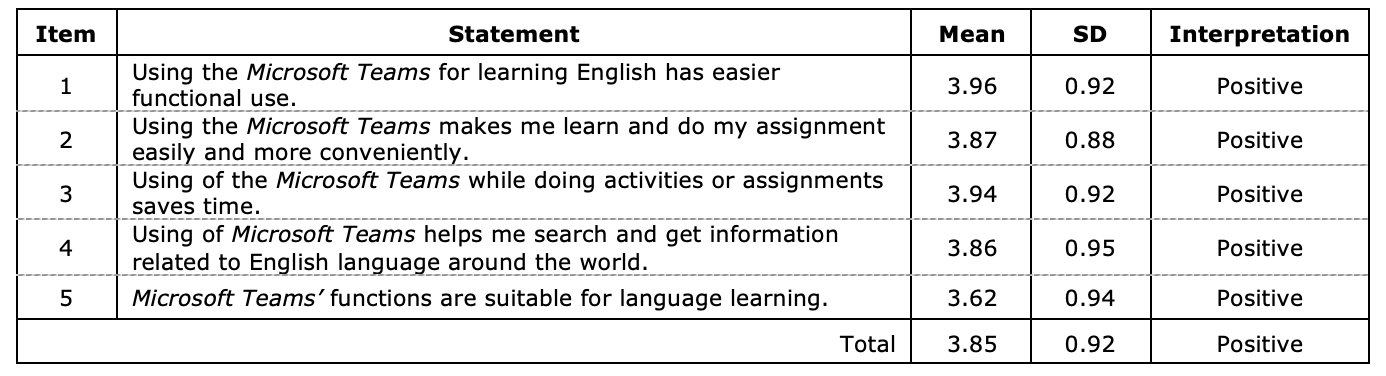
Table 1: Cognitive component related to the users’ knowledge of Microsoft Teams.
As shown in Table 1, cognitive findings were at the positive level (Mean=3.85). This means that the users had high beliefs, thoughts, knowledge, and expectation towards CALL in terms of Microsoft Teams. The top three items were the easier functional use, enhancement of time management, and the more convenient oriented assignment participation. Similarly, the two final items, the source of English language and language learning area were also at the positive level.
Secondly, as shown in Table 2, emotional and feeling segments of attitude were presented as affective information towards learning English through Microsoft Teams.
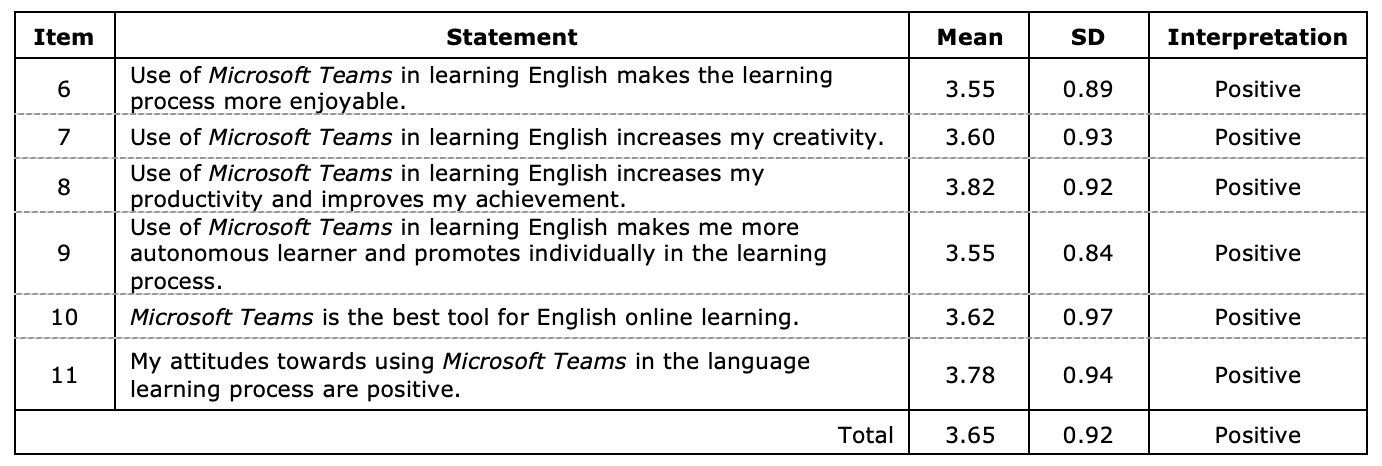
Table 2: Affective component related to the users’ knowledge of Microsoft Teams
Table 2 reports a positive affection (Mean=3.65) concerning the affective component. This means that the respondents felt satisfied with the use of Microsoft Teams in language learning. The first two top items were productive achievement and positive use, both at positive levels. In addition, most respondents positively viewed Microsoft Teams as an effective language learning tool that increased creativity, enhanced enjoyable environment, and supported learning autonomy.
Lastly, the behavioral component, the way students acted and conducted themselves towards Microsoft Teams in the English class, is presented in Table 3.
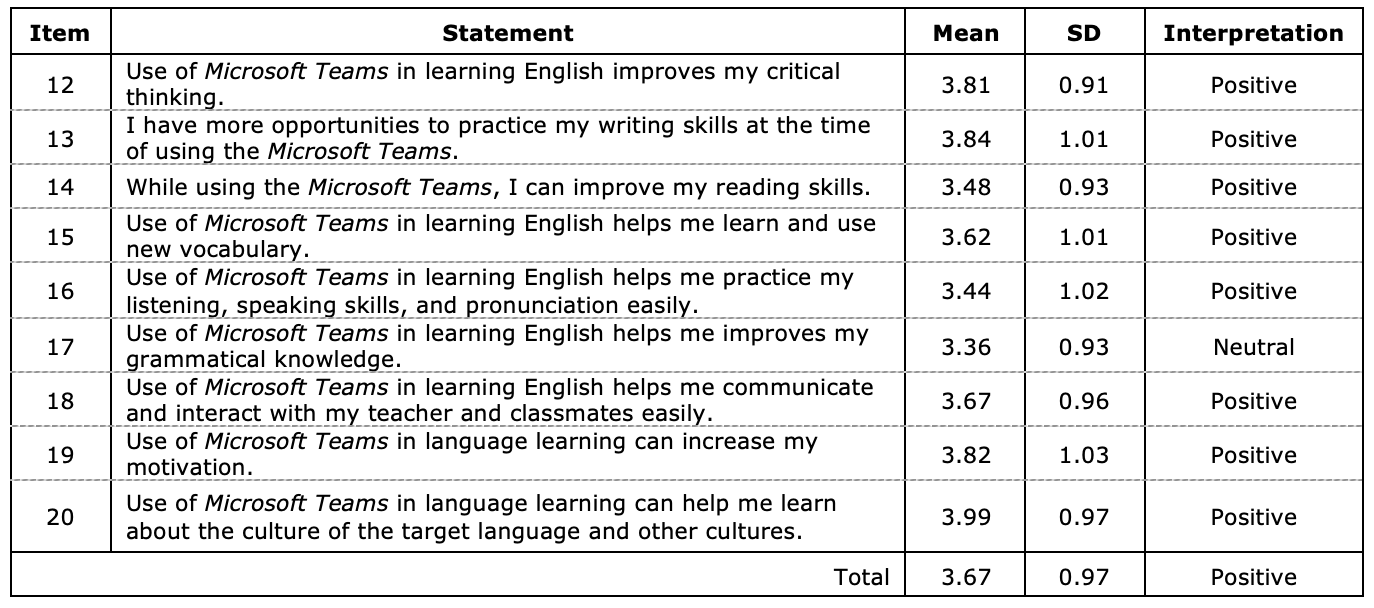
Table 3: Behavioral component related to the users’ knowledge of Microsoft Teams
Table 3 shows the respondents’ positive attitudes (Mean=3.67) concerning behavioral component. Regarding to the top eight positive level items in order, Microsoft Teams first increased the culture of target language, provided writing practice, increased motivation, enhanced critical thinking, promoted interactions, supported vocabulary learning, improved reading skills, and finally offered speaking practices.
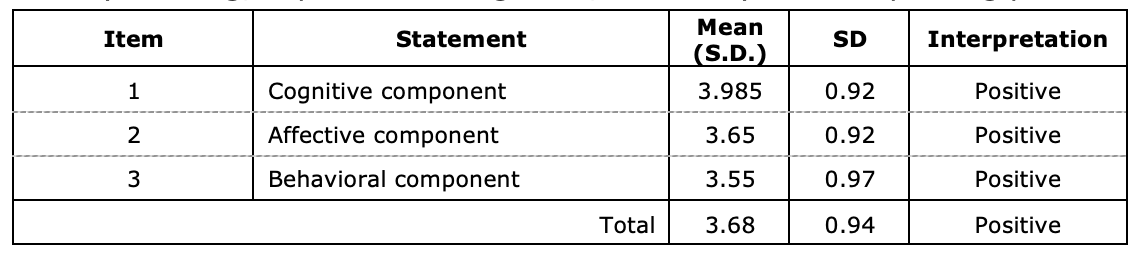
Table 4: Learners’ attitudes towards English instruction through Microsoft Teams
Overall, the mean score from three parts was interpreted at a positive level (Mean=3.68). This implies that users had positive attitude towards CALL regarding Microsoft Teams. This finding is consistent with the study of Rojabi (2020) who relates that EFL student in Indonesia had positive perception towards Microsoft Teams in an online learning environment because it allowed interaction between student-student and student-teacher. Also, the result supports Bouchefra and Baghoussi’s (2017) study which mentions that EFL university teachers had positive attitudes ( 4.29) towards CALL in terms of cognitive, affective, and behavioral domains. Moreover, English language students showed positive attitude towards CALL and Iranian and non-Iranian had no difference in their attitude (Tafazoli et al., 2018). Moreover, the result also agrees with Alrazeq Saeed and Al-Zayed’s (2018) study result which reported that English language and literature students had positive attitude towards CALL with writing, and they also added that the computer increased their motivation in terms of joyful learning, creative improvement, successful learning achievement, enhanced critical thinking skills, as well as syntax and culture. Also, their finding supported the concept that computer use enhanced the participants’ interaction and communication with their teachers and others. Another study which shows results consistent with the present study is Rakowski and Wojdynski (2018) that concluded that Polish learners showed positive attitudes, and they had high engagement toward virtual reality assisted language learning through technology.
Research Question 2: What are the learners’ attitudes and perceptions towards English instruction through Microsoft Teams?
The attitude level towards CALL related to Microsoft Teams was shown to be positive as can be seen below.
Concerning the general use of Microsoft Teams, it was considered positive that it can be connected to maximum three electronic devices in one account registration. Students worried less about distance learning tools because they could study anywhere with the most convenient tool.
I think it is such a convenient tool for online instruction including English class. I can connect it with many electronic devices in one account namely laptop, iPad, and even mobile phone. So, I can join the class activity with all language skills without being worried about equipment. (Student L)
Through a number of users, Microsoft Teams was seen as a stable platform for online class operation. It had less problem occurrence and was effective with the use of other applications in a time.
I fully like Microsoft Teams on active and stable system during operating on more than hundred users. For example, in English 4, we took the listening test the sound is so obvious and I also can make response the test link provided in the same time. (Student H)
In addition, not leaving the main meeting room was another feature for generating well-organized assignment and class. Moreover, members could join that class permanently and Microsoft Teams was revealed as the online class facilitator without mess and confusion.
The small channel in a big room is my favorite ones since English instructor provided us some weekly assignments. We can go into that channel each week, for example, the writing assignment is in channel 1, vocabulary skill is in channel 2, and reading is in channel 3. It is such an outstanding classroom management. (Student B).
Next, the meeting recording option was provided on Microsoft Teams. Students shared that their classmates might possibly have missed some class, but they could learn themselves afterwards. Also, all class members could access that video instruction in order to review the content before examination
Once my friend missed the class because she did her business with her family. I can help her by recording what instructor taught in order to catch up the class including me for final examination review. Not only instructor can click recording, but also anyone in a group can also start recording. (Student C)
Additionally, file management was easy to follow up assignments. A course code was assigned so that students could access each main room and reach the files uploaded by instructors.
Instructors can make course room where students can catch up the teaching files and other documents. I think this platform is well-organized and we can also comment something or send back English assignments easily. (Student F).
As for the listening class activity, the listening skill could effectively be practiced because instructors shared their screen and opened audio files; moreover, students could also access the exam link during listening.
For listening skill, I think audio sound is more obvious than in the normal class and I can choose or write the answer on links in the same time of concentrating on audio listening (Student B).
Furthermore, the speaking test and even activities on Microsoft Teams provided special functions that showed how the students were invited to the room one by one to work with the instructor. They had enough time to prepare themselves before the speaking test. Moreover, in case of speaking practice activity, all students were highly encouraged to share ideas and opinions in the class.
During speaking test, I have time to prepare myself to reduce anxiety and wait for the Microsoft Teams call from instructor. I think I like this function for speaking class because I have never met this function before. (Student A)
The individual call function also created more speaking confidence. Speaking one by one with instructor helped decrease worry and nervousness.
I can say that online speaking fully supports me more confident since I less face with others during speaking. If not, I would be very shy and I probably did not do my best. (Student B)
With reading and writing skills, students could participate in class activities in real-time and/or take the class from the recorded video later, if he or she had missed the class. Additionally, English instructors assigned English reading and writing on a group board. After that, students could leave message in a comment box.
I can watch the VDO teaching when I missed the class and I can also submit my reading and writing assignments afterwards through comment box as similar as Facebook, Instagram, and YouTube. This way I cannot copy from friends, everyone had to answer reading comprehension and sometimes wrote a small paragraph writing under the topic posted by instructor. I think it is less messy class. (Student J)
Participants shared similar views regarding the activity-based tasks designed by the instructors. Their language knowledge, namely listening, speaking, reading, writing, vocabulary, grammar, and even culture of target language depended on the instructor led class activity. Furthermore, students realized that Microsoft Teams was not used exclusively for English classes, but that it served as an effective tool for learning through its various functions and the teachers’ instructional design.
I think all of my English skills are from each instructor’s content and activity. What they share is what I receive. Fortunately, Microsoft Teams supports activity a lot through its various functions even it is only the online learning tool not special for language class. (Student C)
Nevertheless, there were some challenges with Microsoft Teams. Although the platform provided a number of functions, students still expressed similar perspectives. In other words, they felt confused on Microsoft Teams at the beginning. They had to adjust themselves on how to utilize the online platform with its English content. Thus, students spent a lot of time to practicing alone and with friends.
I think it was pretty difficult use at first since it provides many functions and I had to learn English content in the same time. It was my challenging and I was so confused at that time, fortunately, I learnt how to use it from myself and friends sometimes. It is a bit complicated, but now I become as a professional user. (Student N)
There are multifunctional uses on this platform for education, besides learning English. The participants agreed on the benefits of this platform, and referring to convenient tools, the activation of a number of users, a stable system, file storage, and room organization. Moreover, in terms of distance learning, students claimed that this platform was more effective than the learning tools used by their friends from different universities. With a focus on English skills, it could be said that the students’ attitude towards Microsoft Teams use for distance learning was positive because of its organization and stability. These findings support the study of Yen and Nhi (2021) which shows that Vietnamese EFL students had positive perspective towards online learning with Microsoft Teams as it has various outstanding features, such as chatting and calling, sharing screens, recording conversations and meetings, and assigning and responding to the students. The number of directly relevant studies concerning Microsoft Teams for English instruction is scarce because it is a new online classroom platform. However, there were some related studies which confirmed the findings of the present study. Firstly, in the context in Pakistan, the study results of Hussain and Akhter (2016) showed that about 3338 students expressed their positive attitudes towards technology towards technology developed in the USA. Furthermore, this agrees with Akturk et al. (2015) which reported that 329 pre-service teachers, especially the male group, showed positive attitudes. The study of Ngo and Eichelberger (2019) found similar results as they revealed that 928 Vietnamese had positive attitude concerning information and communication technology (ICT) in English instruction, including receptive skills. Finally, Keshtiarast and Salehi (2020) had similar findings and their research pointed out that Iranian students had positive attitudes towards ICT in terms of learning English for Special Purposes (ESP) while their findings also revealed that ICT should be supported while implementing ESP curriculum and textbooks.
Microsoft Teams was an effective platform for general online learning due to its functions. The learning process through online activity-based tasks was relied on instructors’ design on this platform. The amount of knowledge students would receive depended on classroom management in terms of English skills and available functions. These findings agree with the results of the work of Perveen (2021) about learning with CALL. They shared the opinions of 272 undergraduate Pakistan students who participated in task-based assessment through word clouds in the online second language classroom. The findings reported that students were positive towards the use of word clouds in an asynchronous mode in terms of reading comprehension and essay writing. Additionally, these results are also consistent with Hajimaghsoodi and Maftoon’s (2020) study. Their study found that 67 English translation students were in favor of CALL within the context of the activity theory framework which had a substantial impact on the students’ writing abilities. Furthermore, the data demonstrated that the students had a favorable opinion of the intervention’s efficacy in improving their writing skills.
However, students felt anxiety at the beginning for the use of Microsoft Teams since none had experienced it before, and they had to join the English class activities within a short period of time. Fortunately, they aligned with the self-learning and peer-coaching approaches to follow the class activities as directed by the instructor. This point is similar to the results of Nguyen and Duong (2021) which revealed that EFL students faced the problems such as internet connections, a lack of technological skills, and a difficulty doing group work while studying online with Microsoft Teams. The findings of the current study also match the results of Haidari et al. (2019) which found that technology-enhanced EFL activities and students also had high self-directed language learning through technology. This self-directed language learning through technology did not hinder only language skill, and it provided personal growth of learning. This means that students learnt how to use CALL while using Microsoft Teams, besides improving their language knowledge, while self-learning at the time of distancing learning.
Research Question 3: What are the instructors’ attitudes and perceptions towards English instruction through Microsoft Teams?
Regarding the general use of Microsoft Teams for the English class, the instructors reported that there were various advantages to this platform for instruction, such as the main meeting room, small channel, breakout room, directed messaging, administrative files, class schedule notification, screen sharing, stable use, and permanent members added in a group. It was also frequently updated and connected to a number of other applications.
I have used Ms Forms to generate the test link through all skills. I think it is so convenient and easy for students to select their answers. On Ms Forms use, I can make shuffle choices and questions it is nice for online test in terms of preventing corruptive exam among students. Furthermore, Ms Forms is calculated the score result autonomously and individually. I do suggest that not only Ms Forms on Microsoft Teams provided, but also there are a number of applications which we can select into our English class materials. Importantly, I have to learn how to use them. (English Instructor 3)
However, most instructors shared that it was difficult for them to adapt to using Microsoft Teams in their class initially. Through the various applications available on Microsoft Teams, self-directed learning was the only way for students to familiarize themselves with the new functions of the integrated online tool.
I found it difficult to use Microsoft Teams, but it is better than the first time now. Nevertheless, I have still learnt how to use other sites into my classes because there are a number of them. I think this platform is effective medium online teaching tool, even it is not a language package program. However, this means students only perceived what we teach them. So, I have to keep self-learning as always in order to set various language learning activities for my students. (English Instructor 5)
In summary, the English instructors’ views towards Microsoft Teams were positive even though it is not a language package program, but it is connected to various sites and each of them provided different functions, and they could choose to use many in their activity classes. This finding conforms to the findings of the study of Yen and Nhi (2021) which revealed that Microsoft Teams allowed instructors to build an online learning environment, by receiving papers and immediately replying to the students, by working together with students on continuous basis, and by producing and sharing all resources on a single platform. It also made it easier for the teachers to create suitable exams or quizzes, ask questions, provide feedback promptly, organize their classrooms, and keep track of their students’ grades. Serin and Bozdağ (2020) found that 440 teachers had positive attitudes towards technology use in teaching at education level and concerning teaching process autonomy, and professional communication autonomy. The results of the study by Islahi and Nasrin (2019) were also identical with the findings of the present study. Their study found that 482 teachers had positive attitudes towards technology because of Microsoft Teams´ usefulness and productivity in their teaching. Furthermore, since Microsoft Teams was a new platform for distance learning and offered numerous applications, the English instructors needed to maintain a high level of self-efficacy in selecting the most relevant tools for their teaching. H Aleksić-Hajduković et al. (2019) showed findings that match the results of the current study. Their study found that ESP teachers used various sources for self-directed professional development, such as websites, webinars, and social networks. Additionally, these teachers developed their teaching competencies through technology by (1) self-directedness, (2) self-development, (3) information exchange, (4) classroom use of the technology, and (5) testing.
According to research findings, Microsoft Teams’ use in an English class was reflected in the positive attitudes level among users. Learning Management System (LMS) potentiality is generated on this platform because Microsoft Teamssupports several online environments. The function of some main relevant teaching resources from Microsoft Teams are discussed below.
Firstly, since Microsoft Teams operates in virtual classroom, synchronous online teaching is emphasized on this platform; students and instructors can interact each other in real-time situations using directed messaging, chat interaction, and VDO conferencing. This method is useful for students when they would like to participate in class activities; moreover, in case of having questions, they can ask them immediately. Moser and Smith (2015) listed the best practices of synchronous online teaching conduct: (1) providing a welcome message about 15 minutes before class, (2) encouraging class equipment checks, (3) maintaining virtual office hours, (4) using electronic textbooks, (5) encouraging students to participate in the virtual study sessions, (6) integrating other software systems into the virtual classroom experience, and (7) recording class meetings.
Furthermore, through off-line learning, that is, asynchronous online teaching, can also be used with Microsoft Teams. Teachers can create class activities without time limitations, and this idea is well-known as E-learning area. Additionally, in case of students’ missing class, recording VDO conferencing is possible because Microsoft Teamsprovides meeting recording and posts it autonomously at the end of class. In addition, downloading files and sending files back through Microsoft Teams are fully conducted during off-line which supports students while working on assignments both individually and in cooperation with others. However, asynchronous online teaching can cause students to feel isolated. However, as with both synchronous and asynchronous online teaching, this problem can potentially arise not only online, but also in the traditional classroom. The success of a class depends on how and when instructors create classes in order to enhance a student’s knowledge as much as possible through teaching tool activities. It is important to note that although teachers might encounter challenges to meet their pedagogical goals, their adjustment to online teaching and learning environment can be an innovative educational alternative in the new normal era (Thumvichit, 2021).
Conclusions and Recommendations
This study has provided information about users’ attitudes and perceptions towards Microsoft Teams in EFL online classes. Based on the findings, the cognitive component was at a positive level and the affective and behavioral components were at neutral levels. This implies that students had positive attitudes towards the use of Microsoft Teamsfunctions (cognitive component) rather than English learning skills (affective and behavioral components). However, the reported overall score concerning attitudes was positive at the time of Microsoft Teams use online for learning English during the pandemic. Additionally, students and instructors mentioned that they had the same positive attitudes towards the multifunctional features for education, such as group work, a stable system, file storage, a main meeting room, a breakout room, communication channels, VDO recording, and classroom organization. Other available applications were fitted into Microsoft Teams through different functions. Given that Microsoft Teams is a general online learning platform, classroom design was a key factor in helping students achieve the target language outcomes, which depended largely on the instructor’s guidance.
References
Akturk, A. O., Izci, K., Caliskan, G., & Sahin, I. (2015). Analyzing preservice teachers’ attitudes towards technology. International Journal of Social, Behavioral, Educational, Economic, Business and Industrial Engineering, 9(12), 3960-3966. https://doi.org/10.5281/zenodo.1110674
Alabay, S. (2021). Students’ views on learning French online with Microsoft Teams® during Covid-19 pandemic. African Educational Research Journal, 9(2), 333-338. https://doi.org/10.30918/aerj.92.21.053
Aleksić-Hajduković, I., Sinadinović, D., Mijomanović, S. (2019). Self-scaffolding and the role of new technologies in ESP teacher education. In S. Papadima-Sophocleous, E. K. Constantinou, & C. N. Giannikas (Eds.), ESP teaching and teacher education: Current theories and practices (pp. 47-62). Research-publishing.net.
Alian, J. E.-D., Khodabandeh, F., & Soleimani, H. (2018). The effect of CALL-based tasks on EFL learners’ grammar learning. the Journal of Teaching English with Technology, 2018(3), 54-68. https://tewtjournal.org/download/5-the-effect-of-call-based-tasks-on-efl-learners-grammar-learning-by-jalal-ed-din-alian-farzaneh-khodabandeh-and-hassan-soleimani
Allport, G. W. (1954). The historical background of modern social psychology. Addison-Wesley.
Alrazeq Saeed, F. J. A., & Al-Zayaed, N. N. (2018). Attitudes of Jordanian undergraduate students towards using computer-assisted language learning (CALL). International Journal of Education & Literacy Studies, 6(1), 12-16. https://doi.org/10.7575/aiac.ijels.v.6n.1p.12
Bagci, K., & Celik, H. E. (2018). Examination of factors affecting continuance intention to use web-based distance learning system via structural equation modelling. Eurasian Journal of Educational Research, 78, 43-66. https://doi.org/10.14689/ejer.2018.78.3
Bouchefra, M., & Baghoussi, M. (2017). Algerian EFL university teachers’ attitudes towards computer assisted language learning: The case of Djilali Liabes University. International Journal of Education & Literacy Studies, 5(2), 132-139.
Buchal, R., & Songsore, E. (2019). Using Microsoft Teams to support collaborative knowledge building in the context of sustainability assessment. Proceedings of the Canadian Engineering Education Association (CEEA-ACEG) Conference, June 8-12, Ottawa, Ontario, Canada. https://doi.org/10.24908/pceea.vi0.13806
Buczek-Zawiła, A. (2021). Catering to assessment needs of students of English--CALL to the rescue? The Journal of Teaching English with Technology, 21(2), 38-65. https://tewtjournal.org/download/4-catering-to-assessment-needs-of-students-of-english-call-to-the-rescue-by-anita-buczek-zawila
Chapelle, C. A. (2003). English language learning and technology. John Benjamins.
Creswell, J. W. (2014). Research design: Qualitative, quantitative, and mixed methods approaches. Sage.
Dos Santos, L. M. (2020). The motivation and experience of distance learning engineering programme students: A study of non-traditional, returning, evening, and adult students. International Journal of Education and Practice, 8(1), 134-148. https://doi.org/10.18488/journal.61.2020.81.134.148
Eagly, A. H., & Chaiken, S. (1998). Attitude, structure, and function. In D. T. Gilbert, S. T. Fiske, & G. Lindzey (Eds.), Handbook of social psychology (4th ed., pp. 269-322). McGraw-Hill.
Fishbein, M., & Ajzen, I. (1975). Belief, attitude, intention and behavior: An introduction to theory and research. Addison-Wesley.
Foley, K., & Marr, L. (2019). Scaffolding extracurricular online events to support distance learning university students. Journal of Interactive Media in Education, 2019(1). https://doi.org/10.5334/jime.525
Ghufron, M. A., & Nurdianingsih, F. (2019). Flipped teaching with CALL in EFL writing class: How does it work and affect learner autonomy? European Journal of Educational Research, 8(4), 983-997. https://doi.org/10.12973/eu-jer.8.4.983
Grill, P., Stewart, K., Treasure, E., & Chadwick, B. (2008). Methods of data collection in qualitative research: Interviews and focus groups. British Dental Journal, 204, 291-295. https://doi.org/10.1038/bdj.2008.192
Gunawardhana, L. K. P. D. (2020). Review of e-learning as a platform for distance learning in Sri Lanka. Education Quarterly Reviews, 3(2), 141-145. https://doi.org/10.31014/aior.1993.03.02.126
Habbash, M. (2020). Computer assisted language learning integration challenges in Saudi Arabian English as a foreign language classes: The case of EFL teachers at Tabuk University. Arab World English Journal, 11(4), 474-489. https://doi.org/10.24093/awej/vol11no4.30
Haidari, S. M., Yelken, T. Y., & Akay, C. (2019). Technology-enhanced self-directed language learning behaviors of EFL student teachers. Contemporary Educational Technology, 10(3), 229-245. https://doi.org/10.30935/cet.590003
Hajimaghsoodi, A., & Maftoon, P. (2020). The effect of activity theory-based computer-assisted language learning on EFL learners’ writing achievement. Language Teaching Research Quarterly, 16, 1–21. https://doi.org/10.32038/ltrq.2020.16.01
Heigham, J., & Croker, R. A. (2009). Qualitative research in applied linguistics: A practical introduction. Macmillan.
Henderson, D., Woodcock, H., Mehta, J., Khan, N., Shivji, V., Richardson, C., Aya, H., Ziser, S., Pollara, G., & Burns, A. (2020). Keep calm and carry on learning: Using Microsoft Teams to deliver a medical education programme during the COVID-19 pandemic. Future Healthcare Journal, 7(3), e67-e70. https://doi.org/10.7861/fhj.2020-0071
Hubbard, M., & Bailey, M. J. (2018). Mastering Microsoft Teams: End user guide to practical usage, collaboration, and governance. Apress.
Hussain, T., & Akhter, M. (2016). Students’ attitude towards technology: A study from Pakistan. Bulletin of Education and Research, 38(1), 17-30. https://files.eric.ed.gov/fulltext/EJ1210324.pdf
Ilag, B. N. (2020). Understanding Microsoft Teams Administration: Configure, customize, and manage the Teams experience.Apress.
Inpeng, S., & Nomnian, S. (2020). The use of Facebook in a TEFL program based on the TPACK framework. LEARN Journal, 13(2), 369-393. https://so04.tci-thaijo.org/index.php/LEARN/article/view/243729
Islahi, F., & Nasrin. (2019). Exploring teacher attitude towards information technology with a gender perspective. Contemporary Educational Technology, 10(1), 37-54. https://doi.org/10.30935/cet.512527
Kaplan-Rakowski, R., & Wojdynski, T. (2018). Students’ attitudes toward high-immersion virtual reality assisted language learning. In P. Taalas, J. Jalkanen, L. Bradley, & S. Thouësny (Eds.), Future-proof CALL: Language Learning as Exploration and Encounters-Short Papers from EUROCALL 2018 (pp. 124-129)
Keshtiarast, B., & Salehi, H. (2020). Investigating employing information communication technology for ESP learning: A case of Iranian EFL students’ attitudes. International Online Journal of Education and Teaching, 7(2), 412-433. https://iojet.org/index.php/IOJET/article/view/434/473
Kiesler, C. A., Collins, B. E., & Miller, N. (1969). Attitude change: A critical analysis of theoretical approaches. Wiley.
Kılınc, B. K., Yazıcı, B., Gunsoy, B., & Gunsoy, G. (2020). Perceptions and opinions of graduates about the effects of open and distance learning in Turkey. Turkish Online Journal of Distance Education, 21(1), 121-132. https://doi.org/10.17718/tojde.690369
Koreneva, M. V., Leonteva, N. S., Leonteva, L. S., Kuznetsova, V. E., & Bushin, I. A. (2020). Distantsionnoe obuchenie po distsipline “Olimpiiskoe obrazovanie” v usloviyakh pandemii COVID-19 [Distance learning in the field of Olympic education during the COVID-19 pandemic]. Uchenye zapiski universiteta im. P.F. Lesgafta, 8(186), 160-165.
Levy, M. (1997). CALL: Context and conceptualisation. Oxford University Press.
Lodhi, M. A., Fatima, A., Ismail, F., Amin, N., Khalid, F., & Siddiqa, A. (2019). Attitude of male and female students towards computer assisted language learning at intermediate level. English Language Teaching, 12(3), 108-118.https://doi.org/10.5539/elt.v12n3p108
Mantle-Bromley, C. (1995). Positive attitudes and realistic beliefs: Links to proficiency. The Modern Language Journal, 79(3), 371-386. https://doi.org/10.1111/j.1540-4781.1995.tb01114.x
Mantle-Bromley, C., & Miller, R. B. (1991). Effect of multicultural lessons on attitudes of students of Spanish. The Modern Language Journal, 75(4), 418-425. https://doi.org/10.2307/329491
McVey, M., Edmond, A., & Montgomery, D. (2019). Supporting students to develop their digital literacies using Microsoft Teams. ALT Winter Conference 2019, 11-12, December 2019, Glasgow, Scotland. http://eprints.gla.ac.uk/206468
Meihami, H. (2021). A narrative inquiry into Iranian EFL teacher educators’ voice about challenges of CALL teacher education. The Journal of Teaching English with Technology, 2021(2), 92–111.
Microsoft. (2018, August 27). Welcome to Microsoft Teams. Microsoft. https://docs.microsoft.com/en-us/microsoftteams/teams-overview
Microsoft Teams. (2021, August 5). In Wikipedia. https://en.wikipedia.org/wiki/Microsoft_Teams
Moser, S., & Smith, P. (2015). Benefits of synchronous online courses. ASCUE Proceedings, 43-48. https://files.eric.ed.gov/fulltext/ED571270.pdf
Nejati, E., & Jahangiri, A. (2018). The effect of using computer-assisted language learning (CALL) on Iranian EFL learners’ vocabulary learning: An experimental study. Cypriot Journal of Educational Sciences, 13(2), 351-362. https://doi.org/10.18844/cjes.v13i2.752
Nenko, Y., Kybalna, N., & Snisarenko, Y. (2020). The COVID-19 distance learning: Insight from Ukrainian students. The Brazilian Scientific Journal of Rural Education, 5. https://doi.org/10.20873/uft.rbec.e8925
Ngo, H., & Eichelberger, A. (2019). College students’ attitudes towards ICT use for English learning. International Journal of Education and Development using Information and Communication Technology, 15(1), 231-244. http://ijedict.dec.uwi.edu/include/getdoc.php?id=8108&article=2593&mode=pdf
Nomnian, S. (2022). Emergency remote teaching and learning in a language and intercultural communication program during the “new normal” in Thai higher education. Journal of Language and Linguistic Studies, 18(Special Issue 1), 108-126.https://www.jlls.org/index.php/jlls/article/view/3541/996
Nguyen, H. U. N., & Duong, L. N. T. (2021). The challenges of e-learning through Microsoft Teams for EFL students at Van Lang University in COVID-19. AsiaCALL Online Journal, 12(4), 18-29. https://asiacall.info/acoj/index.php/journal/article/view/60
Nikolaevna Poddubnaya, T., Leonidovna Zadneprovskaya, E., Sergeenvna Voevodina, S., Alexandrovna Ilyinova, N., Ramazanovna Khatit, F., & Alexandrovna Panina, E. (2021). Distance learning experience in the context of globalization of education. Propósitos y Representaciones, 9(SPE2). https://doi.org/10.20511/pyr2021.v9nSPE2.985
Olufemi, T. D. (2012). Theories of attitudes. Nova.
Perveen, A. (2021). Use of word clouds for task-based assessment in asynchronous e-language learning. MEXTESOL Journal, 45(2). https://doi.org/10.61871/mj.v45n2-9
Pimentel, J. L. (2010). A note on the usage of Likert scaling for research data analysis. USM R&D Journal, 18(2), 109-112.
Rojabi, A. R. (2020). Exploring students’ perception of online learning via Microsoft Teams: University level in Indonesia. English Language Teaching Educational Journal, 3(2), 163-173. https://doi.org/10.12928/eltej.v3i2.2349
Şentürk, B. (2019). Attitudes of Turkish EFL students towards learning English. International Journal of Curriculum and Instruction, 11(1), 247-255. https://ijci.net/index.php/IJCI/article/view/219/98
Serin, H., & Bozdağ, F. (2020). Relationship between teacher’s attitudes towards technology use in education and autonomous behaviors. The Turkish Online Journal of Educational Technology, 19(3), 60-69. https://www.tojet.net/articles/v19i3/1937.pdf
Shaikh, G., Koçak, Ö., & Göksu, İ. (2021). Does DynEd affect students’ attitudes and language skills in EFL? A case study. The Journal of Teaching English with Technology, 2021(1), 75-93. https://tewtjournal.org/download/6-does-dyned-affect-students-attitudes-and-language-skills-in-efl-a-case-study-by-guler-shaikh-omer-kocak-and-idris-goksu
Shayakhmetova, L., Mukharlyamova, L., Zhussupova, R., & Beisembayeva, Z. (2020). Developing collaborative academic writing skills in English in CALL classroom. International Journal of Higher Education, 9(8), 13-18. https://doi.org/10.5430/ijhe.v9n8p13
Simonson, M. R., & Maushak, N., & (2001). Instructional technology and attitude change. In D. H. Jonassen, (Ed.), Handbook of research for educational communications and technology (pp. 984-1016). Erlbaum.
Stewart, G. A. (2019). Using ALC Press Inc.’s Net Academy Next as the main resource in lower level university English CALL classes in Japan: A case study. The JALT CALL Journal, 15(1), 19-41. https://doi.org/10.29140/jaltcall.v17n3.431
Tafazoli, D., Gómez Parra, M. E., & Huertas Abril, C. A. (2018). A cross-cultural study on the attitudes of English language students towards computer-assisted language learning. The Journal of Teaching English with Technology, 2018(2), 34-68. https://tewtjournal.org/download/4-a-cross-cultural-study-on-the-attitudes-of-english-language-students-towards-computer-assisted-language-learning-by-dara-tafazoli-ma-elena-gomez-parra-and-cristina-a-huertas-abril
Tafazoli, D., Gómez Parra, M. E., & Huertas Abril, C. A. (2019). Attitude towards computer-assisted language: Do gender, age group and educational level matter? The Journal of Teaching English with Technology, 2019(3), 22-39.https://tewtjournal.org/download/3-attitude-towards-computer-assisted-language-learning-do-gender-age-and-educational-level-matter-by-dara-tafazoli-m-a-elena-gomez-parra-and-cristina-a-huertas-abril
Thumvichit, A. (2021). English language teaching in times of crisis: Teacher agency in response to the pandemic-forced online education. The Journal of Teaching English with Technology, 2021(2), 14-37. https://tewtjournal.org/download/3-english-language-teaching-in-times-of-crisis-teacher-agency-in-response-to-the-pandemic-forced-online-education-by-athip-thumvichit/
Thumvichit, A., Varaporn, S., & Tuvachit, V. (2021). Language education in emergencies: A systematic review. Journal of Language and Education, 7(4), 183-197. https://doi.org/10.17323/jle.2021.12462
Thurstone, L. (1931). The measurement of social attitudes. Journal of Abnormal and Social Psychology, 26, 249-269. https://doi.org/10.1037/h0070363
Tsai, P. (2018, December 10). Business chat apps in 2018: Top players and adoption plans. The Spiceworks Community. https://community.spiceworks.com/blog/3157-business-chat-apps-in-2018-topplayers-andadoption-plans
Wood, E. R. G., & Wood, S. E. (1993). The world of psychology. Allyn and Bacon.
Yen, T. V. M., & Nhi, N. T. U. (2021). The practice of online English teaching and learning with Microsoft Teams: From students’ view. AsiaCALL Online Journal, 12(2), 51-57. https://asiacall.info/acoj/index.php/journal/article/view/41