Introduction
Critical thinking (CT) is the amalgamation of the skills to think critically and the inclination towards applying the CT skills one possesses. Supporting this view, Ali and Awan (2021) argue that the existence of CT skills is not complete without the fostering of CT dispositions. CT dispositions are the habits of mind that keep an individual motivated to think deeply and reflect on an issue under discussion. In this regard, possessing dispositions towards CT can help students in an English as a foreign language (EFL) context to write a convincing argumentative paragraph which is a building block for argumentative essay writing. Being effective in writing an argumentative paragraph requires not only to have the language command and the ability to think critically but also the disposition or tendency to think critically. Learning argumentative writing can aid university first-year students to achieve purposes of learning argumentative writing, such as being reasonable and logical to convince the readers. Achieving these purposes requires the students to have the inclination towards using the CT skills they have. In support of this view, Afshar et al. (2017) suggest that there is a connection between CT and writing ability. Solomon (2019) also claims that problem based English writing instruction enhanced the participants’ CT dispositions. The current study differs from Adege’s (2016) and Ruff’s (2005) studies as it examined the impact of integrating CT training into argumentative paragraph writing (APW) lessons. In their studies, these researchers did not focus on APW, which is the base of other levels of argumentative writing such as argumentative essay writing in their studies. The researchers, therefore, were motivated to deal with the current research topic as they regarded lack of integrating CT training into APW lessons is a gap that needs to be addressed in EFL context. The researchers identified this topic as a gap because they believe that integrating CT training into APW lessons can enhance students’ CT dispositions so as to have the commitment to compose a convincing argumentative paragraph, which is the base of other levels of argumentative writing, such as an argumentative essay writing.
According to Kozhevnikova (2014), exposing students to a target language can facilitate its learning. However, the current study was conducted in an EFL context where university first-year students have almost no exposure to English outside the classroom (Bulbula et al., 2021). In such context university first-year students rarely reach the advanced level of language skills in general and the writing skill in particular. Therefore, integrating CT into APW cannot be an issue to be overlooked. Hence, the researchers used APW as a venue to integrate CT training to examine the contribution of the training to the participants’ CT dispositions. The researchers believe that the intervention (integrating CT into APW lessons, is essential to help the students foster their CT dispositions). CT dispositions refer to the motivation or willingness of a thinker to use the CT ability when they plan to do something. When a student’s CT disposition improves, it contributes to their engagement in the teaching learning process of APW. Students in EFL contexts also need to improve their CT skills and dispositions to break the shackles of accepting others’ ideas without questioning or sticking to their own illogical ideas when logical reasons are provided to them to reconsider their ideas (Zhao et al., 2016). The intervention is believed to give university first-year EFL students the opportunity to practice questioning others’ ideas as well as their own and to nurture such dispositions. Regarding the relationship between CT and language skills, Nguyen and Nguyen (2020) insist that CT and language skills can be reflected through productive skills such as writing, especially argumentative writing due to its requirements in analyzing situations, problem-solving, and clarifying opinions. At Wollega University, however, integrating CT into language skills in general and writing skill in particular appears impractical. In the milieu of Ethiopia, as noted by Adege (2016), there was hardly any practice of encouraging learners to think critically and hone their reasoning skills in producing pieces of writing related to their learning, and this is in accordance with the researchers’ suppositions. When the researchers were offering EFL common courses to Wollega University first-year students, they experienced that the students’ argumentative paragraphs were unconvincing, even lacked clarity, and the students lacked interest to improve their paragraphs.
A lack of integrating CT into APW lessons could be a factor that affected the students’ CT dispositions. In support of the researchers’ assumption, Bernasconi (2008) claims that students should be reminded of the importance of integrating CT into writing as they need to think critically and compose their ideas in written tasks, especially in argumentative writing. Hence, the researchers’ experience as well as Adege’s (2016) and Bernasconi’s (2008) suggestions motivated the researchers to employ the intervention to see its impact on the students’ CT dispositions. To this end, the researchers intended to address the following two research questions.
- Is there statistically a significant difference in CT dispositions scores between first-year Wollega University students who received CT training in APW lessons and those who learned the lessons without receiving the training?
- Which CT dispositions subscale improved (if any) in the treatment group after the intervention?
These research questions were articulated to examine whether or not there was a significant difference in CT dispositions scores between the non-treatment and treatment groups and if the CT dispositions subscale(s) improved in the treatment group or not.
Review of the Literature
Critical thinking dimensions
CT, according to Facione (1990, 2000), Facione et al., (1995) and Sosu (2013), involves cognitive (skills) and affective dimensions. The skills dimension consists of analysis, interpretation, inference, explanation, evaluation, and self-regulation, whereas the affective domain includes truth-seeking, open-mindedness, analyticity, systematicity, CT self-confidence, inquisitiveness, and cognitive maturity subscales. However, Paul and Elder (2014) proposed three dimensions of CT: elements of thought, intellectual standards, and intellectual traits. The elements of thought include purpose, question at issue, information, interpretation and inference, concepts, assumptions, implications, and consequences, and point of view, whereas intellectual standards consist of clarity, accuracy, precision, relevance, depth, breadth, logicalness, significance, and fairness. The intellectual traits entail intellectual humility, perseverance, autonomy, confidence in reason, integrity, empathy, courage, and fairmindedness. Although different terms are used, the concepts in the ‘cognitive and affective’ as well as the ‘elements of thought, intellectual standards, and intellectual traits’ dimensions are overlapping.
Teaching critical thinking
Although there is a common understanding among scholars about the significance of CT for academic purposes and beyond, still it is a debatable issue regarding how to teach it (Abrami, et al., 2015; Bellaera et al., 2021; Lombardi et al., 2021). Halpern (2001) claims that since the objective of higher education is to help college students’ think deeply and settle problems, the discussion about CT instruction at higher education is a timely issue. Regarding the benefit of CT for the classroom, CT and overall student success could be improved if institutions of higher learning integrate various courses with the strategies and techniques that have been identified as helpful in developing CT (Alwehaibi, 2012, Taghinezhad et al., 2019). Adeyemi (2012) also affirms that the use of CT should be adapted in every discipline since fostering CT enhances thoughtfulness in students through posing queries that provoke the kind of thought that is vital for constructing knowledge.
According to Vermillion (1997), although teaching a basic course that is solely devoted to the development of CT skills can help students, it is not sufficient for two main reasons. The first reason is that it is impossible to foster students’ CT dimensions adequately by offering a single separate CT course since CT development is a long and difficult process. The second reason is that CT needs to be integrated into every field of study, syllabus, or course offered to students (Kurfiss, 1988; Meyers, 1986) although some scholars (Atkinson, 1997; McPeck, 1981) argue that there is little transfer between understanding CT skills and their actual application to other disciplines.
Regarding CT instruction, various scholars suggest four approaches that help students improve their CT. The first approach is the general or generic approach which refers to teaching CT independently as a specific subject matter. As the name indicates, in this approach, CT is taught as general thinking without referring to a specific context or discipline (Abrami et al., 2015; Ennis, 1989; Davies, 2013; Tiruneh et al., 2014). The second approach refers to the infusion approach which suggests that students learn a subject matter and explicit CT principles in integrated manner (Abrami et al., 2015; Tiruneh et al., 2014). In this approach, students are encouraged to learn and think critically as they are learning about the discipline they are studying. In this regard, this approach has been employed in the current study as the researchers believe that it can support L2 students to learn to think critically and to use language skills (argumentative writing in this study) effectively. The third approach is the immersion approach in which CT is provided implicitly in the subject or course, and the teacher teaches a subject or a course by challenging the students’ intellectual abilities using CT skills covertly to help them think critically within that subject or course (Abrami et al, 2015; Ennis, 1989; McPeck, 1981; Tiruneh et al., 2014). The fourth approach is the mixed approach which is a combination of the domain-general approach and domain-specific approach. In support of this view, researchers (Abrami et al., 2015; Tiruneh et al., 2014) insist that instruction through different approaches prove to be more effective in developing students’ CT.
Dispositions toward CT
Scholars in the field of CT (Ennis, 1996; Facione, 1990; Facione, et al., 1995; Halpern, 1998; Hanscomb, 2017) consider dispositions to be as the inclination or willingness of a thinker to use CT skills for academic issue and for daily life. These scholars also insist that people may choose to not use their thinking abilities or may have not yet acquired the habit of using these abilities. For instance, Case (2005) claims that no amount of thinking skill would compensate the limits of habits of mind, such as closed-mindedness and prejudicial thinking. According to the Delphi report (Facione, 1990), a critical thinker possesses the distinguishable habits that were repeatedly mentioned in various sections and subsections of this article. EFL students need to foster positive dispositions towards CT through learning it and practicing it in their courses, and this can help them develop their CT skills. In line with this view, Hanscomb (2017) argues that learning CT skills can enhance students’ motivation toward CT. In this study, the researchers examined the participants’ CT dispositions, which is almost equivalent to ‘intellectual traits’ (the concept used by Paul & Elder, 2014) The researchers used Facione and Facione’s (1992) California Critical Thinking Dispositions Inventory (CCTDI) questionnaire for the following two reasons. Firstly, the validity and reliability of this questionnaire are well-established for it has been used by several researchers (Facione, 2000). Secondly, the concepts in Paul and Elder’s (2014) concept of ‘intellectual traits’ and Facione and Facione’s (1992) CCTDI are similar. The current researchers, therefore, carefully examined the similarity between the two, and these are summarized in Table 1. As can be seen, the definitions given to the subcategories in each row are more or less similar, although the scholars used different terms for the concepts.
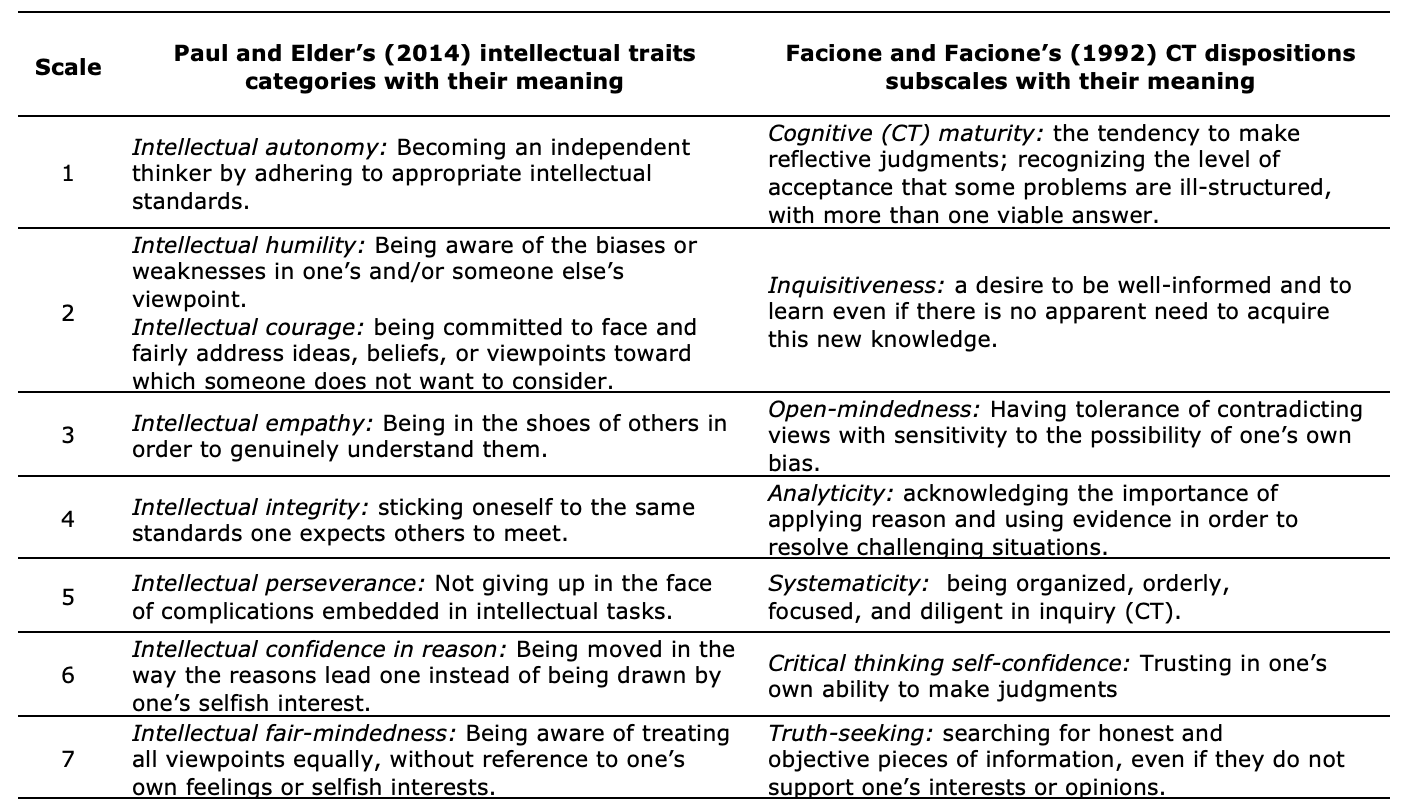
Table 1: Similarity of concepts in intellectual traits and CT dispositions.
Pertaining to the significance of being disposed to CT, scholars in the field of CT Facione et al. (1995); Fisher (2001); Giancarlo et al. (2004); Ip et al. (2000); and Paul and Elder (2014) argue that thinking critically not only requires the cognition aspect of CT but also the affective aspect of CT.
The subscales of CT dispositions
In line with Paul and Elder’s (2014) view, Facione (1990), and Facione and Facione (1992) contends that for CT to be comprehensive, it must take into account an individual’s sentimental or dispositional characteristics. Eigenauer (2015) also suggests that supporting students to foster a positive disposition toward CT is essential. This can be done through creating awareness about the tendency of people toward ‘sloppy’ thinking, and lead them to the realization that their job is to exert effortful control on themselves during intellectual tasks, such as composing argumentative essays and analyzing arguments.
There are seven subscales of CT dispositions that are directly connected with CT abilities or skills (Facione, 1990; Facione & Facione, 1992; Facione et al., 1995). These are truth-seeking, open-mindedness, analyticity, systematicity, inquisitiveness, critical thinking self-confidence, and critical thinking maturity.
In order to measure the CT of individuals, Facione and Facione (1992) developed a scale questionnaire based on the seven subcategories of CT dispositions, the CCTDI. The questionnaire has 75 items in total divided in subscales, specifically truth-seeking (11 items) which measures intellectual honesty; open-mindedness (9 items), assessing tolerance for new ideas and viewpoints different from one’s own; analyticity (11 items) which gauges the awareness of potential problems; systematicity (12 items) designed to evaluate the tendency to be organized, focused, and motivated; critical thinking self-confidence (11 items) which measures the trust in one’s own thought processes and the ability to lead others in decision-making; inquisitiveness (12 items) to discover the intellectual desire to know about an issue; and critical thinking maturity (9 items) which assesses the ability to recognize the complexity of problems and make timely decisions, even when the outcome is uncertain.
The CCTDI was used in the current study to examine the participants’ dispositions towards CT before and after integrating CT into APW lessons. Facione and Facione’s (1992) CCTDI is a standardized questionnaire employed by different researchers from abroad and from Ethiopia to assess the students’ CT dispositions. For instance, Profetto-McGrath (1999, 2003) and Ruff (2005) used CCTDI while Adege (2016) and Solomon (2019) employed CCTDI from local researchers. Although this study was based on Paul and Elder’s (2014) CT model, the CCTDI was used in this study since it was assumed that Facione and Facione’s (1992) CT Dispositions and Paul and Elder’s (2014) Intellectual Traits were overlapping concepts expressed in different terms as explained under the CT dispositions subscale.
Argumentative paragraph writing
Younes and Ayyoub (2017) claim that an argumentative paragraph is one that is written with the purpose of convincing the reader by either supporting an idea using well-reasoned arguments or proving the weaknesses of the counter arguments. As they state, reasons for a given argument should be arranged in a certain logical order, for instance, from the least to the most important or vice versa.
Argumentative writing is indispensable at university level because it is a key mechanism that helps the students be effective in their academic writing. Integrating CT teaching or training into argumentative writing can strengthen L2 students’ reasoning ability. Hence, the students need to be given opportunities to actively participate in argumentative writing lessons through questioning, discussing, and/or elaborating their views using logical reasons and concrete pieces of evidence. In line with this view, Davies and Barnet (2015) claim that questioning any issue is vital as it helps individuals determine the contradicting ideas within the issues.
Previous related studies
Internationally, Eigenauer (2016), Facione (2000), Profetto-McGrath (2003), Reed (1998) and Ruff (2005) conducted studies that addressed the issue of CT dispositions. Eigenauer (2016) conducted a study that involved students at a community college and administered the CCTDI questionnaire as a pre-test and a post-test. The results indicated that the targeted instruction significantly influenced overall scores. Profetto-McGrath (2003) investigated the CT skills and CT dispositions of students in a four-year baccalaureate program. The findings of the study showed a significant relationship between students’ overall CT skills and CT dispositions scores. Reed (1998) conducted an experimental study with community college students to investigate the effect of integrating Paul’s (1990) model for CT in a history course, and she reported that it did not appear to be effective in increasing the participants’ CCTDI scores. Ruff (2005) conducted a study, using a quasi-experimental design, to examine the differences between two sections by administering the California Critical Thinking Skills Test (CCTST) and CCTDI. She used t-tests and ANOVA for data analysis, and the total difference score for the experimental group was significantly higher than that of the control group on the CCTST, but the findings were inconclusive on the CCTDI.
In Ethiopia, three researchers (Adege, 2016, Fikirte, 2005; Solomon, 2019) conducted studies that contributed to the investigation of CT dispositions. Adege (2016) examined the effects of explicit instruction in CT on students’ CT dispositions at Addis Ababa University. The findings revealed that students’ dispositions toward critical thinking improved after the intervention provided to the students in the experimental group. Using experimental and control groups, Solomon (2019) investigated the effects of problem-based English writing instruction on students’ CT dispositions and argumentative writing skills at Gonder University. The findings showed that the experimental group outperformed the control group in both variables. Employing a survey method, Fikrte (2005) conducted a study to examine the interrelationship of CT skills, CT dispositions, and academic achievement of foreign languages department students at Addis Ababa University. The findings indicated that CT skills were found to have no significant relationship with dispositions toward CT and academic achievement. However, students’ dispositions toward CT showed significant positive relationship with their academic achievement.
Although some studies have been conducted in relation to CT dispositions and argumentative writing internationally, there are apparently few studies done in Ethiopia, and there were almost no studies conducted that focused on CT dispositions and APW. Hence, the scarcity of local research works that focus on CT dispositions and APW inspired the researchers to conduct a study to examine if there was statistically a significant difference in CT dispositions scores between the non-treatment group and the treatment group and to identify CT dispositions subscale improved (if any) in the treatment group after the intervention In this research, the purpose of the researchers was studying the improvement of the students’ inclination or interest towards using CT dispositions, their cognitive ability as a result of integrating CT instruction into APW lessons
Methodology
Research design
A quasi-experimental design, specifically a non-equivalent study between groups with a pretest-posttest design was employed in conducting this study. This research design is implemented when a researcher cannot randomly assign participants to two new groups rather uses the previously formed groups (e.g., involving students learning in the same grade level, but in different sections).
In this study, the impact of integrating CT instruction into APW lessons on students’ CT dispositions was examined. The researchers purposively selected Wollega University first-year students who were taking Communicative English Language Skills II because there were argumentative writing lessons in the course. Using random sampling technique, specifically the lottery method, the Social Science Stream and two sections from the stream were selected, and one section was assigned as a treatment group and the other section was assigned as a non-treatment group. The researchers integrated the three CT dimensions suggested by Paul and Elder (2014) while they were teaching APW to the treatment group, and they taught APW to the non-treatment group without integrating the CT dimensions into APW lessons to examine the difference between both groups.
The California Critical Thinking Dispositions Inventory (CCTDI) questionnaire was used to measure the participants’ CT dispositions scores before and after the intervention to see the impact of the intervention in fostering the students’ CT dispositions. The researchers preferred to use CCTDI because the questionnaire is reliable as it has been used by several researchers in different contexts.
Participants
Wollega University first-year students taking the EFL common course “Communicative English Language Skills II” in the 2021/22 academic year were the target population. There were a total of 2,203 participants (males: 1,583 and females: 620) and divided into ‘Natural” (males: 1,147 and females: 424) and “Social’ (males: 436 and females: 196). The researchers used a simple random sampling technique and selected the Social Science Stream from the two groups of the ‘Fresh-students Program’. They also selected two intact sections, i.e., Section A (37 students) and Section D (38 students) from the eight Social Science Stream sections as non-treatment and treatment groups respectively using the same technique. Before commencing the study, each participant read and signed the consent letter to indicate their willingness to participate. A purposive sampling technique was used to select a participating instructor, a volunteer instructor from those who had been assigned to teach the course.
The intervention
CT dispositions and argumentative writing are connected to each other as follows: Argumentative writing requires students to think critically in order to use logical reasons to convince the reader. In order to think critically, students are also expected to possess the interest to use the cognitive ability, and this interest is termed as ‘dispositions towards CT’ by scholars such as Facione and Facione (1992).
To understand the connection between students’ CT dispositions and APW, CT dimensions suggested by Paul and Elder (2014) were integrated into argumentative paragraph writing lessons and the impact of these lessons on the students’ CT dispositions scores after the intervention were examined. These dimensions included were: elements of thought(about purpose, question, concept, point of view, assumption, information, inference, and implication of a certain issue), intellectual standards (about clarity, accuracy, precision, relevance, depth, breadth, logic, significance, and fairness of ideas or reasons in people’s thinking), and intellectual traits including autonomy, humility, courage, empathy, integrity, perseverance, confidence in reason and fair-mindedness.
Specifically, the researchers aimed to recognize whether the CT instruction given to students in the treatment group helped them foster their CT disposition scores as compared, after the intervention, to those who learned argumentative paragraph writing lessons without the integration of CT instruction, i, e., using the conventional process writing approach. In other words, the two groups’ CT dispositions, their interest or inclination towards using cognitive ability was measured using the CCTDI as a measuring tool.
Instrument
A questionnaire, the CCTDI, was administered before and after the intervention so as to examine the influence of the training on the participants’ dispositions toward using the CT knowledge they have. There are 75 items in the questionnaire that are measured on a six-point scale (from strongly agree to strongly disagree), and its overall score is the sum of the scores for each of the seven subscales. This overall score reveals whether a person is inclined to think critically, that is, whether or not the person consistently demonstrates the qualities of an ideal critical thinker, and the possible results are between 70 and 420. In this regard, students who receive a score of less than 210 are understood as having a negative attitude toward CT, those receiving a score of between 210 and 280 are regarded as having an ambivalent attitude toward CT, and those receiving a score of more than 280, a positive attitude toward CT. Each of the items in the seven subscales has a scoring range of 10 to 60. Therefore, students who received a score below 30 were seen to be negatively disposed toward CT, those who received a score between 30 and 40 were considered ambivalentlyoriented toward CT, and those who received a score above 40 are thought to be positively disposed to each of the items as provided in Table 2.

Table 2: Interpretation guide for CCTDI scores
The researchers checked the reliability of the CCTDI and the Cronbach’s Alpha value was 0.93. This value showed that the questionnaire was reliable as some scholars, such as DeVellis (2003), Field (2013), and Pallant (2010) claim that the Cronbach’s Alpha coefficient equals to or greater than 0.7 is acceptable.
Data analysis
The data gathered through the questionnaire before and after the intervention were coded, entered into SPSS version 20, and analyzed using descriptive and inferential statistical techniques using skewness and kurtosis. The mean was used to present each group’s average score between the treatment and non-treatment groups. Skewness and kurtosis were used to check normality of the data distribution to help decide whether or not to use parametric measures for analysis.
As the normality of data distribution was checked and confirmed, a one-way between groups ANCOVA was used since it statistically adjusts the initial group difference related to the independent variable, and this increases the likelihood of finding a statistically significant difference between two group scores. In other words, ANCOVA statistically controls the effect of the covariate on the dependent variable (Bickman & Rog, 2009). Pallant (2010) also says that ANCOVA is convenient when researchers are unable to randomly assign participants to different groups, and uses existing groups (e.g., classes of students). Additionally, the researchers employed the correlation analysis to assess the difference in the strength in the relationship between the CT dispositions and the other two dependent variables: CT quality and APW performance.
Results
Participants’ CT dispositions before and after the intervention
The intention of the data analysis of the CCTDI questionnaire was to investigate whether the CT dispositions of participants in both groups differed significantly as a result of introducing the treatment group to CT integrated into APW lessons. The mean scores of CCTDI before and after the intervention for both groups, the significance, and the Partial Eta Squared values are included in Table 3.

Table 3: The descriptive and inferential statistics of the CT dispositions scores.
As shown in Table 3, the overall CT dispositions scores of the participants before the intervention were 215.9 and 207.7 for the non-treatment group and the treatment group respectively. This indicates that even before the intervention, participants in both groups had different disposition levels, i.e., participants in the non-treatment group had ambivalentdisposition, and those in the treatment group had negative disposition. The overall CT dispositions scores after the intervention revealed that the mean score of participants in the non-treatment group was 218.8, and that of participants in the treatment group was 287.8. The results showed that the participants in the non-treatment group remained within the ambivalent scale while those in the treatment group improved to the positive scale.
To prove that the difference that was observed in the mean scores was due to the intervention provided to the treatment group, the researchers further used ANCOVA which is one of the inferential statistical techniques that statistically removes the effect of the covariate (CT dispositions mean scores before intervention in this study) on the dependent variable (CT dispositions mean scores after intervention in this study). Hence, a one-way between groups ANCOVA was conducted to examine whether or not there was statistically a significant difference between the two groups in their CT dispositions scores after the intervention while the scores before the intervention were controlled for the pre-existing differences between the two groups. As can be seen from Table 3, the ANCOVA results (F (1, 72) = 166.878, p = 0.000, partial Eta squared = 0.699) confirm that there was a statistically significant difference between the two groups(P<0.05). The partial Eta squared value (0.699) also indicated that 69.9% of the variance in the dependent variable (CT dispositions mean scores after the intervention) was explained by the independent variable, i.e., group. In other words, this value showed that group statistically affected the participants’ –post-intervention CT dispositions scores (the dependent variable).
Improvement of CT dispositions sub-scales
The means scores for the seven CCTDI subscales before and after intervention were analyzed to see if there was any improvement in both groups after the intervention. The scores of the subscales are presented in Table 4.
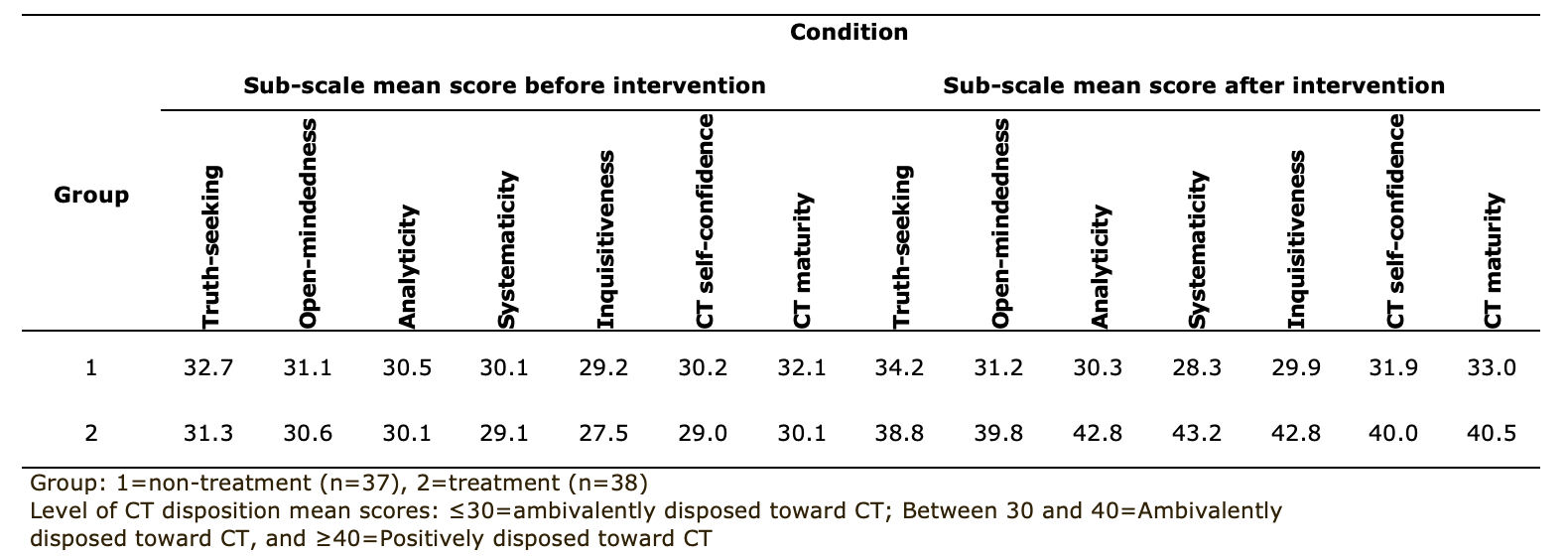
Table 4: CT dispositions subscales’ mean scores before and after the intervention.
As can be seen in Table 4, participants in both groups had ambivalent dispositions (between 30 & 40) for the subscales truth-seeking, open-mindedness, analyticity, and CT maturity before the intervention. For the systematicity subscale, the non-treatment group had an ambivalent disposition, and the treatment group had a negative disposition. Both groups had negative disposition (≤30) for the inquisitiveness subscale. Regarding the CT self-confidence, the non-treatment group had a negative an ambivalent disposition while the treatment group had a negative disposition. After the intervention, participants in both groups remained within the ambivalent range for the truth-seeking and open-mindedness subscales. Participants in the treatment group were higher for analyticity, systematicity, inquisitiveness, CT self-confidence and CT maturity when both groups’ scores were compared. To be specific, participants in the treatment group scored within the ‘positively disposed toward CT’ range while those in the non-treatment group scored within the ‘ambivalently disposed toward CT’ range and within the ‘negatively disposed toward CT’ range for the abovementioned five subscales. Regarding the remaining two subscales, i.e., truth-seeking and open-mindedness both groups remained within the ‘ambivalently disposed toward CT’ range.
As shown in Table 4, it was found that there were improvements in many of the individual sub-scales in the treatment group after the intervention. However, in both groups or in either of the groups, there were sub-scales that remained at the same level they were before the intervention. To be specific, both groups were at the ‘ambivalent’ level for in Truth-seeking and Open-mindedness sub-scales. The non-treatment group was at ‘ambivalent’ level for analyticity and CT self-confidence sub-scales, and at ‘negative’ level for inquisitiveness sub-scale. On the other hand, each group’s CT dispositions sub-scales scores were at different scales before and after the intervention. In this vein, before the treatment, the non-treatment group was at ‘ambivalent’ level and the treatment group was at ‘negative’ level for the systematicity and CT self-confidence sub-scales. After the intervention, the non-treatment group was at ‘ambivalent’ level while the treatment group was at ‘positive’ level for analyticity, CT self-confidence, and CT maturity sub-scales, and the non-treatment group was at ‘negative’ level for systematicity and inquisitiveness sub-scales. This indicated that the treatment group showed improvement after the intervention.
Discussion and Conclusion
The current study investigated the impact of integrating the teaching of critical thinking (CT) in augmentative paragraph writing (APW) lessons with first-year university students to determine their dispositions toward CT. Specifically, the study intended to examine whether there was a statistically significant difference between the non-treatment and the treatment groups in the post-intervention CT dispositions scores after statistically controlling the impact of the pre-intervention CT dispositions scores. Additionally, the study sought to identify the CT dispositions subscales improvement (if any) after the intervention.
Pertinent to the first research question, which asks if there is statistically a significant difference in CT dispositions scores between first-year Wollega University students who received CT training in APW lessons and those who learned the lessons without receiving the training or not, the results of both the descriptive and inferential statistical techniques used in the data analysis revealed that there was a statistically significant difference between the non-treatment and the treatment group scores on the CCTDI questionnaire developed by Facione and Facione’s (1992) . In this regard, the CCTDI total mean scores suggested that for the participants in the treatment group, there was an improvement in the CT dispositions scale after the intervention. The inferential statistical analysis results (a one-way between groups ANCOVA) further implied that the intervention contributed to the difference between the non-treatment and the treatment groups, and the difference was statistically significant (p<0.05). In other words, the results of the participants’ CCTDI scores after the intervention indicated that their willingness to use CT was positively affected by the provision of the intervention. This result is consistent with Adege (2016), Eigenauer (2016), and Solomon (2019). Adege (2016) claimed that one of the variables that improves by offering explicit instruction of CT is the students’ CT dispositions. He concluded that the results prove that the CT approach to learning had a substantial impact on nurturing the participants overall CT dispositions. Eigenauer’s (2016) study results also indicated that through helping students become aware of their tendency toward sloppy thinking and exerting effort during intellectual tasks, such as argumentative writing and its analysis, instructors can support their students to foster CT dispositions. Furthermore, one of Solomon’s (2019) study conclusions indicated that problem-based English language instruction improves students’ CT dispositions. He concluded that problem-based English language instruction contributed to the significant changes toward CT dispositions that were observed in the experimental group. However, the current study’s result contrasted with Reed’s (1998) results. She conducted a single group pre-test post-test experimental study by integrating Paul’s CT model into a History course, and she found no variation between the pre-test and post-test overall CCTDI scores of her students.
Regarding the second research question, which intended to identify the CT dispositions subscale(s) improvement (if any) in the treatment group after the intervention, the result of each CT dispositions score for CCTDI in the present study suggest that some of the subscales (analyticity, systematicity, inquisitiveness, CT self-confidence, & CT maturity) improved, whereas the remaining subscales (truth seeking & open-mindedness) did not. This result was consistent with Adege’s (2016) study results which concluded that the CT approach to learning had a significant influence in fostering some of the students’ CT dispositions subscales (analyticity, systematicity, self-confidence, & inquisitiveness) while it had no significant impact on the remaining three CT dispositions subscales (truth-seeking, open-mindedness, & cognitive maturity). The findings of the study carried out by Taghinezhad et al. (2019) also showed that, at the post-intervention test, there were significant differences in the CCTDI subscales of analyticity, inquisitiveness, self-confidence, and systematicity, but not in any of the other subscales (truth-seeking, cognitive maturity, and open- mindedness).
Since a significant difference was observed between the non-treatment and treatment groups in their critical thinking (CT) dispositions scores, favoring the treatment group, and this implies that the difference was due to the integration of CT dimensions training into APW lessons and the CT dispositions subscale improved in both groups after the intervention with participants improving in analyticity, systematicity, inquisitiveness, self-confidence, and maturity, it is possible to make some suggestions. To this effect, EFL instructors, curriculum (syllabus) designers, and material developers should be aware of the importance of integrating the training of CT dimensions into augmentative paragraph writing lessons to nurture university students’ dispositions to its use.
Limitations
As to the study’s limitations, it would have been more rigorous to conduct the study with EFL major students as they devote their time to improving their English language skills in general and writing skills in particular as compared to first-year students. However, it is difficult to have two intact classes of English majors since a small number of English major students (often less than fifteen) enter Wollega University English Language and Literature Department every year. Due to this, the researchers were forced to conduct the study with first-year freshman students who had less exposure to English writing in general and argumentative writing in particular. To this effect, it is suggested that future researchers choose two intact classes of English major EFL students to more deeply investigate the impacts of integrating the teaching of CT into argumentative paragraph writing as well as essay writing on English major EFL students’ CT dispositions as English major EFL students learn advanced writing courses.
Acknowledgments
We would like to express our heartfelt thanks to all the individuals involved in the study. We also extend our gratitude to Wollega University Freshman Students Program for allowing the study to be conducted with first-year students.
References
Abrami, P. C., Bernard, R. M., Borokhovski, E., Waddington, D. I., Wade, C. A., & Persson, T. (2015). Strategies for teaching students to think critically: A meta-analysis. Review of Educational Research, 85(2), 275-314. https://doi.org/10.3102/0034654314551063
Adege, A. (2016). The effects of explicit instruction in critical thinking on student achievement in writing academic papers, general critical thinking ability, and critical thinking dispositions (Unpublished doctoral dissertation), Addis Ababa University.
Adeyemi, S. B. (2012). Developing critical thinking skills in students: A mandate for higher education in Nigeria. European Educational Research Journal 1(2), 155-161. https://doi.org/10.12973/eu-jer.1.2.155
Afshar, H. S., Movassagh, H., & Arbabia, H. R. (2017). The interrelationship among critical thinking, writing an argumentative essay in an L2 and their subskills. Language Learning Journal 45(4), 1-13. https://doi.org/10.1080/09571736.2017.1320420
Ali, G. & Awan, R.N. (2021). Thinking-based instructional practices and academic achievement of undergraduate science students: Exploring the role of critical thinking skills and dispositions. Journal of Innovative Sciences, 7(1), 56-70. http://dx.doi.org/10.17582/journal.jis/2021/7.1.56.70
Alwehaibi, H. U. (2012). Novel program to promote critical thinking among higher education students: Empirical study from Saudi Arabia. Asian Social Science, 8(11), 193-204. https://doi.org/10.5539/ass.v8n11p193
Bulbula, D. A., Bulti, T. A., & Sada, E. Y. (2021). EFL teachers’ practices and implementations of speaking activities in Ethiopian English textbooks. Education Research International. https://doi.org/10.1155/2021/8696278
Atkinson, D. (1997). A critical approach to critical thinking in TESOL. TESOL Quarterly, 31(1), 71-94. https://doi.org/10.2307/3587975
Bellaera, L., Weinstein-Jones, Y., Ilie, S., & Baker, S. T. (2021). Critical thinking in practice: The priorities and practices of instructors teaching in higher education. Thinking Skills and Creativity, 41. https://doi.org/10.1016/j.tsc.2021.100856
Bernasconi, L. (2008). The jewels of ERWC instruction. California English, 14(1), 16-19.
Bickman, L., & Rog, D. J. (2009). The SAGE handbook of applied social research methods. SAGE.
Case, R. (2005). Bringing critical thinking to the main stage. Education Canada, 45(2), 45-49. https://www.edcan.ca/wp-content/uploads/edcan-2005-v45-n2-case.pdf
Davies, M. (2013). Critical thinking and the disciplines reconsidered. Higher Education Research & Development, 32(4), 529-544. https://doi.org/10.1080/07294360.2012.697878
Davies, M., & Barnett, R. (Eds.). (2015). The Palgrave handbook of critical thinking in higher education. Palgrave Macmillan.
DeVellis, R. F. (2003). Scale development: Theory and applications (2nd ed.). Sage.
Eigenauer, D. J. (2015). Teaching critical thinking dispositions. NISOD Innovation Abstracts, 32(11). https://www.nisod.org/2015/04/10/teaching-critical-thinking-dispositions
Eigenauer, J. D. (2016). Targeted instruction in critical thinking improves dispositions. Inquiry: Critical Thinking across the Disciplines, 31(2), 27-36. https://doi.org/10.5840/inquiryct201631211
Ennis, R. H. (1989). Critical thinking and subject specificity: Clarification and needed research. Educational Researcher, 18(3), 4-10. http://doi.org/10.3102/0013189x018003004
Ennis, R. H. (1996). Critical thinking dispositions: Their nature and assessability. Informal Logic, 8(2), 165-182.https://doi.org/10.22329/il.v18i2.2378
Facione, P. A. (1990). Critical thinking: A statement of expert consensus for purposes of educational assessment and instruction (Research Findings and Recommendations). American Philosophical Association. https://files.eric.ed.gov/fulltext/ED315423.pdf
Facione, P. A. (2000). The disposition toward critical thinking: Its character, measurement, and relationship to critical thinking skill. Informal Logic, 20(1), 61-84. https://doi.org/10.22329/il.v20i1.2254
Facione, P. A., & Facione, N. C. (1992). The California critical thinking disposition inventory. California Academic Press.
Facione, P. A., Sánchez, C. A., Facione, N. C., & Gainen, J. (1995). The disposition toward critical thinking. Journal of General Education, 44(1), 1–25.
Field, A. (2013). Discovering statistics using IBM SPSS Statistics (4th ed.). SAGE.
Fikrte, H. (2005). The critical thinking abilities of college seniors: The case of foreign languages students at Addis Ababa University [Unpublished masters thesis]. Addis Ababa University.
Fisher, A. (2001). Critical thinking: An introduction. Cambridge University Press.
Giancarlo, C. A., Blohm, S. W., & Urdan, T. (2004). Assessing secondary students’ disposition toward critical thinking: Development of the California measure of mental motivation. Educational and Psychological Measurement, 64(2), 347-364. https://doi.org/10.1177/0013164403258464
Hanscomb, S. (2023). Critical thinking: The basics (2nd ed.). Routledge.
Halpern, D. (1998). Teaching critical thinking for transfer across domains: Dispositions, skills, structure training, and metacognitive monitoring. American Psychologist, 53(4), 449-455. https://doi.org/10.1037//0003-066x.53.4.449 ‘
Halpern, D. F. (2001). Assessing the effectiveness of critical thinking instruction. The Journal of General Education, 50(4), 270-286. https://doi.org/10.1353/jge.2001.0024
Ip, W. Y., Lee, D. T. F., Lee, I. F. K., Chau, J. P. C., Wootton, Y. S. Y., & Chang, A. M. (2000). Disposition towards critical thinking: A study of Chinese undergraduate nursing students. Journal of Advanced Nursing, 32(1), 84-90. https://doi.org/10.1046/j.1365-2648.2000.01417.x
Kozhevnikova, E. (2014). Exposing students to authentic materials as a way to increase students’ language proficiency and cultural awareness. Procedia - Social and Behavioral Sciences, 116, 4462–4466. https://doi.org/10.1016/j.sbspro.2014.01.967
Kurfiss, J. G. (1988). Critical thinking: Theory, research, practice, and possibilities. (ASHE-ERIC Higher Education Report No. 2). ERIC. http://files.eric.ed.gov/fulltext/ED304041.pdf
Lombardi, L., Thomas, V., Rodeyns, J., Mednick, F. J., De Backer, F., & Lombaerts, K. (2021). Primary school teachers’ experiences of teaching strategies that promote pupils’ critical thinking. Educational Studies, 50(5), 683-701. https://doi.org/10.1080/03055698.2021.1990017
McPeck, J. E. (1981). Critical thinking and education. St. Martin’s Press.
Meyers, C. (1986). Teaching students to think critically: A guide for faculty in all disciplines. Jossey-Bass.
Nguyen, T. S., & Nguyen, H. B. (2020). Unravelling Vietnamese students’ critical thinking and its relationship with argumentative writing. Universal Journal of Educational Research, 8(11B), 5972-5985. https://doi.org/10.13189/ujer.2020.082233
Pallant, J. (2010). SPSS survival manual: A step-by-step guide to data analysis using SPSS (4th ed.). McGraw-Hill.
Paul, R. (1990). Critical thinking: What every person needs to survive in a rapidly changing world. Center for Critical Thinking and Moral Critique.
Paul, R., & Elder, L. (2014). Critical thinking tools for taking charge of your professional and personal life (2nd ed.). Pearson.
Profetto-McGrath, J. (1999). Critical thinking skills and critical thinking dispositions of baccalaureate nursing students[Unpublished doctoral dissertation]. University of Alberta.
Profetto-McGrath, J. (2003). The relationship of critical thinking skills and critical thinking dispositions of baccalaureate nursing students. Journal of Advanced Nursing, 43(6), 569-577. https://doi.org/10.1046/j.1365-2648.2003.02755.x
Reed, J. H. (1998). Effect of a model for critical thinking on student achievement in primary source document analysis and interpretation, argumentative reasoning, critical thinking dispositions, and history content in a community college history course skills (Publication No. 9911510) [Doctoral dissertation, University of South Florida]. ProQuest Dissertations and Theses.
Ruff, L. G. (2005). The development of critical thinking skills and dispositions in first-year college students: Infusing critical thinking instruction into first-year transition courses [Unpublished doctoral dissertation]. University of Maryland.
Solomon, A. (2019). Effects of problem-based English writing instruction on students’ critical thinking dispositions and argumentative writing [Unpublished doctoral dissertation, Bahir Dar University].
Taghinezhad, A., Riasati, J. M, & Behjat, F. (2019). The effect of teaching critical thinking strategies on students’ academic writing, critical thinking ability, and critical thinking dispositions. International Journal of Foreign Language Teaching and Research, 7(28), 37-55.
Tiruneh, D. T., Verburgh, A., & Elen, J. (2014). Effectiveness of critical thinking instruction in higher education: A systemic review of intervention studies. Higher Education Studies, 4(1). https://doi.org/10.5539/hes.v4n1p1
Vermillion, D. M. (1997). Developing critical thinking skills in EAP Students [Unpublished masters thesis]. Biola University. https://files.eric.ed.gov/fulltext/ED424749.pdf
Younes, K. & Ayyoub, B. (2017). The influence of critical thinking based activities on argumentative paragraph writing quality: A case of first year Moussa Ibn Nossair secondary school literary stream pupils [Unpublished masters thesis]. University of Ahmed Draia Adrar.
Zhao, C., Pandian, A., & Singh, M. K. M. (2016). Instructional strategies for developing critical thinking in EFL classrooms. English Language Teaching, 9(10), 14-21. https://doi.org/10.5539/elt.v9n10p14