
Introduction
A textbook is a curricular material that appears as a book that includes manuscripts or pictures that simplify the achievement of educational goals. It can be utilized to fulfill two aims: education and socialization (Brugeilles & Cromer, 2009; Curdt-Christiansen, 2017; Friedman, 2021). Generally, the educational purpose of textbooks deals with spreading knowledge, skills, and attitudes through assisting the teaching and learning process (Olson, 1989). Textbooks can also be very helpful for teachers with little experience; thereby, they are capable of managing the teaching and learning process in their classes through pre-set classroom activities, sequences, and objectives framed in the textbooks (Richards, 2001).
It also facilitates socializing students through depicting and transferring both social values and norms. However, along with the values, such as humanity and individual rights, textbooks can be used to impose and represent the desired ideologies of the communities to which the students belong. Brugeilles and Cromer (2009) stated that “In their interpretation and presentation of knowledge, textbooks are a vehicle for norms, values and models of social behavior through the representations that they contain” (p. 16). Simply put, a textbook has a role as an ideological agenda (Phillipson, 1992) “[…] to promote a certain belief system and legitimize an established political and social order” (Apple & Christian-Smith, 2017, p. 10). These ideologies embedded in textbooks carry the dominant groups’ intended beliefs, which aim at modifying and guiding people’s thoughts (Widdowson, 2007). One of these social values that is mostly affected by the ideological powers is the gender perspective. Gender-related values are always employed in textbooks as an influential socialization medium that influences students directly and the community indirectly in constructing knowledge and attitudes towards gender equality (Davidson Films, 2010). Thereby, governments and thought-controlling systems in societies are able to implicitly inject their ideological perspectives into the fresh minds of youngsters (Camase, 2009). Hence, it could turn into a major hazard if the imposed ideologies by the powers encourage gendered perspectives (Rawłuszko, 2021; Suissa & Sullivan, 2021).
If such unequal perspectives toward genders appear in textbooks, they can bring about serious effects on teenage students. It may affect the way they recall and comprehend materials (Good et al., 2010; Namaziandost et al., 2018), choose their university majors and future careers (Blickenstaff, 2005; Potter & Rosser, 1992; Van Houweling et al., 2020), and understand social equality, values, and behaviors (Amare, 2007; Lu, 2018; Mukundan & Nimehchisalem, 2008). Among these issues, gender equality plays a major role in shaping learners’ world knowledge about genders. According to Wodak (1997), gender is the “socially, culturally or psychologically constructed differences” between men’s and women’s roles and relations (p. 3). However, if the differences are reproduced and reinterpreted unjustifiably by the educational systems through the textbooks, their consequential effects will be perpetual in societies for decades(Baten et al., 2021; Suissa & Sullivan, 2021). Thus, to avoid possible gendered perspectives in textbooks, meticulous and persistent surveillances are required during and after developing any educational textbooks.
It is obvious that English Language Teaching (ELT) textbooks are no exception in this regard, as they may also hold embedded gendered perspectives. Such gender bias in ELT materials may exacerbate gender differences and, consequently, may hinder gender equality (Dahmardeh et al., 2025; Vu & Pham, 2022). This issue in ELT materials has also been investigated by many scholars in the field. Perhaps, such studies were triggered by Hartman & Judd (1978) since before that research, publications on gender-representation in ELT textbooks had been confined to small-scale reports (Ariyanto, 2018). However, as Demir and Yavuz (2017) expressed, males are generally represented more than females in nearly all ELT textbooks. Such an imbalance in gender representation in Iranian ELT textbooks has been previously reported in some studies. For example, Foroutan (2012) concluded that male dominance was prevalent in all the textbooks. In another study, Hall (2014) reported gender inequality in Iranian ELT textbooks and claimed that the low visibility of female characters is evident in the textbooks.
What connects these studies is the utilization of Critical Discourse Analysis (CDA) as the guiding framework in examining the distribution of institutionally unequalled power in terms of access to linguistic resources. Investigating access to discoursal events and their relationships with the social inequalities “as it is expressed, signaled, constituted, legitimized and so on by language use” (Wodak, 2001, p. 2) are indispensable principles of CDA, which assumes that language is basically ideologically invested, and it is not a neutral means of sending messages. Additionally, discoursal events establish “a particular way of talking about and understanding the world” (Phillips & Jorgensen, 2002, p. 1) both from the perspectives of the producer (the writer, the speaker) and the consumer (the reader, the audience). Thus, CDA, as a research method, seeks to obtain a better understanding in terms of the underlying ideological system of discourse and how this discourse works to affect its context and addressees. In this way, a linkage can be found between CDA and gender studies, which are devoted to examining gender identity and gendered representation, as they similarly attempt to identify and analyze social inequalities regarding gender-related issues. This gendered ideological imposition, which is known as the systematic direction of thoughts toward prototyped perspectives about genders, can be reflected and practiced in school textbooks (Blumberg, 2008; Parker et al., 2017); therefore, analytical examinations of school textbooks can provide information on any underlying biased gendered perspectives.
These examinations are strictly necessary when new textbooks are introduced to the market. In 2013, a series of English textbooks (Prospect 1, 2, & 3[1]) was published to be taught at Iranian public junior high schools. However, since Iran is known as a patriarchal society, under-investigating gender representation in the newly published textbooks can bring about consequential effects on students (Mir, 2020; Mortazavi & Poelker, 2017; Nayyeri, 2013; Sattari, 2020). Therefore, examining gender bias in this series is of high priority. This study aimed to investigate how ELT textbooks represented men and women and their social roles in an Iranian context. In so doing, Iranian junior high school English textbooks were chosen and analyzed through Fairclough's (2015) model of CDA, namely, female and male characters, social roles, and their positions. To guide the study, the following question was raised:
How are female and male social roles, and their positions, represented in newly published Iranian ELT textbooks?
Literature Review
After Iran’s Islamic revolution in 1979, the educational system experienced fundamental changes to establish Islamic rules in its schooling system (Foroutan, 2012). In this regard, all the public and private schools must follow the government’s educational orders and use their prescribed textbooks (Dahmardeh et al., 2017; Dahmardeh & Kim, 2020). According to Lahelma (2014), schooling is considered to be an important factor in forming students’ perspectives on gender. These gender-based worldviews in schooling systems are mostly shaped through textbooks, as they are constantly being used by the students and are considered to be trusted resources (Moore, 2020). If the learning materials hold biases in presenting genders, they can produce adverse effects on the target students in comprehending social roles and status of genders (Dhillon & Meier, 2022; Evans & Rawlings, 2021). Their adverse effect may produce unjustified perspectives in learners that rarely or never change.
In this regard, research has reported that gender inequality in presenting genders exists in textbooks used in the educational system of Iran (e.g., Nayyeri, 2013; Tabatabaei & Mehri, 2019; World Economic Forum, 2020). Such gender bias in textbooks can also be found in Iranian English textbooks, as it is one of the compulsory foreign languages taught in every Iranian high school. All Iranian students are taught using six English textbooks during their six years of high school in classes given three to four hours per week.
Language and gender
Studies exploring the connections between gender and language were triggered when three important books were published: Male/female language (Key, 1975), Language and women’s place (Lakoff, 1975), and Difference and dominance (Thorne & Henley, 1975). These books are intended to explore gender equality as well as deconstruct text-embedded gendered perspectives of gender. The authors of these books sought to increase public consciousness about the destructive nature of gender bias prevalent in texts and educational materials. Generally, perspectives toward the roles played by women and men and society’s expectations of them are reflected and established in textbooks (Bell et al., 2006). Such expectations, which construct certain attitudes and behaviors towards gender, are highly dependent on a country’s culture, policies, economy, and religions (Bell et al.). Culturally speaking, women are assumed to be suppressed groups who are negatively characterized as inactive, weak, dependent, and emotional, and men are positively shown as strong, active, independent, and rational (Fiske et al., 2002; 2002; Kaye & Pennington, 2016; Steele & Aronson, 1995). Moreover, these characterizations of women and men are not innate, but adhere to the social and cultural situation of each society.
On the other hand, gendered perspectives gender may be included in educational textbooks and school curricula (Kereszty, 2009). This could turn into a social hazard if the gender ideologies in the textbooks encourage gender inequality. These would-be biased perspectives could bring about irreparable social problems in the belief structure of the young students as Lee and Collins (2008) claim, “Learners, who generally attach great credibility and authority to educational materials, tend to absorb and assimilate the materials in minute detail without comment, and to be susceptible to their influence.” (p. 128). Hence, educational textbooks can be regarded as tools of injecting and imposing gendered ideologies in societies (Carlson & Kanci, 2017; Gouvias & Alexopoulos, 2018; Lee, 2018).
CDA and gender-based studies
Before 1970, as McCarthy (1991) mentioned, studying language was confined to analyzing its fragments, but with the appearance of discourse analysis in various fields of study (such as linguistics, semiotics, and sociology), the scenario changed substantially. At the present time, discourse analysis includes interdisciplinary approaches that can be utilized to investigate various social issues in different types of research (Phillips & Jorgensen, 2002). Nowadays, CDA, as an outcome of discourse analysis, has attracted attention from different fields of study such as teaching, literature, and sociolinguistics. The main focus of CDA is considering language as a social phenomenon and concentrating on the sociopolitical dominance and inequality in texts. Van Dijk (2006 believes that CDA mainly deals with “the relationship between discourse and power” (p. 363). Fairclough and Wodak (1997) state that it aims to focus on social issues and how power and ideology are embedded in discourse, as discursive practices historically mediate social affairs; therefore, discourse can be considered as a kind of social action.
In this regard, Fairclough's (2015) model is considered to be one of the prominent models of CDA to conduct gender-based studies in ELT textbooks. One of the important uses of CDA is in gender-related studies in which the main concern of the researchers is to reveal the embedded discriminatory patterns between genders in texts. The presence of latent gendered dispositions in texts can be examined in terms of how certain necessary social values are tacitly transmitted through the “hidden curriculum,” which produces embedded assumptions and practices of educational systems created by various actors within the school context (Skelton, 1997). During the last decades, as Gouvias and Alexopoulos (2018) claim, much research has been conducted to investigate gender bias in textbooks which reported similar stereotypes toward genders as females are passive, dependent, weak and physically attractive, males as active, independent and strong (e.g., Ariyanto, 2018; Coles, 1977; Gebregeorgis, 2016; Lee & Collins, 2008).
Reviewing the classical studies exploring gender equality in textbooks, it can be observed that some studies mainly employed frequency and type counts to report inequality in the distribution of roles between genders. For instance, Coles (1977) investigated the number and type of gender roles in five educational materials and reported that males were represented more than females by a ratio of 3:1. He also revealed that in textbooks, females are presumed to hold just traditional and inactive jobs, while males had 73 different occupations. He found that women managed and owned little, while men held various jobs that needed skills and managerial ability. He concluded that such intentional under-representation of females in textbooks is in congruence with the ongoing ideological patterns in the societies, which are partly injected from governments and social bases.
On the other hand, some researchers have opted for CDA as the model of analysis to explore the gender bias in ELT textbooks. In a study, Ariyanto (2018) carried out a CDA study exploring how genders are portrayed in Indonesian English textbooks used at public schools. He utilized critical micro-semiotics to analyze the texts and illustrations oftextbooks and reported that there were gendered impositions in the visual and verbal texts. His interpretation of these findings was that gendered discourses in the textbooks do not encourage gender equality and, in some cases, render stereotyped gender discrimination. He also concluded that gender stereotyping in educational materials is not confined to the boundaries of texts but is extended to the visual aspects of such materials.
Fairclough’s (2015) model of CDA has been utilized by some researchers to examine gendered perspectives in textbooks. As an illustration, Gebregeorgis (2016) employed this model to analyze gendered perspectives in the English for Ethiopia Student’s Book. His findings showed that the texts included in the textbook attempted to follow the current social directions on gender construction and the efforts to alter the existing state of affairs in prevalent gendered dispositions in the educational system of Ethiopia.
Some other studies have also compared gender awareness in ELT textbooks of two nationalities. For example, Lee and Collins (2008) investigated gender bias in the English textbooks in reflections of the later development of genderawareness in Hong Kong compared to Australia. Comparing ten Australian textbooks with ten Hong Kong textbooks, they showed that awareness of gender-based issues had influenced most gender-related terms in Australia and Hong Kong. They reported that the Hong Kong authors favored either “he” or “she” or “generic he”, whereas their Australian counterparts were inclined to apply the generic form. The examination of the pictures in the textbooks revealed that Hong Kong textbook authors paid more attention to the visual presentation of women.
Similar research has been conducted in the Iranian context. In a study done by Bahman and Rahimi (2010), the researchers examined various excerpts of gender representation of females and males in three Iranian high school English textbooks. They attempted to investigate the words ascribed to females and males. Their results showed that the presentation of females and males in these textbooks was not equal, as the males’ roles were more emphasized than those of females. Furthermore, these textbooks included so many male generics that females were practically invisible, which can be regarded as sexism in these textbooks.
More recently, Tahriri and Moradpour (2014) investigated a communicative series called Top Notch to extract any gender bias. Employing Fairclough’s (2015) model, the researchers examined the textbooks based on three main aspects of gender: relations, positions, and content. Their findings indicated that the series displays both genders in a relatively balanced manner and represents both genders in a way that significantly diminishes the stereotypical norms that are often internalized by learners. Moreover, they also concluded that this textbook has embraced the language of marketing and advertising, particularly through leveraging the representation of both genders, with a marginal emphasis on females.
Similarly, Goodarzi & Weisi (2020) investigated the representation of genders, cultures, and races in the Iranian senior high school Vision Series. The examination of these textbooks revealed that they did not present equal cultural representations. They also found that the dominance of white and male characters was evident. Moreover, they reported that males’ roles were more stressed than those of females throughout the series.
Drawing upon the studies and their results above, conducting studies examining the issue of gender equality in educational materials is a necessity which is more tangible in governments with ideological patterns such as Iran. Therefore, this research is an attempt to unravel the underlying ideologically driven gendered stereotypes in a recently published Iranian English series (Prospects). Results would contribute to shedding light on the unknown status quo of gender equality in contemporary Iranian educational materials.
The present study
This research aims to investigate how males and females are represented in the Prospects series for junior high school students. This research can be considered significant for several reasons. First, as the English series being taught at Iranian junior high schools has been introduced to Iran’s Educational System (Prospect 1, 2, and 3) (Kheirabadi & Alevimoghaddam, 2016), and the previous series Right Path to English (Birjandi & Soheili, 2006) were reported to embody gendered dispositions (Ansary & Babaii, 2003), therefore, analyzing them in terms of embedded gendered perspectives seems to be necessary. Also, as English is the obligatory foreign language in Iranian high schools from Grade 7 on, if the textbooks contain gender bias and boost stereotypical thinking and beliefs, they will indirectly shape a gender-biased worldview for students. Although social perceptions about gender roles are changing in Iran, critics believe that the gendered views that are most prevalent are that males are the breadwinners and females are the homemakers. Given that education is a means of making changes in society (Välimaa & Hoffman, 2008), if gender equality is effectively practiced and presented in school textbooks, its movements will experience fewer barriers in the future. Finally, since no research on gender representation in Iranian most recently published English as a foreign language (EFL) textbooks (the Prospect series) has been carried out, the present study on the contemporary Iranian EFL textbooks will provide the required information for both curriculum planners and the Educational System on the status quo of gender equality in the EFL textbooks in public school to render the needed improvement.
Methodology
Materials
English as an obligatory subject is widely taught to all Iranian students from grades 7 to 12. Therefore, the investigation of the English textbooks regarding their gender representation and possible latent gendered ideologies is of high priority (Zarrinabadi & Mahmoudi-Gahrouei, 2017). In this study, the first three textbooks that are taught in grades 7, 8, and 9 were selected for examination. In the Prospect series, all four skills are practiced along with some vocabulary lists and basic grammatical structures. The textbooks, which were introduced to Iranian high schools from 2010 to 2015, seek to improve students’ English communicative abilities. The series includes a student's book with an audio CD, a workbook, and a teacher's book. In this research, Fairclough’s (2015) model of CDA was utilized to examine the conversations to disclose the gender representations in this series. Table 1 shows the number of units and conversations of the Prospectseries.
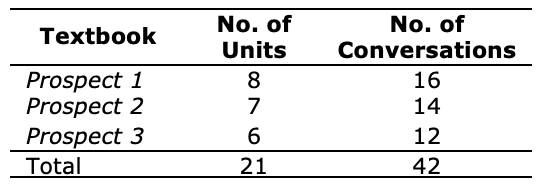
Table 1: Number of units and conversations
Model of analysis
Fairclough’s (2015) model, based on Halliday’s (1985) systemic-functional grammar (SFG) introduced the model of CDA to analyze gender representations in textbooks. In this model, content, social relations, and subject positions are scrutinized to reveal embedded ideologically driven biases in textbooks. To operationalize this model in our study, the following steps were taken:
Content
A careful examination of the textbooks was carried out to categorize meaning-related aspects of gender representations into a set of numerical data. To do so, gender-related meaning dimensions were counted in terms of content, relation, and subject positions throughout the series, then the data gathered were recorded for subsequent comparisons. The logic behind analyzing the dimensions was checking which meaning aspects were emphasized or de-emphasized regarding gender-related issues, as these intentional meaning choices can reflect the latent ideologies of textbook developers.
Relations
To categorize social relations, the relations of the interlocutors in conversations, such as teacher-student and female-male relations in the three textbooks were counted. Then, the identified relations from all three textbooks were categorized into equal and unequal positions to detect any unequal positions in these relations and gender-related superiorities. It should be mentioned that the repetitions of the relations were also considered in the study. That is, the frequency of all the social relations a person with a specific position had, were counted as the data.
Subject positions
All the measures taken to embed ideological perspectives and meanings in text are normally in accordance with one another. These measures entailed three meaning dimensions of relations, subjects, and contents. As Fairclough (2015) said, “all three dimensions of meaning overlap and co-occur in practice, but it is helpful to distinguish them” (p. 46). Hence, the frequency of subject position occurrences was counted each time the interlocutors of a conversation were communicating. Five categories of gender-related positions were introduced: family, societal, commercial, occupational, and other subject positions. When the interlocutors happened to take more than one social position, saliency was the criterion for the selection of their social position. Meanwhile, if any position could not be fed into the categories, it was assumed to be position–free and was categorized into the other subject positions. Moreover, friendship was not considered as a subject position, as it was enumerated as a social relation, and repeating it in a new dimension would cause confusion.
To measure the inter-rater reliability (Cohen’s Kappa) of the obtained data, both researchers analyzed the textbooks. Then, using SPSS software, the inter-rater reliabilities (21 situations and relations) of the data were calculated, resulting in 0.701, 0.812, and 0.823 for Prospect 1, 2, and 3, respectively (Table 2).
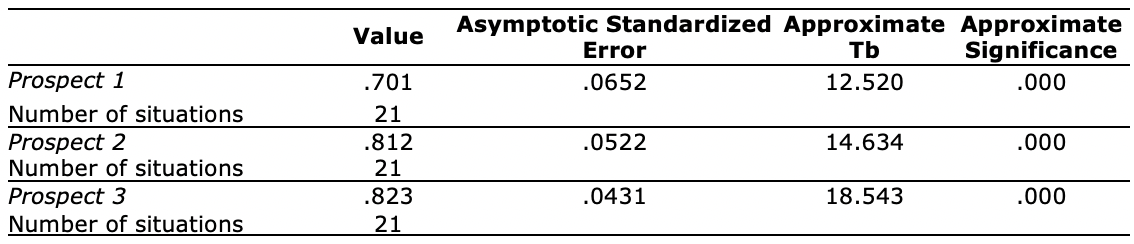
Table 2: Inter-rater reliability (Kappa) of the textbooks
This study was basically conducted to reveal underlying gender-related ideological representations of Iranian junior high school EFL textbooks. To do so, content, relations, and subject positions were carefully inspected to decide whether the textbooks were adequately gender-balanced or whether any significant gendered bias was embedded.
Results and Discussion
This study sought to investigate the possible underlying gender-related ideologies embedded in Iranian junior high school EFL textbooks. To do so, all the characters in the textbooks were identified to examine the characters’ gender, their relations, and subject positions. To examine the characters’ relations, the frequency of equal, unequal, the overall relations in textbooks was scrutinized. In the examination of the unequal relations within conversations, it was revealed that equal relations in the textbooks were confined to ‘Student-Student’ and ‘Friend-Friend’, and equal relations were not similarly distributed between genders in these two categories.
As Table 3 illustrates, most interactants of ‘Friend-Friend’ relations were males (seven conversations); however, only four for both genders were found in ‘Student-Student’ relations. This might indicate the authors' emphasis on representing female students just inside the schools. Not showing females in an outdoor setting having conversations could bring about consequential challenges in terms of illustrations and topics in an Islamic context. Unsurprisingly, no equal relations involving both genders in one conversation in the Prospect series were reported to involve both females and males. Some examples of the pictures used for such conversations can be found in Figure 1. This can be explained from the Islamic view, which bans friendship between females and males. Moreover, co-education is not allowed in the public sector of the educational system of Iran, which deters Iranian authors from manifesting such situations. To some extent, the textbook authors are not to blame for it, as insisted on in the Fundamental Evolution Document of Education and Pedagogy, “teaching and learning foreign languages should be aimed at bolstering and spreading “the Iranian-Islamic identity” (Ministry of Education, 2018, p. 30). Therefore, in this case, the controlling ideology injected into the textbooks is prescribed by the governing system, which stops the authors from taking an independent decision in this regard.
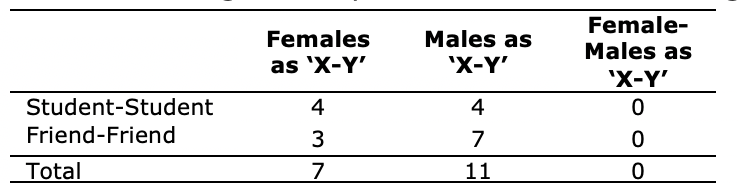
Table 3: Frequency of equal relations
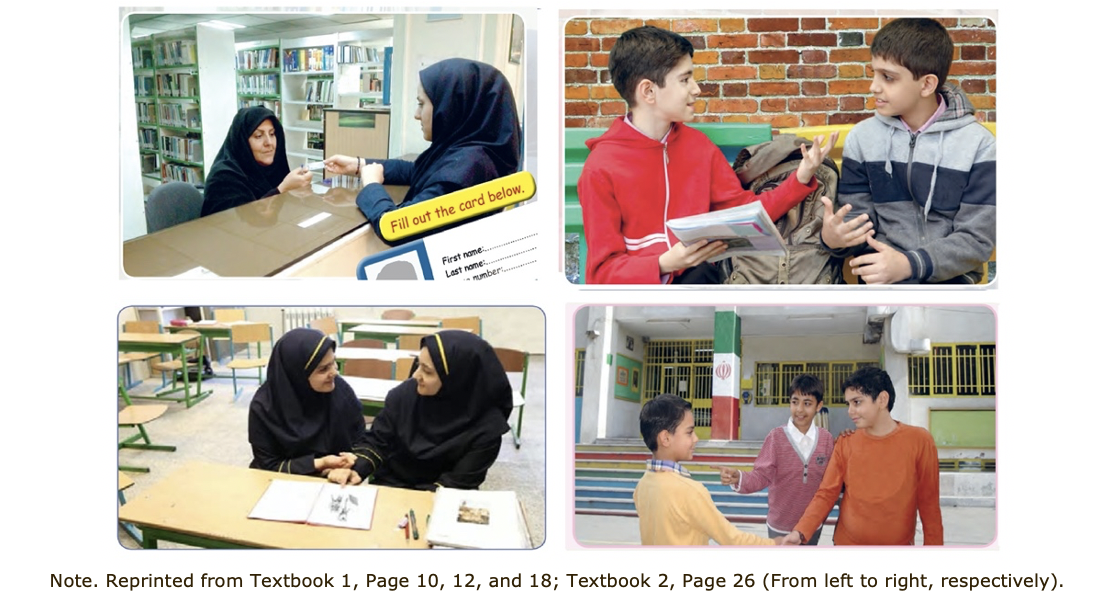
Figure 1: Unisex conversations in Prospect
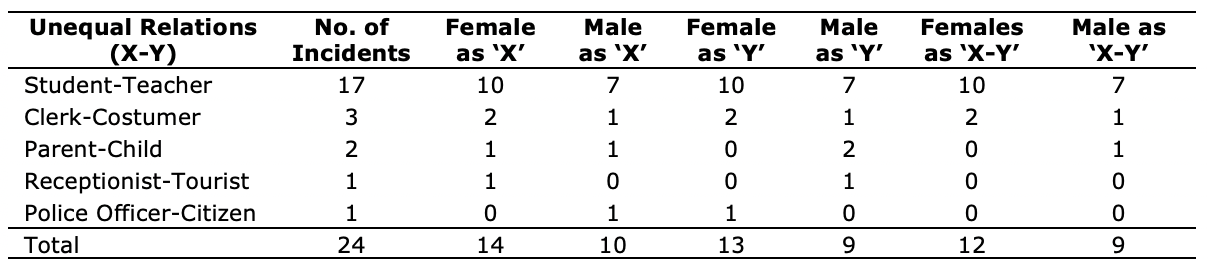
Table 4: Frequency of unequal relations
As Table 4 shows, the frequency of equal relations is more than the frequency of unequal relations. Table 4 illustrates that out of the overall 42 relations, 85.7% of relations occurred between unequal social positions. Nevertheless, these unequal relations do not indicate any advantage of one position over the other. As Table 5 shows, ‘Student-Teacher’, ‘Clerk-Customer’, and ‘Parent-Child’ relations are the first three frequent relations in these textbooks. According to Table 4, no noticeable gender-related bias in unequal relations was visible; however, for the case of ‘Teacher-Student’, the number of female teachers was higher than their male counterparts. This might be suggestive of a common belief in Iran that teaching is a suitable job for females. Additionally, the portrayal of ‘Teacher-Student’ as the leading relation in the textbooks may create the conception in students that English is a school subject, not a means of establishing communication with the world (Joo et al., 2020; Rao, 2019). Figure 2 shows some of the pictures assigned to the teacher-student conversations in the textbooks.

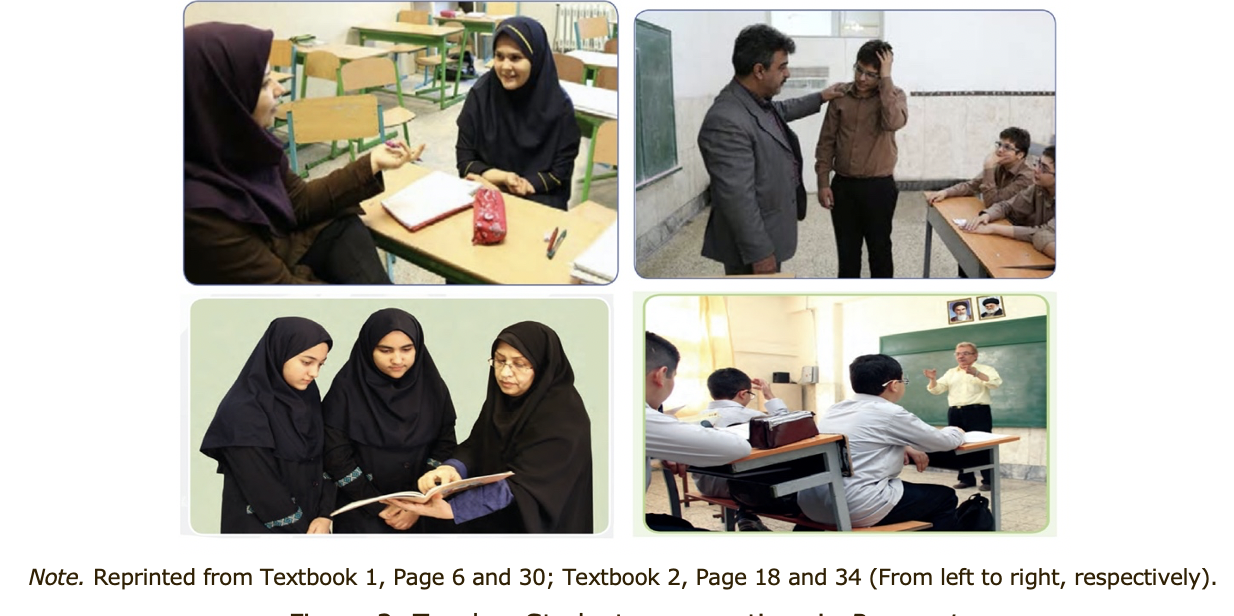
Figure 2: Teacher-Student conversations in Prospect
Relational categories
The characters’ relational categories in the textbooks were examined. According to Table 5, only two dialogues between females and males occurred in the textbooks. It is notable that one of these conversations took place between a mother and a son, and the other between a lost little girl and a male police officer (Figure 3). Although these conversations had interlocutors with different genders, the family relation in the first and the young age of the girl in the second cannot represent a great proportion of the conversational situations between genders. As stated earlier, the reason may reside in the resolution of the authors to adhere to Islamic orders, which ban intersexual relationships in societies. This Table also indicates a significant difference between ‘Female-Female’ and ‘Male–Male’ conversations, which reveals that the former is only one-third of the latter. Although this difference is not recognizable at first glance, as the readers proceed further through the three textbooks, it becomes more apparent that there are attempts to keep women on the margins. As Florent and Walter (1989) claim, this marginalized role of females in this series “…is so deeply engrained in our culture, our language, and our subconscious that it is difficult for us to avoid it in the production of language-teaching materials” (p. 182). However, this worldview from cultural and ideological bases in educational settings and language teaching textbooks seems to oppose a major goal of education, which is equal access of genders to social resources and roles (Aragonés-González et al., 2020; Esteves, 2018). Thus, maintaining variety in choosing social roles irrespective of gender can neutralize any intentional or unintentional attempts to marginalize genders.
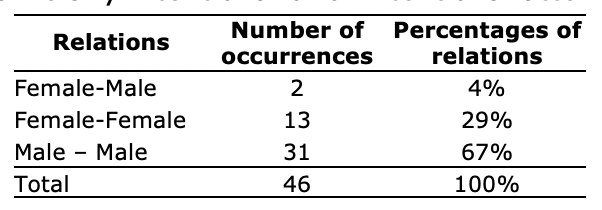
Table 5: Overall relations in Prospect
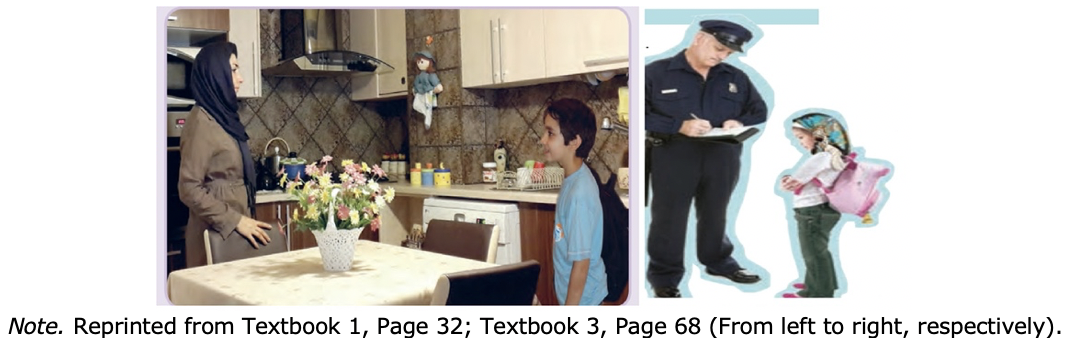
Figure 3: Male-Female conversations in Prospect
Subject positions
The subject positions in the conversations were categorized into four groups: Family, Societal, Educational, and Occupational. These positions were identified based on pictorial and contextual clues indicating the interlocutors’ relatedness with a specific position. As the within-group comparisons in Table 6 suggest, educational positions have the highest frequency among the social positions between genders. It might be concluded from the authors’ emphasis on locating most of the conversations in school contexts. Limiting the context of English use to schools may hamper the authenticity of the included talks in the textbooks as English, like other languages, normally takes place in miscellaneous contexts and the confinement of it to a specific context, i.e., schools, can reduce the contextual authenticity of the ELT materials (Ahmed, 2017).

Table 6: Subject positions in Prospect with group comparisons
As Table 7 shows, although these series are developed to be taught in schools of both genders, a high degree of difference is noticeable between genders in social positions. As for Family, Societal, and Educational positions, females appropriated just one-third of the subject positions in comparison with males; they, however, possessed nearly the same number of occurrences in terms of occupational positions. It should be mentioned that most of occupational positions were limited to school contexts as females are typically teachers and school staff, limiting the developers of the textbooks to depicting schools as a more appropriate occupational target. This portrayal of school-related occupations as the most recurrent and appropriate could suggest that, partly and somehow purposefully, the textbook developers tried to impose ideological perspectives of the ruling system, that is, the educational system of Iran. However, a major role of ELT materials is to avoid any direct or indirect ideological impositions (Addison, 2011; Kazemi et al., 2017). Therefore, in order to widen students’ perspectives and introduce miscellaneous occupational contexts to them, including various careers in educational textbooks, is of high importance.

Table 7: Subject positions in Prospect with group comparisons
Conversation topics
The conversation topics were enumerated and tabulated in Table 8 to grasp a better understanding of gender representations and participation under each topical category. As Table 8 suggests, most female characters are interlocutors of the conversations dealing with education, home, work, and technology, while male characters are mostly distributed among topics concerning travel, personal information, names, occupations, and nationalities. Although in some cases, like education, it has been attempted to leverage females’ positions and roles, it can be seen that the distribution of the genders within the topics is, to some extent, haphazard. It is worth mentioning that the Prospect series attempted to take an unbiased side in terms of overall gender representations in different topical categories. In some cases, some traces of gender stereotyping of social position can be found, which can be attributed to cultural and religious beliefs currently practiced in Iran. This finding highly correlates well with other studies such as those of Amini and Birjandi (2012), Goodarzi & Weisi (2020), and Lee and Mahmoudi‑Gahrouei (2020). According to Lee and Mahmoudi‑Gahrouei, this ambivalence of the textbook developers in gender representation may be rooted in the fact that they are supposed to follow the government’s policy on the one hand, and to write textbooks which accord with the international values in terms of gender equality on the other. However, employing textbooks to preach the government’s ideological perspectives could divert textbooks from their educational purposes.
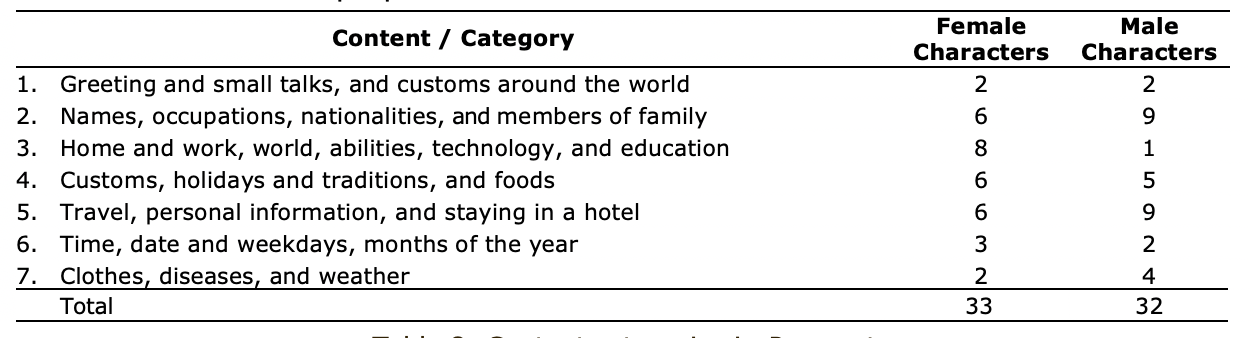
Table 8: Content categories in Prospect
Overall, this research showed that, although relatively new in the market, this series still contains gender-bias in its conversations, which is in line with the findings of previous studies (Amerian & Esmaili, 2015; Bahman & Rahimi, 2010; Esmaili, 2011). In spite of the international ethics of developing ELT course books in terms of avoiding over- or under-representation of genders, the gendered bias in representing textbook characters is still identifiable in Iranian course books. Many textbook developers all around the globe are required to avoid the inclusion of cultural values and ideological perspectives that oppose gender equality and encourage the limitation of social roles and relations (Dahmardeh et al., 2025; Selvi & Kocaman, 2020; Vu & Pham, 2022)
Conclusions and Implications
Textbooks convey gender-related worldviews to their users, especially students, when they are studying and practicing the activities included in them. Therefore, textbooks can reinforce the target students' prevailing gendered stereotypes that are shaped in their society, and which will probably result in gendered perspectives and consequently, gender discrimination. This study revealed that gendered role stereotyping is still found in contemporary Iranian school textbooks in the public sector, such as favoring males over females in unequal and equal relations, more tangible representation of male roles in topical categories, and imposition of socially acceptable male and female activities through overrepresentation of subject positions.
Generally, gendered impositions embedded in the Prospect series can be an indicator of what hidden curriculum, which emphasizes that ideologies of the ruling systems in societies can be implicitly reflected in texts, and consequently, in textbooks. Hence, the cultural and religious context of Iran forces the course book developers to distance themselves from the international standards of ELT course books regarding gender representation and stick to the internal acceptability of the course books.
It should be noted that the male dominance manifested in school textbooks is not necessarily accepted by the whole Iranian society. It simply reflects the worldview of a small proportion of society and the imposed ideology of the current governing system in Iran, since all Iranian course books are filtered by the meticulous monitoring of the government’s authorities. Thus, the Iranian textbooks are utilized by the government as a means of spreading thoughts and directing them to their intended beliefs (Davidson Films, 2010). Therefore, to shrink such gender bias and to reconstruct an equal atmosphere in society, developing a more gender-unbiased curriculum is a high priority. It is difficult at present to predict what consequences such gender bias in textbooks will have for the teenagers who are learning English from these textbooks. However, findings from other studies have revealed that students’ worldview is influenced by the stereotypes they encounter in their textbooks (Law & Chan, 2004). Other studies should be carried out to discover the awareness of developers, practitioners, educational managers, and parents about the gender bias in teenagers’ textbooks. Their views are of utmost importance in forming the way genders will be represented and portrayed in the minds of our future generations.
The results presented in this research represent a further step towards developing gender-free textbooks and helping textbook authors and curriculum developers find an unbiased position in terms of representing genders in educational contexts. The results can help teachers become cognizant of the possible gendered perspectives in textbooks and establish gender equality among their students, since they can spread gender equality by assigning relevant roles to both genders in their classroom talks. Therefore, to reach an unbiased society, all the individuals involved with educating the younger generation should act as agents of redressing social inequalities, such as gender bias. Finally, although this study examined gender representation in an Iranian textbook series, some other issues to investigate in this series seemed to be beyond the scope of this study. Thus, more research is called for to examine gender equality in this series through analyzing the images and the adjectives that were employed to depict and introduce genders. Also, it could be illuminating to carry out a longitudinal study to examine the possible effects of over- or under-representation of gender on pupils.
References
Addison, N. (2011). Confronting culture and ideology in ELT: A study of cultural ideology in ELT, and an examination of some consequential pedagogic challenges and possibilities which confront teaching practitioners. Reitaku Journal of Interdisciplinary Studies, 19(2), 57-74. https://doi.org/10.18901/00000170
Ahmed, S. (2017). Authentic ELT materials in the language classroom: An overview. Journal of Applied Linguistics and Language Research, 4(2), 181-202. http://www.jallr.com/index.php/JALLR/article/view/551/pdf551
Amare, N. (2007). Where is she? Gender occurrences in online grammar guides. Research in the Teaching of English, 42(2), 163-187. https://doi.org/10.58680/rte20076490
Amerian, M., & Esmaili, F. (2015). Language and gender: A critical discourse analysis on gender representation in a series of international ELT textbooks. International Journal of Research Studies in Education, 4(2), 3-12. https://doi.org/10.5861/ijrse.2014.963
Amini, M., & Birjandi, P. (2012). Gender bias in the Iranian high school EFL textbooks. English Language Teaching, 5(2), 134–147. https://doi.org/10.5539/elt.v5n2p134
Ansary, H., & Babaii, E. (2003). Subliminal sexism in current ESL/EFL textbooks. Asian EFL Journal, 5, 200–241.
Apple, M., & Christian-Smith, L. (Eds.). (2017). The politics of the textbook. Routledge.
Aragonés-González, M., Rosser-Limiñana, A., & Gil-González, D. (2020). Coeducation and gender equality in education systems: A scoping review. Children and Youth Services Review, 111. https://doi.org/10.1016/j.childyouth.2020.104837
Ariyanto, S. (2018). A portrait of gender bias in the prescribed Indonesian ELT textbook for junior high school students. Sexuality & culture, 22(4), 1054-1076. https://doi.org/10.1007/s12119-018-9512-8
Bahman, M., & Rahimi, A. (2010). Gender representation in EFL materials: An analysis of English textbooks of Iranian high schools. Procedia-Social and Behavioral Sciences, 9, 273–277. https://doi.org/10.1016/j.sbspro.2010.12.149
Davidson Films, Inc. (2010, 22 June). Bandura’s Social Cognitive theory: An introduction, a preview. [Video]. YouTube.https://www.youtube.com/watch?v=S4N5J9jFW5U
Baten, J., De Haas, M., Kempter, E., & Meier zu Selhausen, F. (2021). Educational gender inequality in Sub‐Saharan Africa: A long‐term perspective. Population and Development Review, 47(3), 813-849. https://doi.org/10.1111/padr.12430
Bell, C. M., McCarthy, P. M., & McNamara, D. S. (2006). Variations in language use across gender: Biological versus sociological theories. Proceedings of the Annual Meeting of the Cognitive Science Society, 28. https://escholarship.org/uc/item/1q30w4z0
Birjandi, P., Noruzi, M., & Mahmudi, G. H. (2006). Right path to English. The Center for Printing and Publishing of Textbooks.
Blickenstaff, J. C. (2005). Women and science careers: Leaky pipeline or gender filter?. Gender and Education, 17(4), 369-386. https://doi.org/10.1080/09540250500145072
Blumberg, R. L. (2008). The invisible obstacle to educational equality: Gender bias in textbooks. Prospects, 38(3), 345-361.https://doi.org/10.1007/s11125-009-9086-1
Brugeilles, C., & Cromer, S. (2009). Promoting gender equality through textbooks: A methodological guide. UNESCO.
Camase, G. (2009). The ideological construction of a second reality: A critical analysis of a Romanian EFL textbook. University of Toronto.
Carlson, M., & Kanci, T. (2017). The nationalized and gendered citizen in a global world–Examples from textbooks, policy and steering documents in Turkey and Sweden. Gender and Education, 29(3), 313-331. https://doi.org/10.1080/09540253.2016.1143917
Coles, G. S. (1977). Dick and Jane grow up: Ideology in adult basic education readers. Urban Education, 12(1), 37-54. https://doi.org/10.1177/0042085977121003
Curdt-Christiansen, X. L. (2017). Multilingual socialization through textbooks. In P. Duff, & S. May (Eds.), Language socialization. Encyclopedia of language and education series. Springer. https://doi.org/10.1007/978-3-319-02327-4_15-1
Dahmardeh, M., & Kim, S.-D. (2020). Gender representation in Iranian English language coursebooks: Is sexism still alive?. English Today, 36(1), 12-22. https://doi.org/10.1017/S0266078419000117
Dahmardeh, M., Mohammed Hasan, A., Muhammadi, P., & Al-Rashdi, F. (2025). A comparative study of gender representation in EFL coursebooks in the Middle East. Journal for Multicultural Education, 19(1), 108-120. https://doi.org/10.1108/JME-10-2024-0138
Dahmardeh, M., Parsazadeh, A. & Parsazadeh, H. (2017). A diachronic analysis of the cultural aspect of local English coursebooks. Journal of Pedagogic Development, 7(2), 57–72. http://hdl.handle.net/10547/622144
Demir, Y., & Yavuz, M. (2017). Do ELT coursebooks still suffer from gender inequalities? A case study from Turkey. Journal of Language and Linguistic Studies, 13(1), 103-122. https://dergipark.org.tr/en/pub/jlls/issue/36109/405452
Dhillon, A., & Meier, K. J. (2022). Representative bureaucracy in challenging environments: Gender representation, education, and India. International Public Management Journal, 25(1), 43-64. https://doi.org/10.1080/10967494.2020.1802633
Esmaili, F. (2011). A comparative study on gender representation in Iranian high school English textbooks and American Headway series: A critical discourse analysis perspective [Unpublished masters. thesis]. University of Arak.
Esteves, M. (2018). Gender equality in education: A challenge for policy makers. People: International Journal of Social Sciences, 4(2), 893-905. https://doi.org/10.20319/pijss.2018.42.893905
Evans, I., & Rawlings, V. (2021). “It was just one less thing that I had to worry about”: Positive experiences of schooling for gender diverse and transgender students. Journal of Homosexuality, 68(9), 1489-1508. https://doi.org/10.1080/00918369.2019.1698918
Fairclough, N. (2015). Language and power. Longman.
Fairclough, N., & Wodak, R. (1997). Critical discourse analysis. In T. A. Van Dijk, (Ed.), Discourse studies: A multidisciplinary introduction (pp. 258-284). Sage.
Fiske, S. T., Cuddy, A. J. C., Glick, P., & Xu, J. (2002). A model of (often mixed) stereotype
content: Competence and warmth respectively follow from perceived status and competition. Journal of Personality and Social Psychology, 82(6), 878–902. https://doi.org/10.1037//0022-3514.82.6.878
Fiske, S. T., Xu, J., Cuddy, A.C., & Glick, P. (2002). (Dis)respecting versus (dis)liking:
Status and interdependence predict ambivalent stereotypes of competence and warmth.
Journal of Social Issues, 55(3), 473–490. https://doi.org/10.1111/0022 4537.00128
Florent, J., & Walter, C. (1989). A better role for women in TEFL. ELT Journal, 43(3), 180-184. https://doi.org/10.1093/elt/43.3.180
Foroutan, Y. (2012). Gender representation in school textbooks in Iran: The place of languages. Current Sociology, 60(6), 771–787. https://doi.org/10.1177/0011392112459744
Friedman, D. A. (2021). Language socialization and academic discourse in English as a foreign language contexts: A research agenda. Language Teaching, 56(2). https://doi.org/10.1017/S0261444821000422
Gebregeorgis, M. Y. (2016). Gender construction through textbooks: The case of an Ethiopian primary school English textbook. Africa Education Review, 13(3-4), 119-140. https://doi.org/10.1080/18146627.2016.1224579
Goodarzi, A., & Weisi, H. (2020). Deconstruction of cultural, racial and gender dominance in Iranian senior high school EFL textbooks. International Journal of Foreign Language Teaching and Research, 8(32), 11-20. https://journals.iau.ir/article_674716.html
Good, J. J., Woodzicka, J. A., & Wingfield, L. C. (2010). The effects of gender stereotypic and counter-stereotypic textbook images on science performance. The Journal of Social Psychology, 150(2), 132-147. https://doi.org/10.1080/00224540903366552
Gouvias, D., & Alexopoulos, C. (2018). Sexist stereotypes in the language textbooks of the Greek primary school: S multidimensional approach. Gender and Education, 30(5), 642-662. https://doi.org/10.1080/09540253.2016.1237620
Hall, M. (2014). Gender representation in current EFL textbooks in Iranian secondary schools. Journal of Language Teaching and Research, 5(2), 253-261. https://doi.org/10.4304/jltr.5.2.253-261
Halliday, M. A. K. (1985). An introduction to functional grammar. Arnold.
Hartman, P. L., & Judd, E. L. (1978). Sexism and TESOL materials. TESOL Quarterly, 12(4), 383-393. https://doi.org/10.2307/3586137
Joo, S. J., Chik, A., & Djonov, E. (2020). The construal of English as a global language in Korean EFL textbooks for primary school children. Asian Englishes, 22(1), 68-84. https://doi.org/10.1080/13488678.2019.1627636
Kaye, L. K., & Pennington, C. R. (2016). “Girls can't play”: The effects of stereotype threat on females' gaming performance. Computers in Human Behavior, 59, 202-209. https://doi.org/10.1016/j.chb.2016.02.020
Kazemi, S. A., Asadi Aidinlou, N., & Davatgari Asl, H. (2017). Manifestations of globalization and linguistic imperialism in English language teaching and materials preparation: Ideology in the international ELT textbooks. Research in English Language Pedagogy, 5(2), 223-246. https://doi.org/10.4304/jltr.5.2.253-261
Kereszty, O. (2009). Gender in textbooks. Practice and Theory in Systems of Education, 4(2), 1-7. http://www.irisro.org/ptse/0901Kereszty.pdf
Key, M. R. (1975). Male/female language. The Scarecrow Press.
Kheirabadi, R., & Alavimoghaddam, B. (2016). Evaluation of Prospect series: A paradigm shift from GTM to CLT in Iran. Journal of Teaching and Research, 7(3), 619-624. https://doi.org/10.17507/jltr.0703.26
Lahelma, E. (2014). Troubling discourses on gender and education. Educational Research, 56(2), 171-183. https://doi.org/10.1080/00131881.2014.898913
Lakoff, R. (1975). Language and women's place. Harper & Row.
Law, K. W. K., & Chan, A. N. H. (2004). Gender role stereotyping in Hong Kong's primary school Chinese language subject textbooks. Asian journal of women's studies, 10(1), 49-69. https://doi.org/10.1080/12259276.2004.11665965
Lee, J. F. K. (2018). Gender representation in Japanese EFL textbooks–A corpus study. Gender and Education, 30(3), 379-395. https://doi.org/10.1080/09540253.2016.1214690
Lee, J. F. K., & Collins, P. (2008). Australian English-language textbooks: The gender issues. Gender and Education, 21(4), 353-370. https://doi.org/10.1080/09540250802392257
Lee, J. F. K., & Mahmoudi-Gahrouei, V. (2020). Gender representation in instructional materials: A study of Iranian English language textbooks and teachers’ voices. Sexuality and Culture, 24, 1107–1127. https://doi.org/10.1007/s12119-020-09747-z
Lu, H. (2018). Caring teacher and sensitive student: Is it a gender issue in the university context? Gender and Education, 30(1), 74-91. https://doi.org/10.1080/09540253.2016.1171296
McCarthy, M. (1991). Discourse analysis for language teachers. Cambridge University Press.
Ministry of Education (2018). Fundamental evolution document of education and pedagogy. Publication Center of Iran’s Ministry of Education.
Mir, T. A. (2020). Living under sanctions: The perils of being a woman in Iran. Political Discourse, 6(1), 57-72. https://doi.org/10.5958/2582-2691.2020.00006.1
Moore, A. R. (2020). Understanding heteronormativity in ELT textbooks: A practical taxonomy. ELT Journal, 74(2), 116-125. https://doi.org/10.1093/elt/ccz058
Mortazavi, S., Poelker, K. E. (2017). Women in Iran. In C. M. Brown, U. P. Gielen, J. L. Gibbons, & J. Kuriansky (Eds.), Women's evolving lives (pp. 73-90). Springer.
Mukundan, J., & Nimehchisalem, V. (2008). Educational software and English teaching courseware: Promising panaceas. Journal of NELTA, 13, 71-79.
Namaziandost, E., Sabzevari, A., & Hashemifardnia, A. (2018). The effect of cultural materials on listening comprehension among Iranian upper-intermediate EFL learners: In reference to gender. Cogent Education, 5(1), 156-601.https://doi.org/10.1080/2331186X.2018.1560601
Nayyeri, M. H. (2013). Gender inequality and discrimination: The case of Iranian women. Iran Human Rights Documentation Centre.
Olson, D. R. (1989). Making up your mind. Canadian Psychology/Psychologie Canadienne, 30(4), 617-627. https://doi.org/10.1037/h0079836
Parker, R., Larkin, T., & Cockburn, J. (2017). A visual analysis of gender bias in contemporary anatomy textbooks. Social Science & Medicine, 180, 106-113. https://doi.org/10.1016/j.socscimed.2017.03.032
Phillips, L., & Jorgensen, M. W. (2002). Discourse analysis as theory and method. Sage.
Phillipson, R. (1992). Linguistic imperialism. Oxford University Press.
Potter, E. F., & Rosser, S. V. (1992). Factors in life science textbooks that may deter girls' interest in science. Journal of Research in Science Teaching, 29(7), 669-686. https://doi.org/10.1002/tea.3660290705
Rao, P. S. (2019). The role of English as a global language. Research Journal of English, 4(1), 65-79.
Rawłuszko, M. (2021). And if the opponents of gender ideology are right? Gender politics, Europeanization, and the democratic deficit. Politics & Gender, 17(2), 301–323. https://doi.org/10.1017/S1743923X19000576
Richards, J. C. (2001) Curriculum development in language teaching. Cambridge University Press.
Sattari, N. (2020). Women driving women: Drivers of women-only taxis in the Islamic Republic of Iran. Women's Studies International Forum, 78. https://doi.org/10.1016/j.wsif.2019.102324
Selvi, A. F., & Kocaman, C. (2020). (Mis-/under-)representations of gender and sexuality in locally-produced ELT materials. Journal of Language, Identity & Education, 20(2), 118–133. https://doi.org/10.1080/15348458.2020.1726757
Skelton, A. (1997). Studying hidden curricula: Developing a perspective in the light of postmodern insights. Curriculum Studies, 5(2), 177-193. https://doi.org/10.1080/14681369700200007
Steele, C. M., & Aronson, J. (1995). Stereotype threat and the intellectual test performance of African Americans. Journal of Personality and Social Psychology, 69(5), 797-811. https://doi.org/10.1037//0022-3514.69.5.797
Suissa, J., & Sullivan, A. (2021). The gender wars, academic freedom, and education. Journal of Philosophy of Education, 55(1), 55-82. https://doi.org/10.1111/1467-9752.12549
Tabatabaei, M. G., & Mehri, N. (2019). Gender inequality in unpaid domestic housework and childcare activities and its consequences on childbearing decisions: Evidence from Iran. Journal of International Women's Studies, 20(2), 26-42. https://vc.bridgew.edu/jiws/vol20/iss2/3
Tahriri, A. B., & Moradpour, P. (2014). Gender representation in ‘Top-Notch series: A critical discourse analysis perspective.International Journal of Research Studies in Psychology, 3(2), 39-51. https://doi.org/10.5861/ijrsp.2014.633
Thorne, B., & Henly, N. (1975). Language and sex: Difference and dominance. Newbury House.
Välimaa, J., & Hoffman, D. (2008). Knowledge society discourse and higher education. Higher Education, 56(3), 265-285. https://doi.org/10.1007/s10734-008-9123-7
Van Dijk, T. A. (2006). Discourse and manipulation. Discourse & Society, 17(3), 359-383.https://psycnet.apa.org/doi/10.1177/0957926506060250
Van Houweling, E., Christie, M. E., & Rahim, A. A. (2020). Women’s access and experience in higher education agricultural programs in Africa. Gender and Education, 32(4), 486-504. https://doi.org/10.1080/09540253.2018.1495832
Vu, M. T., & Pham, T. T. T. (2022). Gender, critical pedagogy, and textbooks: Understanding teachers’ (lack of) mediation of the hidden curriculum in the EFL classroom. Language Teaching Research, Online first. https://doi.org/10.1177/13621688221136937
Widdowson, H. (2007). Discourse analysis. Oxford University Press.
Wodak, R. (1997). Introduction: Some important issues in the research of gender and discourse. In R. Wodak (Ed.), Gender and discourse (pp. 1–20). Sage.
Wodak, R. (2001). What CDA is about—A summary of its history, important concepts and its developments. In R. Wodak, & M. Meyer (Eds.) Methods of critical discourse analysis (pp. 1-13).
World Economic Forum. (2020). Global gender gap report 2020. https://www3.weforum.org/docs/WEF_GGGR_2020.pdf
Zarrinabadi, N., & Mahmoudi-Gahrouei, V. (2018). English in contemporary Iran. Asian Englishes, 20(1), 81-94. https://doi.org/10.1080/13488678.2017.1389147
[1] Alavimoghadam, B., Kheirabadi, R., Rahimi, M., Davari, H. Prospect 1 (2013), Prospect 2 (2014), Prospect 3 (2015). Iran School books Publication Company.