

Introduction
In general, reading is a purposeful mental process formed by the conceptualization and transformation of printed symbols into phonological forms and one of the most important modern society skills needed throughout life(ABanditvilai, 2020; Eskey, 2005; Koda, 2007; Nisa, 2017; Noor, 2016; Ziegler & Goswami, 2006). Additionally, reading is a skill that should be utilized frequently to benefit from the resources related to the selected field in universities providing education in a second language (L2). For this reason, reading is a key skill in the first language (L1) and L2 acquisition processes. Several researchers (e.g., Levine et al., 2000; Marzban & Barati, 2016) have stated that one of the most significant skills to be acquired by university students learning English as L2 is the ability to comprehend academic texts. With this in mind, L2 students are in need of effective reading strategies for reading comprehension acquisition, which is seen as one of the main ways of gaining academic knowledge (Abdelhalim, 2017; Janaideh, 2020; Lee & Tsai, 2017; Paris & Hamilton, 2009; Zhou & Zhao, 2014).
There are two different tendencies in the literature regarding the acquisition of reading comprehension strategies. The first of these is related to the idea that reading comprehension in L2 is a skill that students can acquire on their own (Birch, 2002; Perry, 2013; Tindal & Nisbet, 2010). This view causes reading comprehension strategies to be utilized without being taught to students. This situation highlights the relationship between L1 and L2 in reading comprehension instruction (Bernhardt & Kamil, 1995; Brisbois, 1995; Long et al., 2006; McNamara et al., 2007; Yamashita, 2002). Underlying this widespread point of view is the idea that reading in L1 and L2 are interdependent abilities (Cummins, 1984; Goodman, 19733). Contrary to the idea mentioned above, another common opinion is that explicit instruction of reading comprehension strategies in L2, which takes into account the needs, strengths, and weaknesses of students, is one of the important issues that several researchers often emphasize (Duke et al., 2021; Madikiza et al., 2018; Ness, 2011; Williams & Burden, 1998).
Foreign language teaching today is seen as a comprehensive subject that aims not only to teach students to speak, read, listen, and write in L2 but also to develop cultural understanding and social skills and encourage students’ personal development (Stevens, 2014). Therefore, it is thought that the way for the students to improve their reading comprehension skills is basically related to learning the L2 speakers’ world perspective, cultures, thoughts, and value systems (Alsamadani, 2017; Aşcı & Topçu Tecelli, 2020; Houda, 2021; Mohammadzahed, 2017). It is widely thought that short stories in L2 as an authentic tool trigger students’ curiosity, help them realize the possibilities, flexibility, and richness of the target language, and support reading comprehension (Alsamadani, 2017; Aşcı & Topçu Teceli, 2020; Eren, 2004; Erten & Karakaş, 2007; Houda, 2021; Mohammadzahed, 2017). Although L2 teaching is a dynamic discipline in which new methods and techniques can be developed, it is observed that literary texts, which are a very valuable tool, are not sufficiently included in L2 teaching curricula (Bilal et al., 2013; Stevens, 2014; Tomlinson, 2008). With the above components in mind, this study aims to investigate whether short stories and explicit instruction of reading comprehension strategies have an impact on reading comprehension.
Literature Review
Reading comprehension strategies
The main goal in foreign language teaching is to enable students to master the four basic skills (listening, reading, speaking, and writing) competently. With this background in mind, it is observed that most of the studies examining the learning strategies used by students to develop their L2 competencies are related to the reading comprehension strategies (Baker & Boonkit, 2004; Banditvilai, 2020; Cekiso, 2012; Li, 2010). These studies seem to emphasize that students who are called good readers aim to interpret the author's ideas, have a clear goal in mind, and grasp the required information from the text by utilizing reading comprehension strategies (Erler & Finkbeiner, 2007; Lee & Tsai 2017; Noor, 2016; Zhang & Wu, 2009; Zhou & Zhao, 2014). It is remarkable that the difference between good readers and other readers is associated with reading comprehension strategies. Being a good L2 reader could mean adopting a different structural integrity and ordering system from the mother tongue. Additionally, those good readers proceed by planning how they will cope with a written text and which reading comprehension strategies they will use. At this point, the cited works from the literature as reported above are capable of creating and supporting the assumption that consciously used reading comprehension strategies are effective in the development of reading comprehension skills.
In the related literature, good readers are considered to benefit from the advantages of various reading comprehension strategies that are used before, during, and after reading to understand the text better and step into the world of the author (Duke et al., 2021; Fathi & Afzali, 2019; Madikiza et al., 2018; Pressley, 2000).
In this study, the reading comprehension strategies of questioning, visualization, making connections, and summarizing will be addressed. The rationale for the selection of these strategies is rooted in their capacity to accommodate learners’ diverse learning preferences (Ankrum & Bean, 2008). Recent research also documents meaningful individual differences in strategy use that relate to comprehension outcomes (Sun et al., 2021). In this vein, the researcher intended to address learner diversity and provide multiple pathways to enhance text comprehension.
Questioning
The questioning strategy is one of the most substantial strategies that can be utilized before, during, and after reading and it supports the students’ active participation in the reading process (Duke et al., 2021; Elleman, 20177) Answering questions enables students to gauge how well they have understood the text (Jensen, 2010; Joseph et al., 2016). This strategy requires actively engaging with the text to generate questions that help deepen understanding of meaning and increase students’ independence (Crabtree et al., 2010). It is an effective reading comprehension strategy that can offer some benefits to students. By generating questions, students can improve their reading comprehension and become more independent learners. Additionally, they can develop the confidence to approach new and challenging texts.
Visualization
Visualization is an effective reading comprehension strategy that can provide a range of benefits to students. Jensen (2010) asserted that students can transform their thoughts about the text into visual representations to find the meaning by arranging the information in the text. According to de Salas and Huxely (2014), this strategy supports students’ problem-solving and decision-making skills. With this strategy, students go beyond relying solely on the words in the text and instead use their visuals to construct nonverbal representations of the concepts conveyed in the text (van den Broek, 2010). By doing so, students can increase their possibilities of accurately comprehending the text (Sadoski & Paivio, 2007). Therefore, the visualization strategy helps students embody their ideas and thoughts and make inferences about the ideas the author wants to convey.
Making connections
Making connections is a powerful reading comprehension strategy that involves linking the text to students’ prior knowledge, experiences, and observations. According to Kern (2008), the first step is to activate background knowledge. This strategy helps readers internalize the text when applied before, during, and after reading by creating a path for students to engage with the text on a more personal level and develop a deeper appreciation and enjoyment of reading (Draper, 2010). Keene and Zimmerman (1997) have mentioned that making connections occurs in three different ways: text-to-self, text-to-text, and text-to-world. The first can be expressed as building a relationship between students’ own lives, and the text they are reading, while the second can be defined as the cognitive process of associating the information, themes, or ideas presented in the text being read with those found in other texts. In text-to-world, on the other hand, students’ thoughts about the world are influential. Thus, it can be said that the students should have a deep worldview to benefit from this strategy.
Summarizing
Summarizing can help students distill the main ideas and key details of the text, and express them concisely and efficiently. Jensen (2010) said that summarizing is the ability to retell the essential points in the text in a logical order. This strategy involves processing the ideas in the passage and examining how they are interconnected (Huang, 2006), looking at the text holistically, purifying important ideas from details, and creating a new text that is consistent in meaning (Dole et al., 1991) Additionally, students need the ability to analyze and synthesize information to create an effective summary (Friend, 2000). With this background in mind, summarizing requires readers to engage in higher-order thinking skills, such as identifying the central message of the text, recognizing the main supporting ideas, and eliminating irrelevant information. Thus, this strategy is to rewrite original sentences that require creativity, rather than carrying out a mechanical writing activity.
Explicit instruction of reading comprehension strategies
In the context of explicit instruction of reading comprehension strategies, many studies emphasize that the improvement in students’ ability to understand L2 academic texts, in general, is related to teachers who employ reading comprehension strategies as a model in the classroom (Banditvilai, 2020; Duke et al., 2021; Kosonkoson, 2013). In this regard, the teachers should be trained more consciously about how reading comprehension strategies ought to be taught to students, and if necessary, that knowledge and awareness should be improved through in-service training for teachers (Demirbaș, 2018; Fathi & Afzali, 2019; Zhang & Wu, 2009). Additionally, the syllabuses prepared for explicit instruction of reading comprehension strategies should be equipped with appropriate reading strategies to cover all learning styles (Tadayonifar et. al., 2021). The assumption that explicit instruction of reading comprehension strategies which are developed based on knowledge, observations, and experiences in the field is effective in developing reading comprehension skills can be created and supported by the above examples.
On the other hand, studies by Shang (20100) and Mehrpour et al. (2012) contradict the studies mentioned above. The results of these studies, in general, found that explicit instruction of reading comprehension studies indicated a positive and significant relationship in terms of self-efficacy and awareness of reading strategies and encouraged the use of them. However, no relationship could be found between reading strategies and reading comprehension success, and it was found that learners did not significantly improve their reading comprehension performance. Similarly, Spörer et al. (2009) wanted to observe how three different groups would make a difference in reading comprehension skills by forming reciprocal instruction groups, traditional instruction groups, and explicit instruction groups. When the results were compared, it was found that the students in the reciprocal instruction group had higher performance in reading comprehension than in the other two groups.
In light of these research examples, the emphasis on the requirement to focus on students’ needs during the planning of explicit instruction of reading comprehension strategies is noteworthy. In addition, in some studies mentioned above, it was observed that explicit instruction of reading comprehension strategies did not have any improvement effect on students' reading comprehension performances.
The importance of short stories in L2 education
The close relationship between language and literature undoubtedly explains why literary texts are among the key materials in foreign language teaching. Literary texts are the product of intelligence that reflects the characteristic features of a society, its culture, the richness of the language it belongs to, and its artistic attribute. In this vein, with rich words and syntax structures, literary texts are seen as useful authentic tools in L2 teaching (Nazara, 2019; Paran, 2008; Pardede, 2011; Stevens, 2014; Turan & Çolak, 2018). From this point of view, it has been observed that the benefits of short stories, which are a type of literary text, are frequently mentioned because of their unique features and because they support all L2 skills (Hişmanoğlu, 2005; Khatib & Seyyedrezaei 2013; Koutsompou, 2015; Pardede, 2011; Sage, 1987; Vural, 2013; Yeasmin et al., 2011). Moreover, short stories provide an opportunity to develop several different skills. While Al-Haydan (2020) stated that the use of short stories as a target language contributes to better learning of prefixes and suffixes, Turan and Çolak (2018) emphasized their effect on four basic skills in L2. Mart (2012) mentioned the benefits on speaking skills and Aşcı and Topçu Teceli (2020) and Mohammadzahed (2017) mentioned the contribution to reading and writing skills. Similarly, several studies underlined that the use of short stories in the classroom contributes to the development of reading comprehension skills (Abu Zahra & Farrah; 2016; Erten & Karakaş, 2007; Lao & Krashen, 2000; Sultan et al., 2018). It has been found that the use of short stories in L2 education contributes to students’ motivation in many theoretical and experimental studies (Ellis & Brewster, 1991; Ghazali, 2008; Hişmanoğlu, 2005; İnal & Çakır, 2014; Kırkgöz, 2012; Musleh et al., 2020; Nazara, 2019; Pathan, 2012). With this in mind, it is assumed that students’ motivation will increase with the use of short stories as a tool in the explicit instruction of reading comprehension strategies in the classroom.
To contribute to the studies mentioned in the literature review, this study is an attempt to explore the role of short stories and explicit instruction on reading comprehension skills. In this sense, in line with the criteria determined for elementary level (A2) and pre-intermediate level (B1) students in the Common European Framework of Reference for Languages (CEFR), the explicit instruction of four basic reading comprehension strategies (asking questions, visualizing, making connections, and summarizing) and employing English short story books in classroom contributions to reading comprehension was investigated. Thus, three basic components, explicit instruction, reading comprehension strategies, and short stories, that are frequently emphasized in the reading literature have been brought together and examined from a holistic point of view.
This study aims to answer the following research questions:
- What is the impact of the explicit instruction for four different reading strategies on the overall effectiveness of reading comprehension skills?
- What are the perspectives of the study group on the explicit instruction of reading comprehension strategies to understand short stories?
- What are the perspectives of the study group on the use of short stories in the classroom?
Methodology
Research design
This research study follows a quasi-experimental design, as suggested by Creswell (2014) because, in some experimental studies, there may be spontaneously created groups, so individuals cannot be randomly assigned to groups. Additionally, a mixed-method design was adopted so that the validity and reliability of the findings would increase (Hashemi 2012; Yıldırım & Şimşek, 2008). In addition to mixed-method design, the quantitative research design was seen as the focus and the qualitative as a supporting element. Within the scope of the quantitative research method, a post-test control group model was employed, considering that the pre-test may negatively affect the post-test scores of the students and the implementation process. In this sense, Karasar (2005) stated that in the post-test control group model, the groups are formed by unbiased assignment, and it is assumed that the similarity between the groups is achieved before the experiment; in this way, the adverse effects of pre-experimental measurement on internal and external validity are reduced.
Pilot study group and materials
The research study first began with materials development. Before the piloting stage of the research work, reading comprehension strategies presentations for in-class practice of skills and strategies (questioning, visualization, making connections, and summarizing) were prepared by asking for expert’s opinions. In general, the materials were designed to cover the definition of strategies, where and how to utilize them, their benefits, key features, and effectiveness. After proofreading by a native English speaker, they took their final form and were formatted for the classroom.
The pilot study aimed to determine whether the time given for the presentations was sufficient and they were clear and understandable for the students at their comprehension level. In this vein, the piloting study took place in the English preparatory school of a state university in Ankara, Turkey, over eight weeks. This study was carried out with 25 students, 13 females, and 12 males, enrolled in the preparatory program at the elementary level; (A2) in a 50-minute class per week (eight lesson hours total). After the pilot study, it was seen from the verbal feedback received from the students that all the materials prepared had clear and understandable expressions. Additionally, it was observed that the students did not experience any difficulties during the activities. Accordingly, it was concluded that all the materials could be used without making any changes to the main study.
Main study group
The main study was conducted with two groups of students, an experimental group and a control group. Table 1 shows the demographic and general information of the groups who participated in the study.
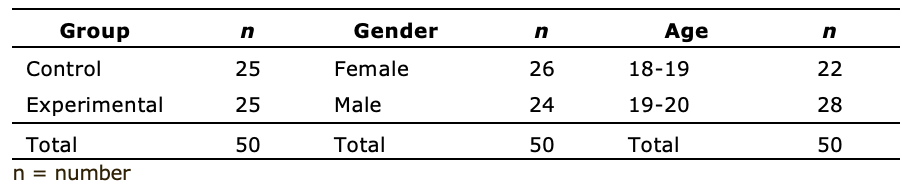
Table 1: Student participants
In addition to the information in Table 1, all participants spoke Turkish as their L1 were at A2+ level in English in all skills according to Common European Framework of Reference (CEFR). A written consent form, which included information about the study, details about participants’ rights, as well as anonymity and confidentiality of the responses was given to participants before starting the study. Care was taken that all participants read the written consent forms in detail. By asking whether there were any unclear statements in the written consent form, the researcher provided extra proof that the terms of consent have been understood. Through the written consent forms, it was observed that all written responses of the participants were positive, and participation was ensured to continue based on the principle of voluntariness.
Implementation
Main study started in the 2019-2020 academic year at a state university in Ankara, Turkey, and lasted 16 weeks. It was implemented for one class hour every week. (16 class hours total). Four different reading comprehension strategies detailed in the literature review were explicitly taught by the researcher to the experimental group. Meanwhile, the lessons were taught by adhering to the syllabus in the control group. The implementation began at the elementary level (A2) with a total of 50 preparatory students and was completed at the end of the pre-intermediate level (B1).
In the implementation phase, the researcher delivered presentations on reading comprehension strategies. The presentations explained the strategies’ importance and purposes, their benefits for reading comprehension, and when and how they can be used before, during, and after reading, illustrated with concrete in-class examples. In addition, the researcher invited students to ask questions about any points they were curious about or did not understand to support students’ internalization of the strategies. Figure 1 illustrates an in-class tool in the implementation part of the course.
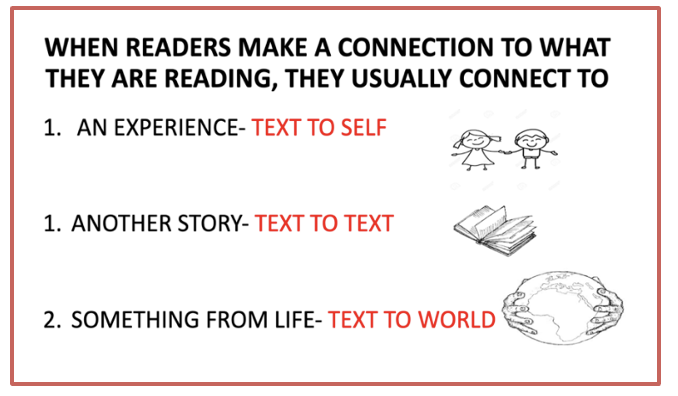
Figure 1: A screenshot from an in-class tool
After the necessary information about each reading comprehension strategy had been shared with the students, the examples were analyzed and discussed with the class with the researcher encouraging the students to express the strategies verbally in the classroom. Figure 2 illustrates an in-class strategy example discussed with the students..

Figure 2: A screenshot from an in-class making connections strategy example
Then, by reading the short story books in the syllabus (The Olympic Promise, A2 by Lynda Edwards; Black Beauty, B1by Anna Sewell) students were invited to implement strategies in the classroom, and finally, student products were displayed. Figure 3[1] illustrates a student’s product created and displayed in class.
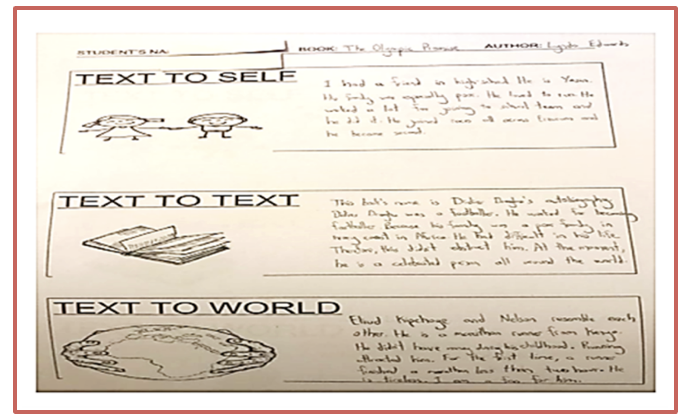
Figure 3: A screenshot of a student’ product
Upon completion of implementation, a post-test was utilized in both experimental and control groups. The participants were told that comprehension level would be evaluated rather than grammar and lexis and they were given 30 minutes to answer the questions. After the post-test, a questionnaire was utilized only with the experimental group.
Instruments
Post-test
For the quantitative data, an achievement test was developed and used as a post-test consisting of eight open-ended questions covering the simplified short story books The Olympic Promise (A2) and Black Beauty (B1) included in the curriculum. Each question was evaluated as 5 points and designed for a maximum of 40 and a minimum of 0 points.
The questions were written in clear, accessible language to assess students’ comprehension rather than grammar or memorization. An assessment specialist and two English instructors reviewed the draft items, and all lexical and grammatical issues were corrected. Finally, incorporating their feedback, the assessment instrument was finalized for classroom use.
In the evaluation phase, two English instructors independently scored participants’ responses using an analytic rubric (0-5 per item) aligned with reading-comprehension criteria. Discrepancies were resolved by consensus, and item scores were summed to compute a total post-test score (0-40) for each participant. Group differences were tested using a Mann-Whitney U test and are reported in Table 2.
Student questionnaire
In addition to the post-test, a student questionnaire was administered to the experimental group to examine the perceived effects of explicit instruction in reading comprehension strategies and the use of short stories in the classroom. Developed with input from field experts, the questionnaire comprised two open-ended questions. The responses constituted qualitative data and were analyzed using descriptive analysis. This method allows students to articulate their views and enables researchers to obtain more comprehensive data (Yıldırım & Şimşek, 2008). Accordingly, students’ responses were summarized, common themes were identified and interpreted, and the findings were supported with direct quotations.
Findings
Research question 1: What is the impact of the explicit instruction four different reading strategies on the overall effectiveness of reading comprehension skills?
The findings revealed that the development process of the experimental group differed significantly from the control group. As seen in Table 2, a significant difference in reading comprehension was found between the students who participated in the explicit instruction of reading comprehension strategies and those who did not at the end of a 16-week experimental study (U=625.00 p<.05). In this context, according to the results of the analysis, it was clear that there was a significant difference in support of the experimental group students.

Table 2: Mann Whitney U-test results on the improvement of participants’ reading comprehension
When the mean rank was considered in Table 2, it was seen that while the average of the control group students’ achievement scores was X ̅ =13.00, the average of the experimental group students’ achievement scores was X ̅=38.00. The data showed that the achievement scores of the experimental group students were significantly higher than the control group students. In this context, it was found that explicit instruction of reading comprehension strategies helped to answer the post-test questions more accurately. In other words, the findings supported the effectiveness of the enriched input, tools, and examples presented during the implementation. As a result, explicit instruction of reading comprehension strategies applied to the experimental group made a difference in reading comprehension compared to the control group, and this difference was statistically confirmed.
Research question 2: What are the perspectives of the study group on the explicit instruction of reading comprehension strategies to understand short stories?
To answer this question, the first question of the questionnaire utilized for the experimental group was as follows: 'What are your opinions on the explicit instruction of reading comprehension strategies (asking questions, visualizing, making connections, and summarizing) in the classroom?'. The results of the questionnaire indicated that all students had positive perspectives toward explicit instruction of reading comprehension strategies. These findings were visualized in Figure 4, which was created by counting the number of positive responses to the questionnaire item.
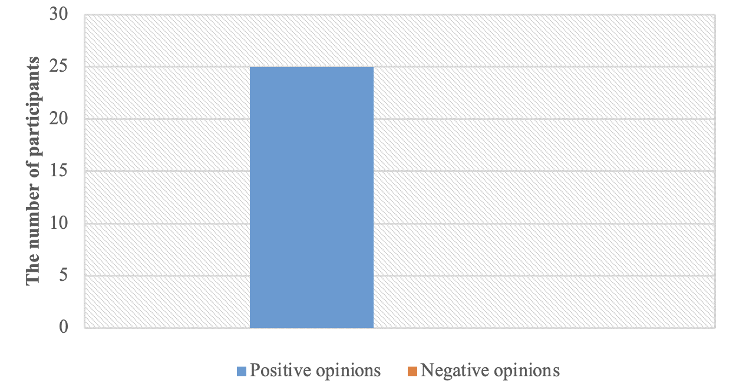
Figure 4: Participants’ opinions about explicit instruction of reading comprehension strategies
On analyzing the sentences written by some experimental group students, it was observed that teaching reading comprehension strategies explicitly in the classroom, in general, made reading in the L2 enjoyable and motivating and triggered other reading comprehension strategies to wonder.
I haven’t encountered reading comprehension strategies before, it’s not difficult, but I wonder why I didn’t learn it sooner.Strategies are motivating to read. (Student 12)
…It seems strange to me that although I have been learning English since primary school, reading comprehension strategies have not been taught. I am happy to participate in this study, and I have started to love reading. (Student 2)
... I wish I had learned it earlier… I also liked that our teacher explained and gave examples in class one by one. (Student 16)
…thank you very much for providing this learning environment. Trying to understand what you read in L2 without knowing the reading comprehension strategies is like searching for water in the desert. (Student 1)
It is very beneficial because our teacher first explained by giving examples one by one and then asked us to practice. (Student 5)
These strategies will be my compass in comprehension. Plus, each lesson was very clear and fruitful because our teacher explained every detail with concrete examples. (Student 4)
In addition, the data showed that explicit instruction played a salient role in understanding strategies. The students’ reflections revealed that the teacher giving examples as role models in the classroom paved the way for internalizing comprehension strategies.
Research question 3: What are the perspectives of the study group on the use of short stories in the classroom?
To answer this question, the second question of the questionnaire applied to the experimental group was as follows: 'What are your opinions on the use of short stories as a tool in the classroom?'. In this framework, as can be seen in Figure 5, while positive opinions about the use of short stories as a tool in the classroom were found 20 times in total, it was observed that five of the students found the short stories boring.
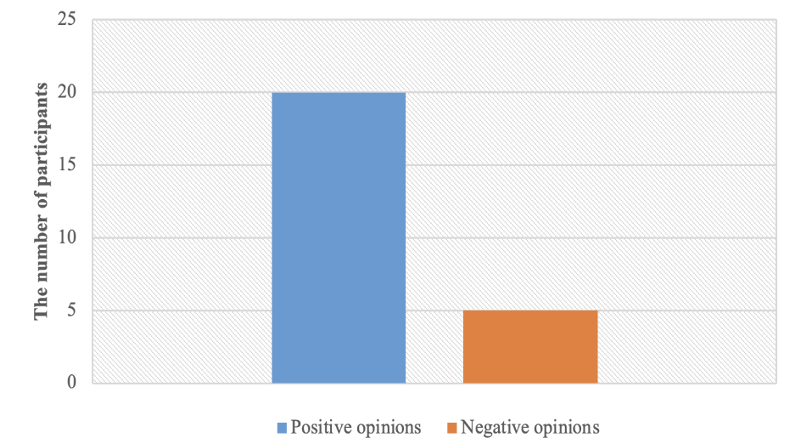
Figure 5: Participants’ opinions about utilizing short stories as a tool in the classroom
According to the comments below, exemplifying the two different tendencies, it is observed that the students, in general, who have positive opinions, prefer short stories instead of reading texts in course books because they arouse curiosity and are not boring.
… I prefer to read short stories over texts in textbooks because it keeps me interested in the lesson, and I also wonder what will happen in the next chapter of the short story… (Student 20)
…I wish all the topics, including grammar, were explained by short story books. I never got bored. (Student 18)
However, students who expressed negative views generally reported that the short stories were hard to follow and monotonous because they focused on a single overarching theme. They also noted that, by contrast, the coursebooks covered varied, contemporary topics (e.g., environment, law, technology), which they found more engaging than reading stories in L2. Illustrative comments include:
… I found it boring, and I don’t like reading books. (Student 4)
… the short stories are based on a single topic, whereas each unit of the course books covers different topics, and I like to read about different topics more. Reading short stories in the classroom did not make sense to me. (Student 6)
It is hard to follow the short stories, and the topic is very boring…I love to read about daily topics such as technology. (Student 25)
At the end of a 16-week experimental study, it was found that explicit instruction of reading comprehension strategies contributed to answering reading comprehension questions more accurately. Furthermore, all of the students in the experimental group expressed a positive opinion about the explicit instruction of strategies in the classroom. Lastly, the utilization of short story books as a tool in the classroom, in general, improved their motivation toward reading comprehension skills in L2.
Discussion, Conclusion, and Implications
In this study, it was found that explicit instruction of reading comprehension strategies improved reading comprehension skills. This finding is in line with several studies (Akkakoson, 2013; Banditvilai, 2020; Demirbaș, 2018; Fathi & Afzali, 2019; Madikiza et al., 2018; Zhang & Wu, 2009). However, it contradicts the findings of Mehrpour et al. (2012) and Shang (2010).
All the students expressed a positive opinion about the explicit instruction of reading comprehension strategies. This view is parallel with many studies (Banditvilai, 2020; Demirbaș, 2018; Gorsuch et al., 2015; Okumuş Ceylan, 2016). In addition, one of the most observed views was that students stated their willingness to learn other reading comprehension strategies.
Student comments on the use of short stories in the classroom showed two different tendencies. The students who provided positive opinions mostly stated that they preferred short stories instead of reading texts in course books, read with curiosity, and were motivated. These findings are in parallel with the studies of Khatib and Seyyedrezaei (2013) Kırkgöz (2012); Musleh et al. (2020), and Pathan (2012). Previous literature also reveals that utilizing short stories in the L2 environment increased students’ motivation and sense of wonder. However, the students, although few, who gave negative opinions, in general stated that they had difficulty following the stories. Additionally, they mentioned that reading on current issues is more stimulating than short stories which cover only one topic.
This study has a set of implications. Today, it is known that the language of education at many universities in Turkeyand abroad is in English. Students studying at these universities have to understand linguistically challenging and long academic texts. These texts require a knowledge of reading comprehension strategies and the ability to use these strategies effectively in the appropriate place, as well as vocabulary and structure knowledge. It is thought that the explicit reading comprehension strategies should be taught in the preparatory programs of the universities as they can provide considerable benefits to the students in terms of comprehension of the academic texts in departmental courses. For this purpose, it is recommended that practitioners include explicit reading comprehension strategies instruction in their curriculum (Akkakoson, 2013; Banditvilai, 2020; Duke et al., 2021).
A curriculum prepared to explicitly teach reading comprehension strategies can raise students’ awareness and build their knowledge of how to use these strategies. Determining which strategies to include can be one of the most challenging steps in curriculum design. In this process, an inclusive approach that accommodates diverse learner needs and supports students’ critical and creative thinking should be adopted Duke et al. (2021).
Another important phenomenon is the selection of the materials to be used in the implementation phase of the curriculum. At this point, it is suggested that many student needs can be met by choosing short stories as a tool. Short stories, as a type of literary text, are very rich in terms of being an authentic tool that contributes to critical thinking development skills and understanding of the culture of L2. When all these components are used, it is predicted that the use of short stories in the explicit instruction of reading comprehension strategies will motivate students to read in L2 and increase their reading comprehension. However, because approximately 20% of respondents reported not enjoying short stories, the curriculum should also provide high-interest alternatives and choice. The same strategies can be taught with brief topical texts (e.g., news articles, informational passages, infographics), graded readers or micro-stories, with varied themes/lengths and optional audio or visual scaffolds. Offering two or three thematically diverse text options per unit, pre-teaching key vocabulary, and chunking longer texts can maintain engagement while keeping strategy instruction consistent.
Despite its contributions, the current study has some limitations that should be acknowledged. First, the English short-story books used in the research were limited to A2/B1 levels. Second, the implementation focused on four reading comprehension strategies (questioning, visualization, making connections, and summarizing). Third, the sample size was relatively small for a mixed-methods design, which constrains statistical power and limits the generalizability of the quantitative findings. These limitations should be considered when interpreting the results.
Acknowledgments
I am deeply grateful to Associate Professor Sıla Ay, Professor Dr. Dilek Peçenek, Assoc. Professor Özgür Şen Bartan, and Dr. Tarık Uzun for their guidance and support throughout this research. Their expertise and encouragement were instrumental to the completion of this study.
Special thanks to my children, Mert and Görkem, whose love and support inspire me every day.
References
Abdelhalim, S. M. (2017). Developing EFL students’ reading comprehension and reading engagement: Effects of a proposed instructional strategy. Theory and Practice in Language Studies, 7(1), 37-48. https://doi.org/10.17507/tpls.0701.05
Abu Zahra, N. A., & Farrah, M. A. (2016). Using short stories in the EFL classroom. Journal of Islamic University-Gaza, 24(1), 11-24. https://doi.org/10.12816/0023933
Akkakoson, S. (2013). The relationship between strategic reading instruction, student learning of L2-based reading strategies and L2 reading achievement. Journal of Research in Reading, 36(4), 422-450. https://doi.org/10.1111/jrir.12004
Al-Haydan, D. Y. A. (2020). The effects of morphological awareness on EFL secondary school students’ reading comprehension skills. International Journal of Education & Literacy Studies, 8(3), 48-58. https://doi.org/10.7575/aiac.ijels.v.8n.3p.48
Al Janaideh, R., Gottardo, A., Tibi, S., Paradis, J., & Chen, X. (2020). The role of word reading and oral language skills in reading comprehension in Syrian refugee children. Applied Psycholinguistics, 41(6), 1283–1304. https://doi.org/10.1017/s0142716420000284
Alsamadani, H. (2017). The effect of talking story books on Saudi young EFL learners’ reading comprehension. English Language Teaching, 10(5), 204-213. https://doi.org/10.5539/elt.v10n5p204
Ankrum, J. W., & Bean, R. M. (2008). Differentiated reading instruction: What and how. Reading Horizons: A Journal of Literacy and Language Arts, 48(2), 133-146. https://doi.org/10.1177/0033688205052143
Aşci, Y., & Topçu Tecelli, N. (2020). Yabancı dil olarak Türkçe öğretiminde okuma ve yazma becerisi geliştirmeye yönelik öykü kullanımı [The use of story for improving teaching Turkish as a foreign language reading and writing skills]. Hacettepe Üniversitesi Türkiyat Araştırmaları Dergisi, 32, 203-220. https://doi.org/10.20427/turkiyat.642418
Baker, W., & Boonkit, K. (2004). Learning strategies in reading and writing: EAP contexts. RELC Journal, 35(3), 299-328. https://doi.org/10.1177/0033688205052143
Banditvilai, C. (2020). The effectiveness of reading strategies on reading comprehension. International Journal of Social Science and Humanity, 10(2), 46-50. https://doi.org/10.18178/ijssh.2020.v10.1012
Bernhardt, E. B., & Kamil, M. L. (1995). Interpreting relationships between L1 and L2 reading: Consolidating the linguistic threshold and the linguistic interdependence hypotheses. Applied Linguistics, 16(1), 15-34. https://doi.org/10.1093/applin/16.1.15
Bilal, H. A., Tariq, A. R., Masood, A., Nasim, G., & Iqbal, A. (2013). Developing second language reading comprehension through short story. International Journal of English Language Education, 1(3), 282-292. https://doi.org/10.5296/ijele.v1i3.4152
Birch, B. M. (2002). English L2 reading: Getting to the bottom. Lawrence Erlbaum.
Brisbois, J. E. (1995). Connections between first- and second-language reading. Journal of Literacy Research, 27(4), 565-584. https://doi.org/10.1080/10862969509547899
Cekiso, M. (2012). Reading comprehension and strategy awareness of grade 11 English second language learners. Reading & Writing, 3(1). https://doi.org/10.4102/rw.v3i1.23
Crabtree, T., Alber-Morgan, S. R., & Konrad, M. (2010). The effects of self-monitoring of story elements on the reading comprehension of high school seniors with learning disabilities. Education and Treatment of Children, 33(2), 187-203. https://doi.org/10.1353/etc.0.0090
Creswell, J. W. (2014). Research design: Qualitative, quantitative, and mixed method approaches (4th ed.). Sage.
Cummins, J. (1984). Bilingualism and special education: Issues in assessment and pedagogy. Multilingual Matters.
de Salas, K., & Huxley, C. (2014). Enhancing visualization to communicate and execute strategy: Strategy-to-process maps. Journal of Strategy and Management, 7(2), 109-126. https://doi.org/10.1108/jsma-10-2012-0055
Demirbaș, B. (2018). İçerik temelli öğretime dayalı okuma stratejileri eğitiminin öğrencilerin okuma stratejileri kullanımına etkisi ve eğitim hakkında öğrenci görüşleri [The effect of content-based instruction of reading strategies on students’ use of reading strategies and student opinions on education] [Unpublished master’s thesis] Kocaeli University.
Dole, J. A., Duffy, G. G., Roehler, L. R., & Pearson, P. D. (1991). Moving from the old to the new: Research on reading comprehension instruction. Review of Educational Research, 61(2), 239-264.https://doi.org/10.3102/00346543061002239
Draper, D. (2010). Comprehension strategies: Making connections. Teaching. Learning. Effecting. Retrieved on 4 September 2025 from https://klumbcomprehensionstrategies.weebly.com/making-connections.html
Duke, N. K., Ward, A. E., & Pearson, P. D. (2021). The science of reading comprehension instruction. The Reading Teacher, 71(6), 663-672. https://doi.org/10.1002/trtr.1993
Elleman, A. M. (2017). Examining the impact of inference instruction on the literal and inferential comprehension of skilled and less skilled readers: A meta-analytic review. Journal of Educational Psychology, 109(6), 761–781. https://doi.org/10.1037/edu0000180
Ellis, G., & Brewster, J. (1991). The storytelling handbook: A guide for primary teachers of English. Penguin.
Eren, Z. (2004). The use of short story in teaching English to the students of public high schools. Hacettepe Üniversitesi Eğitim Fakültesi Dergisi, 26(26), 41-47.
Erler, L., & Finkbeiner, C. (2007). A review of reading strategies: Focus on the impact of the first language. In A. D. Cohen & E. Maraco (Eds.), Language learner strategies (pp. 187-206). Oxford University Press.
Erten, H. İ., & Karakaş, M. (2007). Understanding the divergent influences of reading activities on the comprehension of short stories. The Reading Matrix, 7(3), 113-133.
Eskey, D. E. (2005). Reading in a second language. In E. Hinkel (Ed.), Handbook of research in second language teaching and learning (pp. 563-579). Lawrence Erlbaum.
Fathi, J., & Afzali, M. (2019). The effect of second language reading strategy instruction on young Iranian EFL learners’ reading comprehension. International Journal of Instruction, 13(1), 475-488. https://doi.org/10.29333/iji.2020.13131a
Friend, R. (2000). Teaching summarization as a content area strategy. Journal of Adolescent & Adult Literacy, 44(4), 320-329. https://www.jstor.org/stable/40015345
Ghazali, S. N. (2008). Learner background and their attitudes towards studying literature. Malaysian Journal of ELT Research, 4(1). https://meltajournals.com/index.php/majer/article/view/652/632
Gorsuch, G., Taguchi, E., & Umehara, H. (2015). Repeated reading for Japanese language learners: Effects on reading speed, comprehension, and comprehension strategies. The Reading Matrix, 15(2), 18-44. https://www.readingmatrix.com/files/13-l624by2v.pdf
Goodman, K. S. (1973). Psycholinguistic universals in the reading process. In F. Smith (Ed.), Psycholinguistics and reading(pp. 135–142). Holt, Rinehart and Winston.
Hashemi, M. R. (2012). Reflections on mixing methods in applied linguistics. Applied Linguistics, 33(2), 206-212.https://doi.org/10.1093/applin/ams008
Hişmanoğlu, M. (2005). Teaching English through literature. Journal of Language and Linguistic Studies, 1(1), 53–66.https://www.jlls.org/index.php/jlls/article/view/6/7
Houda, B. (2021). Using short stories to enhance EFL students’ critical thinking. Social and Human Science, 8(1), 486-508. https://doi.org/10.46316/1676-008-001-030
Huang, S.-c. (2006). Reading English for academic purposes: What situational factors may motivate learners to read? System, 34(3), 371-383. https://doi.org/10.1016/j.system.2006.04.006
İnal, H., & Çakır, A. (2014). Story-based vocabulary teaching. Procedia-Social and Behavioral Sciences, 98, 675-679.https://doi.org/10.1016/j.sbspro.2014.03.467
Jensen, M. (2010). Improving reading comprehension of junior division students as the teacher-librarian: An action research study [Unpublished master’s thesis], Nipissing University. http://oar.nipissingu.ca/reports_and_documents-Melissa_Jensen.htm
Joseph, L. M., Alber-Morgan, S., Cullen, J., & Rouse, C. (2016). The effects of self-questioning on reading comprehension: A literature review. Reading & Writing Quarterly, 32(2), 152-173. https://doi.org/10.1080/10573569.2014.891449
Karasar, N. (2005). Bilimsel araştırma yöntemleri [Scientific research method] (15th ed.). Nobel Yayınları.
Keene, E. O., & Zimmerman, S. (1997). Mosaic of thought: Teaching comprehension in a reader’s workshop. Heinemann.
Kern, R. (2008). Making connections through texts in language teaching. Language Teaching, 41(3), 367-387. https://doi.org/10.1017/s0261444808005053
Khatib, M., & Seyyedrezaie, S. H. (2013). Short story-based language teaching (SSBLT): A literature-based language teaching method. Journal of Humanities Insight, 1(4), 177-182.
Kırkgöz, Y. (2012). Incorporating short stories in English language classes. Novitas-ROYAL, 6(2), 110–125. https://novitasroyal.org/volume-6-issue-2-october-2012-special-issue/?wpdmc=volume-6-issue-2#
Koda, K. (2007). Reading and language learning: Crosslinguistic constraints on second language reading development. Language Learning, 57(1), 1-44. https://doi.org/10.1111/0023-8333.101997010-i1
Koutsompou, V.-I. (2015). The use of literature in language classroom: Methods and aims. International Journal of Information and Education Technology, 5(1), 74–79. https://doi.org/10.7763/ijiet.2015.v5.479
Lao, C. Y., & Krashen, S. (2000). The impact of popular literature study on literacy development in EFL: More evidence for the power of reading. An International Journal of Education Technology and Applied Linguistics, 28(2), 261-270. https://doi.org/10.1016/s0346-251x(00)00011-7
Lee, S. H., & Tsai, S.-F. (2017). Experimental intervention research on students with specific poor comprehension: A systematic review of treatment outcomes. Reading and Writing, 30(4), 917-943. https://doi.org/10.1007/s11145-016-9697-x
Levine, A., Ferenz, O., & Reves, T. (2000). EFL academic reading and modern technology: How can we turn our students into independent critical readers? TESL EJ, 4(4).
https://tesl-ej.org/wordpress/issues/volume4/ej16/ej16a1
Li, F. (2010). A study of English reading strategies used by senior middle school students. Asian Social Science, 6(10), 184-192. https://doi.org/10.5539/ass.v6n10p184
Long, D. L., Johns, C. L., & Morris, P. E. (2006). Comprehension ability in mature readers. In M. J. Traxler & M. A. Gernsbacher (Eds.), Handbook of psycholinguistics (pp. 801-833). Academic Press.
Madikiza, N., Cekiso, M. P., Tshotsho, B. P., & Landa, N. (2018). Analysing English additional language teachers’ understanding and implementation of reading strategies. Reading and Writing, 9(1), 170-180. https://doi.org/10.4102/rw.v9i1.170
Mart, Ç. T. (2012). Developing speaking skills through reading. International Journal of English Linguistics, 2(6), 91-96. https://doi.org/10.5539/ijel.v2n6p91
Marzban, A., & Barati, Z. (2016). On the relationship between critical thinking ability, language learning strategies, and reading comprehension of male and female intermediate EFL university students. Theory and Practice in Language Studies, 6(6), 1241-1247. https://doi.org/10.17507/tpls.0606.14
McNamara, D., de Vega, M., & O’Reilly, T. (2007). Comprehension skill, inference making, and the role of knowledge. In F. Schmalhofer & C. A. Perfetti (Eds.), Higher level language processes in the brain: Inference and comprehension processes(pp. 233-250). Lawrence Erlbaum.
Mehrpour, S., Sadighi, F., & Bagheri, Z. (2012). Teaching reading comprehension strategies to Iranian EFL pre-university students. Teaching English as a Second Language Quarterly, 31(1), 107-139. https://doi.org/10.22099/jtls.2012.331
Mohammadzahed, B. (2017). A text world theory approach to the teaching of short stories in an EFL context: A pedagogical stylistic study. Journal of Language and Linguistic Studies, 13(2), 285-295.https://www.jlls.org/index.php/jlls/article/view/658/315
Musleh, O. A., Ibrahim, M. A., & Altakhaineh, A. R. M. (2020). Non-native speakers’ attitudes towards the use of short Arabic stories in language classes. Journal of Language and Linguistic Studies, 16(4), 1760-1773. https://doi.org/10.17263/jlls.850996
Nazara, P. (2019). Learning vocabularies using short stories at primary school: Students’ perceptions. Journal of English Teaching, 5(3), 157-165. https://doi.org/10.33541/jet.v5i3.1308
Ness, M. (2011). Explicit reading comprehension instruction in elementary classrooms: Teacher use of comprehension strategies. Journal of Research in Childhood Education, 25(1), 98-117. https://doi.org/10.1080/02568543.2010.531076
Nisa, B. (2017). Learning English reading skill through e-learning. Jurnal Bahasadan Sastra, 9(2), 151-155. https://doi.org/10.31294/w.v9i2.2590
Noor, N. H. H. (2016). Second language reading comprehension strategies in Brunei Durussalam’s primary schools [Unpublished doctoral dissertation] The University of Queensland. https://espace.library.uq.edu.au/view/UQ:409741
Okumuş Ceylan, N. (2016). Using short stories in reading skills class. Procedia-Social and Behavioral Sciences, 232, 311-315. https://doi.org/10.1016/j.sbspro.2016.10.027
Paran, A. (2008). The role of literature in instructed foreign language learning and teaching: An evidence-based survey.Language Teaching, 41(4), 465-496. https://doi.org/10.1017/s026144480800520x
Pardede, P. (2011). Using short stories to teach language skills. Journal of English Teaching, 1(1), 14-27. https://doi.org/10.33541/jet.v1i1.49
Paris, S. G., & Hamilton, E. E. (2009). The development of children’s reading comprehension. In S. E. Israel & G. G. Duffy (Eds.), Handbook of research on reading comprehension (pp. 32-53). Routledge.
Pathan, M. M. (2012). Advantages of using short-stories in ELT classroom and the Libyan EFL learners’ perceptions towards them for developing reading comprehension skills. Arab World English Journal, 4(1), 28-41. https://awej.org/images/AllIssues/Volume4/Volume4Number1March2013/3.pdf
Perry, D. (2013). Comprehension strategies while reading expository texts in Spanish (L1) and English (L2). Psicologia Educativa, 19(2), 75–81. https://doi.org/10.1016/s1135-755x(13)70013-7
Pressley, M. (2000). Comprehension instruction in elementary school: A quarter-century of research progress. In B. M. Taylor, M. F. Graves, & P. van den Broek (Eds.), Reading for meaning: Fostering comprehension in middle grades (pp. 32-51). Teachers College Press.
Sadoski, M., & Paivio, A. (2007). Toward a unified theory of reading. Scientific Studies of Reading, 11(4), 337-356. https://doi.org/10.1080/10888430701530714
Sage, H. (1987). Incorporating literature in ESL instruction. Prentice-Hall.
Shang, H. F. (2010). Reading strategy use, self-efficacy, and EFL reading comprehension. Asian EFL Journal, 12(2), 18-42.
Spörer, N., Brunstein, J. C., & Kieschke, U. (2009). Improving students’ reading comprehension skills: Effects of strategy instruction and reciprocal teaching. Learning and Instruction, 19(3), 272–286.https://doi.org/10.1016/j.learninstruc.2008.05.003
Stevens, A. E. P. (2014). Short stories as a source of cultural insight when teaching English [Unpublished doctoral dissertation], Hedmark University College.
https://brage.inn.no/inn-xmlui/bitstream/handle/11250/284177/Stevens.pdf?sequence=1&isAllowed=y
Sultan, A., Nafi, J., Qabaja, Z., & Al-Abed, S. (2018). The effects of short stories on the development of 5th grades’ reading comprehension skills in Hebron district. International Journal of English Language Teaching, 5(4).
Sun, Y., Wang, J., Dong, Y, Zheng, H., Yang, J., Zhao, Y., & Dong, W. (2021). The relationship between reading strategy and reading comprehension: A meta-analysis. Frontiers in Psychology, 12, 635289. https://doi.org/10.3389/fpsyg.2021.635289
Tadayonifar, M., Valizadeh, M., Entezari, M., & Bahraman, M. (2021). The impacts of reading strategy instruction on improving the reading comprehension of students with different learning styles. Language Learning in Higher Education, 11(2), 413–432. https://doi.org/10.1515/cercles-2021-2024
Tindal, E., & Nisbet, D. (2010). Exploring the essential components of reading. Journal of Adult Education, 39(1), 1–9. https://files.eric.ed.gov/fulltext/EJ891080.pdf
Tomlinson, B. (2008). Language acquisition and language learning materials. In B. Tomlinson (Ed.), English learning materials(pp. 1–3). Continuum.
Turan, Y. Z., & Çolak, R. (2018). The use of short story as a learning/teaching tool in ELT/EFL classes: “The Necklace” by Guy De Maupassant. Sosyal Bilimler Enstitüsü Dergisi Karabük Üniversitesi, 8(1), 173–189. https://dergipark.org.tr/tr/download/article-file/772692
van den Broek, P. (2010). Using texts in science education: Cognitive processes and knowledge representation. Science, 328(5977), 453–456. https://doi.org/10.1126/science.1182594
Üstündağ Algın, P. (2022). İngilizcenin yabancı dil olarak öğretiminde okuma anlama stratejilerinin kullanımının kısa hikâyeleri anlamaya etkisi [The effect of using reading comprehension strategies in teaching English as a foreign language on understanding short stories] (Master’s thesis). Ankara University, Institute of Social Sciences, Ankara, Turkey.
Vural, H. (2013). Use of literature to enhance motivation in ELT classes. Mevlana International Journal of Education, 3(4), 15-23.
Yamashita, J. (2002). Mutual compensation between L1 reading and L2 language proficiency in L2 reading comprehension. Journal of Research in Reading, 25(1), 81–95. https://doi.org/10.1111/1467-9817.00160
Yeasmin, N., Azad, A. K., & Ferdoush, J. (2011). Teaching language through literature: Designing appropriate classroom activities. ASA University Review, 5(2), 283–297.
Yıldırım, A., & Şimşek, H. (2008). Sosyal bilimlerde nitel araştırma yöntemleri [Qualitative research methods in the social sciences] (7th ed.). Seçkin Yayınları.
Williams, M., & Burden, R. L. (1997). Psychology for language teachers: A social constructivist approach. Cambridge University Press.
Zhang, L. J., & Wu, A. (2009). Chinese senior high school EFL students’ metacognitive awareness and reading-strategy use. Reading in a Foreign Language, 21(1), 37-59. https://nflrc.hawaii.edu/rfl/item/188#:~:text=https://doi.org/10.64152/10125/66635
Zhou, X., & Zhao, Y. (2014). A comparative study of reading strategies used by Chinese English majors. English Language Teaching, 7(3), 13-18. https://doi.org/10.5539/elt.v7n3p13
Ziegler, J. C., & Goswami, U. (2006). Becoming literate in different languages: Similar problems, different solutions. Developmental Science, 9(5), 429-436. https://doi.org/10.1111/j.1467-687.2006.00509.x
[1] This screenshot is deliberately presented in low resolution to protect participants’ privacy and to maintain confidentiality.