
Introduction and Literature Review
The rapid advancement of Generative Artificial Intelligence (GenAI) has sparked significant discussions in various sectors, particularly in English language education (ELE; Ulla & Teng, 2024). Its adoption in K-12 education remains limited, often perceived as a threat to academic integrity (Gustilo et al., 2024). However, as technology continues to evolve, teachers and educational institutions are beginning to explore its potential as a valuable teaching and learning tool.
To date, only Javier and Moorhouse (2023) have empirically done an integration of GenAI in the Philippine K-12 education. With this, current research on GenAI in ELE remains scarce, with limited empirical studies on its integration in K-12 education. Despite its promise, several challenges hinder the effective integration of GenAI in classrooms. One major concern is the lack of AI literacy among both teachers and learners, which limits their ability to critically evaluate AI-generated content. AI literacy, as characterized by Moorhouse et al. (2024), includes competencies that enable individuals to assess GenAI tools, communicate effectively with AI, and utilize GenAI tools in English language classrooms. Recognizing these challenges, educational institutions have begun developing guidelines (Harvard University, n.d.; Cañas-Llamas, A. (2024) and frameworks to enhance AI literacy for teachers (Miao & Cukurova, 2024) and students (Miao et al., 2024).
Professional development plays a crucial role in fostering AI literacy and integrating GenAI into pedagogical practices. However, many teachers struggle to recognize the pedagogical rationale for adopting AI-driven tools in the classroom. Without adequate training, teachers may remain hesitant to use GenAI, missing out on its potential benefits in supporting learner learning and engagement. To address this, teacher education and in-service training must include specific workshop sessions on the responsible use of GenAI, classroom simulations that demonstrate its benefits and risks, and opportunities for reflective practice on how AI can complement human instruction. In this regard, Meniado (2023a) highlighted those teachers need practical training on how to integrate technologies, including AI, based on their existing needs and teaching contexts. Insights from such programs can better prepare English language teachers to integrate GenAI meaningfully, particularly when professional development is context-based, work-based, or customized to teachers’ needs, as preferred by Southeast Asian English language teachers (Meniado, 2023b). Such training can also equip them with strategies to mitigate overreliance and ensure that learners remain active participants in the learning process.
Learning the English curricula in the Philippines focuses on helping learners to read, to write, and to think critically (Barrot, 2018). GenAI tools like ChatGPT, Google Gemini, and other writing assistants can help by giving feedback (Barrot, 2023; Bui & Barrot, 2025), improving grammar (Javier, 2022), and showing examples of good writing. But they can also cause problems if learners rely too much on them and stop thinking for themselves or doing their own reading and writing. This means teachers need to find a balance, using AI to support learning without letting it replace important skills.
This paper critically examines the GenAI practices of secondary school English language teachers and the regulations addressing their misuse in the classroom. It also explores potential future directions for GenAI in classroom settings. By critically reflecting on these, this paper aims to contribute to ongoing discussions by introducing a framework for the responsible and effective use of GenAI in K-12 education such as teacher’s usage, familiarity, partnership, and future use in the language classrooms.
Methods
This paper utilized a semi-structured interview approach to gather rich, descriptive data on the actual classroom practices of secondary school English language teachers. The interviews were conducted online and face-to-face with 78 teachers from different parts of the Philippines, allowing for the exploration of key themes related to curriculum implementation, instructional techniques, and challenges faced in the classroom.
Participants were secondary school English language teachers from public and private schools, with no special criteria other than currently teaching English. They were purposively selected and contacted through professional networks. Data were gathered through five open-ended questions and four closed-ended questions with follow-up items (see Appendix). The interview was conducted in English, and all questions were answered in English. Responses were analyzed manually using Braun and Clarke’s (2006) thematic analysis, involving data familiarization, coding, and theme development. ChatGPT 3.5 was also used as an external audit tool to support the analysis (Moorhouse & Kohnke, 2024). After the ChatGPT 3.5 analysis was completed, the manually developed themes were compared with the themes produced by ChatGPT 3.5 based on the researchers’ codes. Only minor differences were found between the manual analysis and the GenAI-assisted analysis. The researchers then conducted a collaborative review to reach agreement on the final themes. Pseudonyms (e.g., Cyrus, Carlo, Jane, and others) were used to protect the identities of the teacher participants.
Before conducting the interviews, all participating teachers were provided with information about the reflection process and voluntarily gave their consent, ensuring that ethical standards were strictly upheld (Polonski & Waller, 2005). This approach enables the interviewers to probe for specific details while also allowing for the emergence of unexpected insights from the teachers’ experiences.
Findings
Classroom policies and teachers’ practices using GenAI
The results showed that some teachers were more familiar with GenAI than others. The participants’ pseudonyms are presented according to the order in which their responses are discussed in the findings. The labels “Familiar” and “Unfamiliar” indicate the participants’ reported familiarity with the technology being discussed. The four focus areas with their corresponding themes revealed a mix of enthusiasm, uncertainty, and a clear need for guidance.
Teachers’ familiarity and use of GenAI
Mixed familiarity levels
A total of 53.85% (42 participants) were familiar with GenAI, while 46.15% (36 participants) were not familiar with it. The data from the interview showed a clear division between teachers who were and were not familiar with GenAI. While many teachers were already using tools like ChatGPT and Google Gemini for their work, a substantial number were unfamiliar with GenAI or had not yet explored its applications. This suggests a need for foundational awareness and education.
Responses varied. For example, when asked about what GenAI they were using, Carlo (familiar) listed, “ChatGPT, Midjourney, Gemini.” Similarly, when asked if he was familiar with GenAI, Jerome (not familiar) responded he was not and Marlon (uncertain) stated, “I’m not sure.”
Curiosity and openness to learn
Even among those who were unfamiliar with GenAI, there was a strong sense of curiosity and a willingness to explore it, particularly if it could benefit their teaching profession. Many saw the potential for these tools to assist them and were eager to learn more.
Cyrus when asked it about if he was interested in GenAI, he said, “Yes, I am.” Likewise, Danilo explained his interest by saying, “I want to know how I can use it in my teaching strategies.” Additionally, Gilbert, who was not currently using GenAI, also showed willingness to learn, said, “Yes, because I want to learn new things that would help me with my teaching profession.”
Usage of GenAI
Instructional aids and efficiency
Teachers frequently relied on GenAI to streamline their day-to-day tasks, from creating classroom materials to managing their workload (Bui & Barrot, 2025). This is often driven by time constraints and the need to produce a high volume of content quickly. This is evident in the teachers’ responses, as seen in the following excerpts.
In terms of their use of GenAI in teaching, Glenda shared that she used it for “efficient production on learners’ worksheets and activities.” In another response, Mark pointed out that he used GenAI to create “example scenarios for lesson discussions and basic quiz questions.” From a different perspective, Wilson described GenAI as helpful in “crafting my lessons, activities, even a friend who gives reasonable pieces of advice.”
Content creation and research
GenAI was also being utilized for more specific content-related tasks. Teachers used it for generating new ideas, refining existing text, and gathering information for both professional development and classroom instruction (Moorhouse & Wong, 2025).
With respect to their specific applications of GenAI, Jeff noted using it for “prompts to kickstart writing or idea generation.” On the other hand, Lance shared that he used GenAI for “editing texts” and “image creation.” Furthermore, Rose explained that she used it to “refine sentence structure, coherence, cohesiveness, and clarity, and supercharge assessment questions and evaluations.”
Future of language classrooms with GenAI
Increased dependence and reduced critical thinking
Teachers revealed a widespread concern on learners’ possible overdependence (Barrot, 2025) on GenAI which could potentially diminish their critical thinking, composition skills, and creativity. Several teacher participants worried that assessing learners’ outputs could become more challenging and that fair evaluation would become more difficult to achieve with AI-generated work blurring the line between authentic and artificial learning as can be seen from the following opinions:
Nowadays, students are relying most of their work on AIs. If this continues, their critical thinking and comprehension would be highly at risk of not being properly developed for they will not use it anymore. (Jane)
No authentic learning specifically in the writing tasks from learners cause they won’t think anymore[sic] they just generate essays, poems etc., without even reading and rephrasing them. (Joy)
Teachers will find it difficult to identify who can write well and who are not…. (Sharon)
More efficient and effective classes
Amid the possible threats to authentic learning, many teachers expressed optimism that GenAI would make language classrooms more technologically advanced, interactive, and efficient. With proper and responsible use, these teachers believed in the potential of GenAI to transform classrooms.
To a certain extent, I see future language classrooms that make use of GenAI to be more effective and efficient than what we have now. (Aldrin)
...if used properly, language classrooms can really improve in terms of developing the language learner’s contextual communication skills. Generative AI can be a good example of formal conversations, which can help learners practice discoursing with people. (Shane)
I see language classrooms to be more interactive and collaborative with students who are more responsive and responsible in making use of AI for productive and meaningful learning to happen. (Mary)
Policy awareness & recommendations
The interview data reveals a significant gap in official policy awareness regarding GenAI, but also provides a wealth of recommendations from teachers on what such policies should address.
Lack of policy awareness
A prominent finding is that most teachers are unaware of any existing Department of Education (DepEd), i.e., the government agency responsible for K-12 basic education in the Philippines, policy on the proper use and implementation of GenAI in the classroom at the time of writing this article. This indicates a vacuum in official guidance which teachers are keen to see filled.
Concerning their awareness of DepEd policies on GenAI, Angel indicated the absence of knowledge by stating, “None so far.” Reflecting a similar lack of awareness, Rey admitted, “No, I don’t. And if there is, I am not yet fully aware of it.” Highlighting the same point, Mercy also remarked, “I honestly do not know a specific policy in Deped about GenAI use.”
Recommendations for policy development
In the absence of a formal policy, teachers offered numerous suggestions. These recommendations often focused on ethical use, preventing plagiarism, and setting clear boundaries for students and teachers. There was a strong call for guidelines on responsible use to ensure that technology served as an aid rather than a crutch.
Regarding their recommendations for GenAI policy development, Ben suggested that “there should be provided guidelines [sic] on the use of GenAI for students especially in research related subjects/activities.” From a policy perspective, Lucas emphasized the need for a “policy on intellectual theft and originality.” Adding a more restrictive view, Sheryl recommended that it be “used by teachers only as there would no longer be reliable assessment on the part of students if they too would be allowed to access the app.”
Public-private partnerships suggested
A unique and forward-thinking recommendation was made for collaboration between DepEd and the private institutions that developed GenAI tools. This suggested a recognition of the need for resources and expertise from the technology sector to effectively integrate these tools into the education system. Expanding these recommendations, Luke proposed “Establishing partnerships between DepEd and companies that create or provide GenAI tools.”
The analysis of the interview data highlights the evolving relationship between public and private high school teachers in the Philippines and GenAI. While many teachers are becoming more familiar with GenAI and have begun using it for various instructional and administrative tasks, there remains a noticeable gap in their understanding of related policies and how to apply GenAI effectively in the classroom. This gap creates a strong demand for capacity-building initiatives and the development of clear, official guidelines. Notably, at the time of writing this paper, no policy had yet been released by DepEd in the Philippines.
Despite these mixed views, teachers acknowledged both the potential benefits and inherent risks of using GenAI in the classroom. While many saw its capacity to significantly transform language teaching, there was no consensus on whether such a transformation would ultimately support or hinder authentic learning. The findings further revealed that although teachers and learners recognized GenAI’s potential to enhance content creation, its use remained largely unstructured and inconsistent. Participants expressed uncertainty about best practices, varied interpretations of ethical boundaries, and a reliance on trial-and-error approaches. Given the absence of an official policy from DepEd, these issues underscore the urgent need for a clear framework that can both maximize the pedagogical benefits of GenAI and safeguard academic integrity.
Suggested use of GenAI for secondary school English language teachers and learners
In academic and professional writing, the integration of GenAI presents both unique opportunities and ethical challenges. Given the absence of an official policy from DepEd, this paper proposes a structured five-phase framework (Figure 1), simplified as GUIDE, which systematically embeds GenAI into the content creation process while upholding human agency, originality, and academic integrity (Ulla & Teng, 2024; Yang et al., 2024). This framework is designed to support teachers and learners in navigating the use of GenAI by providing a structured approach that emphasizes critical, ethical, and responsible use. It serves as a practical guide for them to explore, implement, reflect on, and refine the use of GenAI tools while awaiting formal guidelines from DepEd.
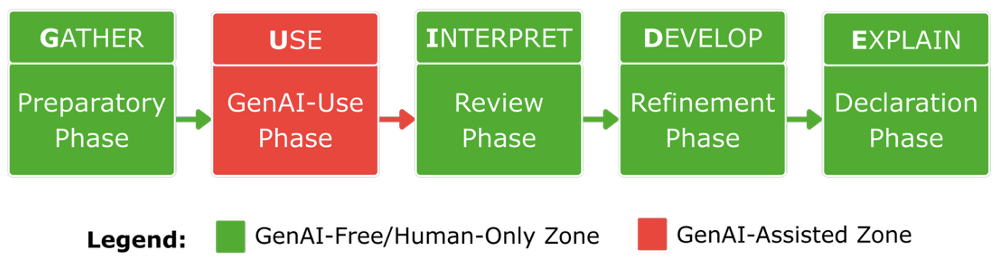
Figure 1: GUIDE-A five-phase framework for ethical and responsible GenAI use
The foundational stage of any creative or scholarly endeavor must remain human-centric. In the preparatory phase (Gather), the author’s primary task is to immerse themselves in the subject matter by gathering ideas, activating prior knowledge, and synthesizing resources to form a conceptual understanding. This is a GenAI-free zone, as the intellectual groundwork, including the formulation of a preliminary draft, is exclusively driven by human understanding and critical thought.
For instance, a researcher would meticulously review existing literature, take detailed notes, and then construct a preliminary outline and an initial draft based on their own analysis, thereby ensuring that the core intellectual property of the work is their own. This phase is important to establish the originality of the work.
Following this, once a substantive human-authored draft or design concept is in place, GenAI is introduced not as a replacement for intellectual effort, but as a sophisticated tool for enhancement. The “use” phase (the GenAI-assisted phase) involves leveraging GenAI tools (e.g., ChatGPT, Google Gemini, Grammarly, Quillbot) to enhance the draft. This could include refining grammar, suggesting better phrasings, expounding concepts, or summarizing sections, effectively utilizing GenAI as a powerful assistant. In this phase, GenAI’s utility is explicitly delineated to specific, supportive tasks.
For instance, an author might use a GenAI tool to refine grammar, correct spelling errors, or suggest alternative phrasing for a sentence to improve clarity. Crucially, GenAI is not to be used for generating a full report, a complete essay, or an entire literature review, as these tasks demand the original thought and complex argumentation that remain the purview of the human author.
The “Interpret” phase (the critical review phase) is a critical review process where the author, after receiving GenAI’s contributions, must act as the ultimate editor. This step goes beyond a simple proofread. It involves a rigorous and critical analysis of the GenAI-generated output to assess its accuracy, relevance, and overall quality. The author’s role is to scrutinize every suggestion, discerning which are valuable and align with the paper’s intent and which should be discarded. This human-driven scrutiny is essential to prevent the passive adoption of AI-generated content, which can introduce factual errors or logical inconsistencies.
For example, if a GenAI tool suggests a different sentence to introduce a paragraph, the author should not just accept it at face value. Instead, they should carefully evaluate whether the new sentence truly improves the flow and clarity of their argument. They might find that while the GenAI’s sentence is grammatically correct, it fails to capture the specific nuance of their original thought. This deliberate process of evaluation ensures that the scholarly argument remains intact, safeguarding the integrity and authenticity of the author’s voice and research.
The Develop phase (the human-refinement phase) marks a deliberate and essential return to human-only activity, serving as a powerful complement to the GenAI-assisted “Use” phase. In this stage, the author takes the filtered insights and valuable enhancements that were identified in the “Interpret” phase and independently refines the work. This is where the paper truly becomes a reflection of the author’s unique voice and scholarly identity. The process involves rewriting, rephrasing, and restructuring the text without the aid of GenAI, ensuring that the final product is a genuine exercise in human creativity and judgment.
For example, if the GenAI had suggested a new topic sentence for a paragraph, the author would not just paste it in. Instead, they would carefully integrate the idea, rewording it to fit their specific style and the overall tone of the paper. This hands-on refinement ensures the scholarly argument is not only coherent but also authentically theirs, with no hint of GenAI’s algorithmic patterns. GenAI tools are intentionally set aside during this phase to maintain the integrity of human authorship and creative control.
Finally, the integrity of the entire process is cemented in the declaration phase (explain phase). In a spirit of full transparency, the author must provide an explicit and honest account of how GenAI was used. This could be articulated in a dedicated methodology section or a footnote, detailing the specific tools and their precise application.
For example, “GenAI was used solely to check for grammatical consistency and to suggest alternative phrasing.” This practice is vital for addressing the inevitable realities of GenAI detection, where a paper may show a low plagiarism score but a high GenAI-detection percentage. By proactively declaring the ethical use of GenAI for enhancement, authors uphold academic honesty and provide a clear distinction between GenAI-assisted refinement and GenAI-generated content. This ultimately assures readers and reviewers that while GenAI was part of the process, the ideas, arguments, and conclusions are entirely the product of human intellect.
By and large, in the GUIDE framework, only the second phase is designated as a GenAI-assisted zone, while the rest are intentionally maintained as GenAI-free zones. This boundary positions GenAI as a complementary tool for both teachers and learners and ensures it remains at the background of the teaching-learning process. This framework confines GenAI to a single, purpose-bound phase as it seeks to safeguard the epistemic and ethical integrity of educational practice and emphasize human agency throughout the learning experience. For learners, this framework encourages authentic knowledge construction, critical engagement, and personal accountability. For teachers, it offers a structured yet flexible model that supports instructional design and planning, authentic assessment (Barrot, 2023; Bui & Barrot, 2024), and reinforcement of academic integrity (Yang et al., 2024). Ultimately, the GUIDE framework operationalizes ethical and responsible GenAI integration by foregrounding human cognition and reflective teaching and learning practice.
Conclusion
This paper has tried to show a deeper recognition of GenAI’s transformative potential (Ulla & Teng, 2024), not only in English language teaching, but in education as a whole. To integrate GenAI effectively within the English curriculum, teachers must develop a complex skill set that supports critical and responsible engagement with the technology. In line with this, both teachers and learners are encouraged to build AI literacy (Moorhouse et al., 2024; United Nations Educational, Scientific and Cultural Organization (2024a, b), understanding GenAI as a tool for instruction, a subject of study, and a means of enhancing the learning experience.
Moreover, when using GenAI detectors to evaluate learner written outputs, teachers are encouraged to look beyond percentage scores and consider supporting evidence, such as multiple drafts, to verify the originality of learners’ ideas in the work. To enable this, professional development initiatives should provide hands-on training and foster collaborative spaces (Teng, 2024) for teachers to explore the evolving landscape of GenAI in English language teaching.
Importantly, the use of GenAI should not be seen as a weakness, but rather as a strategic approach to enrich teaching and learning. Promoting responsible use, anchored in transparency, accountability, and integrity, ensures that GenAI supports rather than weakens critical thinking, creativity, and ethical behavior. In doing so, it safeguards academic honesty and helps prepare learners for the responsible and critical use of GenAI (Javier & Moorhouse, 2023).
Endnote
In writing this paper in 2024, ChatGPT 3.5 was used in the data analysis as a third-party qualitative data auditor. In 2026, during the revision stage of the publication process, ChatGPT 5.0 and Gemini Pro were used to improve the accuracy, fluency, coherence, and cohesion of the language. We reviewed and finalized all content, carefully considered the suggestions of the AI tools, and agreed on which recommendations to adopt and which to disregard. We take full responsibility for this critical paper. However, as the article underwent language enhancement using AI tools, it cannot be guaranteed that no AI-assisted text remains.
References
Barrot, J. S. (2018). English curriculum reform in Philippines: Issues and challenges from a 21st century learning perspective.Asia Pacific Journal of Education, 38(2), 145-160. https://doi.org/10.1080/15348458.2018.1528547
Barrot, J. S. (2023). ChatGPT as a language learning tool: An emerging technology report. Technology, Knowledge and Learning, 29, 1151-1156. https://doi.org/10.1007/s10758-023-09711-4
Barrot, J. S. (2025). Trinka: Facilitating academic writing through an intelligent writing evaluation system. Assessing Writing, 65. https://doi.org/10.1016/j.asw.2025.100953
Braun, V., & Clarke, V. (2006). Using thematic analysis in psychology. Qualitative Research in Psychology, 3(2), 77-101.https://doi.org/10.1191/1478088706qp063oa
Bui, N. M., & Barrot, J. (2025). Using generative artificial intelligence as an automated essay scoring tool: A comparative study. Innovation in Language Learning and Teaching. https://doi.org/10.1080/17501229.2025.2521003
Domingo, N. J., & Lintao, R. B. (2025). ChatGPT’s usability in expository writing in AI-enabled classrooms: Perceptions of tertiary students and teachers. Multidisciplinary Research, 60(1), 81-101. https://doi.org/10.7719/jpair.v60i1.931
Gustilo, L., Ong, E., & Lapinid, M. R. (2024). Algorithmically driven writing and academic integrity: Exploring educators’ practices, perceptions, and policies in AI era. International Journal for Educational Integrity, 20. https://doi.org/10.1007/s40979-024-00153-8
Harvard University (n.d.). Guidelines for using ChatGPT and other generative AI tools at Harvard. Retrieved August 8, 2025 from https://provost.harvard.edu/guidelinesusing-chatgpt-and-other-generative-ai-tools-harvard
Javier, D. R. (2022). Using tech tools for academic writing: Grammarly as a pedagogical tool. MEXTESOL Journal, 46(2). https://www.mextesol.net/journal/index.php?page=journal&id_article=46359
Javier, D. R. C., & Moorhouse, B. L. (2023). Developing secondary school English language learners’ productive and critical use of ChatGPT. TESOL Journal, 15(2). https://doi.org/10.1002/tesj.755
Meniado, J. C. (2023a). Empowering Southeast Asian English language teachers to thrive in the age of artificial intelligence (AI). TEIS News: The Newsletter of the Teacher Educator Interest Section. https://my.tesol.org/news/717935
Meniado, J. C. (2023b). Digital language teaching 5.0: Technologies, trends and competencies. RELC Journal, 54(2), 461-473.https://doi.org/10.1177/00336882231160610
Miao, F., & Cukurova, M. (2024). AI competency framework for teachers. UNESCO Digital Library. https://doi.org/10.54675/ZJTE2084
Miao, F., Shiohira, K., Lao, N. (2024). AI competency framework for students. United Nations Educational, Scientific and Cultural Organization. https://doi.org/10.54675/JKJB9835
Moorhouse, B. L., & Kohnke, L. (2024). The effects of generative AI on initial language teacher education: The perceptions of teacher educators. System, 122. https://doi.org/10.1016/j.system.2024.103290
Moorhouse, B. L., Wan, Y., Wu, C., Kohnke, L., Ho, T. Y., & Kwong, T. (2024). Developing language teachers’ professional generative AI competence: An intervention study in an initial language teacher education course. System, 125. https://doi.org/10.1016/j.system.2024.103399
Moorhouse, B. L., & Wong, K. M. (2025). Generative artificial intelligence and language teaching. Cambridge University Press.https://cup.org/3G1FyNs
Polonski, M. J., & Waller, D. S. (2005). Designing and managing a research project. A business student’s guide. Sage.
Teng, M. F. (2024). A systematic review of ChatGPT for English as a foreign language writing: Opportunities, challenges, and recommendations. International Journal of TESOL Studies, 6(3), 36-57. https://doi.org/10.58304/ijts.20240304
Ulla, M. B., & Teng, M. F. (2024). Generative artificial intelligence (AI) applications in TESOL: Opportunities, issues, and perspectives. International Journal of TESOL Studies, 6(3), 1-3. https://doi.org/10.58304/ijts.20240301
Cañas-Llamas, A. (2024). UPOU releases guidelines on AI use for teaching and learning. UPOU Releases Guidelines on AI Use for Teaching and Learning. University of the Philippines. https://www.upou.edu.ph/news/upou-releases-guidelines-on-ai-use-for-teaching-and-learning
Yang, S., Liu, Y., & Wu, T.-C. (2024). ChatGPT, a new “Ghostwriter”: A teacher-and-students poetic autoethnography from an EMI academic writing class. Digital Applied Linguistics, 1(2024). https://doi.org/10.29140/dal.v1.2244